Interstate 96
Overview
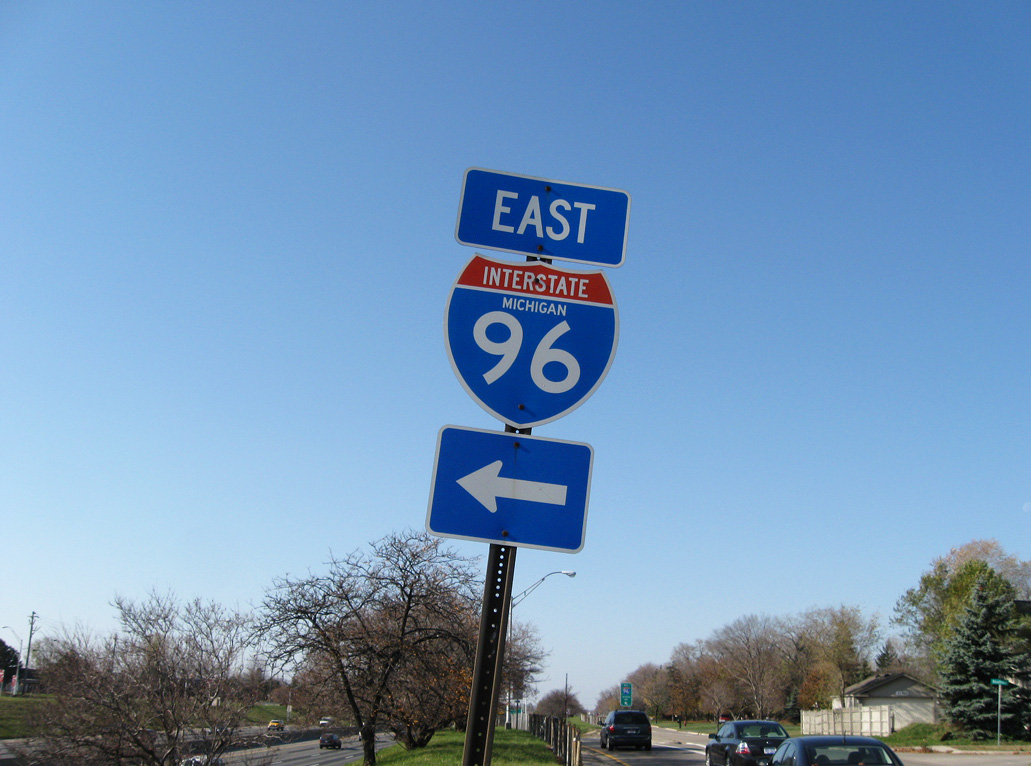
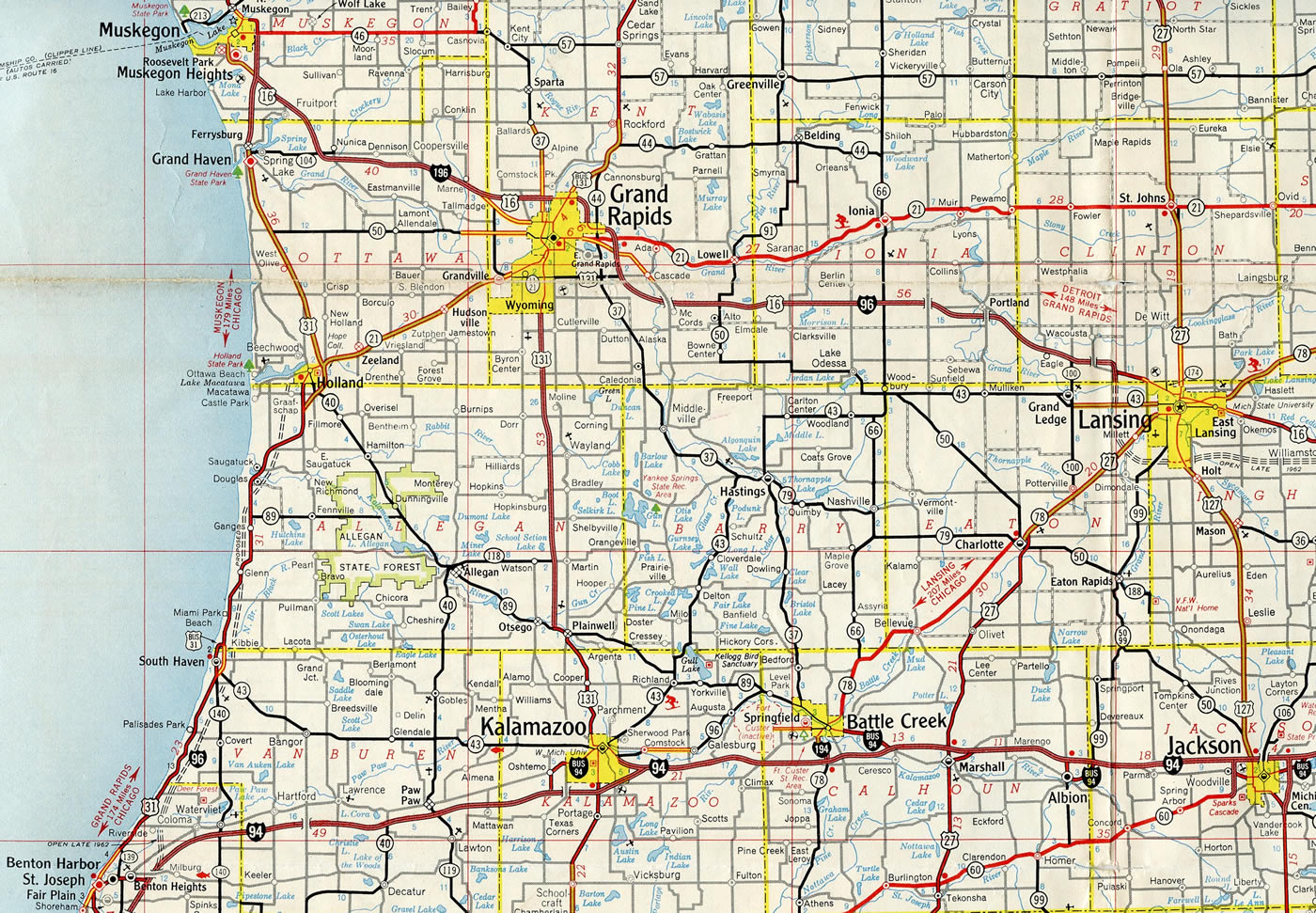
Intrastate Interstate 96 traverses southern Michigan from Muskegon east to Detroit. The freeway begins at a cloverleaf interchange with U.S. 31 at Norton Shores. Angling southeast from there, I-96 heads to Crockery Township where it turns east to Coopersville and the north side of Grand Rapids.
Bypassing Furniture City to the north and east, Interstate 96 circles southward to Gerald R. Ford International Airport (GRR) and the east end of the M-6 freeway before resuming an eastward course to Portland. Southeast from there, the freeway parallels both the Looking Glass and Grand Rivers to combine with Interstate 69 to the west of Lansing.
East from Interstate 69, I-96 spans the Grand River ahead of south Lansing to Michigan State University and the freeway along U.S. 127. Interstate 496 loops through the city, serving both the state capitol complex and Downtown.
Becoming rural again, Interstate 96 leaves Lansing to pass by the villages of Webberville and Fowlerville and the small cities of Howell and Brighton. The Detroit suburbs ensue from U.S. 23 and Brighton east along I-96 to the interchange complex with Interstate 275, I-696 and M-5 at Novi. I-96 turns south there along side I-275 from Novi to Livonia.
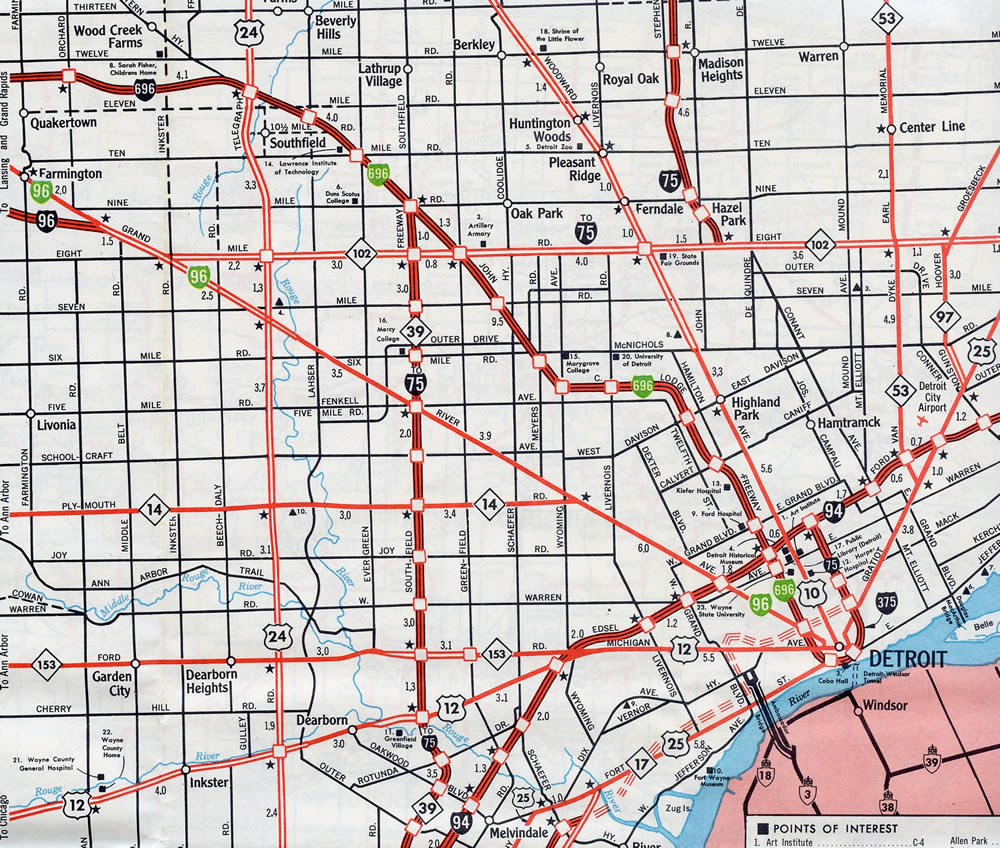
The remainder of Interstate 96 east through Livonia and into Detroit is an urban freeway, with a dual roadway section between Exit 180 (Outer Drive) and Exit 186 B (Davison Street). Beyond the three-wye interchange with M-8, I-96 curves southeast along the Jeffries Freeway to meet I-94 and Interstate 75 (Fisher Freeway) before ending at the ramps to the Ambassador Bridge linking Michigan with Windsor, Ontario.
Mileage by State
| Michigan | 187.05 mi |
Data Sources
December 31, 2025 Interstate Route Log and Finders List
Parallel U.S. Routes
Interstate 96 wholesale replaced the alignment of U.S. 16 through Michigan. The route used to cross Lake Michigan via a ferry from Milwaukee to Muskegon. It ran east to end in Downtown Detroit until 1962, when it was truncated west to Wisconsin.
History
Originally, Interstate 96 was to begin at the Michigan-Indiana state line cosigned with Interstate 94. Once at Benton Harbor, I-96 was to split from I-94, following current Interstate 196 all the way to Grand Rapids. Northward at Grand Rapids, Interstate 96 was to have turned onto its existing alignment toward Lansing and Detroit. Interstate 196 then was defined to include what is now I-96 between Muskegon and Grand Rapids. Changes were made in 1963 (Bessert, 2025) when I-96 and I-196 west from Grand Rapids traded places. The American Association of State Highway and Transportation Officials (AASHTO) approved the change on June 23, 1969.
The last section of Interstate 96 (between Eagle/Grand Ledge area and east of Howell) opened to traffic in 1962 (Lansing State Journal, 2006). This 59 mile long stretch of freeway replaced former U.S. 16, which subsequently was decommissioned.
Interstate 96 through the Novi and Wixom areas opened to traffic in 1957. Along this stretch are the first two Single Point Urban Interchanges (SPUI) built in Michigan. Upgrades to the previous diamond interchanges at Beck and Wixom Roads (Exits 159 and 160) were needed after traffic demands overwhelmed both. Rising land costs and a lack of available right-of-way necessitated the need for a new approach to improving the exits. Work began in 2004 on the $27.438 million interchange project at Beck Road with construction of a wider overpass for Beck Road. Ramp construction at Exit 160 followed in 2005. A similar process upgraded the Wixom Road interchange (The Oakland Press, 2003).
Within Detroit, Interstate 96 originally ended at Farmington along what later became Business Spur I-96 and is now M-5 (Brighton-Farmington Expressway). The freeway defaulted onto Grand River Avenue (historic U.S. 16) just west of Middlebelt Road in Farmington Hills, with the portion leading southeast to the Jeffries Freeway at West Chicago never constructed.
As part of the Gateway Project to improve the connection between I-75 and the Ambassador Bridge between Detroit and Windsor, Ontario, Interstate 96 was extended beyond the end at I-75 to the bridge into Canada. $170 million in construction began on February 25, 2008 and the bulk of work was completed on July 2, 2009, when I-75 southbound reopened to traffic (Helms, 2009). Accelerated work was the result of entire shutdowns along the final mile of I-96 and 1.5 miles of I-75 as a new roadway was built to the Ambassador Bridge approach.
East End  (Fisher Freeway) ‐ Detroit, MI
 East at
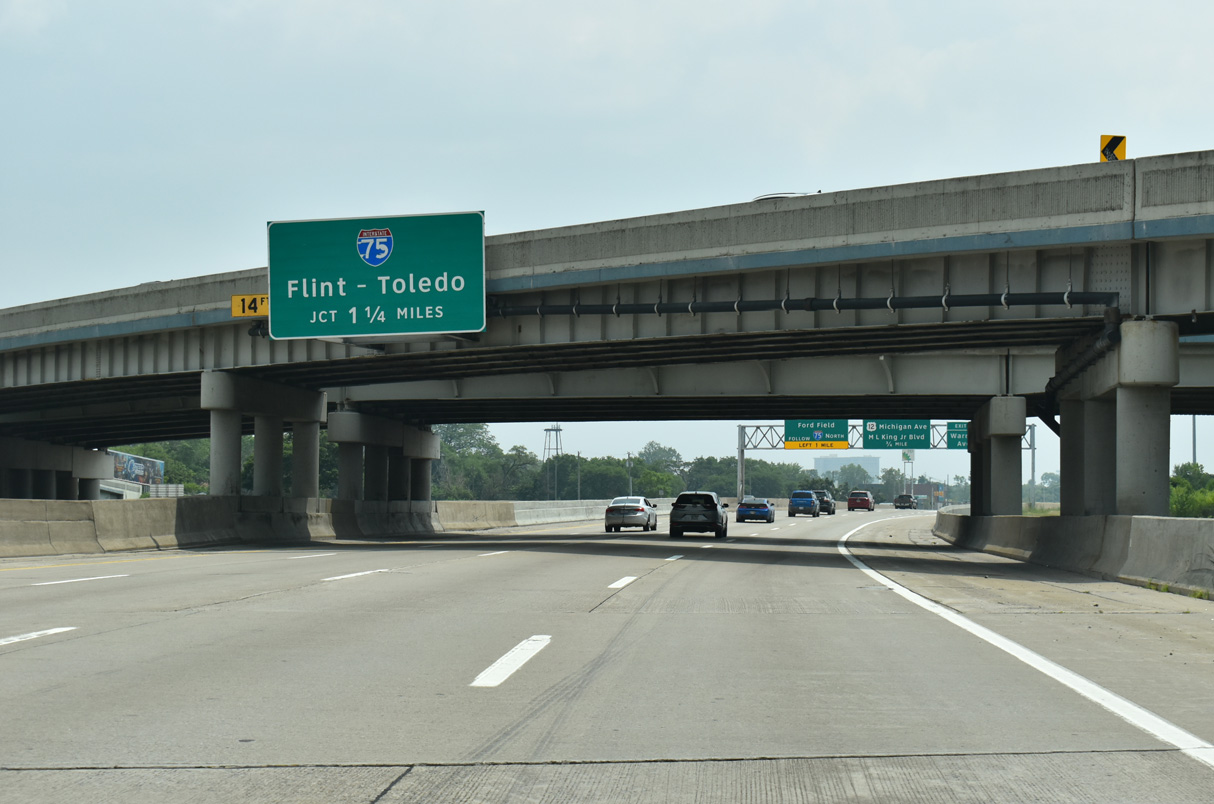
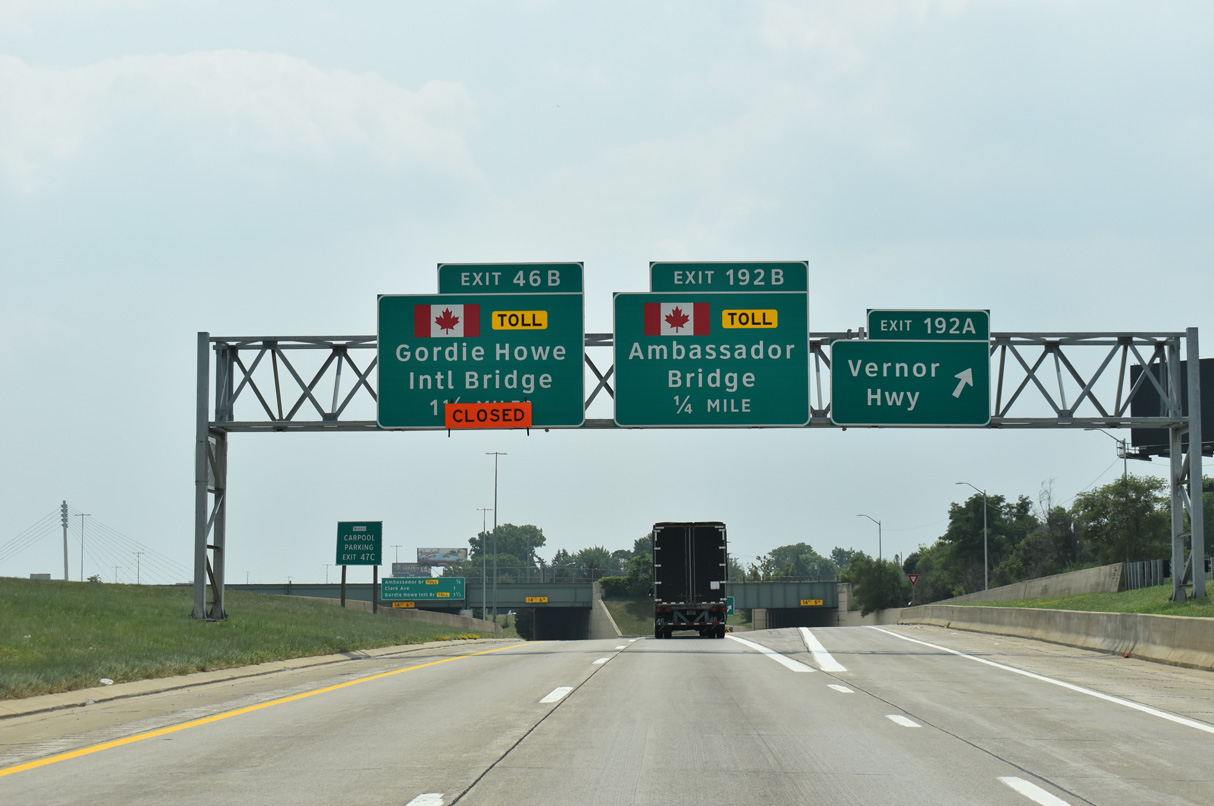
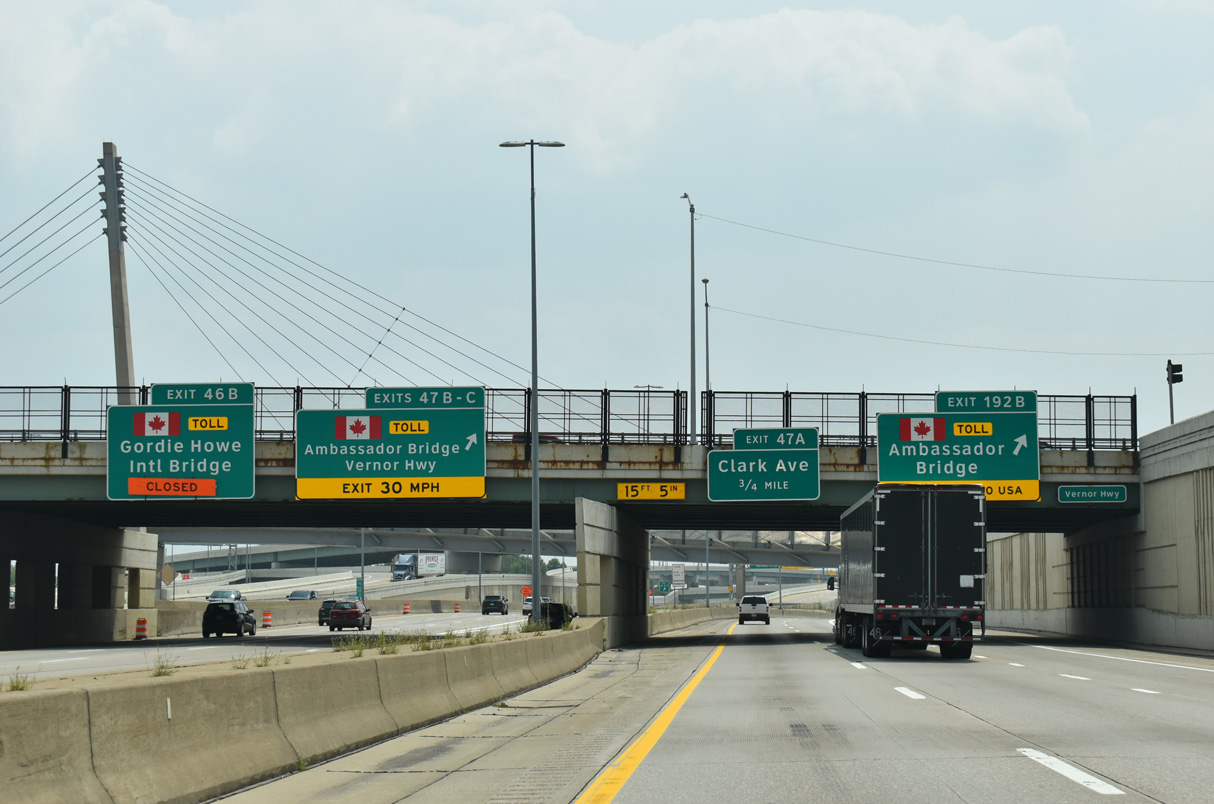
Interstate 96 continues 1.25 miles southeast from the systems interchange with I-94 (Edsel Ford Freeway) to the ramp separation for I-75 (Fisher Freeway). 07/19/26
North at
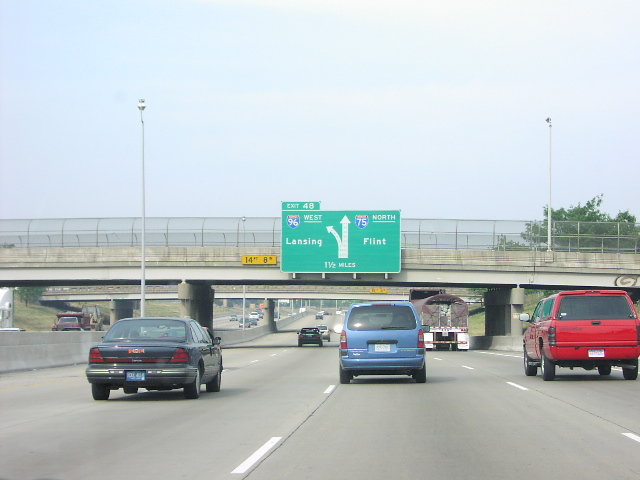
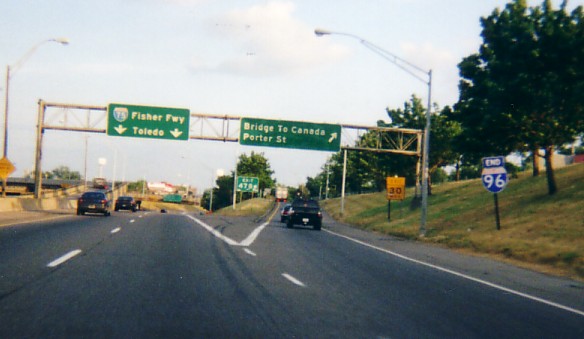
Paralleling M-85 (Fort Street), I-75 (Fisher Freeway) makes a northwesterly turn ahead of the Ambassador Bridge and I-96 (Jeffries Freeway) west at Exit 48. I-96 links Detroit with Lansing 86 miles to the west while I-75 leads beyond Downtown to Flint. Photo by Jim Teresco / Rob Foulis (08/01/01).
South at
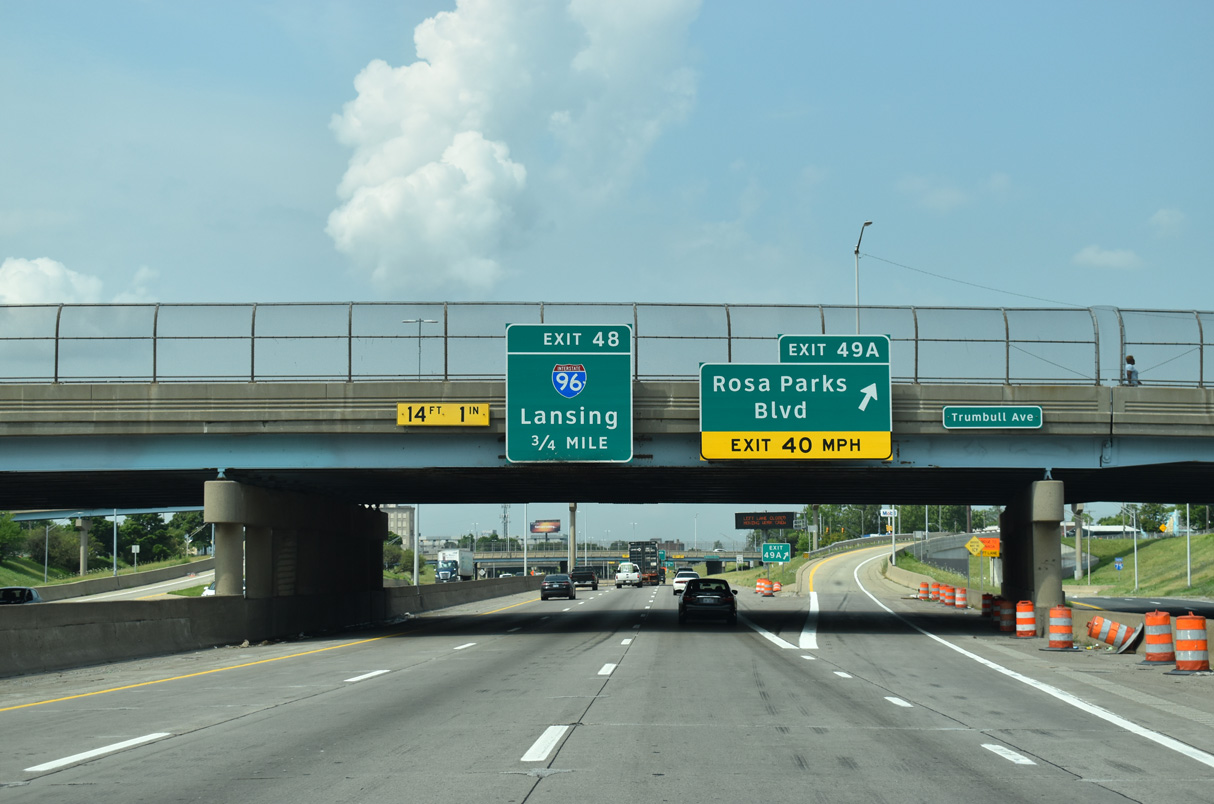
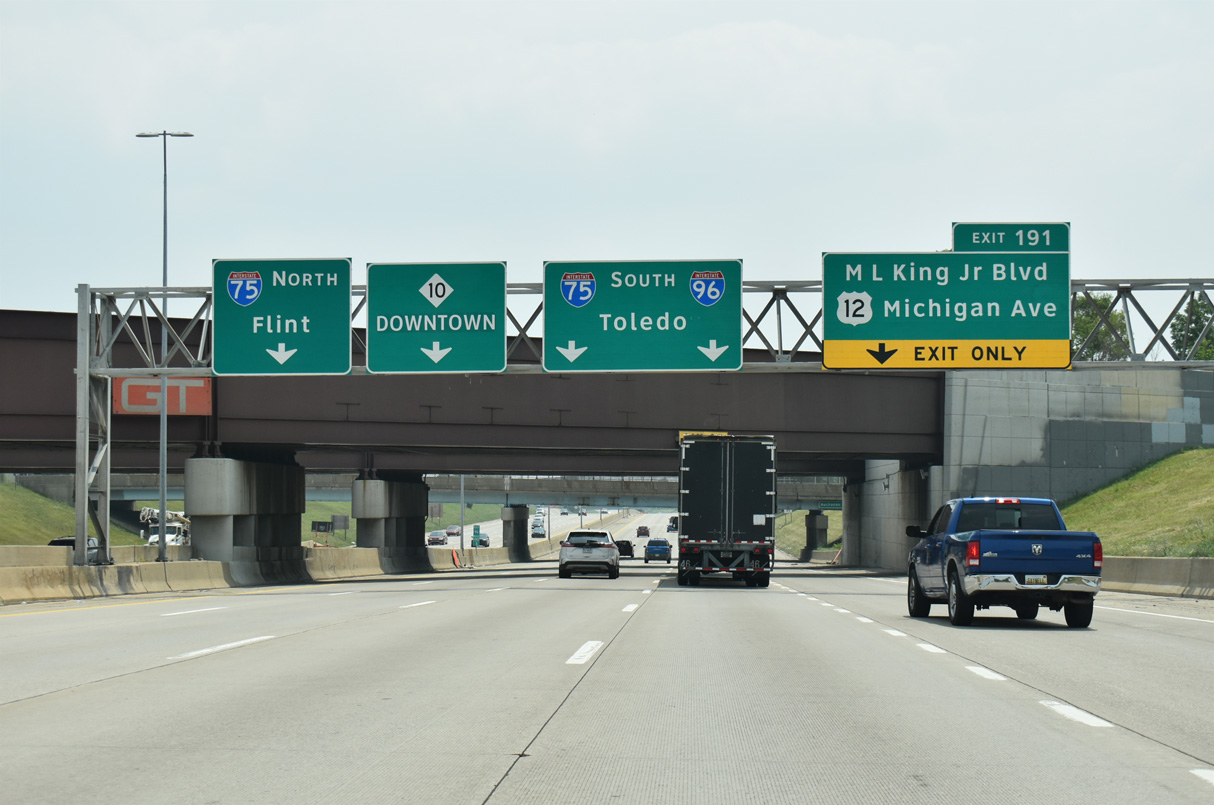
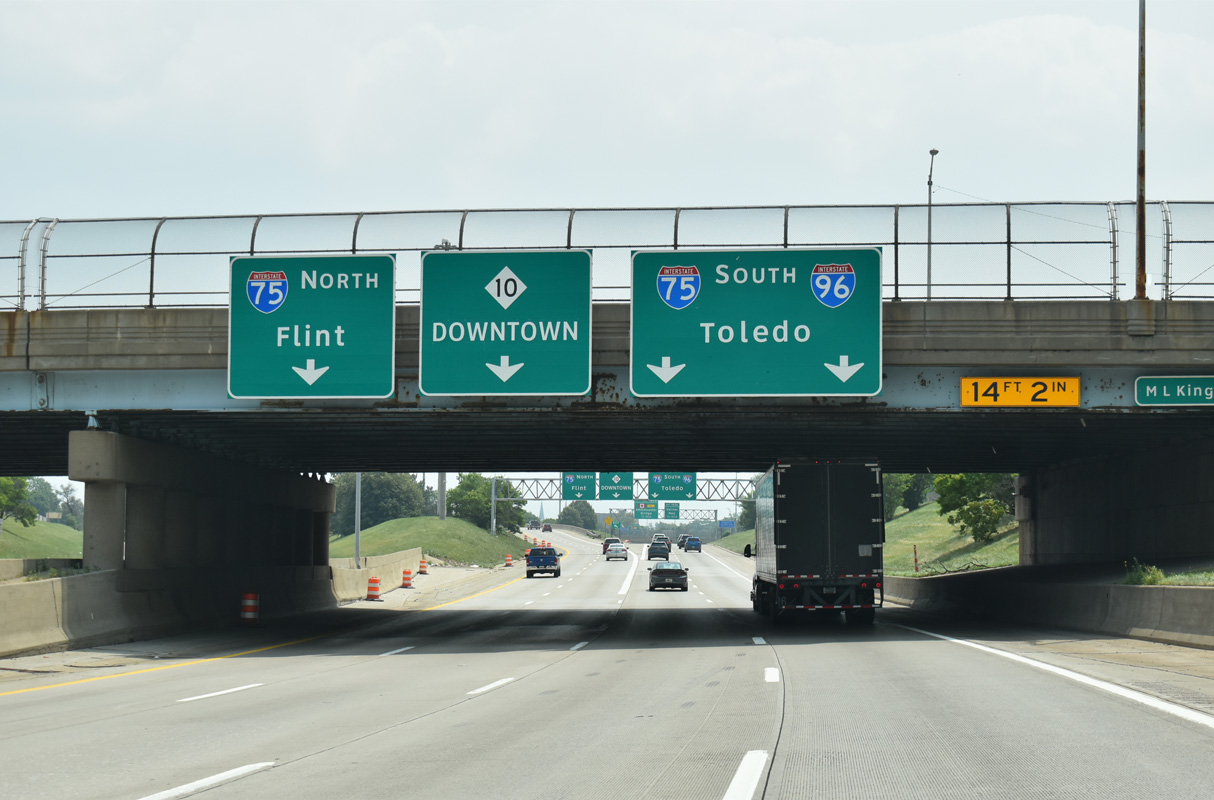
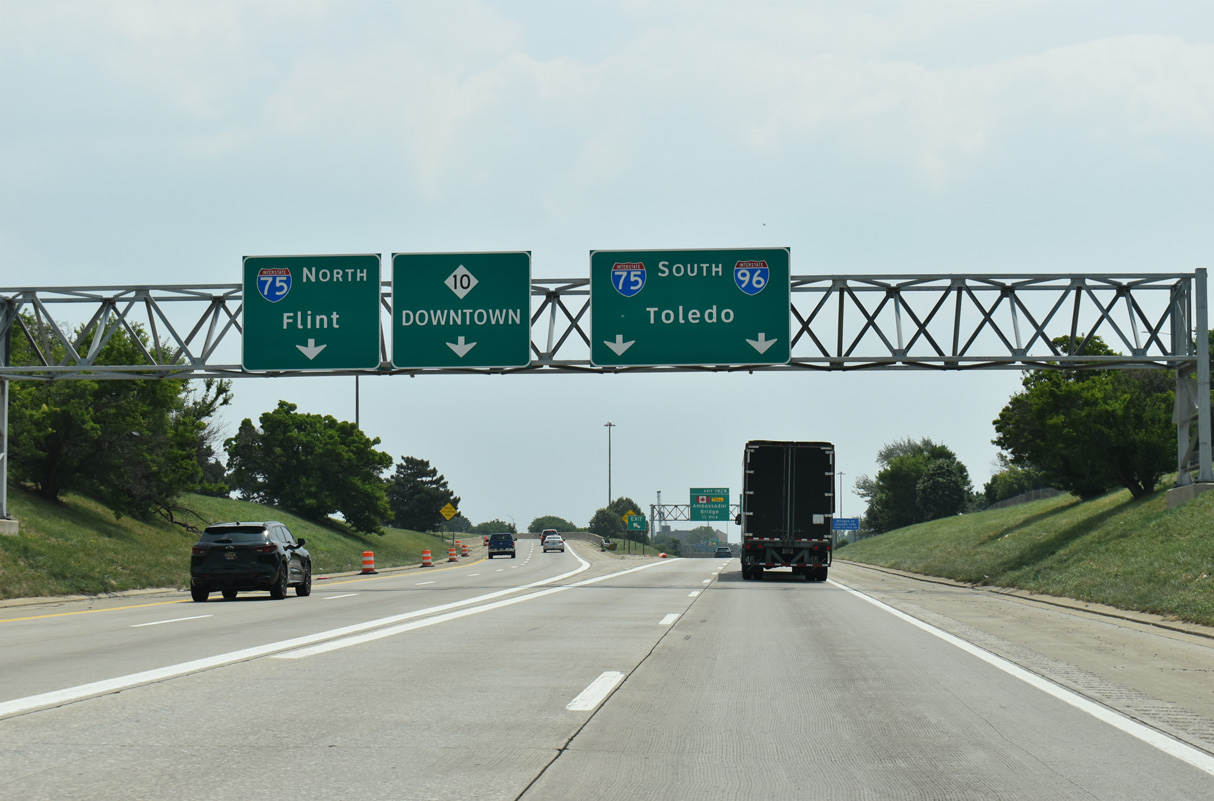
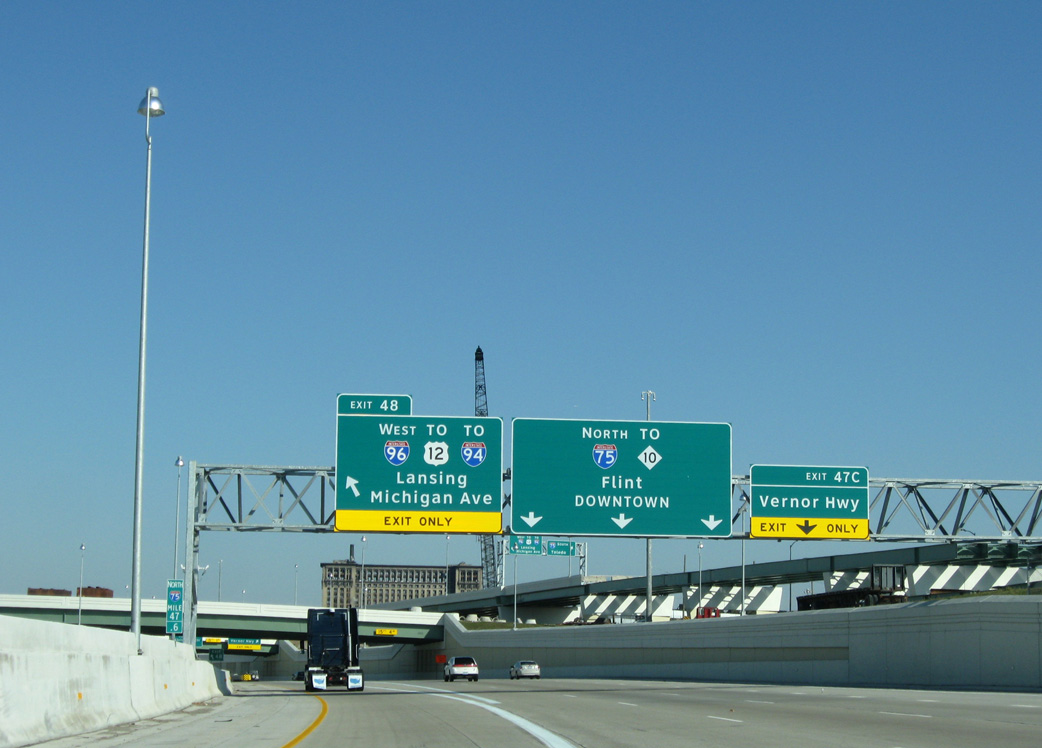
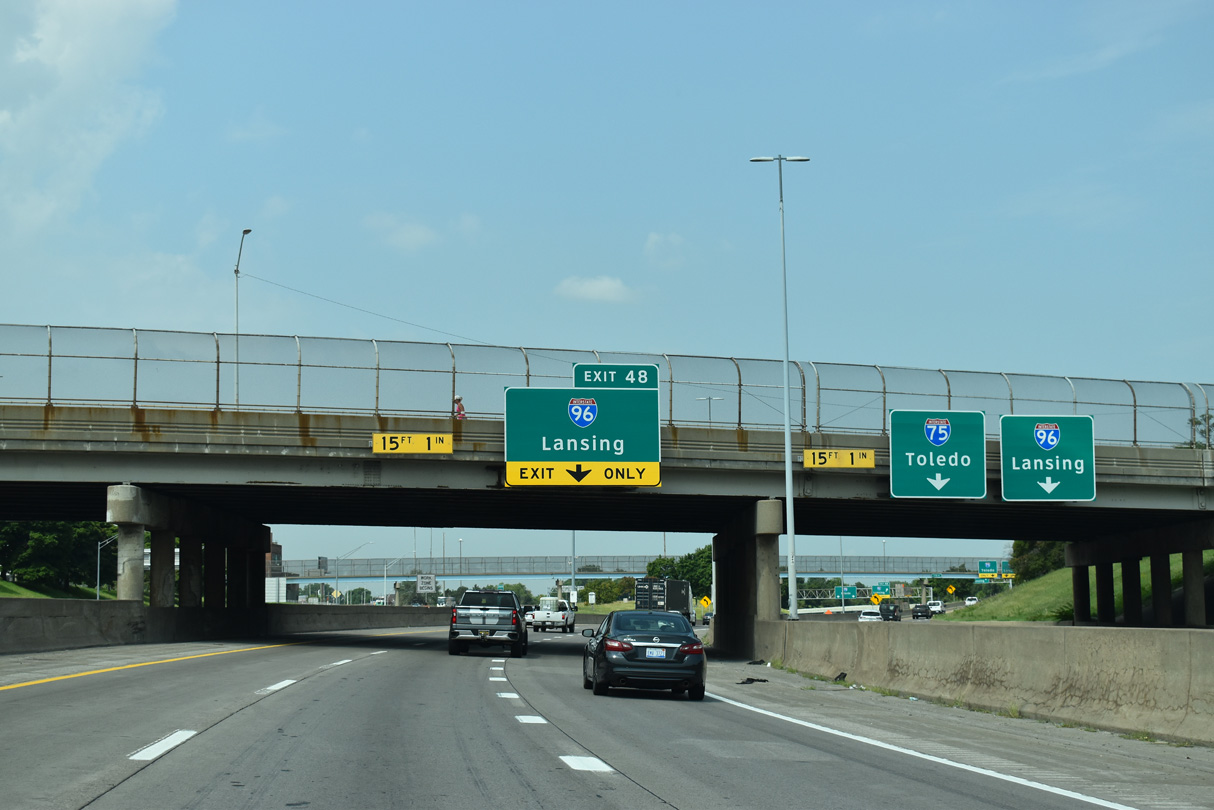
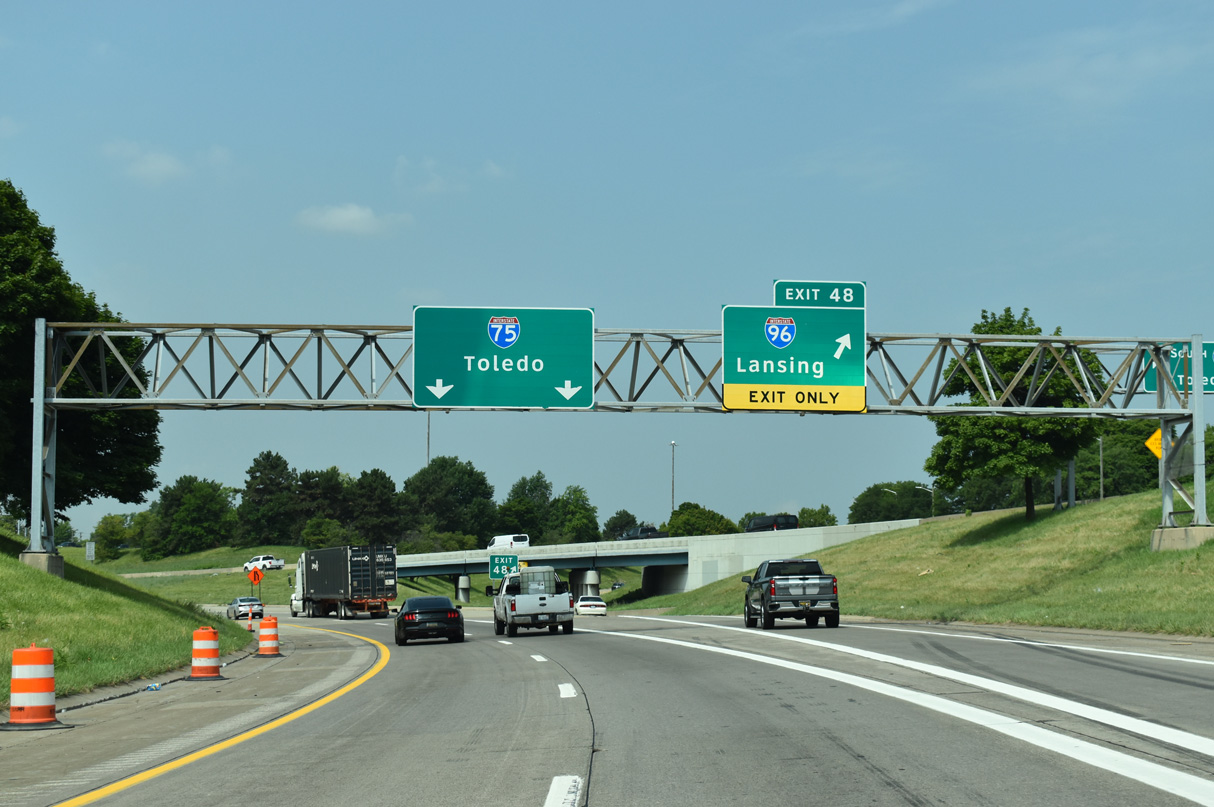
Leading away from the turbine interchange with M-10 (Lodge Freeway) outside Downtown Detroit, I-75 advances 0.75 miles west to Interstate 96. 07/22/24
West
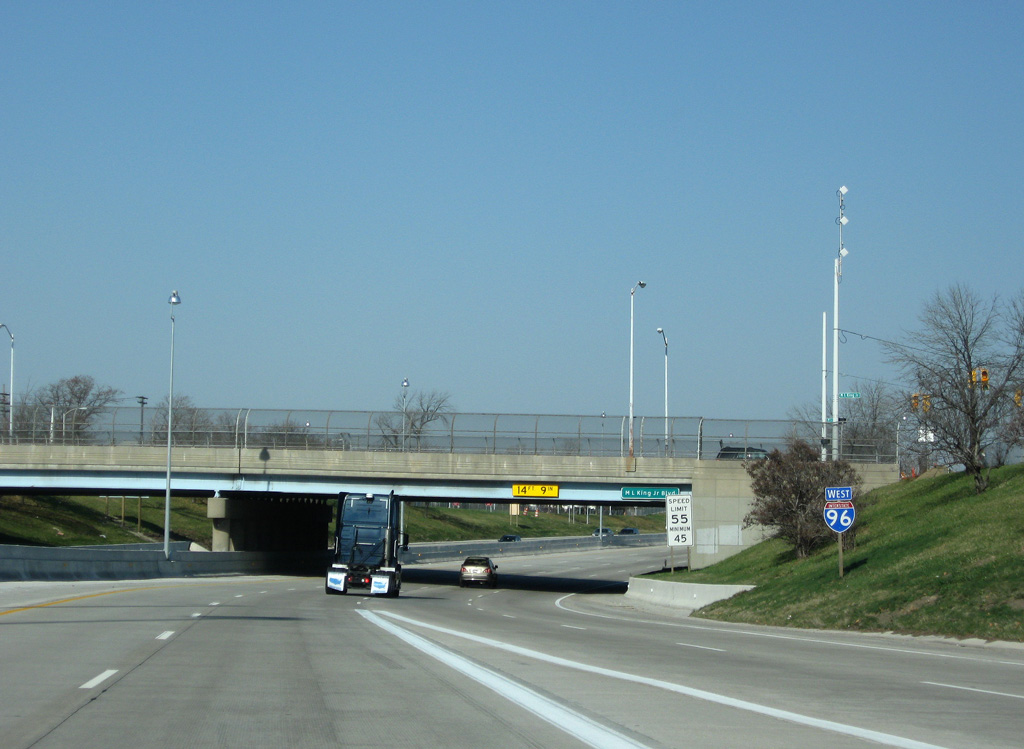
The first confirming marker for Interstate 96 westbound stands ahead of the Martin Luther King, Jr. Boulevard just beyond I-75. 11/07/09
East End – Past Views
Past Views Gallery (Tap to Expand / Collapse Section)
South at
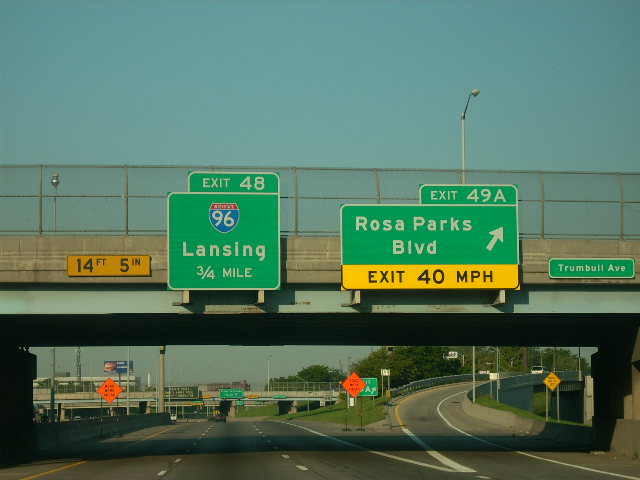
Replaced guide sign sides at Exit 49 A along I-75 south. The Rosa Parks Boulevard off-ramp used to be the exit to old Tiger Stadium. Photo by Frank Gillon (09/03/07).
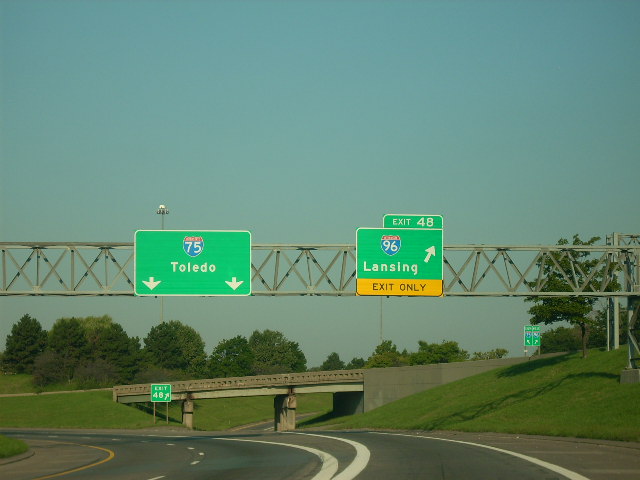
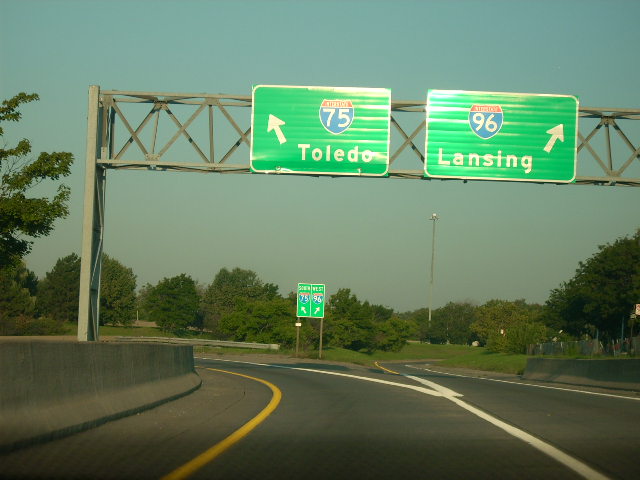
West End 
 ‐ Muskegon, MI
West at
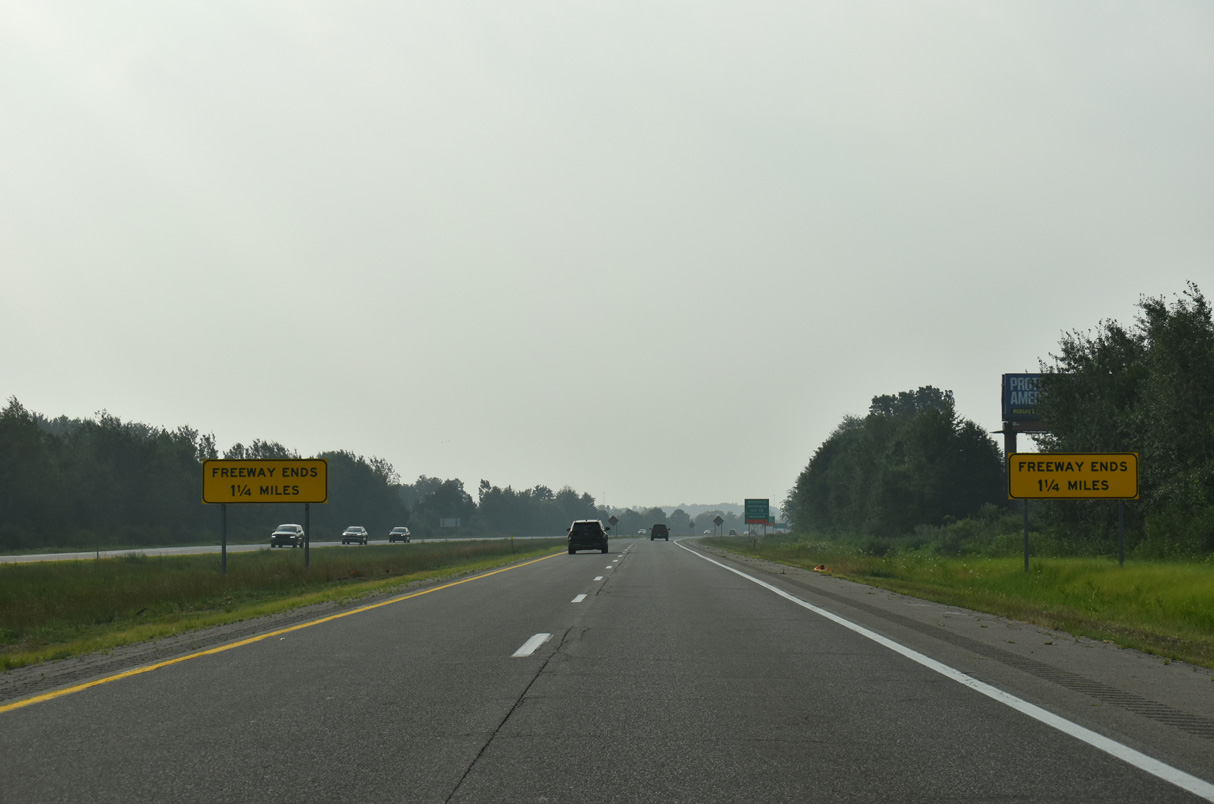
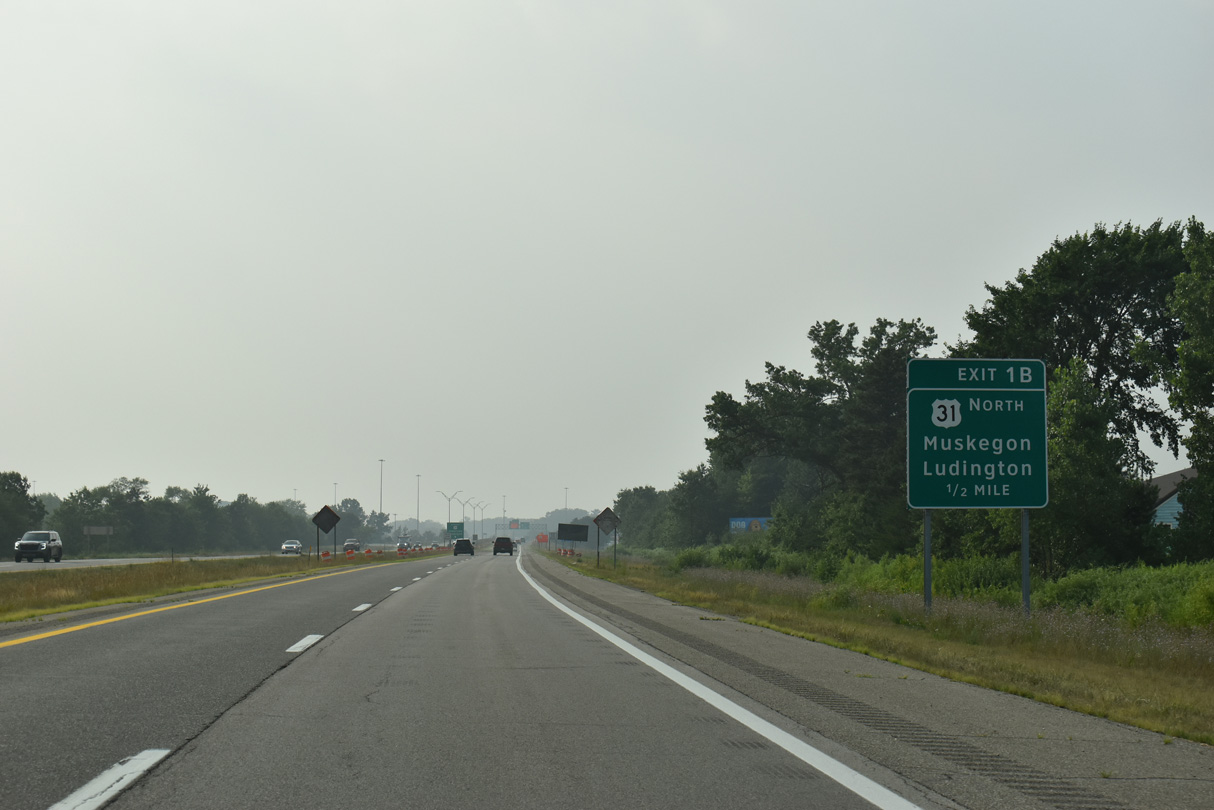
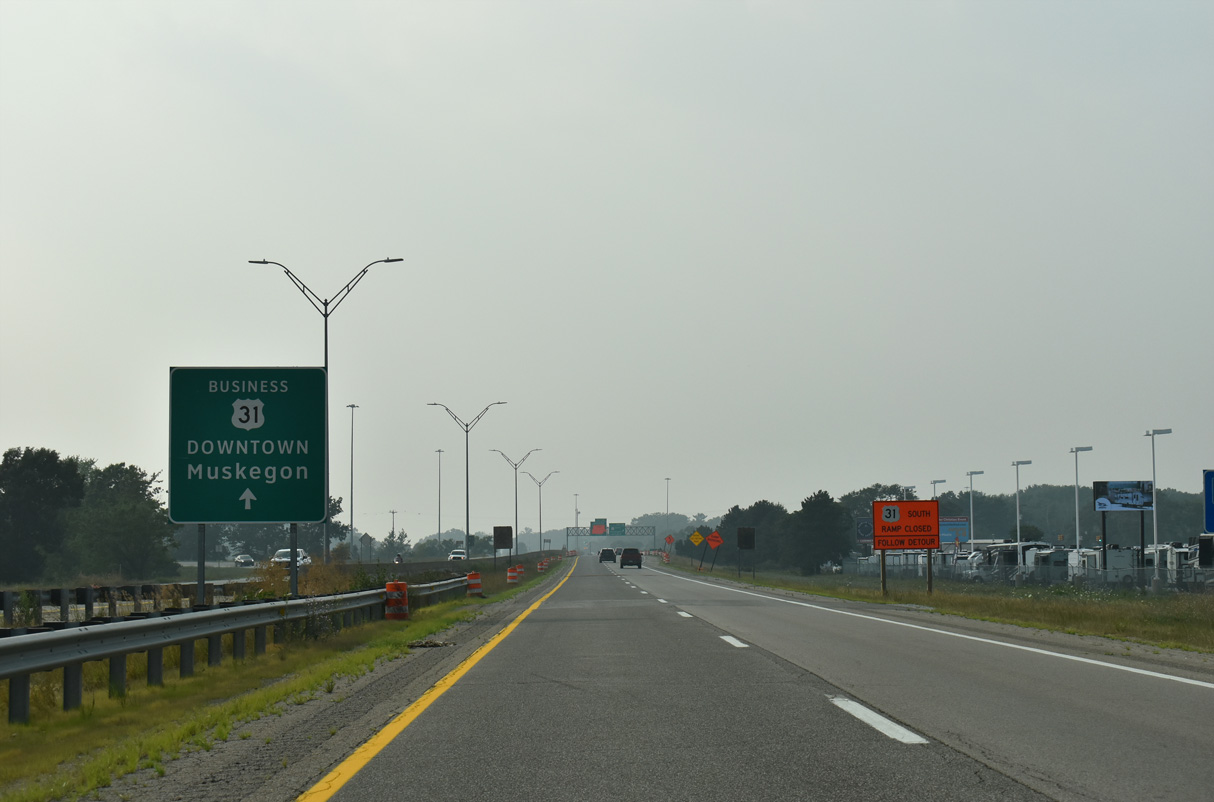
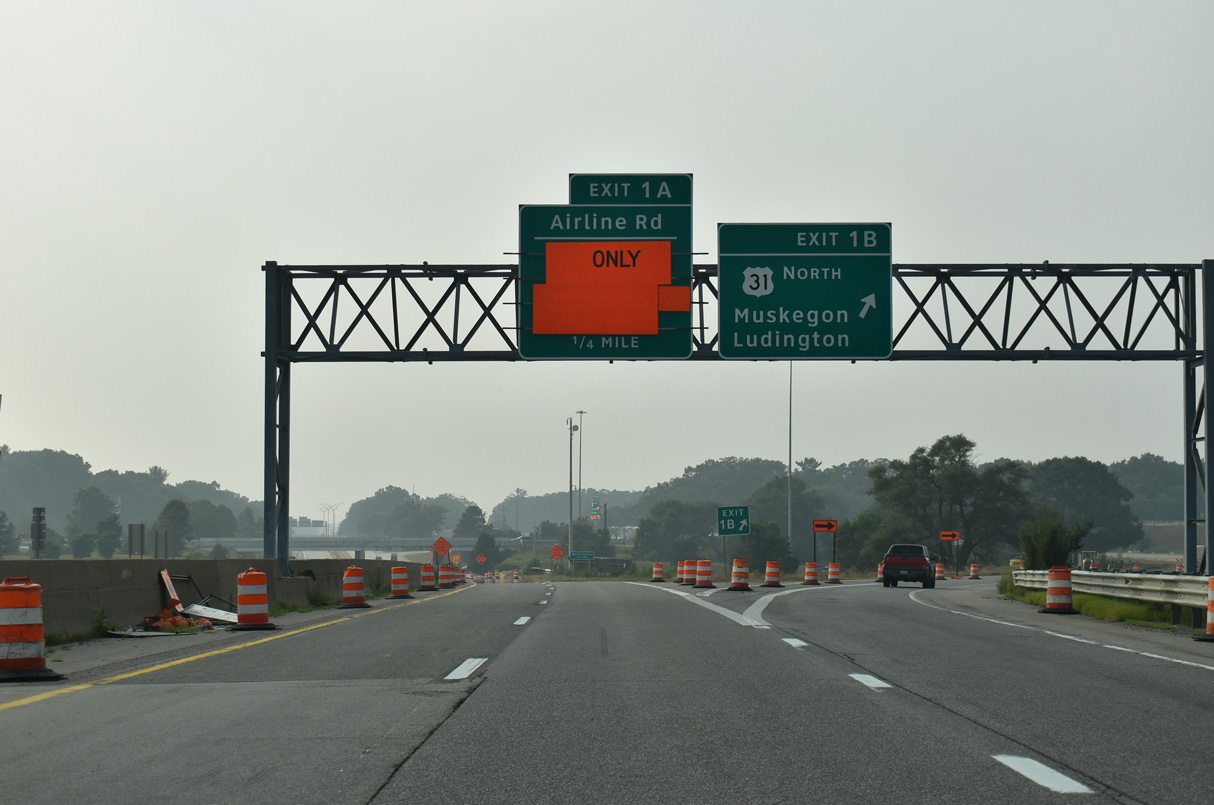
Interstate 96 angles northwest along side Airline Highway (old U.S. 16) to U.S. 31 outside Muskegon. 07/18/26
South at
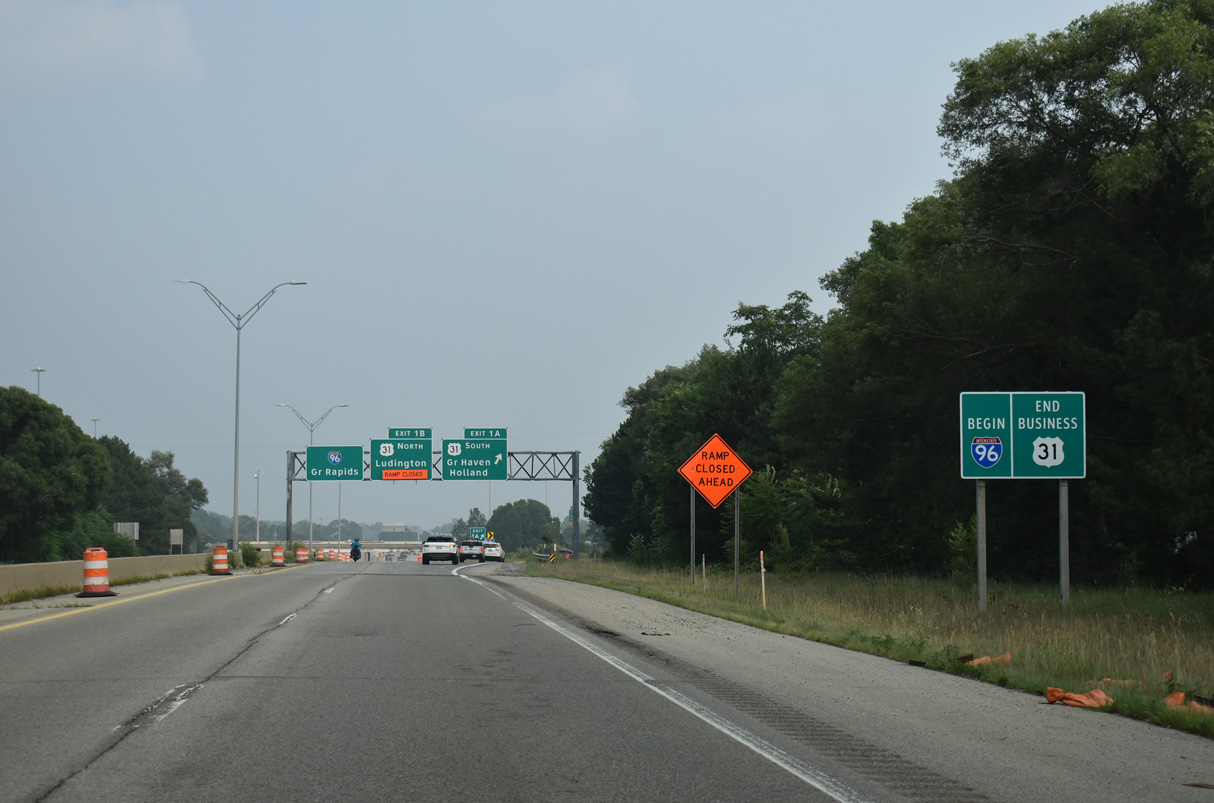
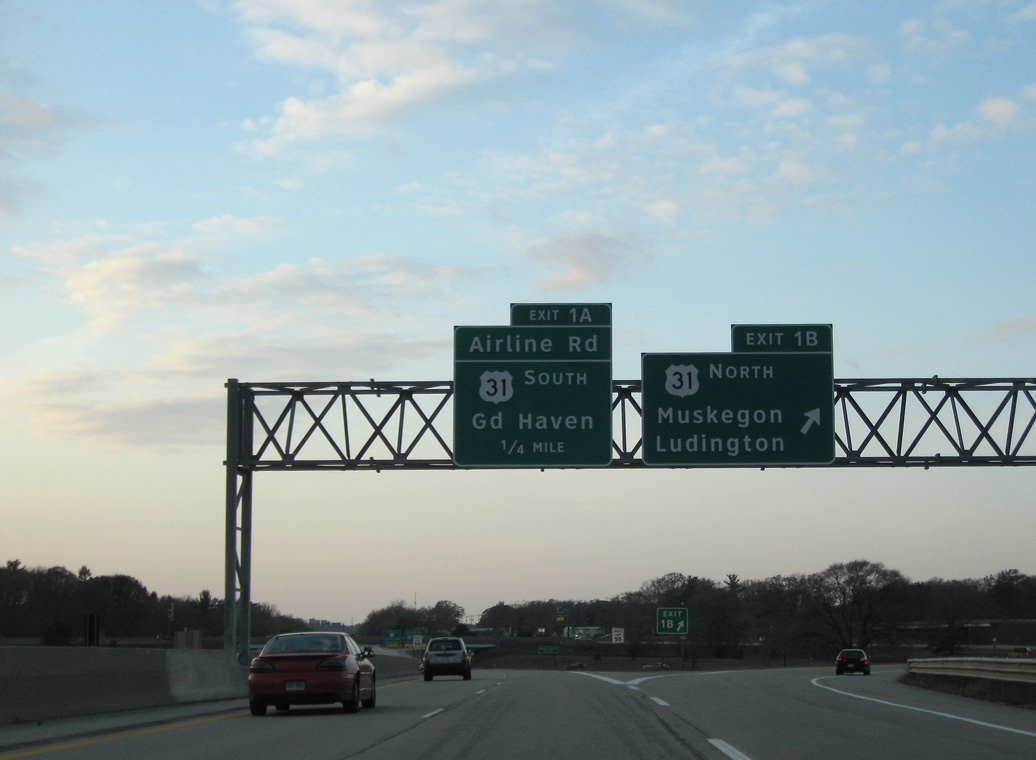
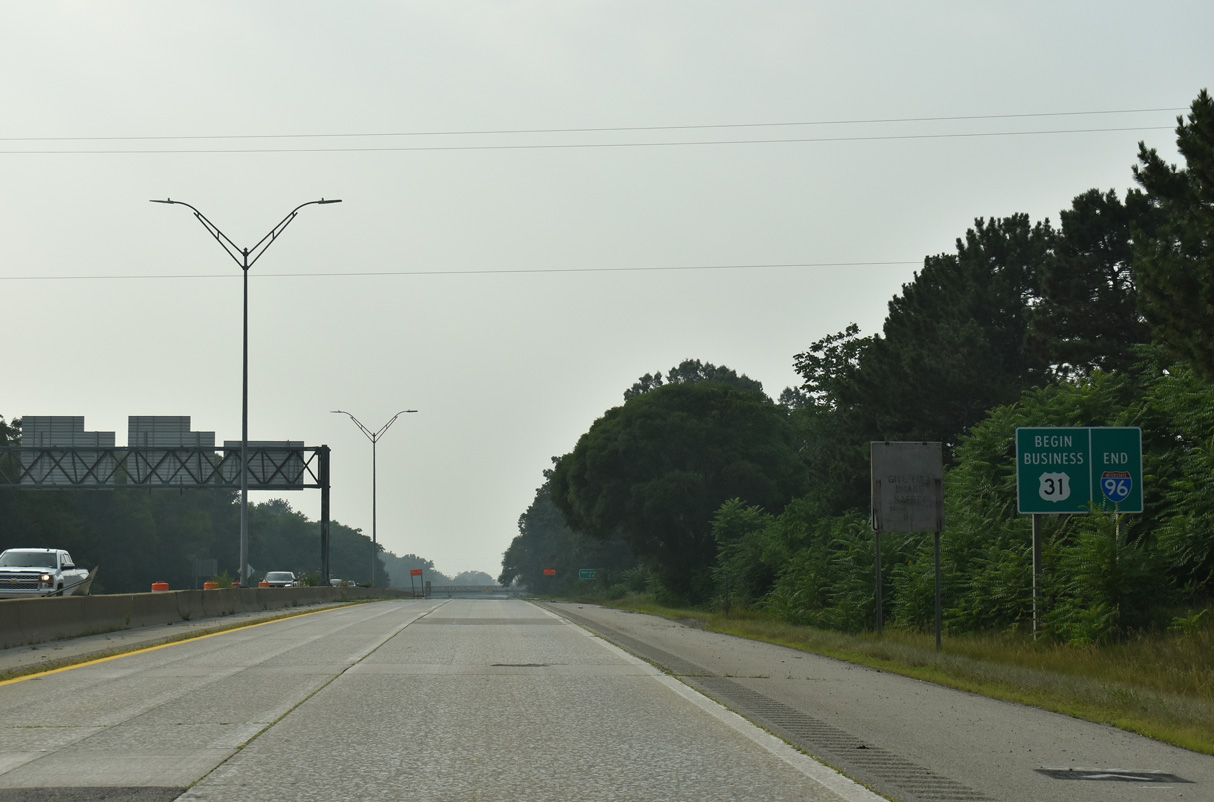
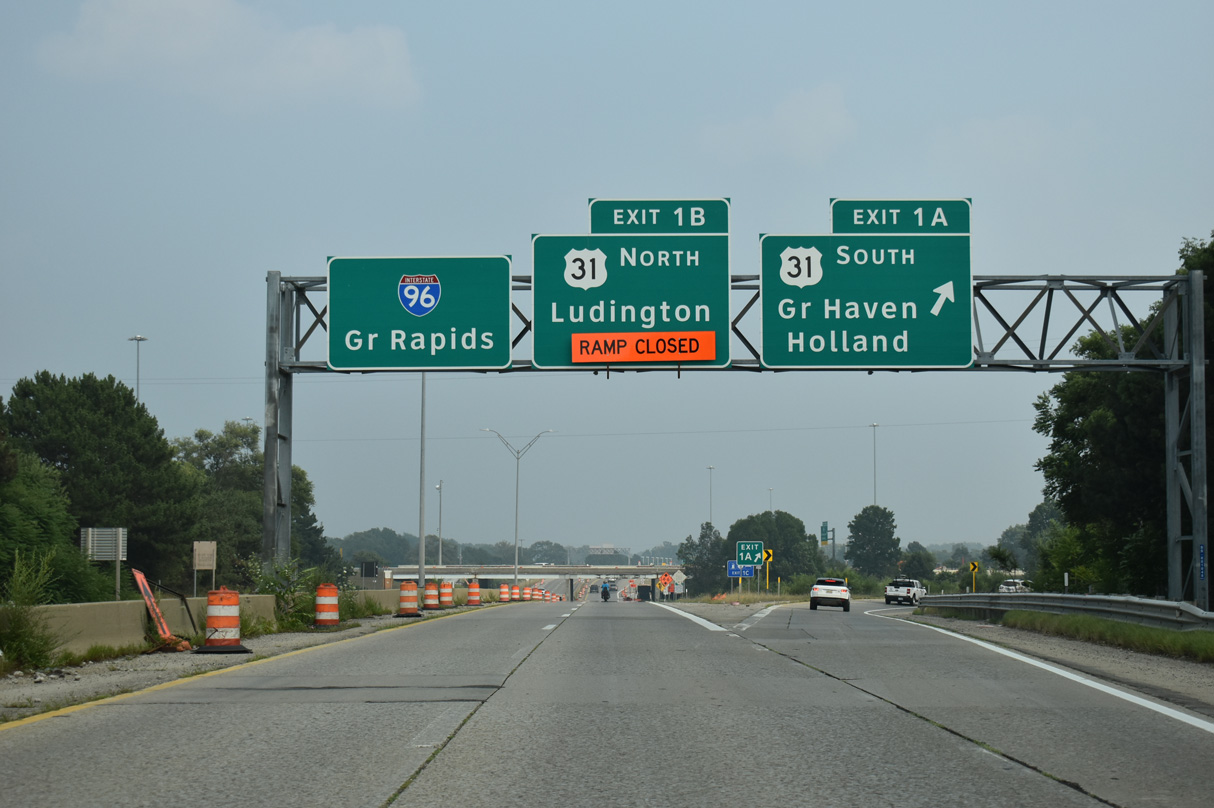
The begin sign for Interstate 96 precedes Exit 1 A for the freeway taking U.S. 31 south to Grand Haven. 07/18/26
North at
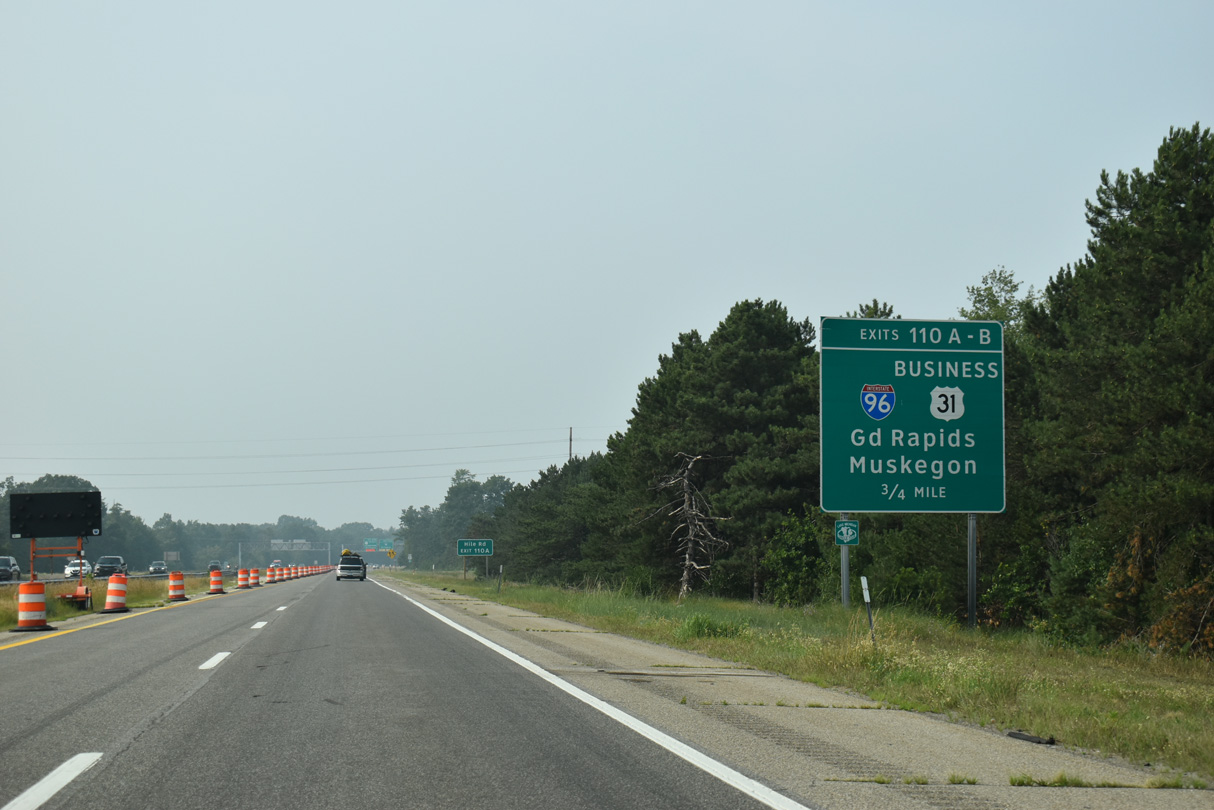
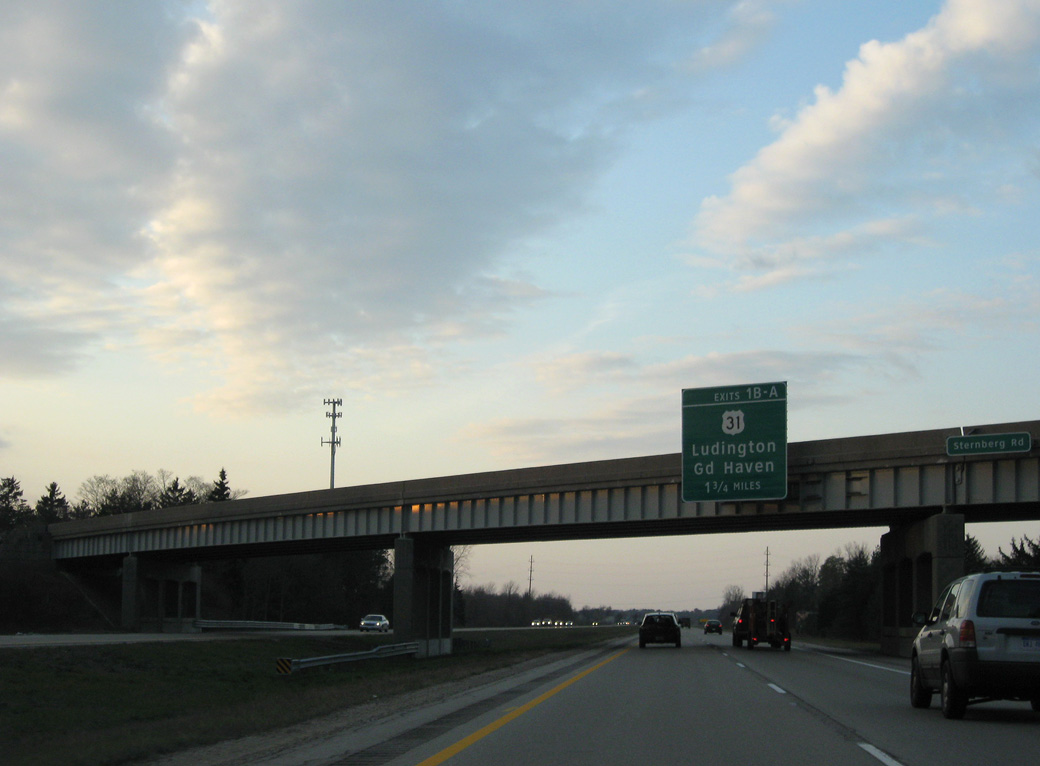
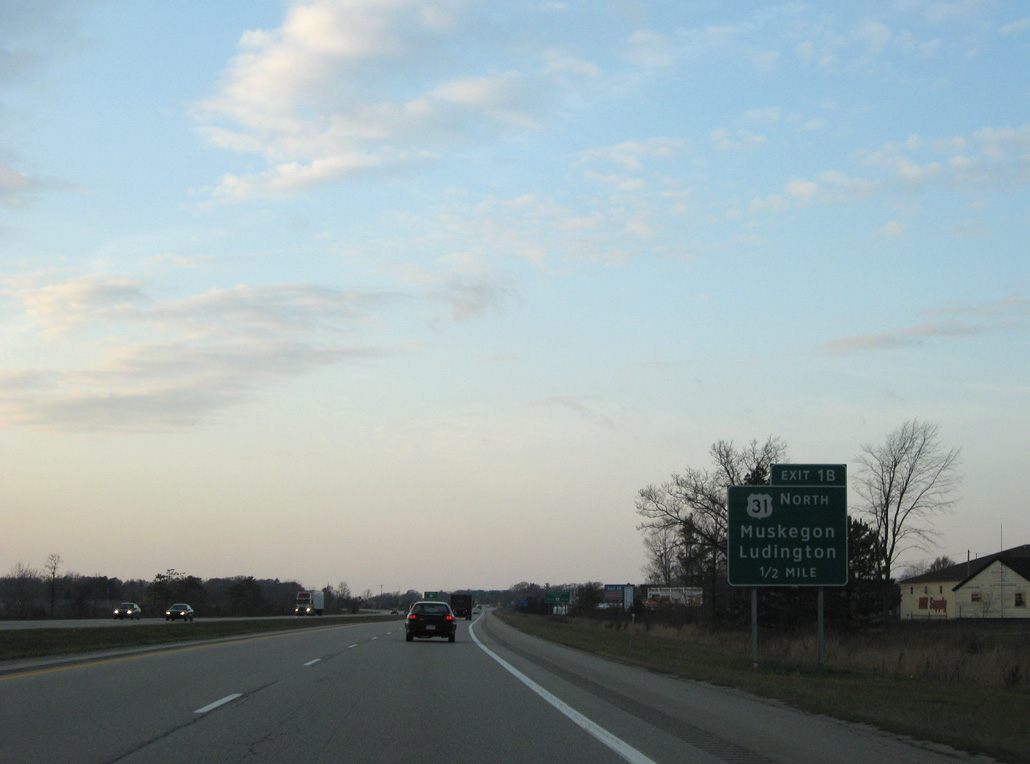
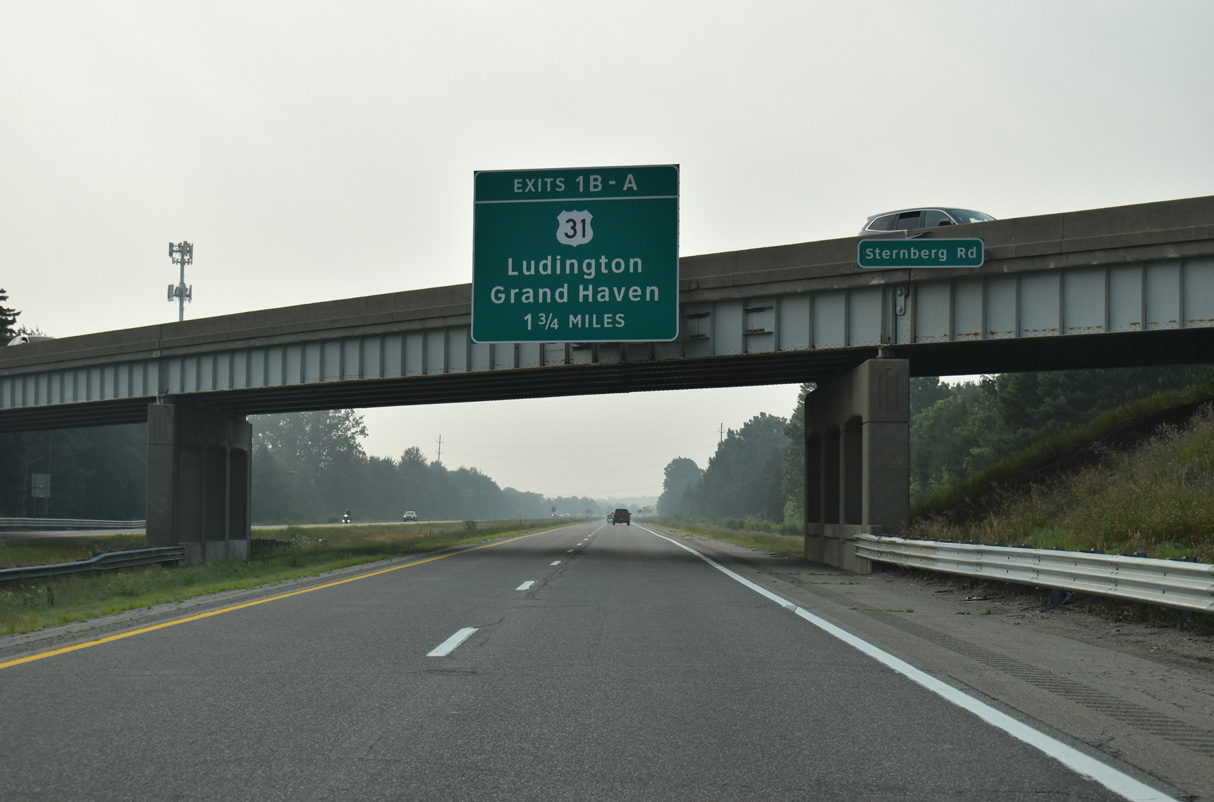
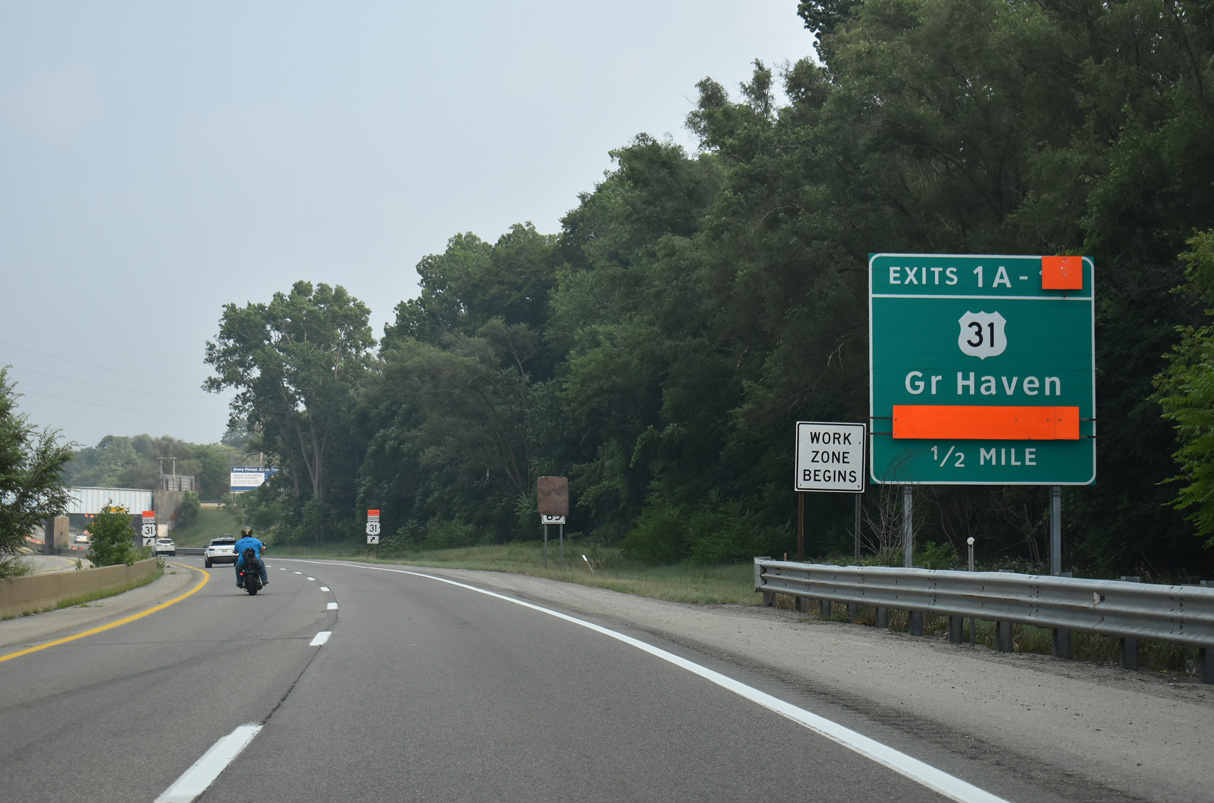
U.S. 31 advances 0.75 miles north from the commercialized interchange with Sternberg Road to Interstate 96 east and U.S. 31 Business north. 07/18/26
South at
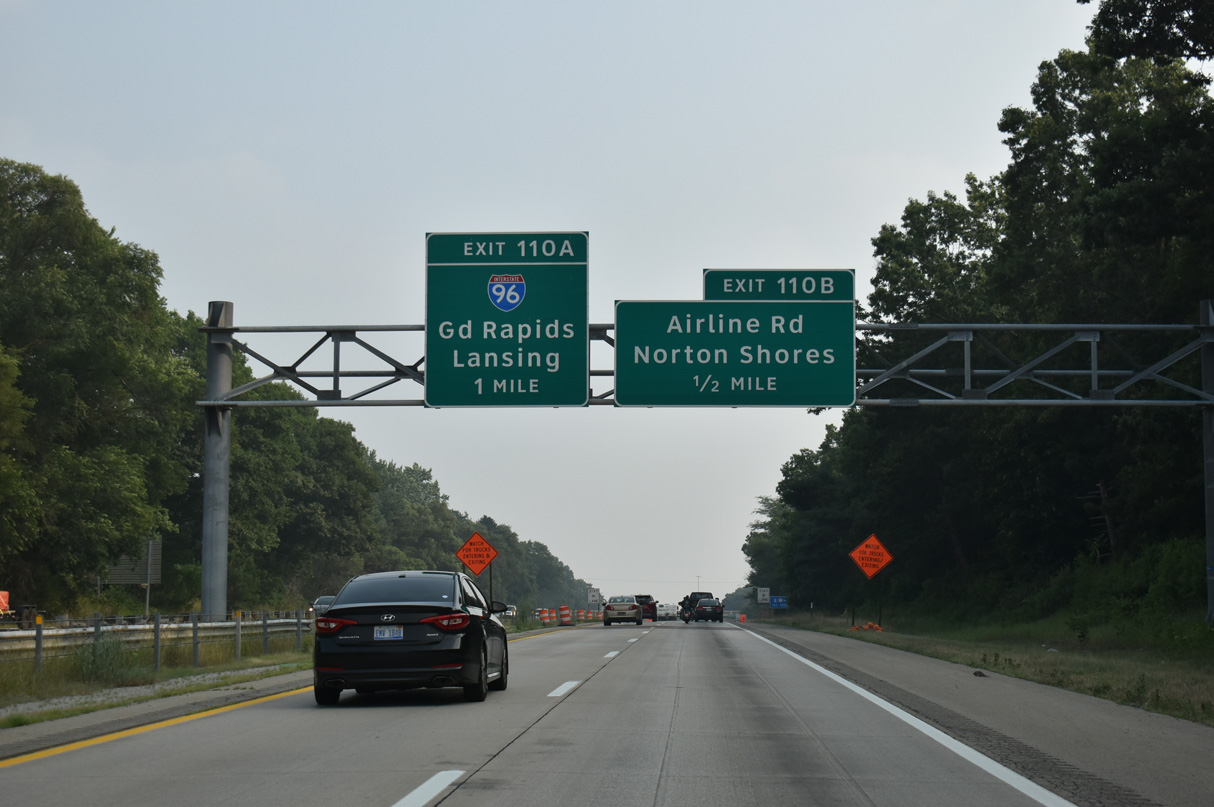
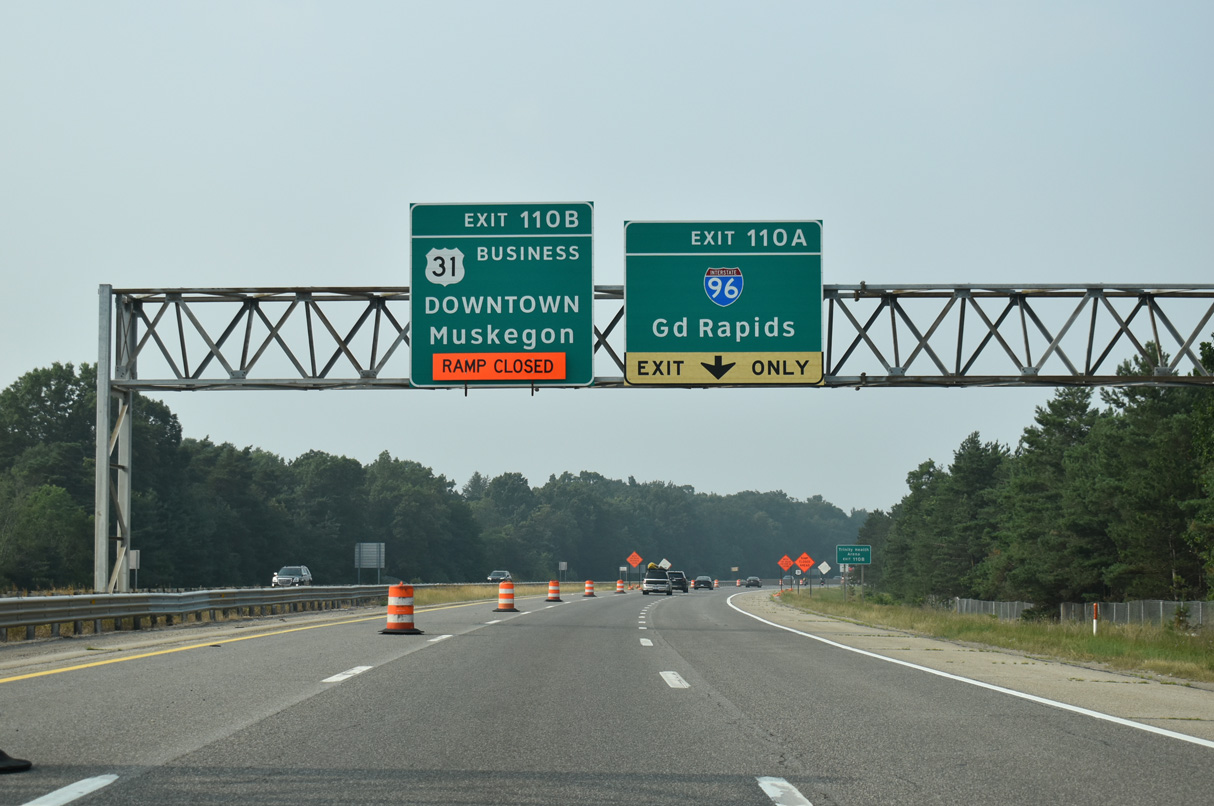
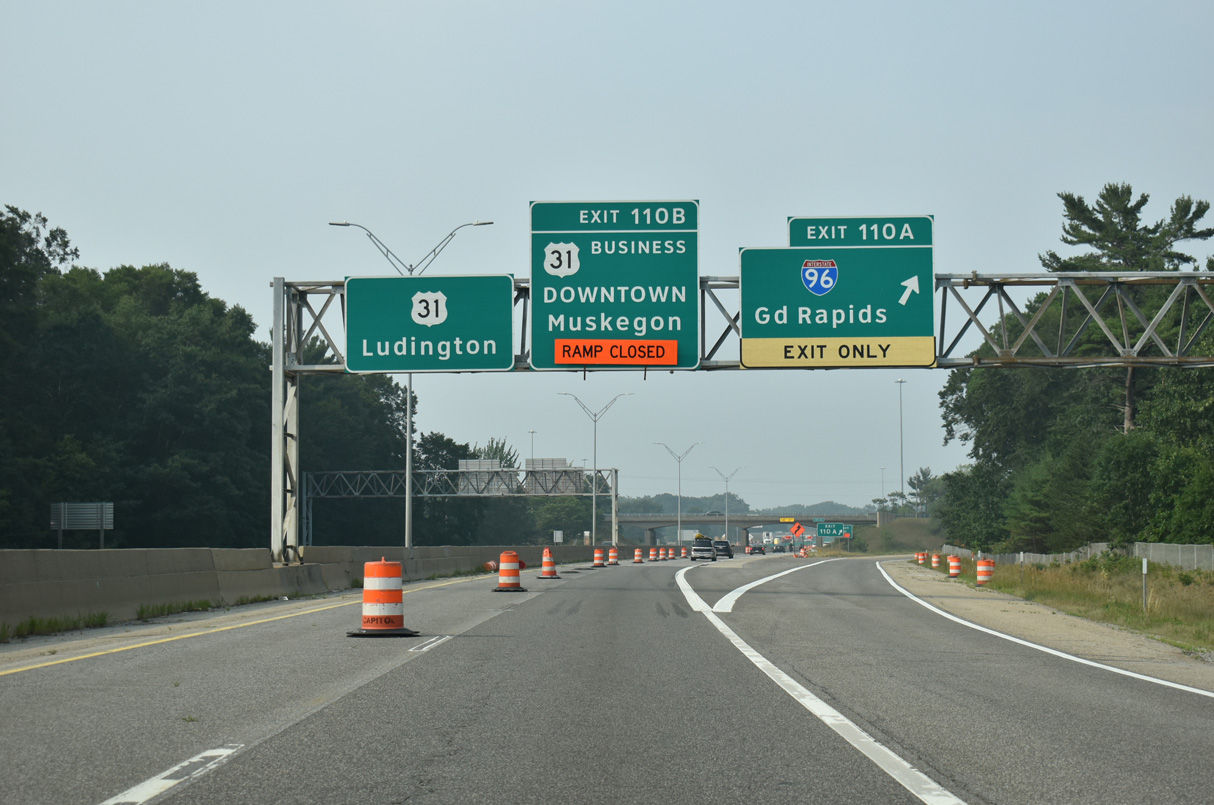
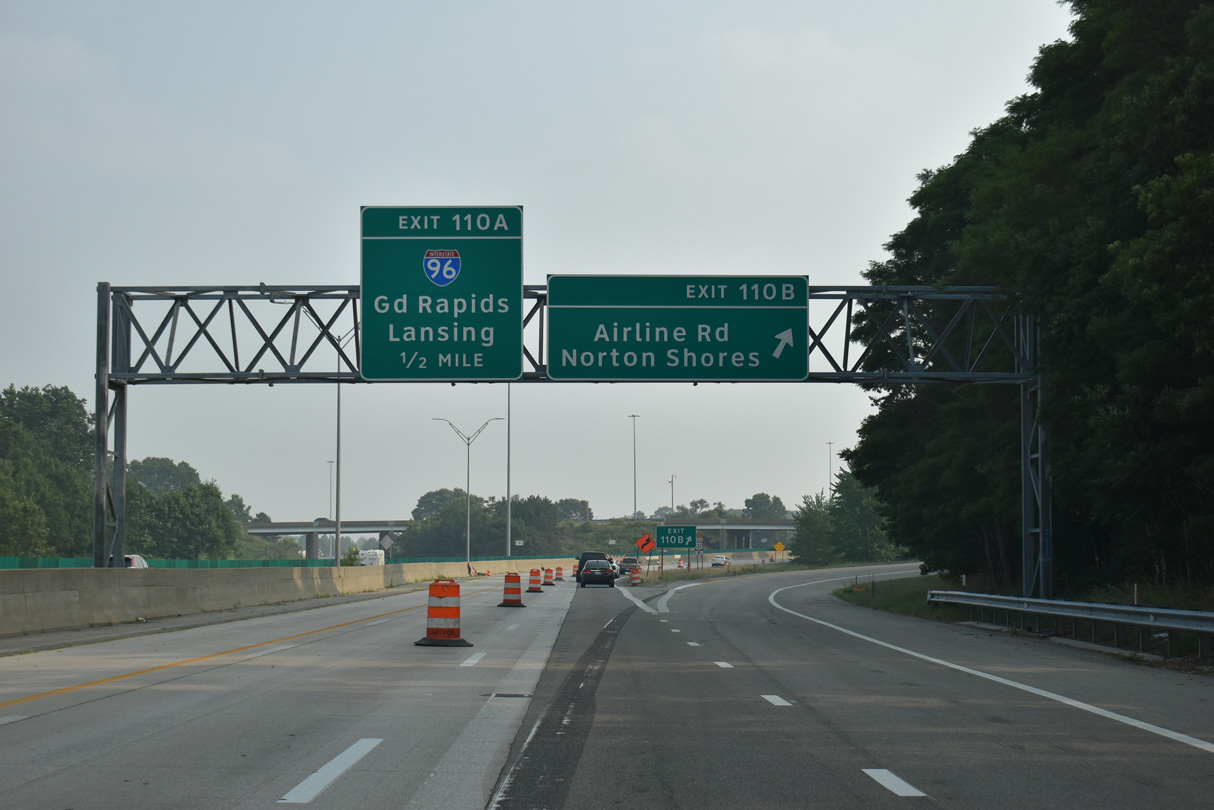
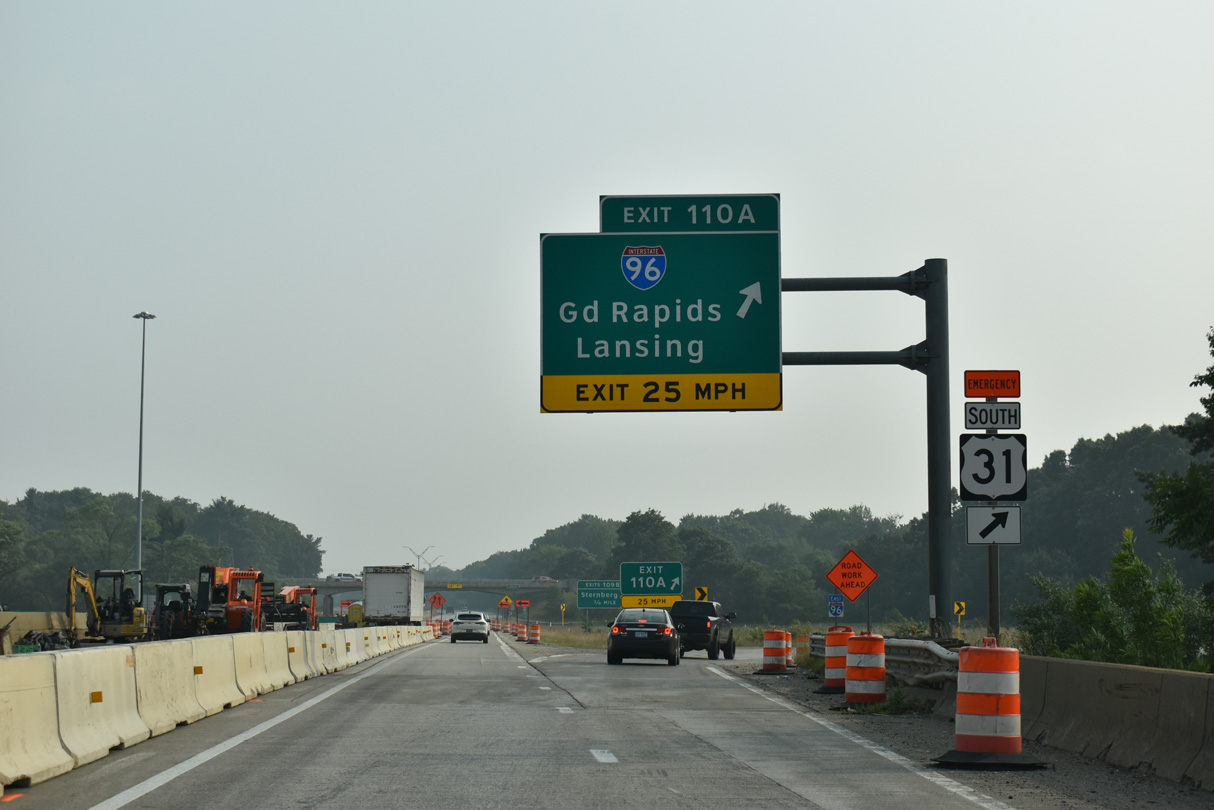
U.S. 31 traverses an area of wetlands associated with Black Creek on the mile preceding Exit 110 A to I-96 east. 07/18/26
East
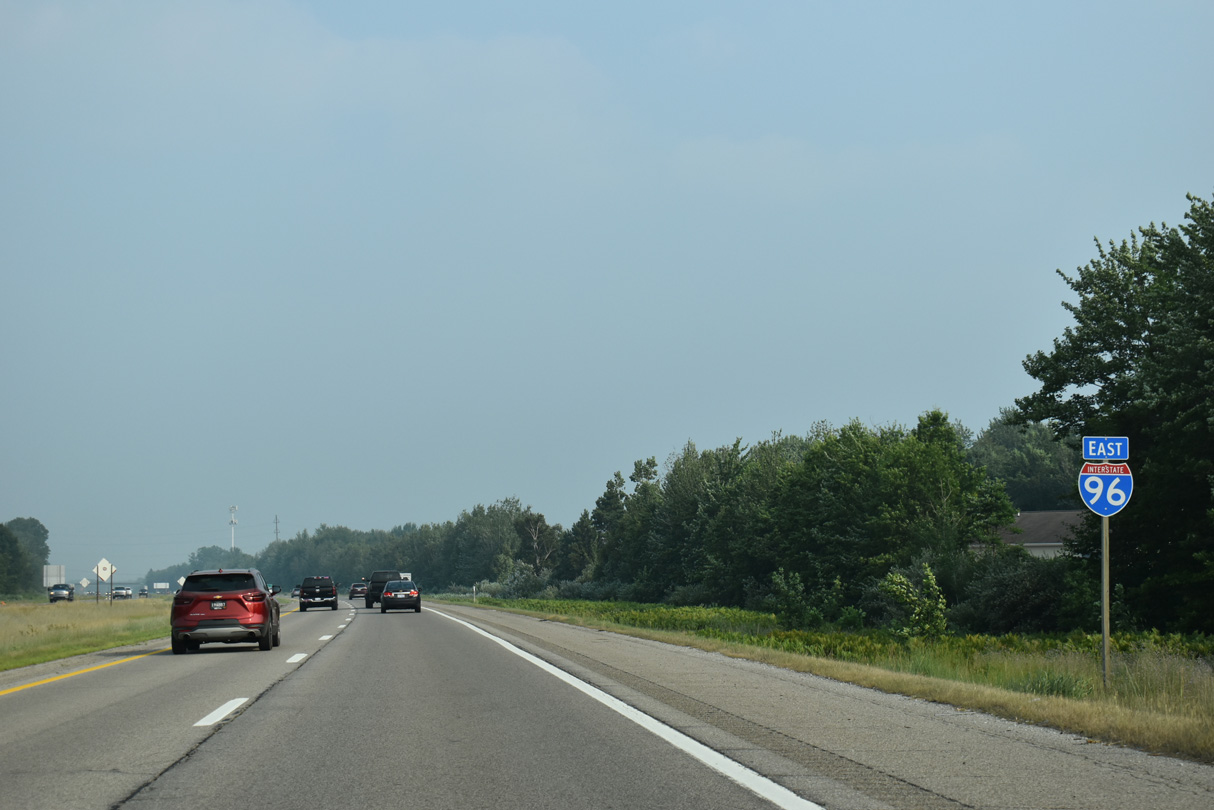
The first reassurance marker for Interstate 96 east appears after Exit 1 C to Hile Road. 07/18/26
West End – Past Views
Past Views Gallery (Tap to Expand / Collapse Section)
South at
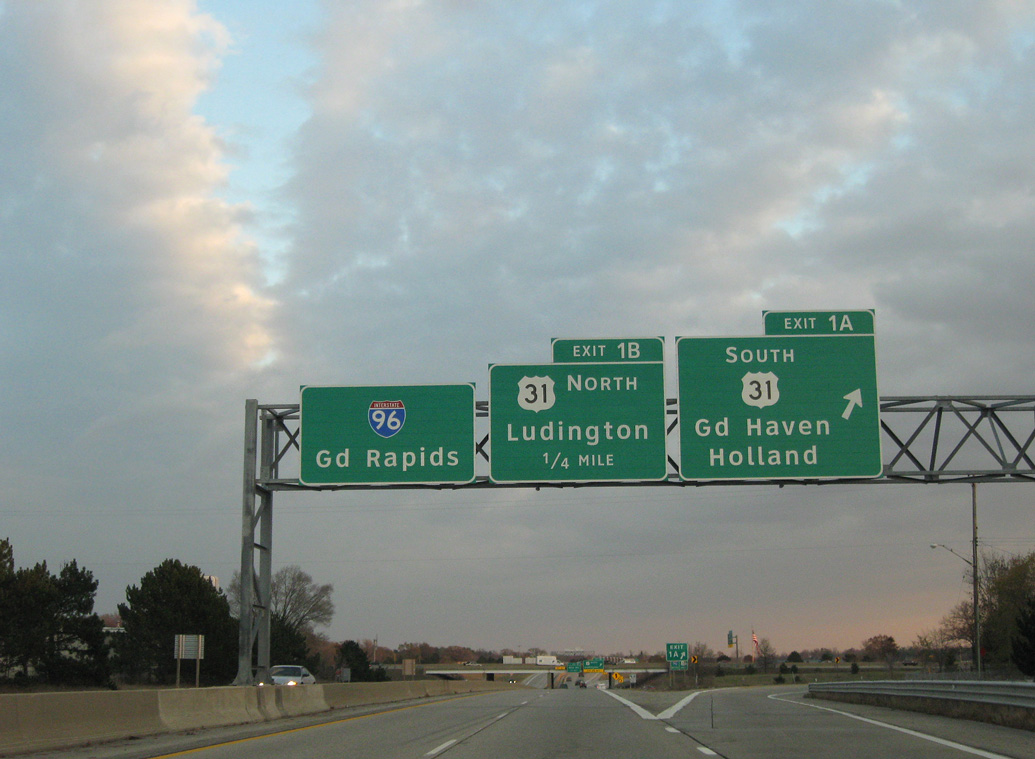
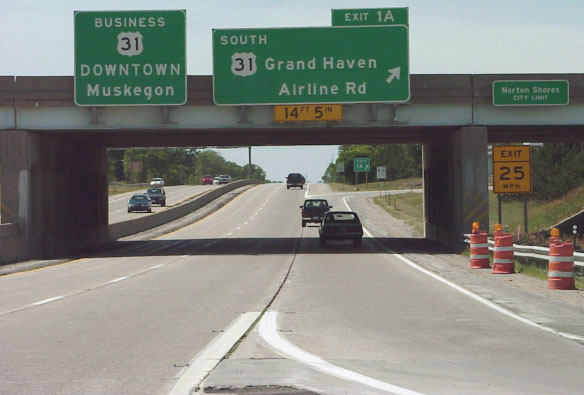
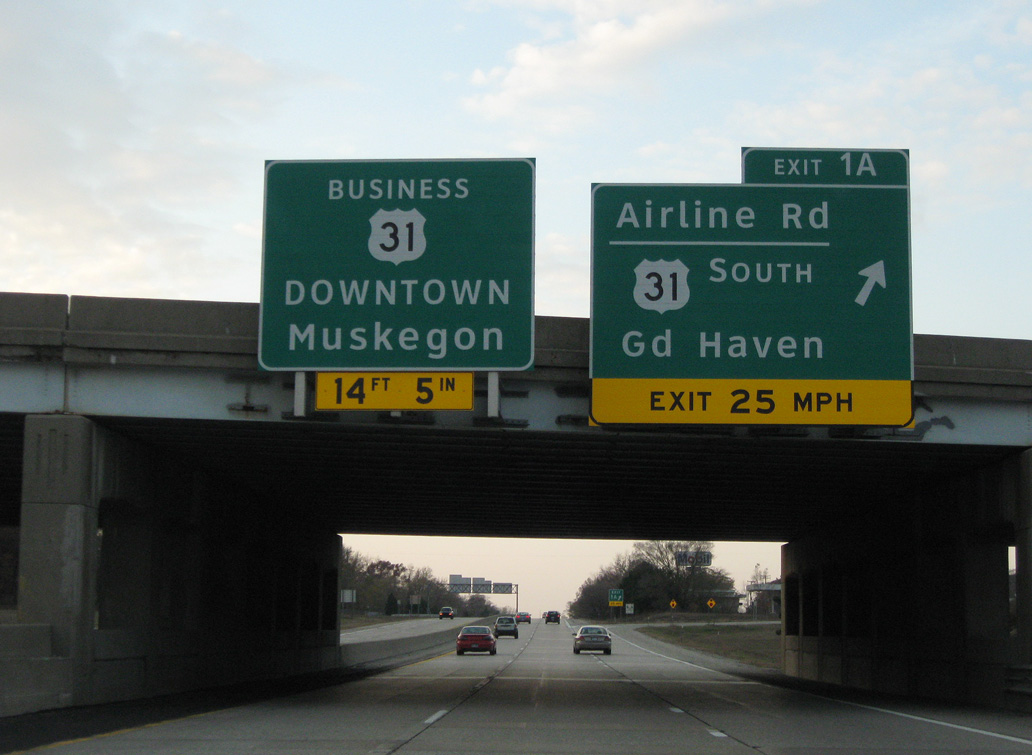
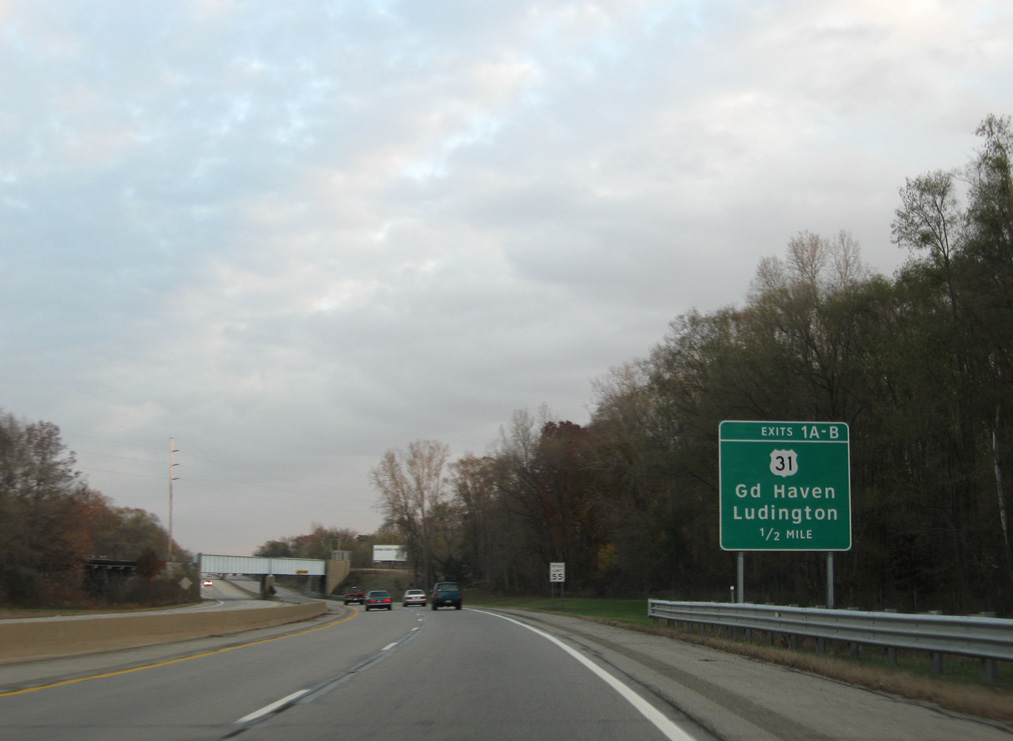
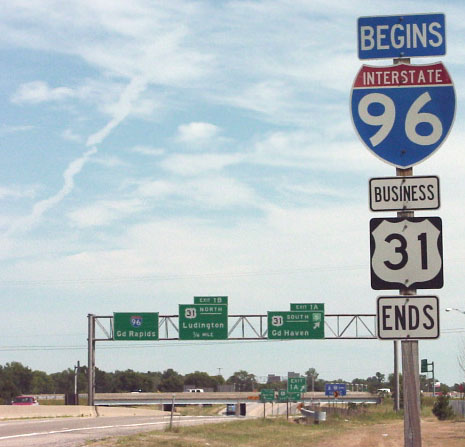
Exit 1 A departs U.S. 31 Business south beyond the Airport Road overpass for U.S. 31 south to Holland. 11/05/09
West at
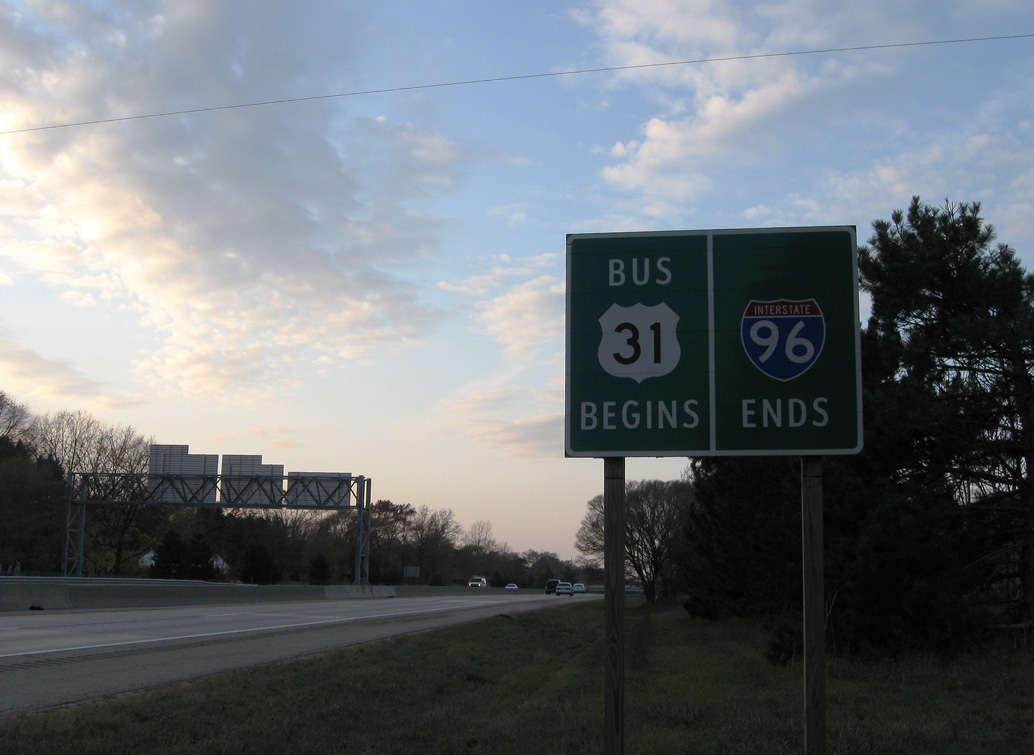
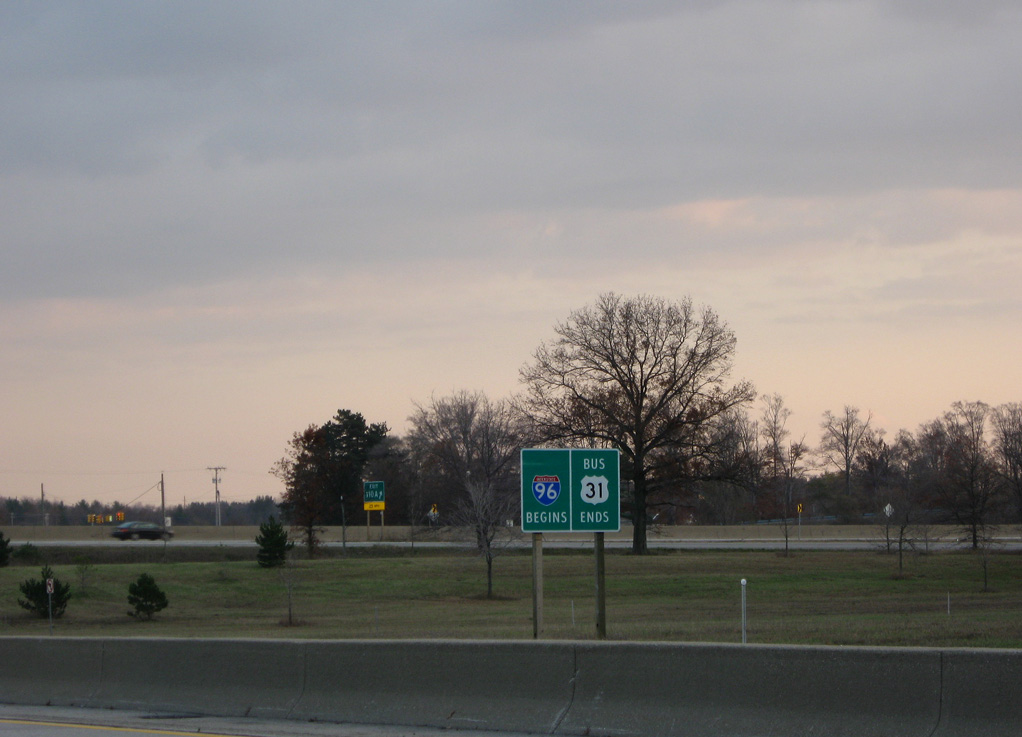
A previous end sign for Interstate 96. 11/05/09