
Interstate 680 California
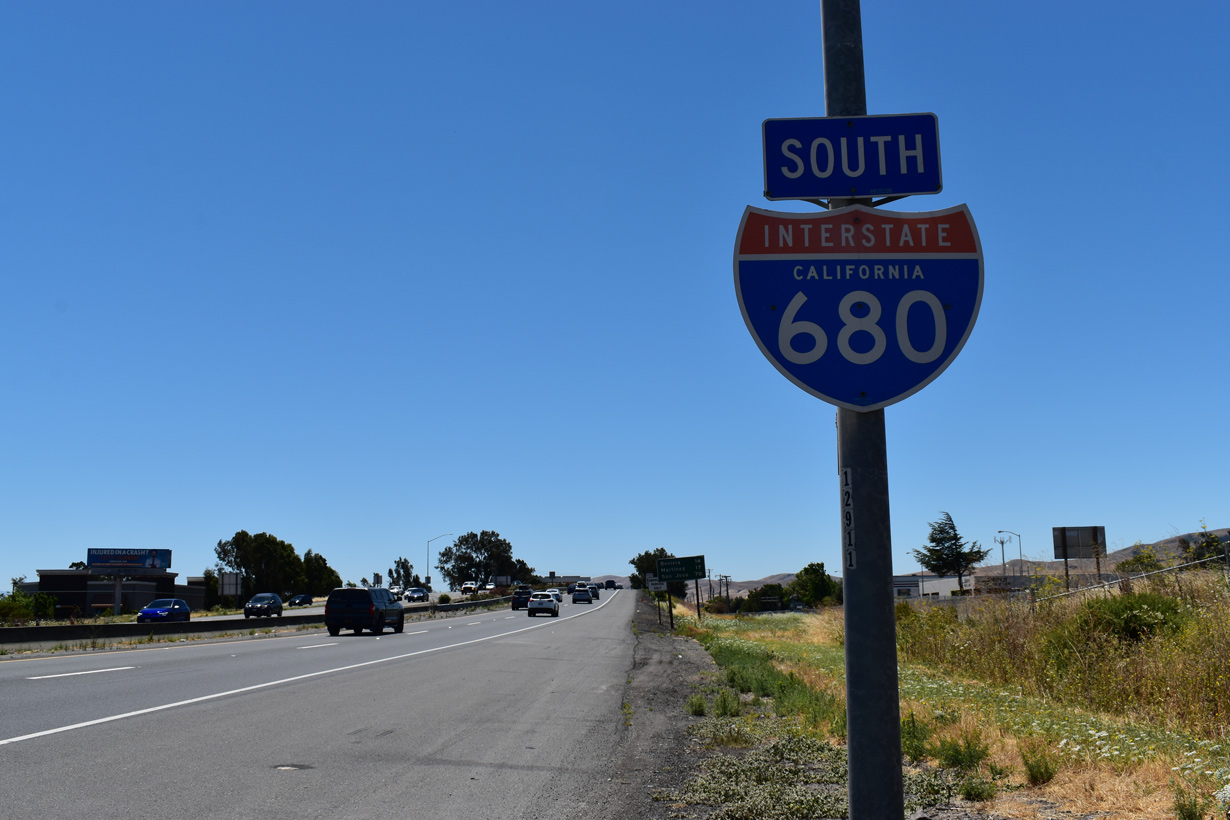
Overview
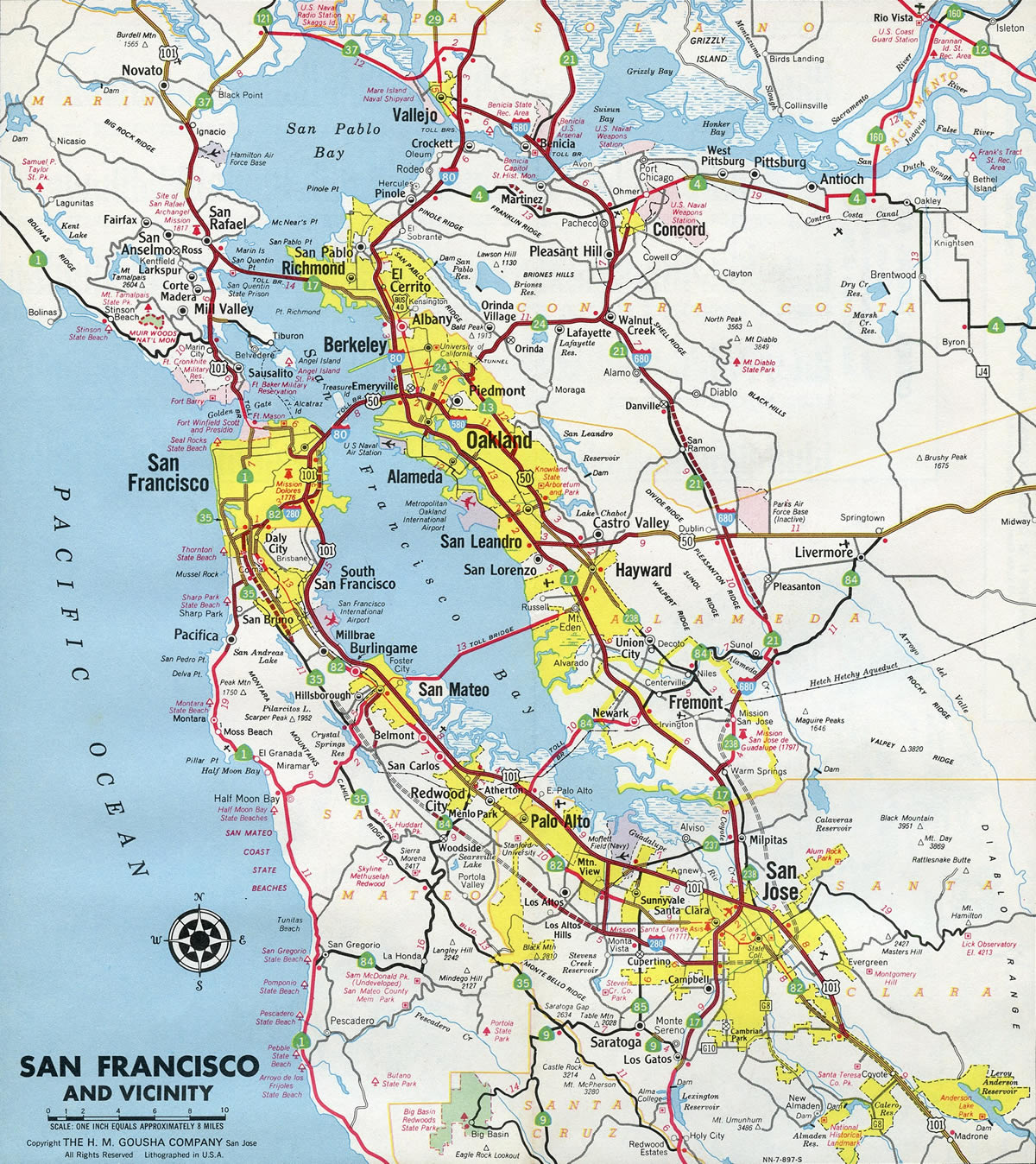
One of the busiest freeways in the East Bay, Interstate 680 connects the communities of Benicia, Concord, Walnut Creek, Danville, Sunol and San Jose. The section between Interstate 580 and the Benicia Bridge underwent extensive reconstruction through the late 1990s, resulting in an eight to ten lane freeway with carpool lanes.
Additionally Interstate 680 through the Sunol Grade was improved in 2001-2003. As part of the eight lane expansion, two bridges that were constructed in part for the planned interchange with SR 238 (Hayward Bypass/Mission Freeway) were removed.
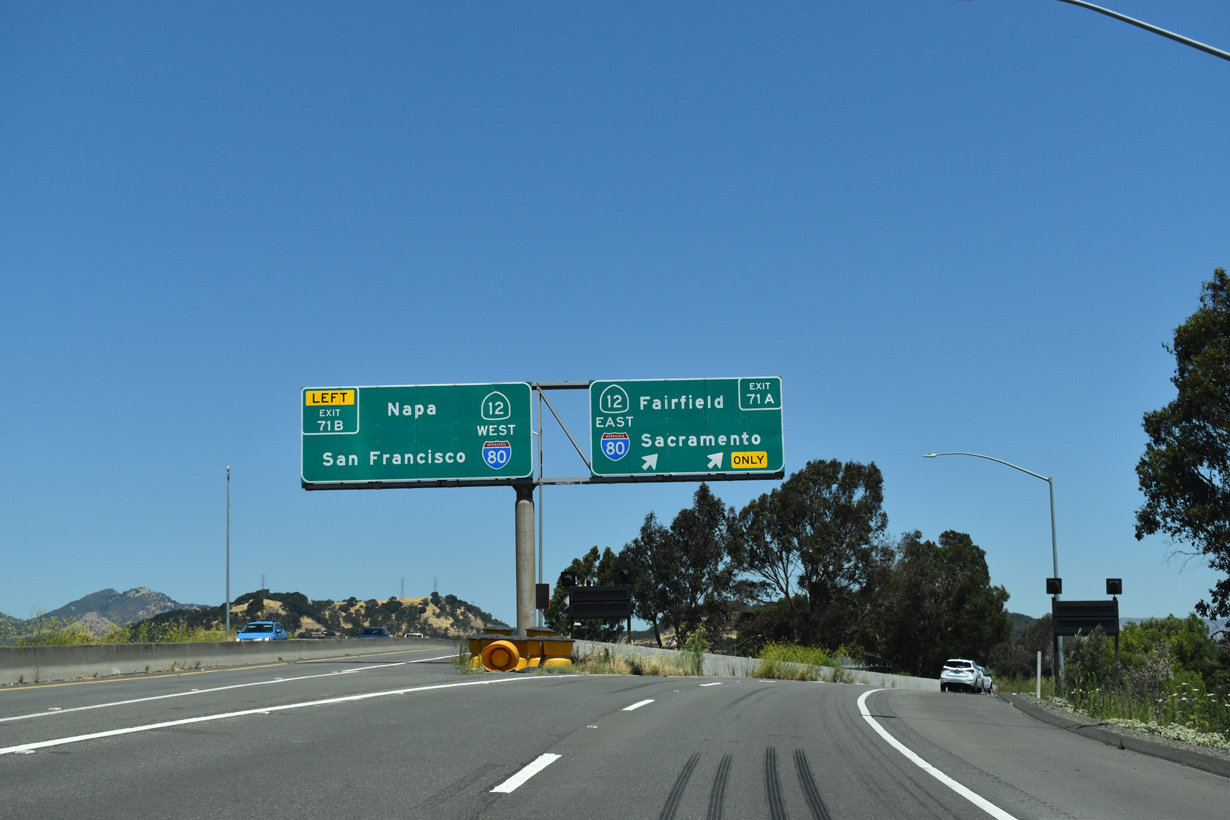
The Solano I-80 I-680 SR 12 Interchange project at Fairfield addressed weaving traffic concerns, improved connectivity and expanded capacity. Work on the westbound connection from I-80 to SR 12 beyond I-680 was completed in 2017 as part of Package 1. Package 2A, the second of seven, replaced the single lane ramp from SR 12 east onto I-80 with a two lane bridge structure with accommodations for future project phases. A slip ramp from SR 12 to Green Valley Road ties into a braided off-ramp from I-80 east to I-680. Package 2A was originally scheduled for completion by Fall 2022.
Mileage by State
| California | 70.49 mi |
Data Sources
December 31, 2025 Interstate Route Log and Finders List
History
The Interstate 680 corridor was previously part of California State Route 21. Construction of the freeway gradually overtook the state route between San Jose and Fairfield in the 1960s and 1970s.
Prior to 1976, the northern most extent of Interstate 680 turned west from Benicia to I-80 at Vallejo. This changed with both the establishment of Interstate 780 along the former western leg to Vallejo and the extension of I-680 north over what was the remaining section of SR 21 between Benicia and I-80 at Coredlia.
The 1.2 mile long, Benicia-Martinez deck-truss Bridge over the Sacramento-San Joaquin River Delta was augmented with a parallel bridge. Started in 2001, this project involved the replacement of approaches for northbound traffic along with a new bridge structure located east of the original span. Following completion of the second span on August 25, 2007, the existing 1962 bridge was retrofitted to meet state seismic standards and restriped to carry southbound traffic. With the completion of the $1.2 billion project, the regular congestion that occurred as part of the reduced lanes, toll plazas, and the adjacent interchange with I-780 diminished (MTC, 2026).
North End 
 ‐ Fairfield, CA
 North at
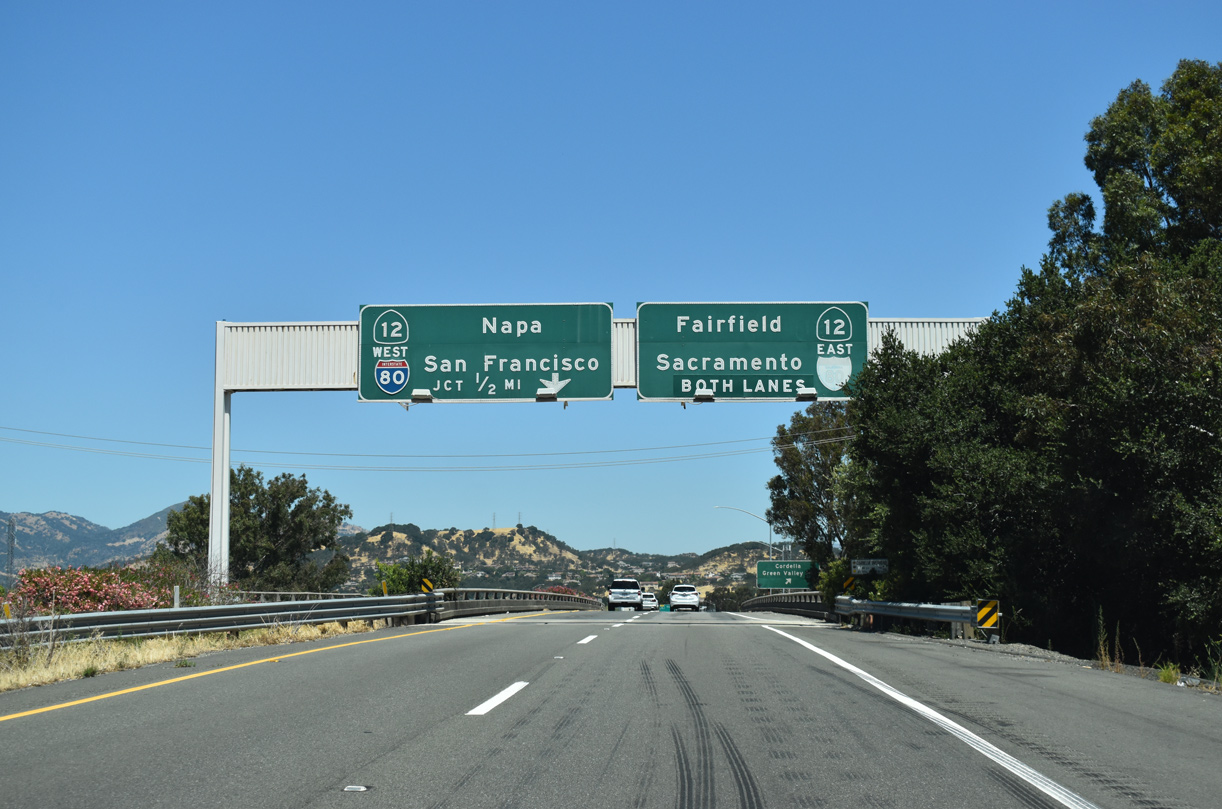
Interstate 680 enters the trumpet interchange with I-80/SR 12 just north of the Cordelia Road underpass at Cordelia. 07/15/23
West at
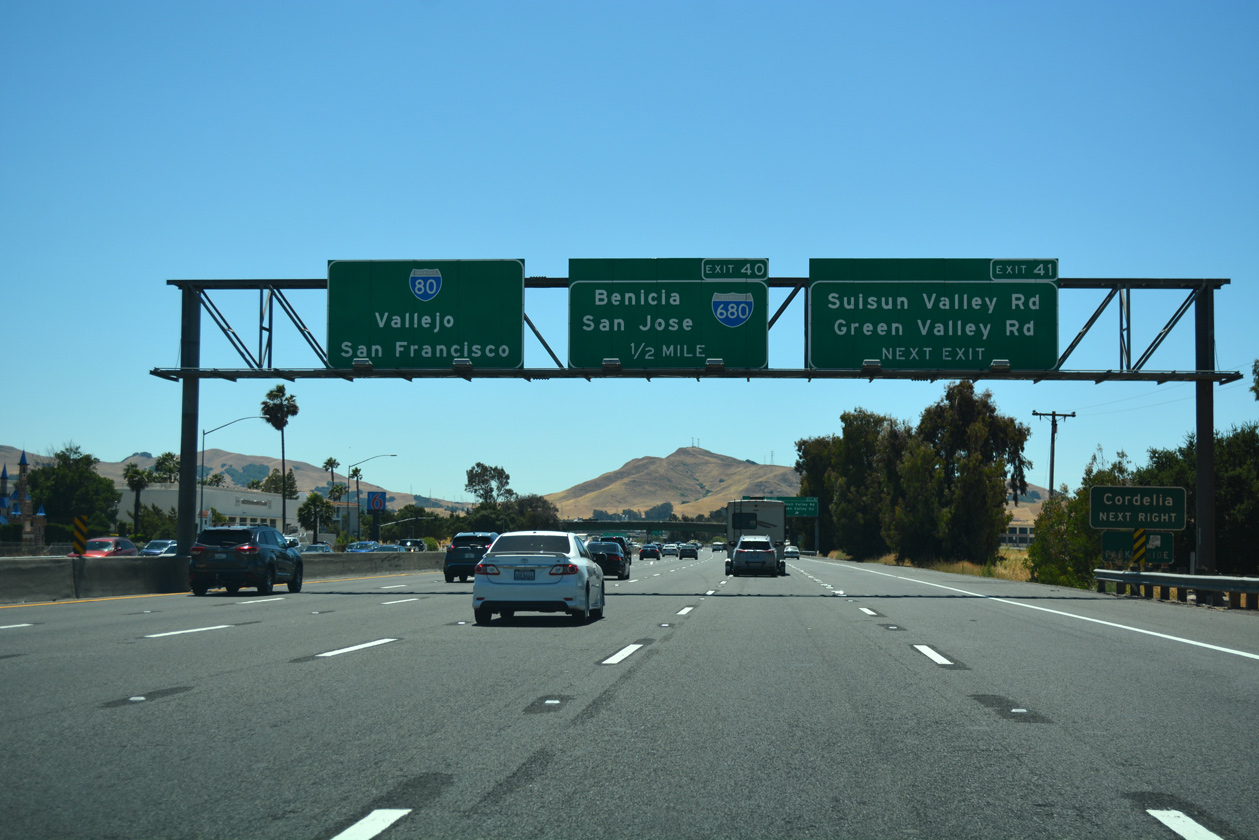
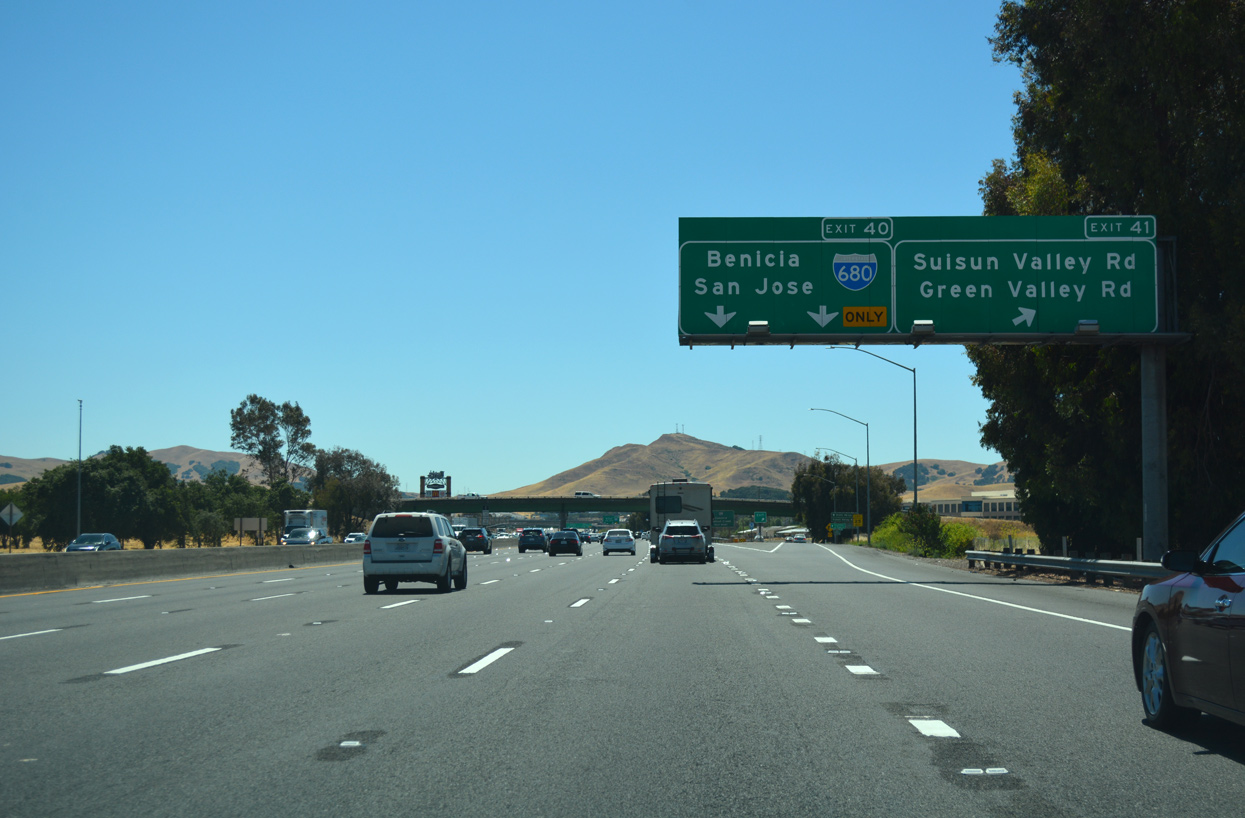
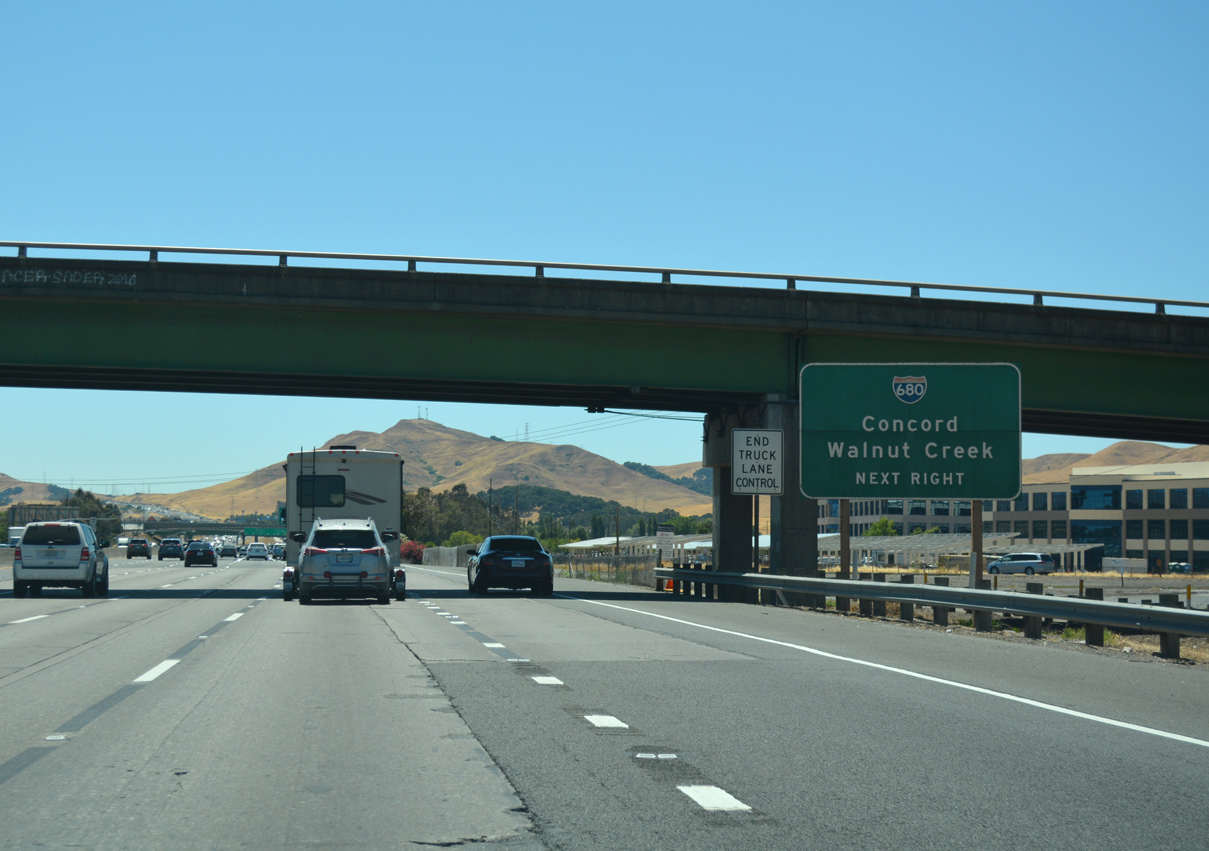
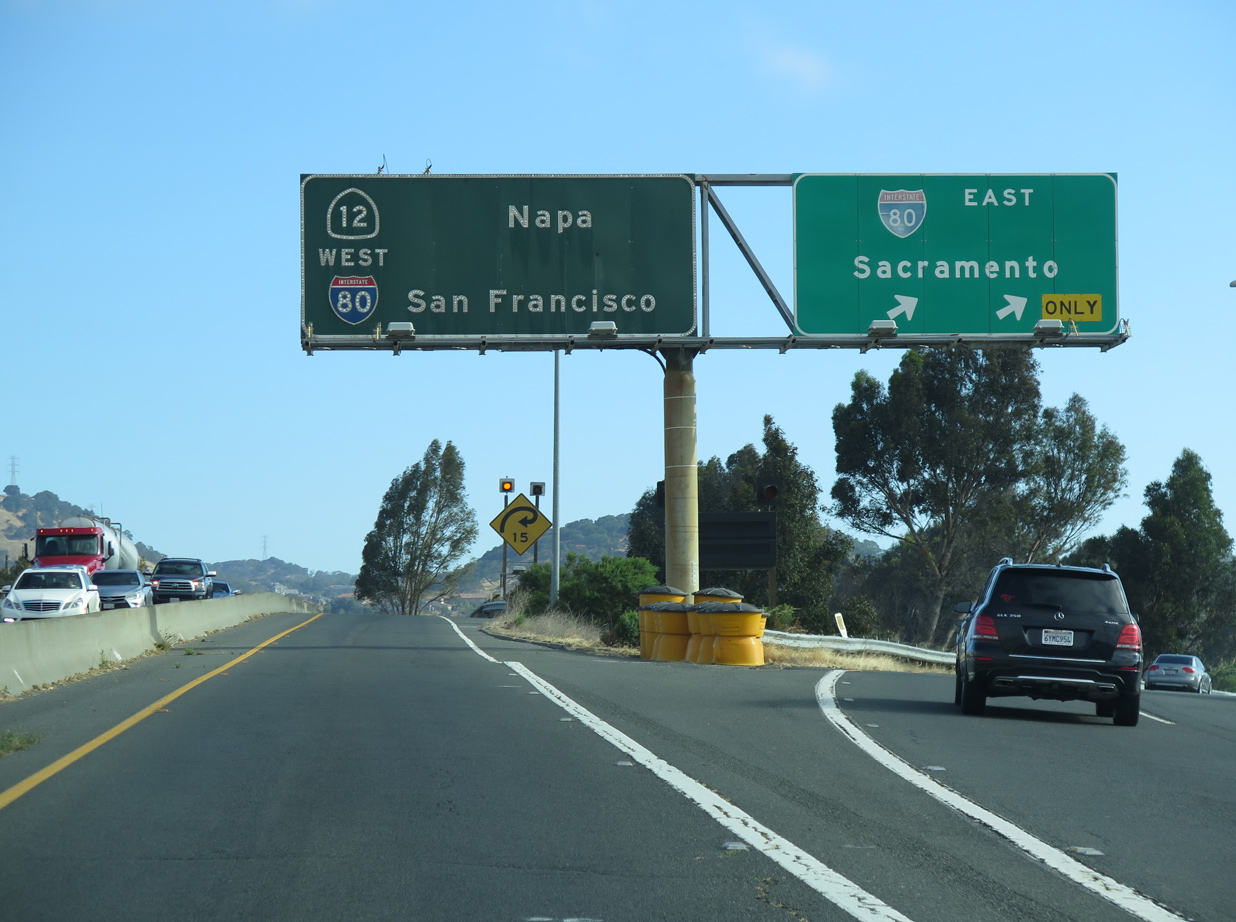
Exit 41 departs I-80/SR 12 west for areas of southwest Fairfield at Green Valley a half mile ahead of Interstate 680. 07/11/18
East at
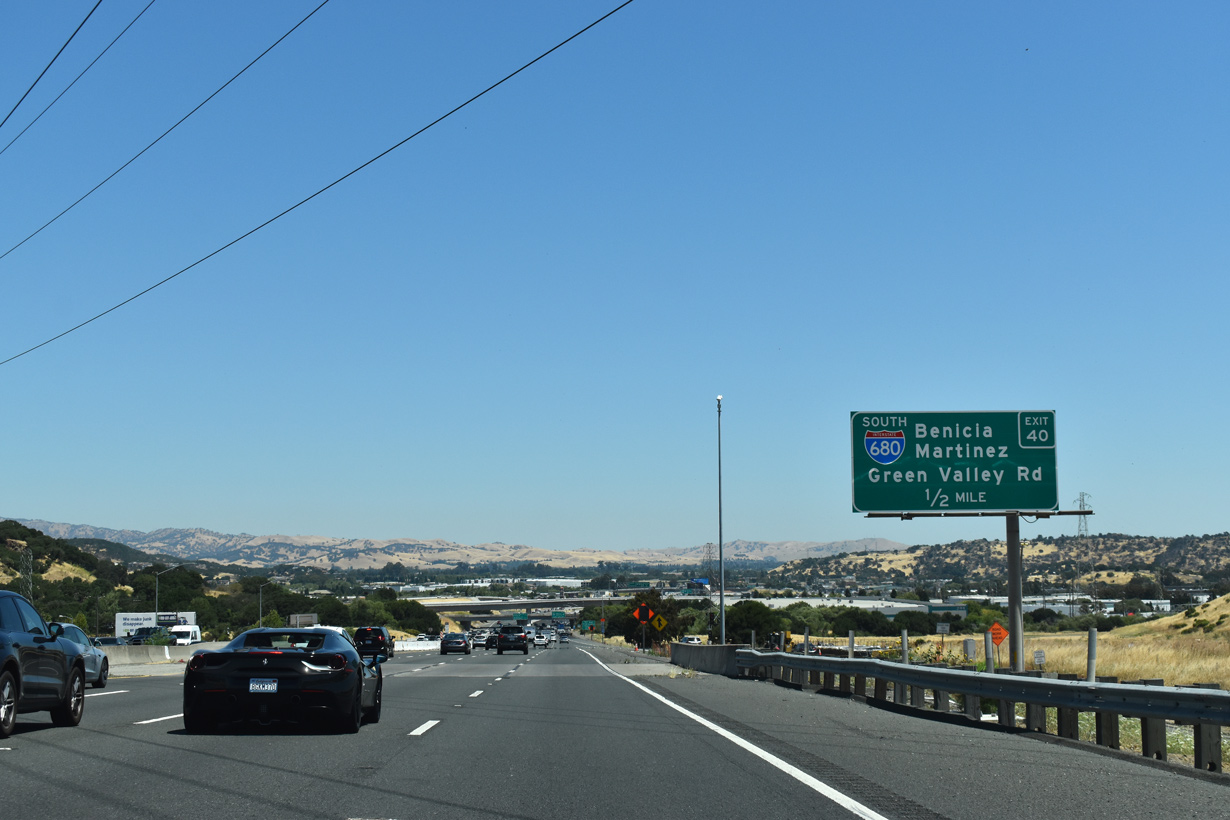
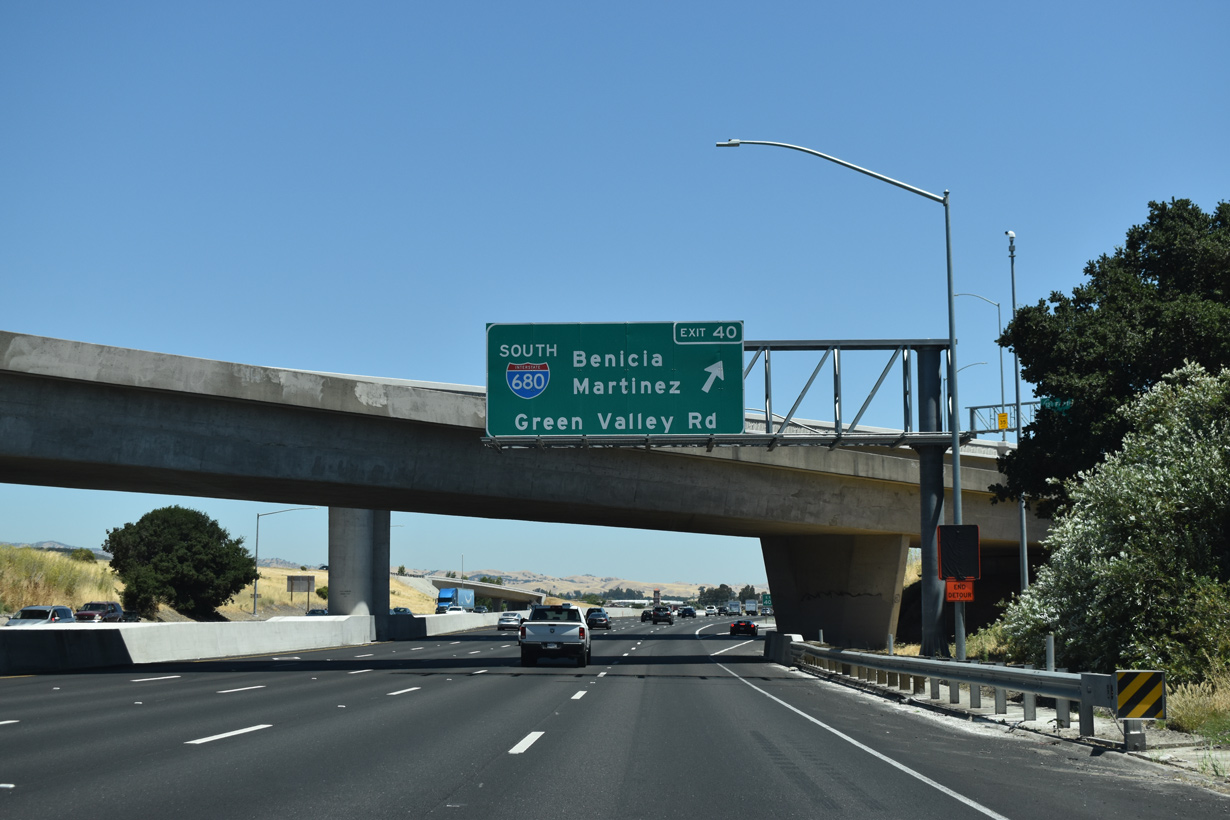
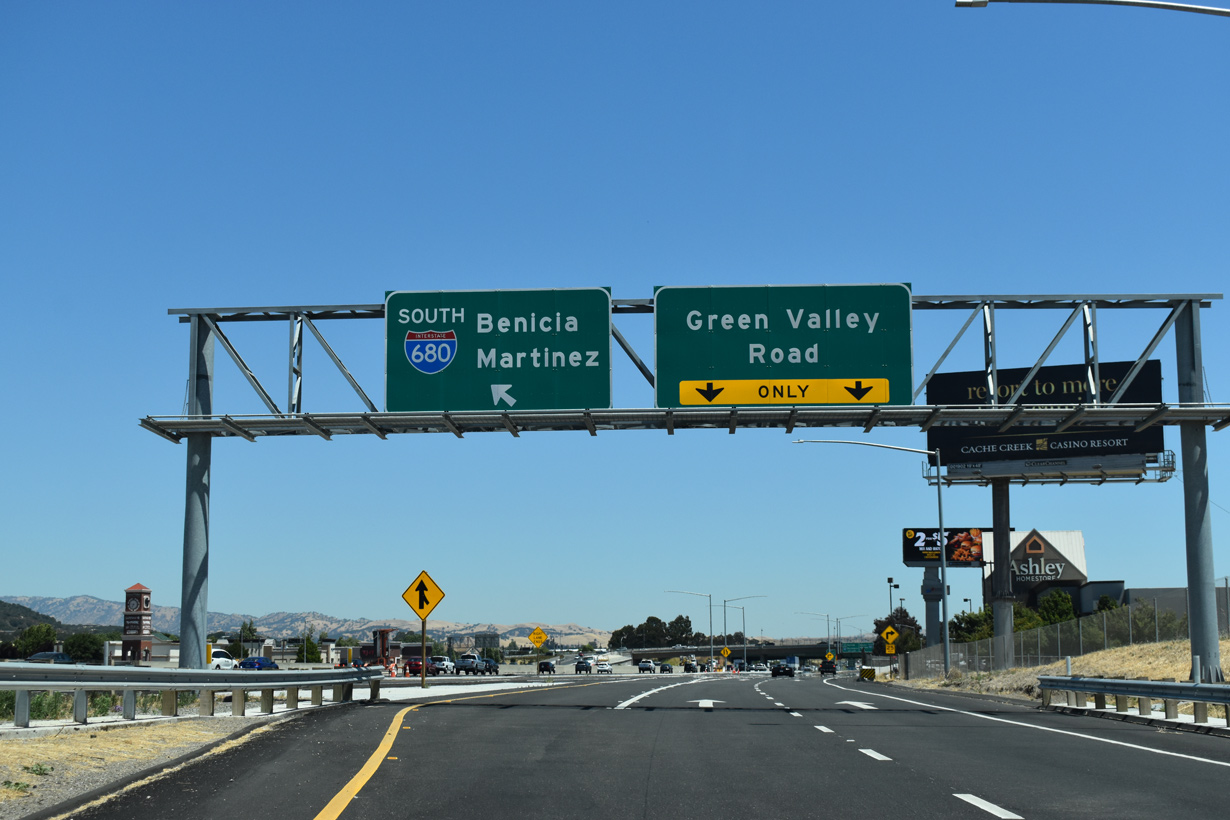
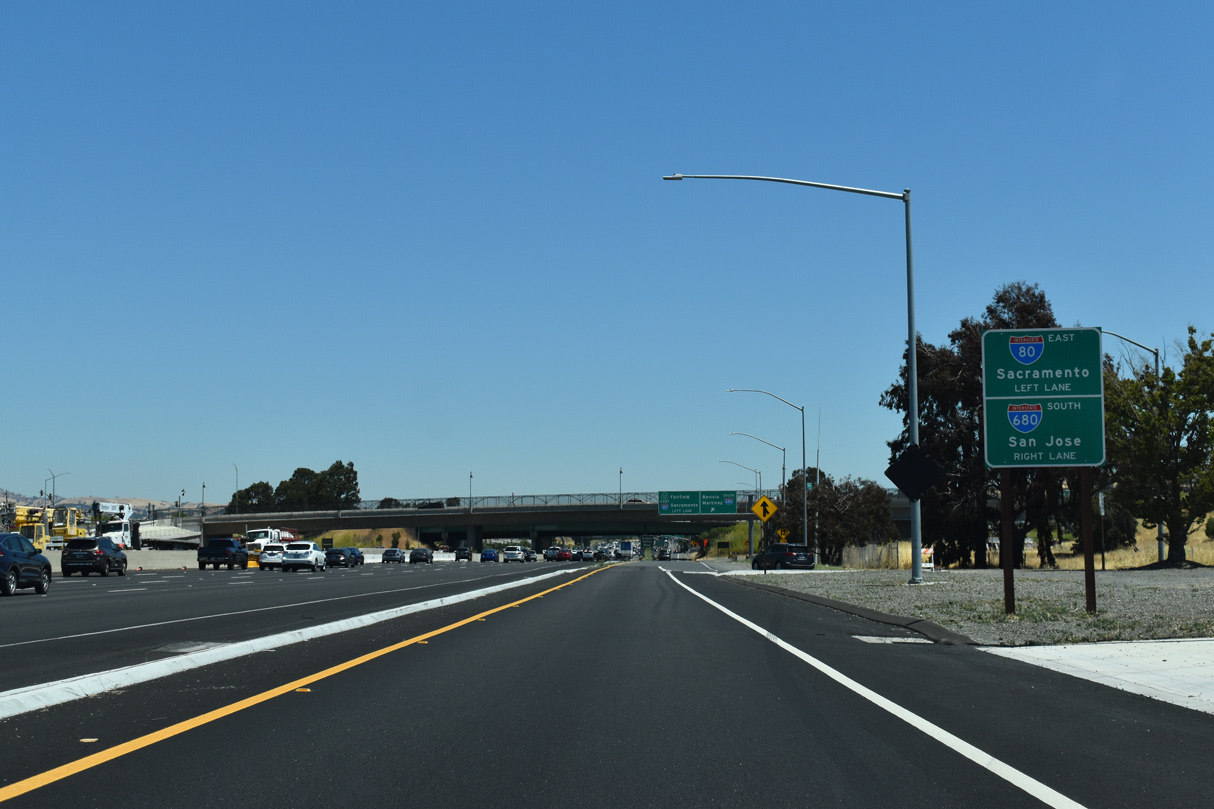
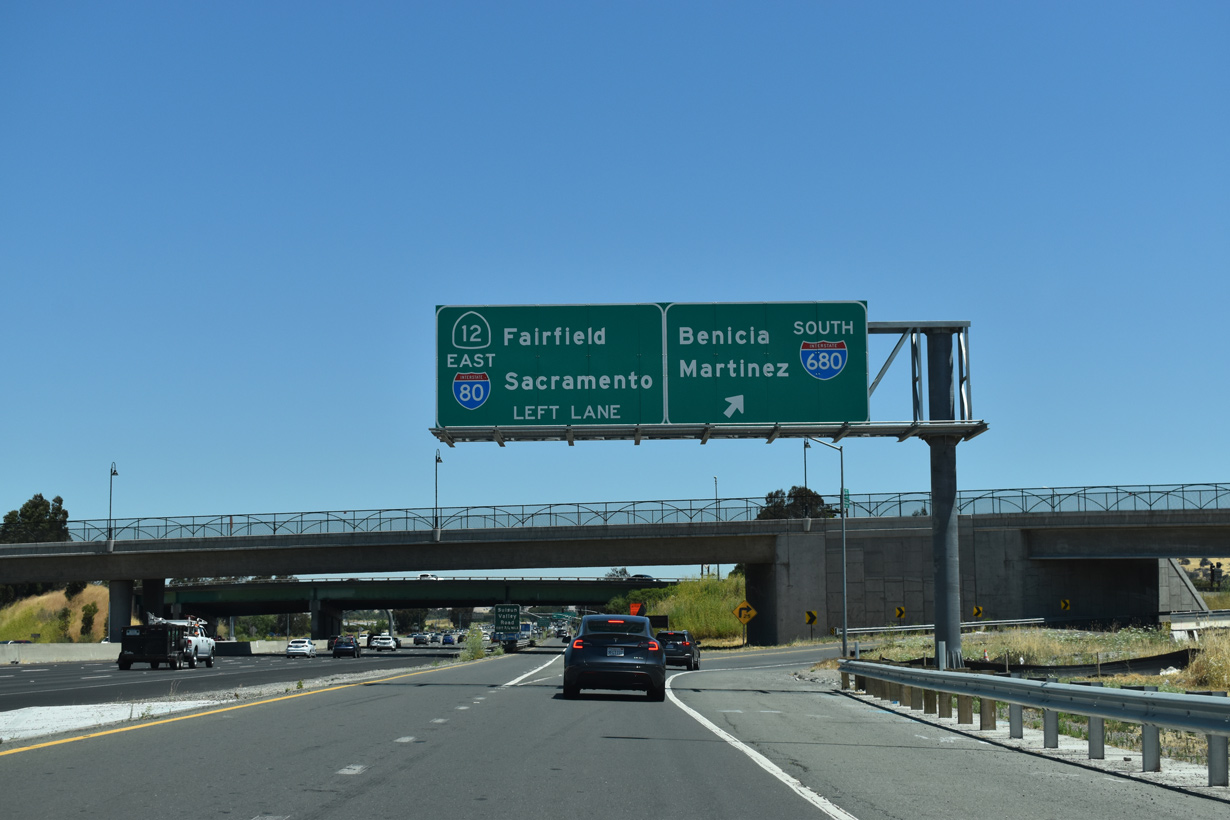
SR 12 combines with Interstate 80 eastbound at a wye interchange preceding the north end of I-680 at Green Valley in Fairfield. 07/15/23
North End – Past Views
Past Views Gallery (Tap to Expand / Collapse Section)
at
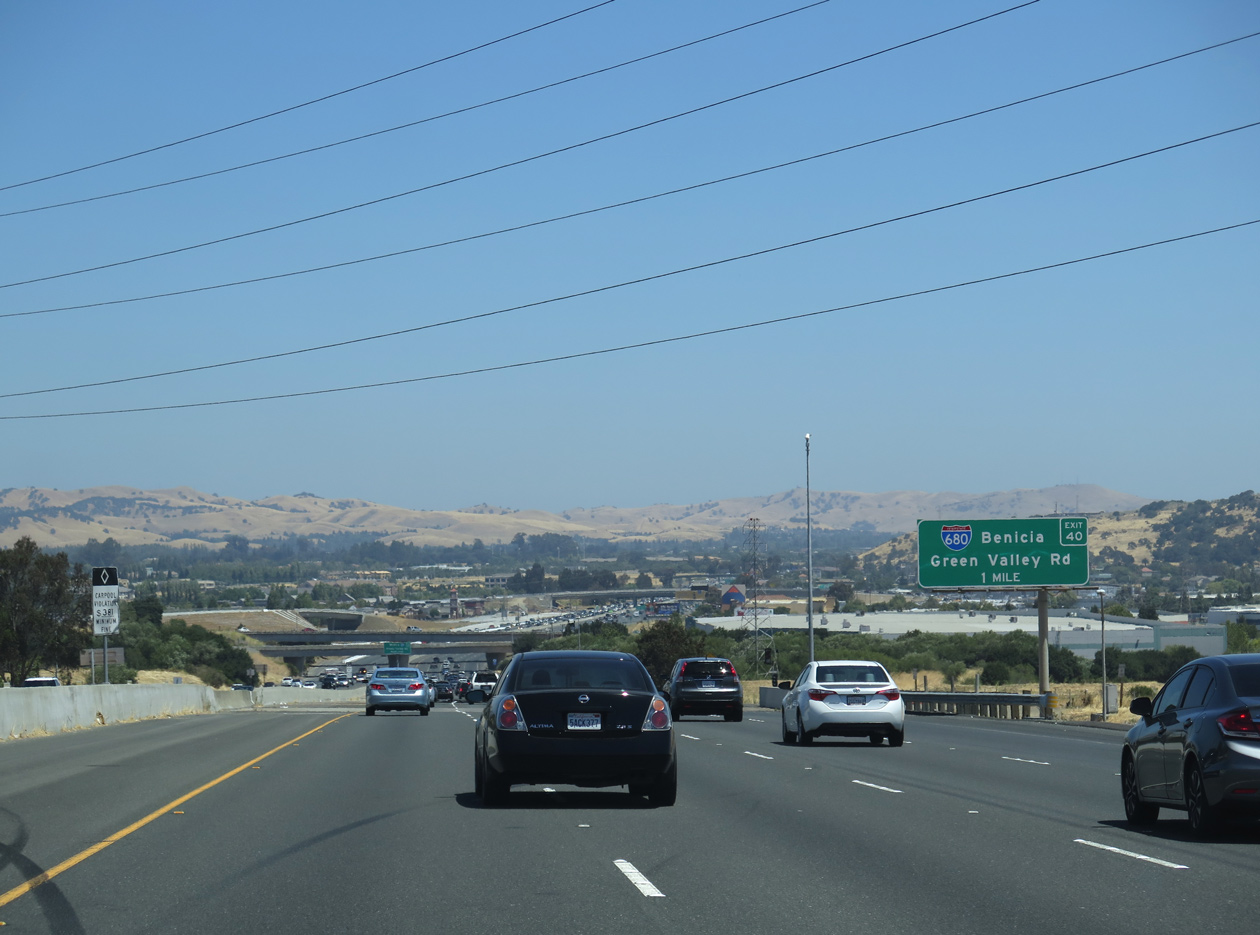
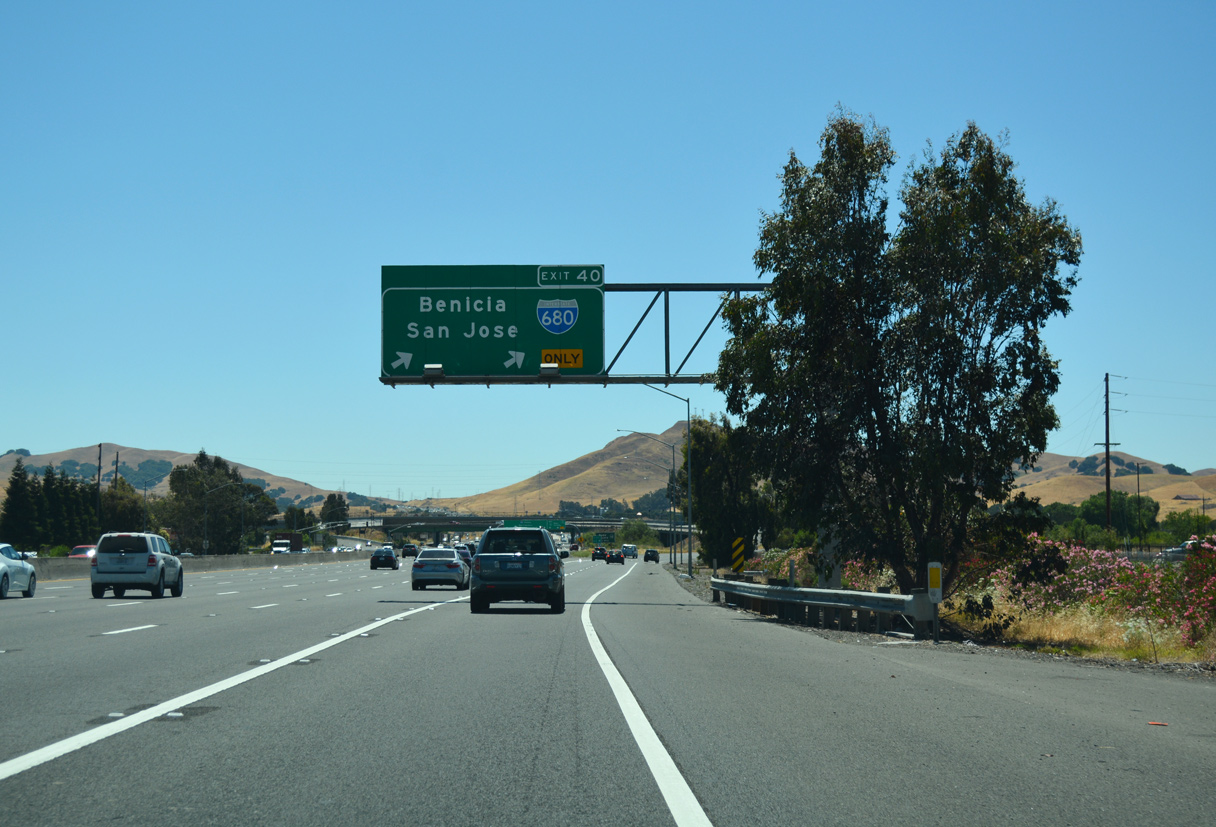
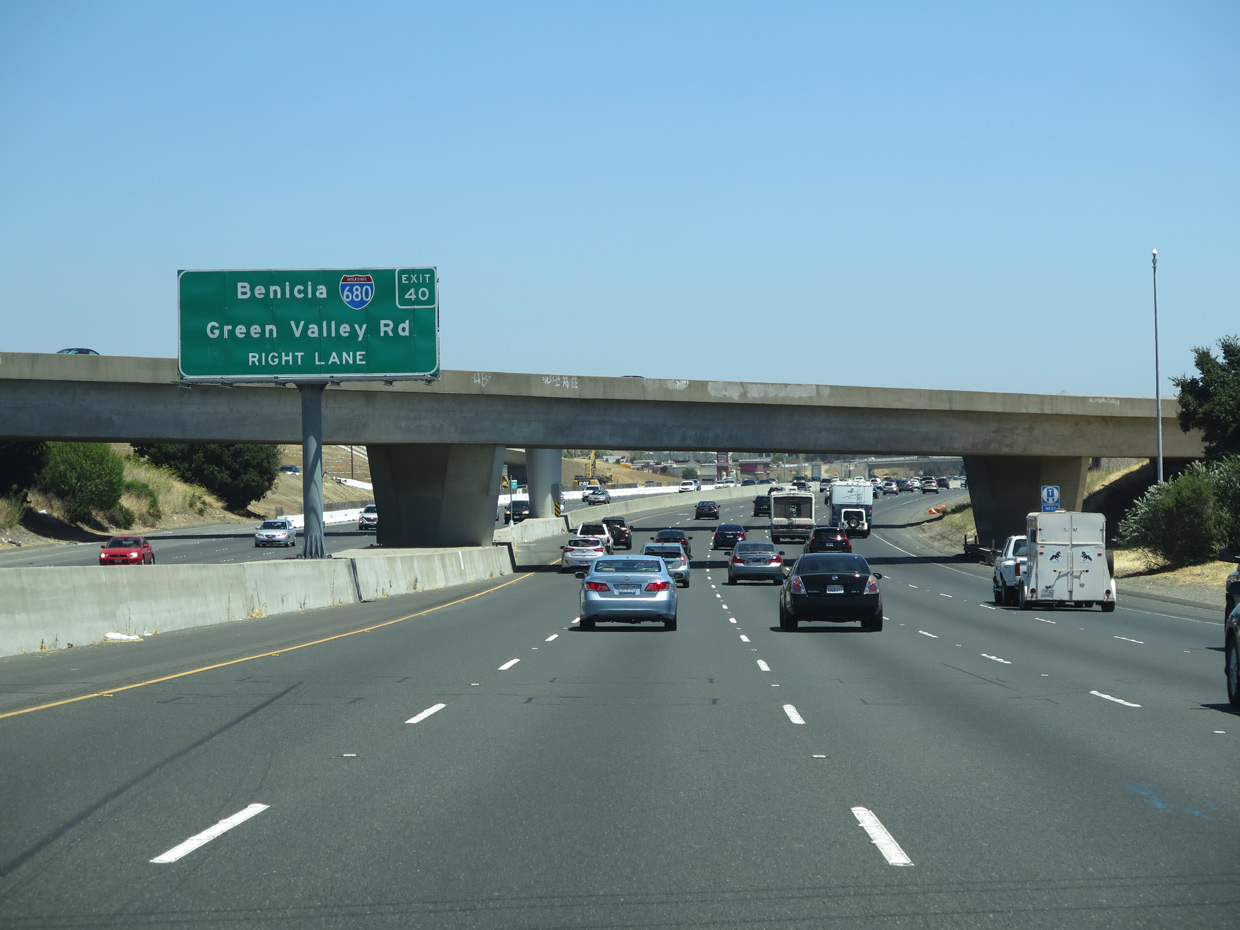
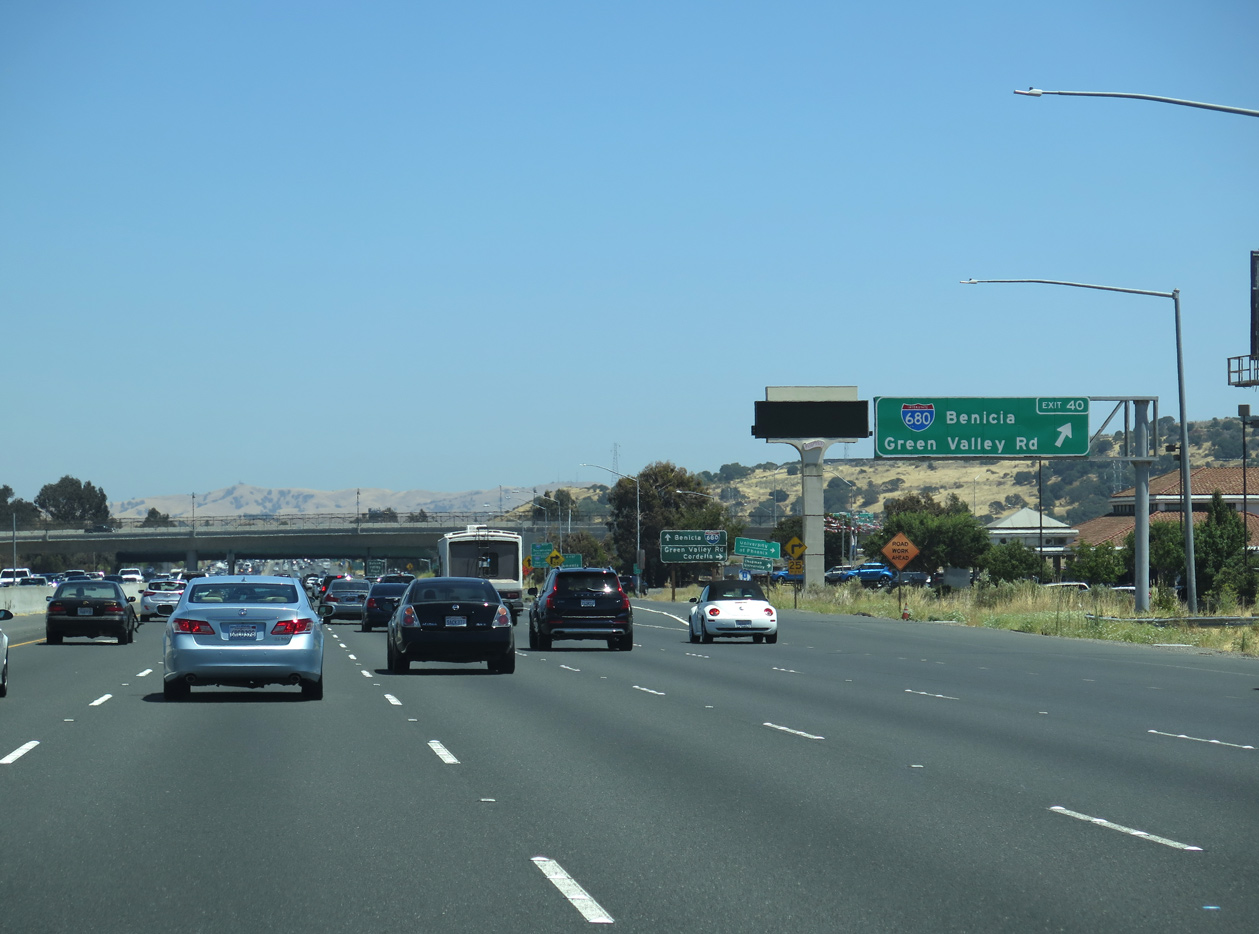
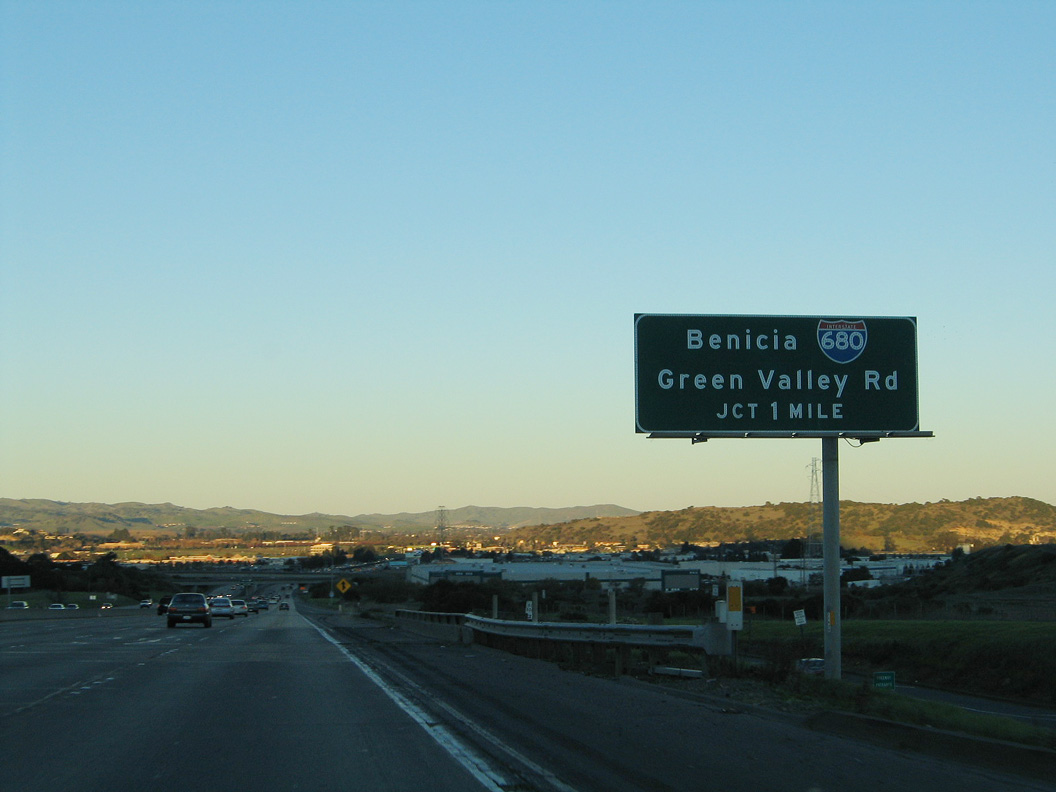
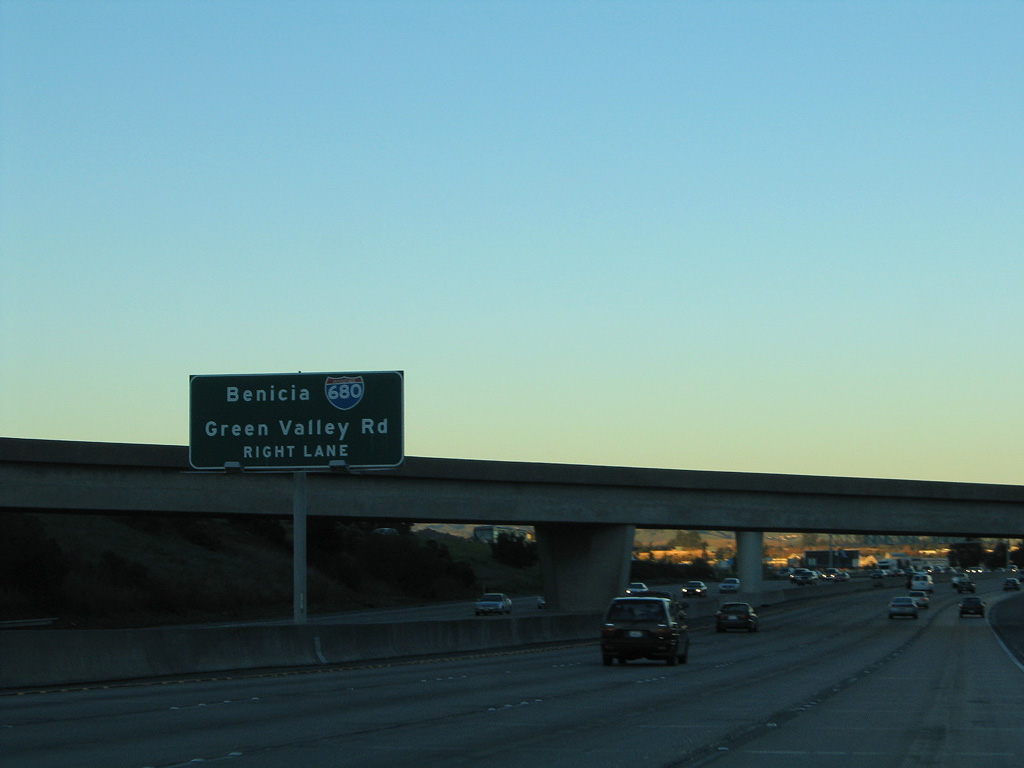
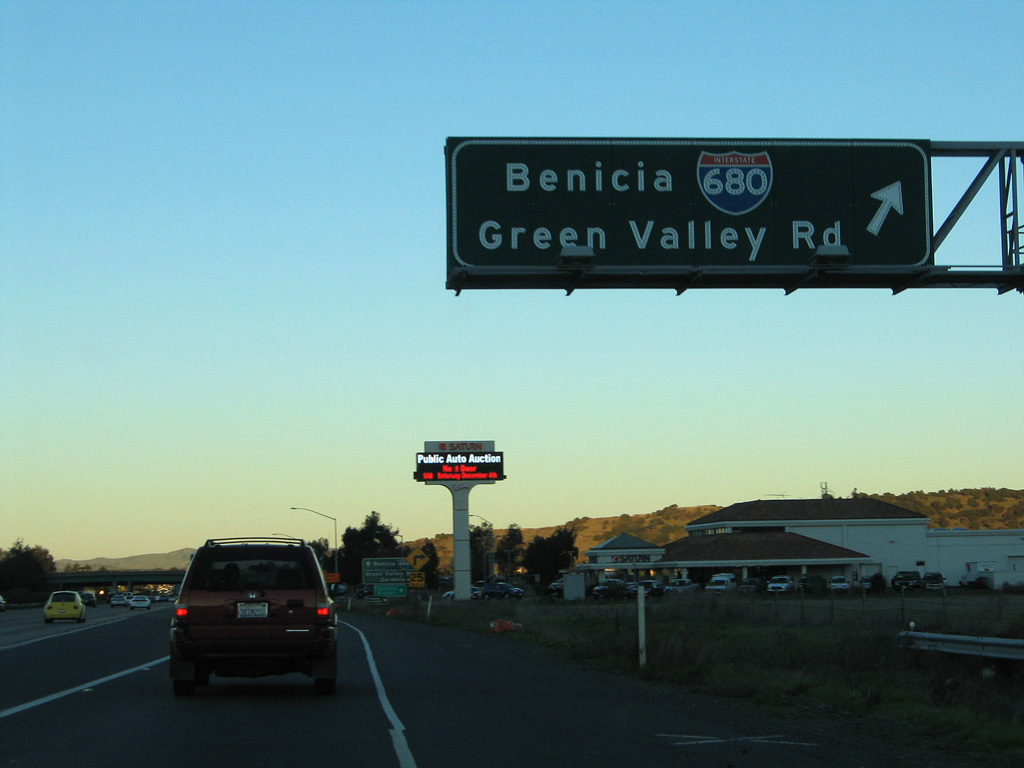
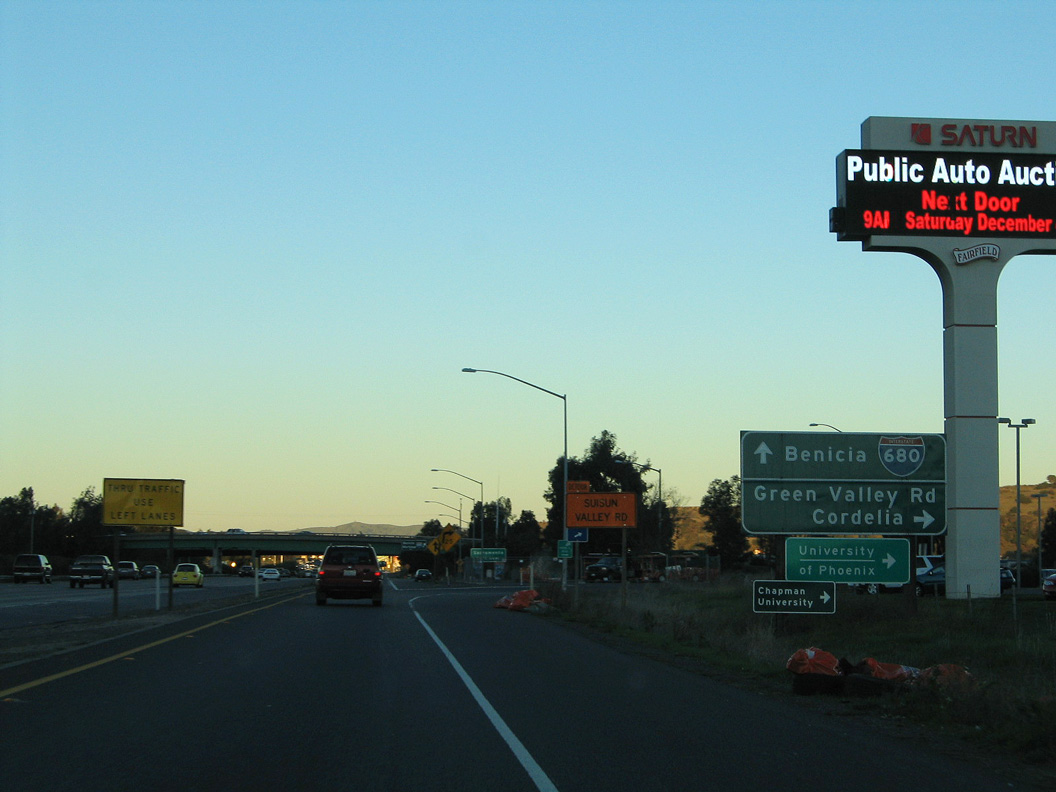
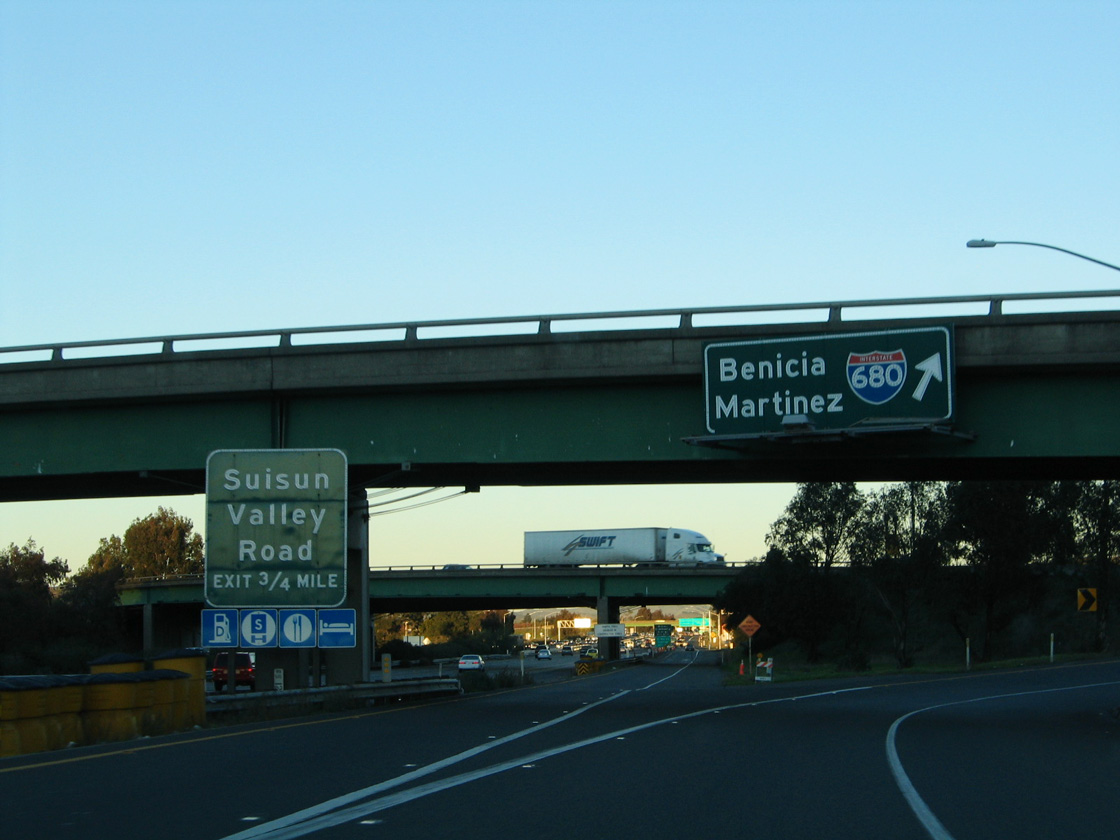
Prior to I-80/I-680/SR12 Interchange Project: Package 2A, Exit 40 departed just beyond the entrance ramp bringing SR 12 east onto the freeway. This resulted in a short weaving traffic pattern. 07/24/16
South End 
 ‐ San Jose, CA
South at
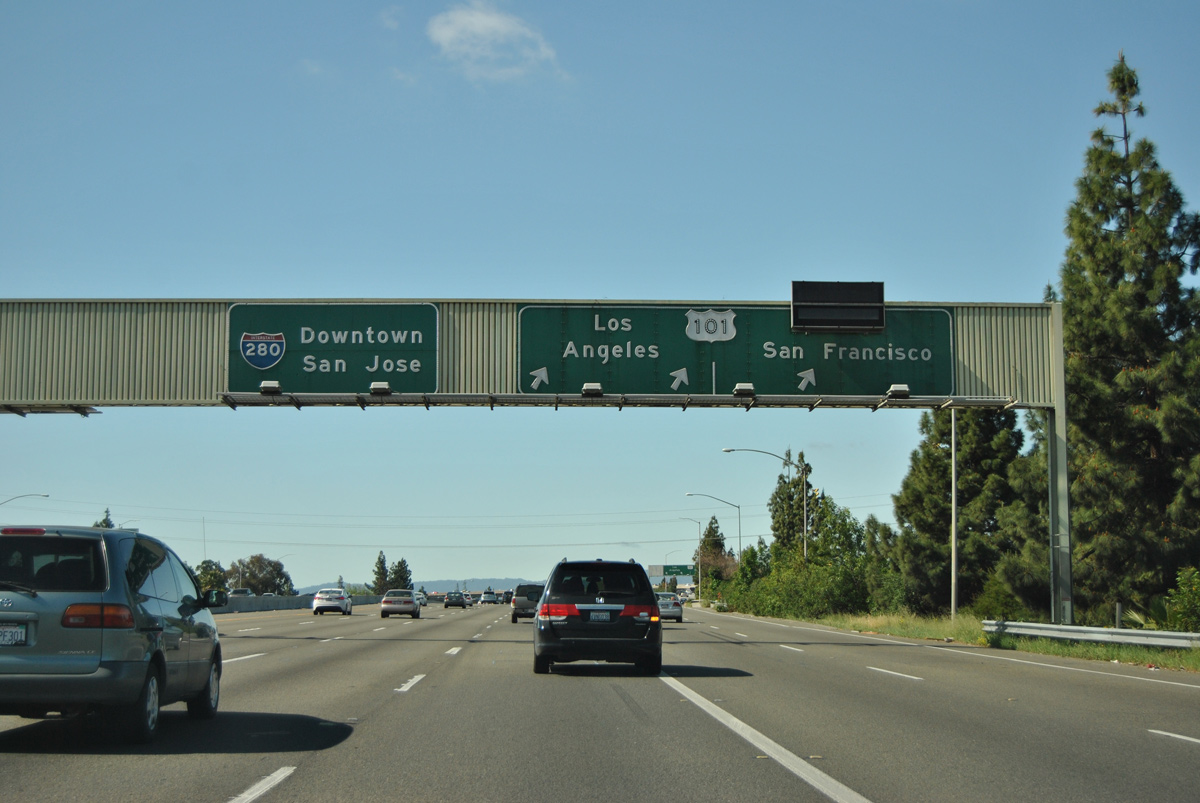
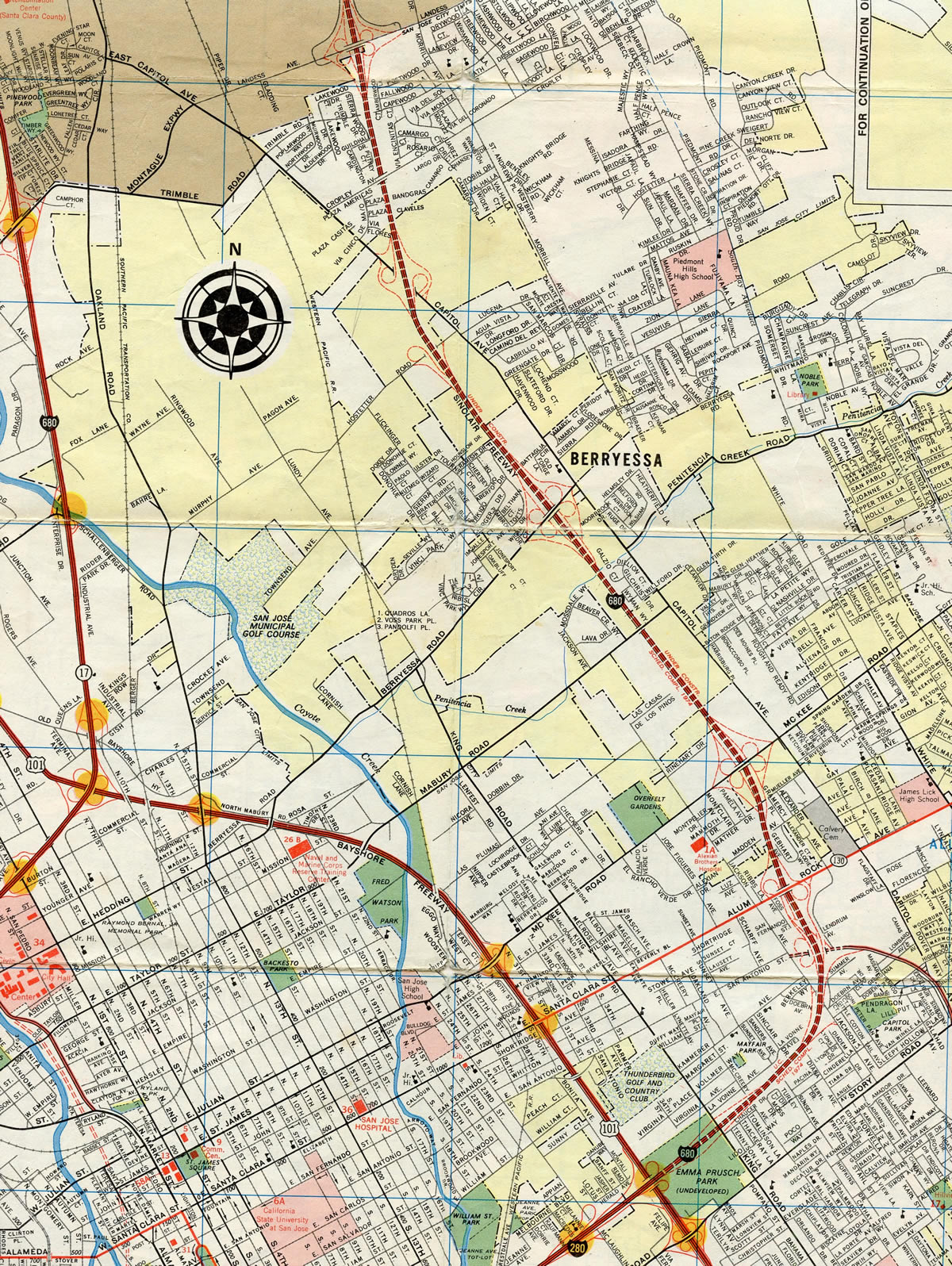
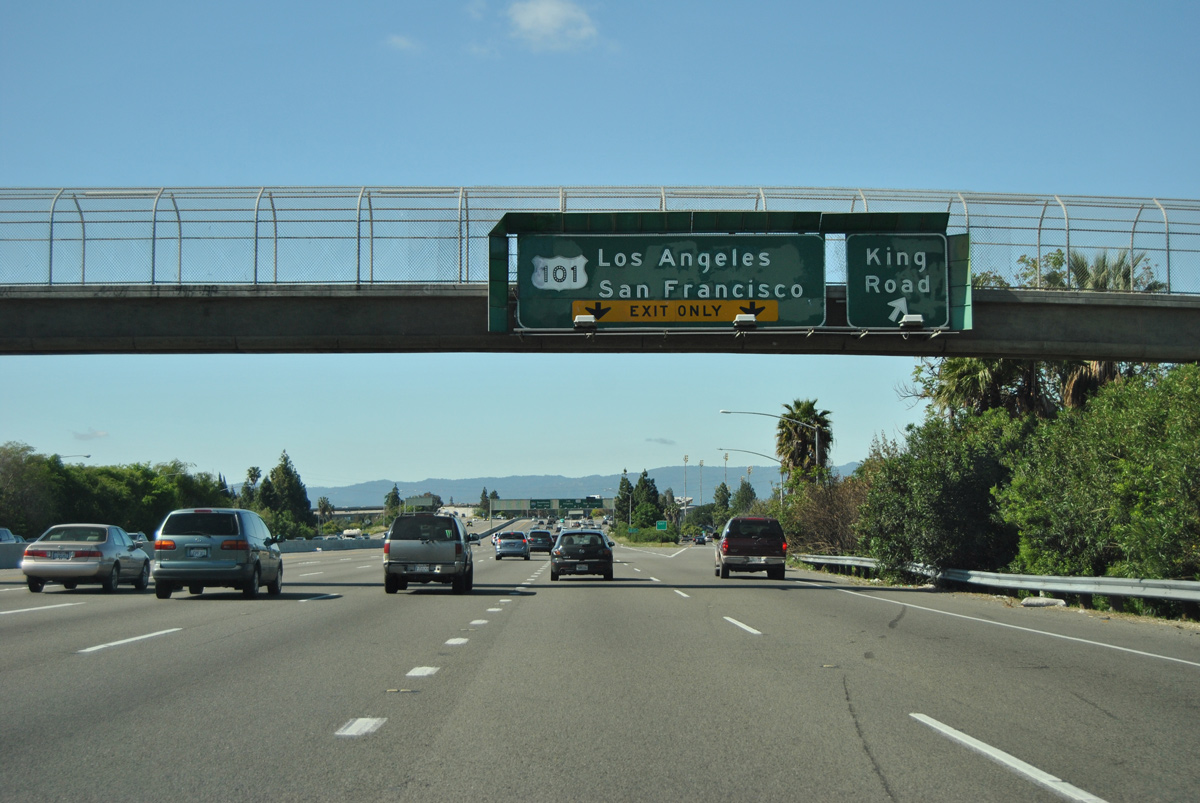
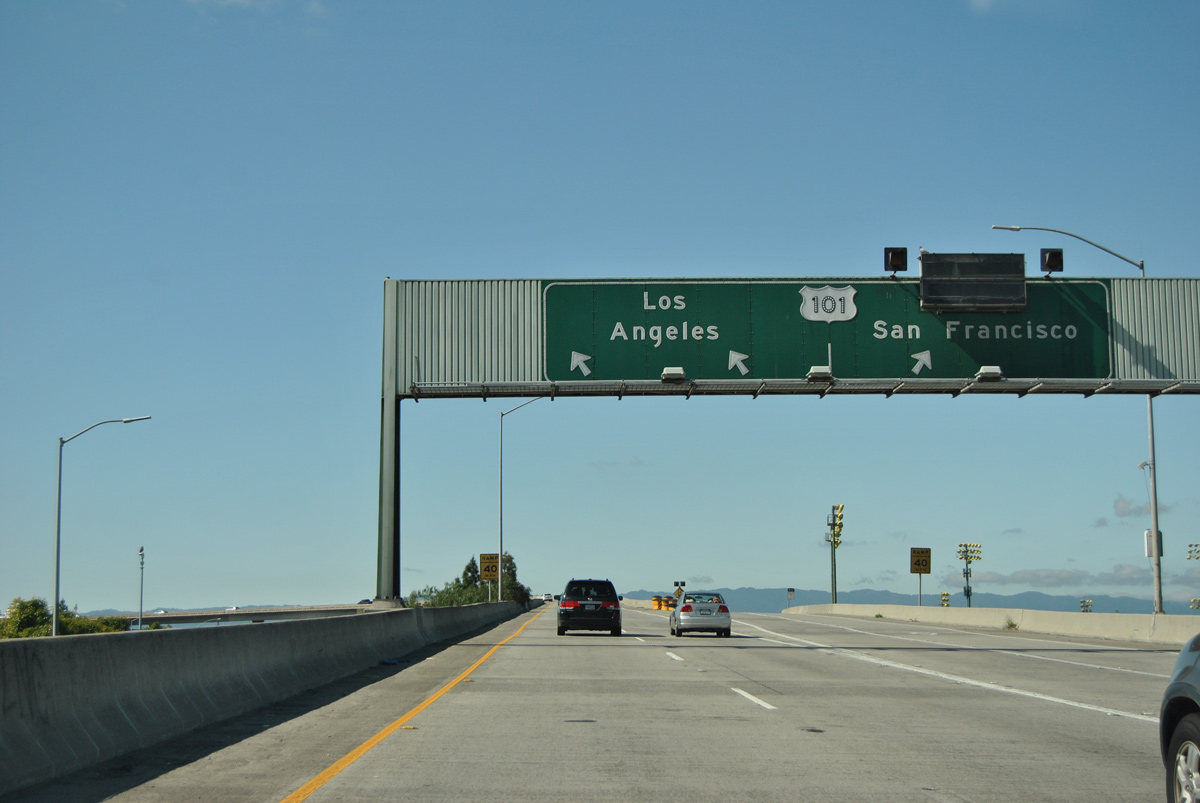
Interstate 680 south ends and I-280 north begins at the three-lane off-ramp (Exit 1 B) for U.S. 101. I-280 extends the Sinclair Freeway southwest to Downtown, Burbank and West San Jose. 03/27/16
South at
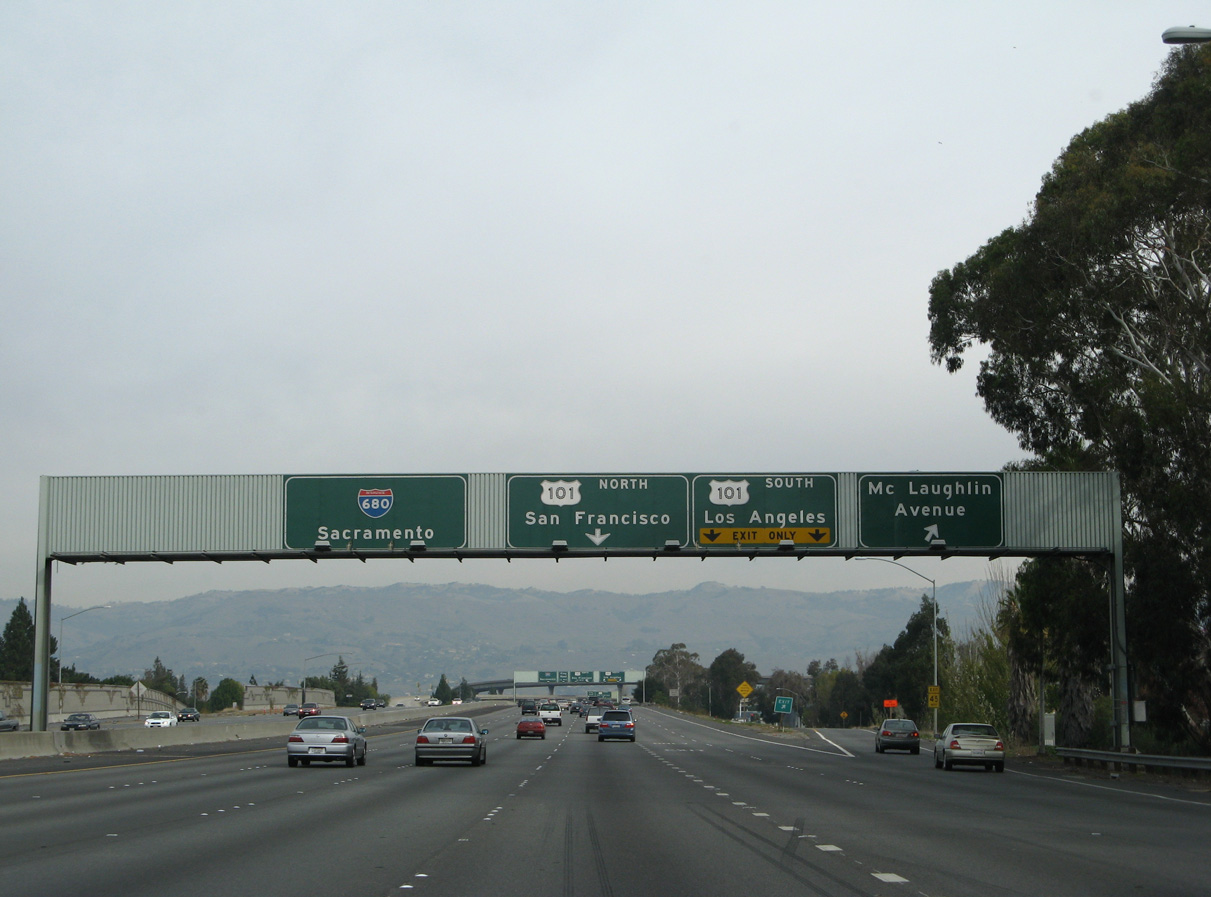
Southbound Interstate 280 at the systems interchange with U.S. 101 and transition to I-680 north. 11/25/07
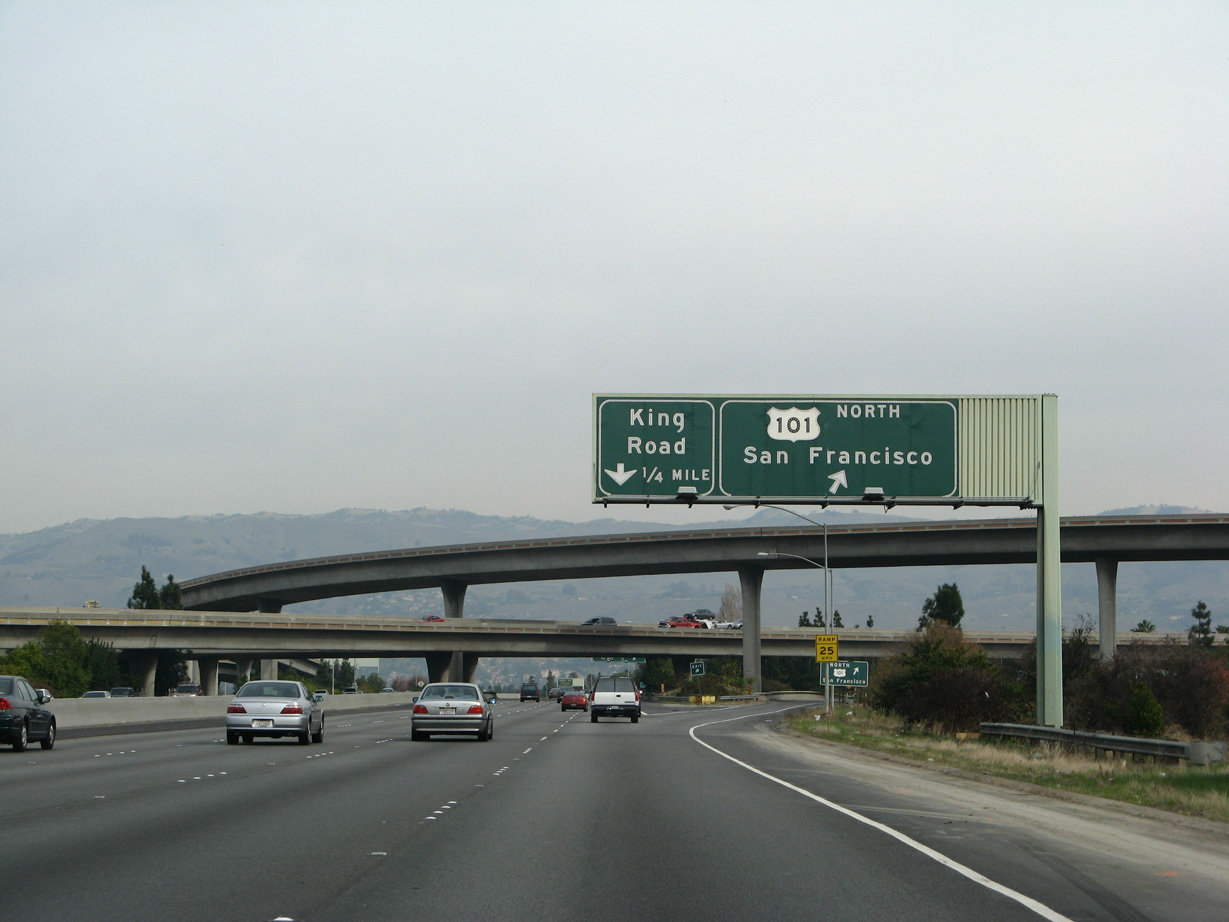
North at
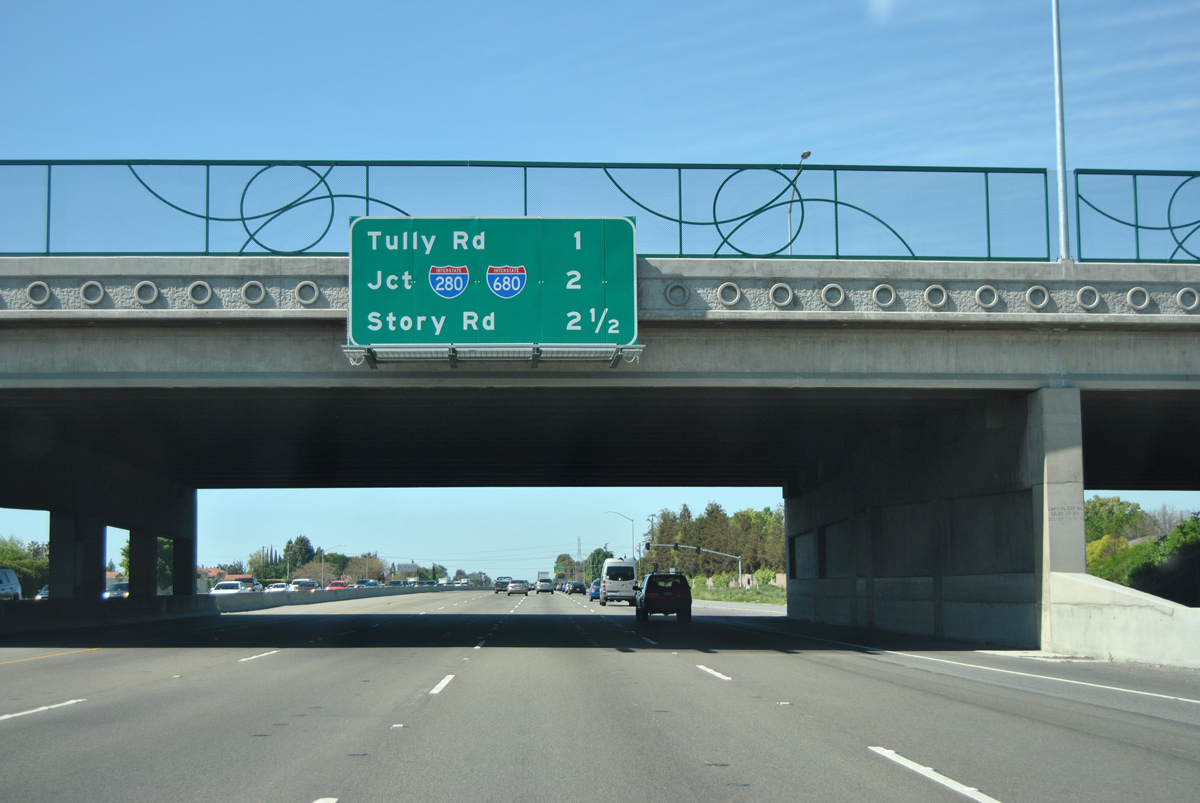
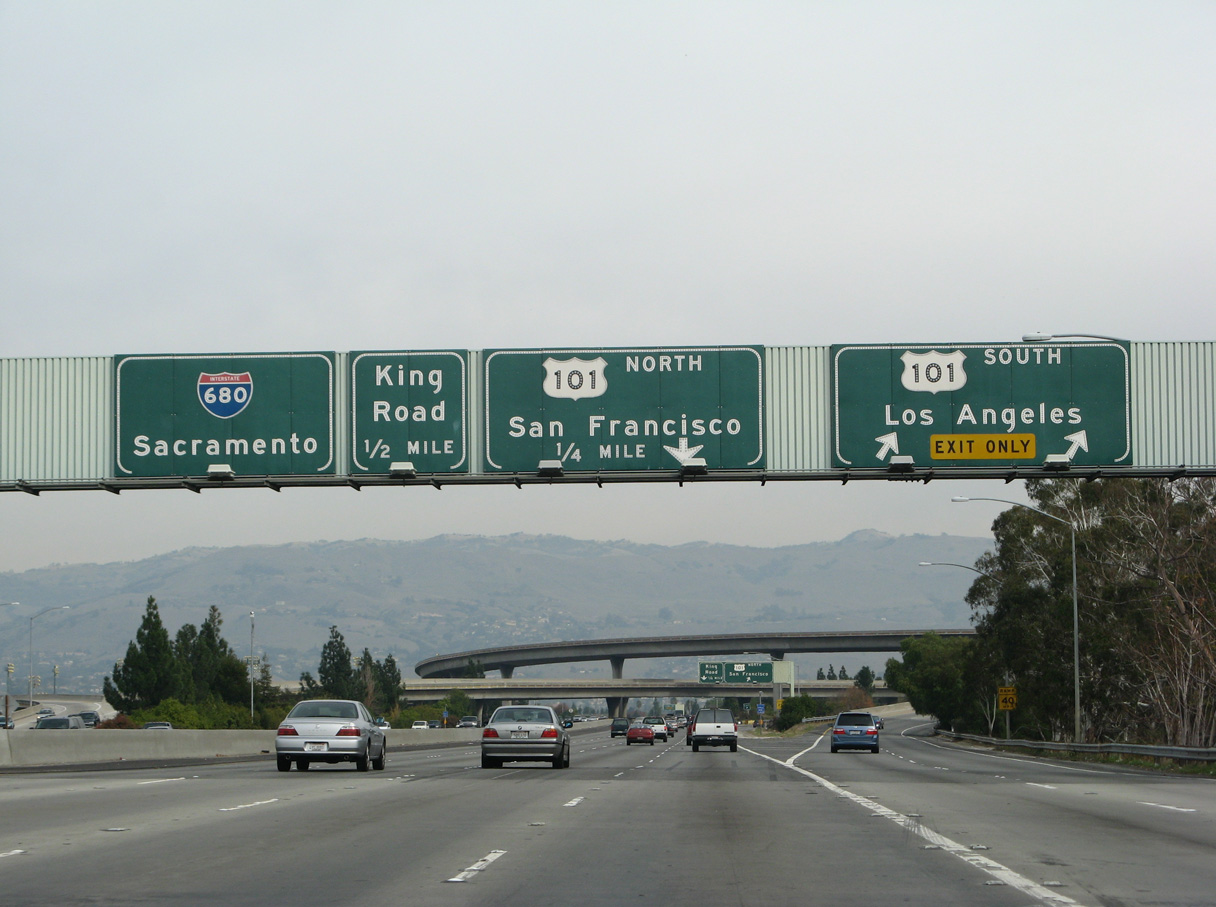
Two miles southeast of I-280/I-680 on U.S. 101 northbound at the six-ramp parclo interchange with Capitol Expressway. 03/25/16
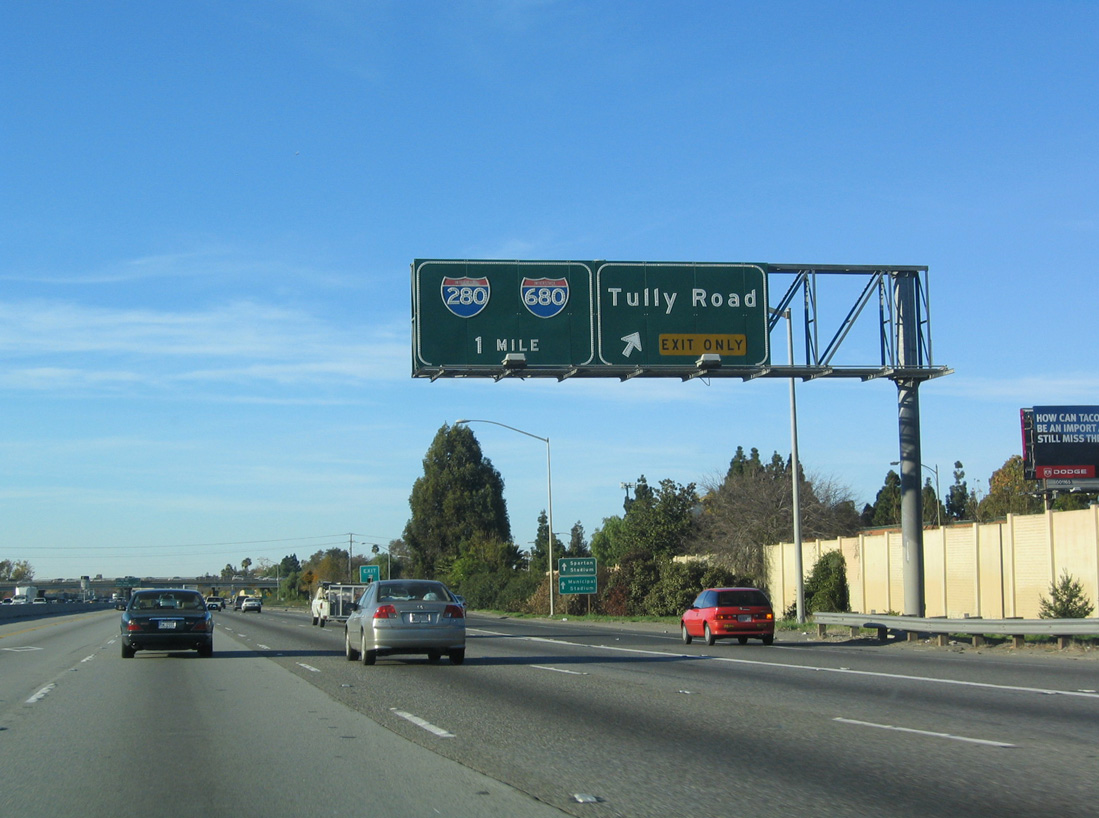
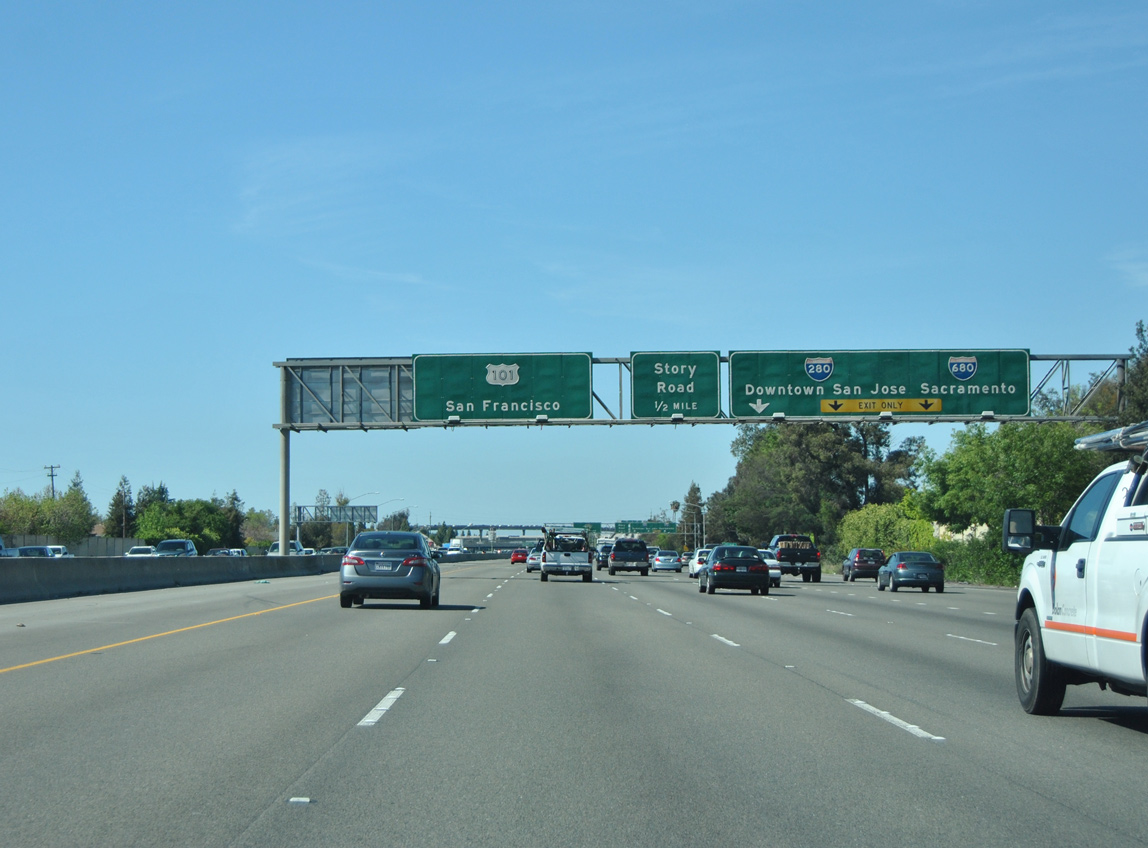
South at
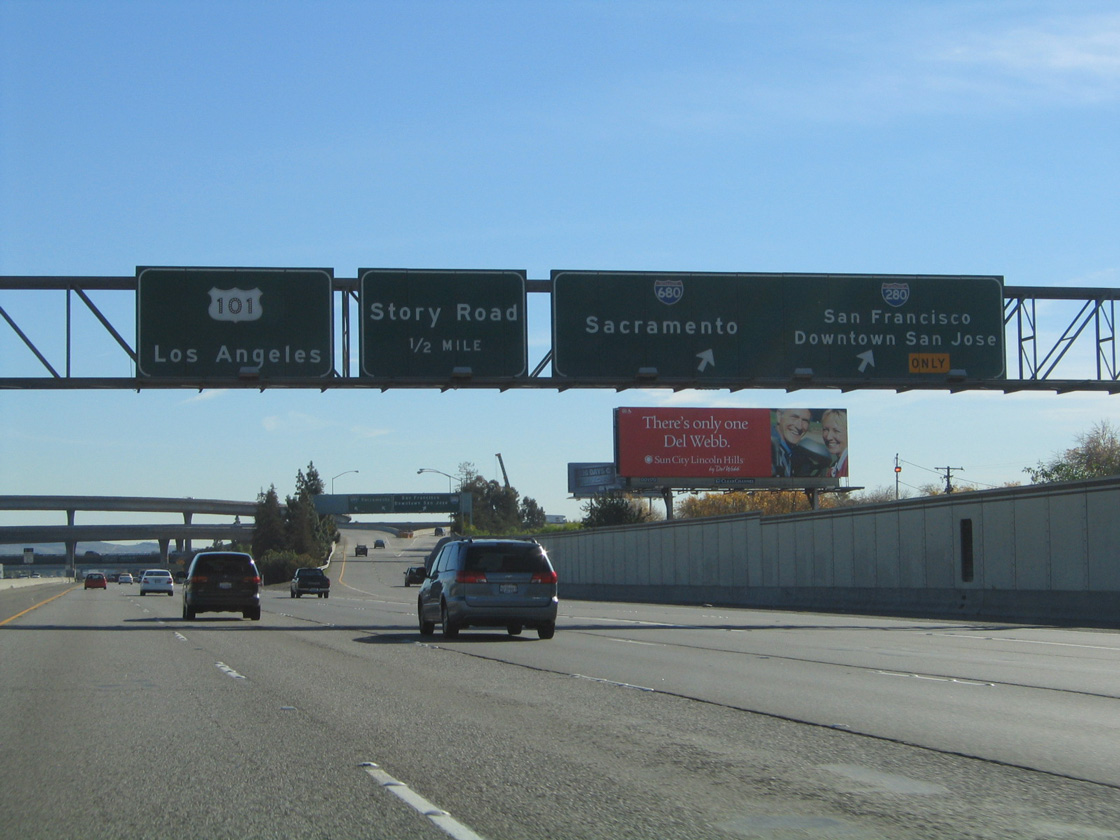
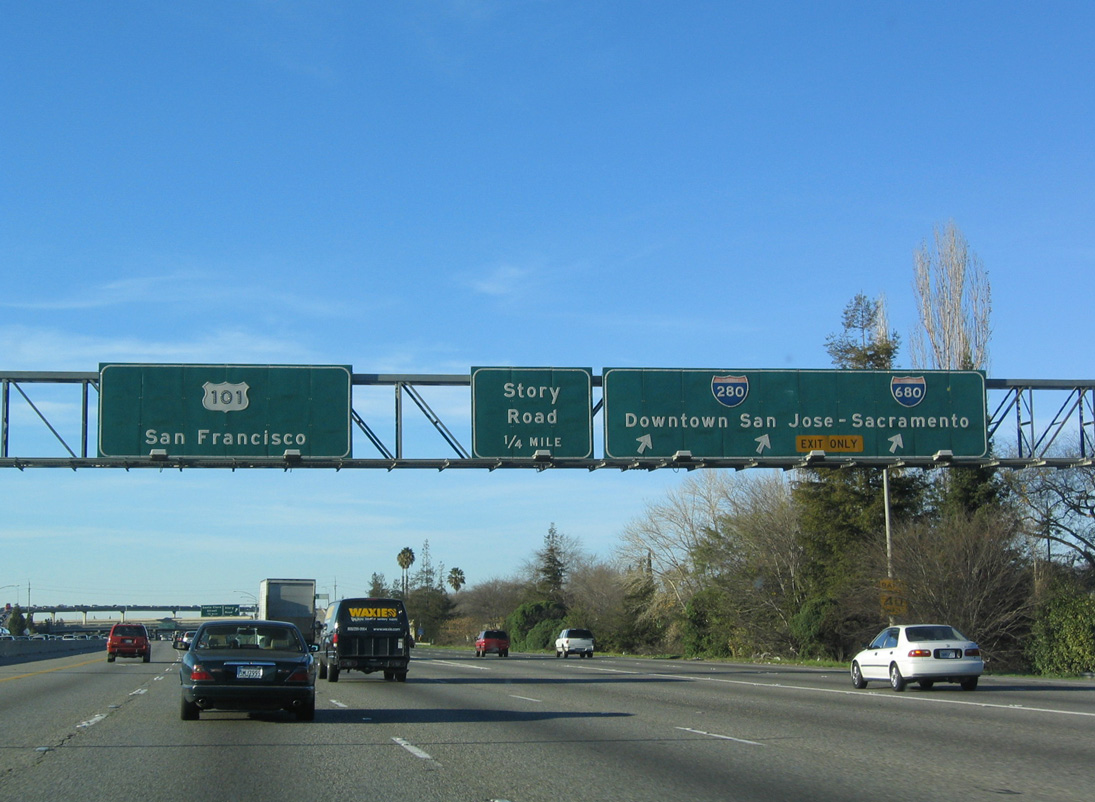
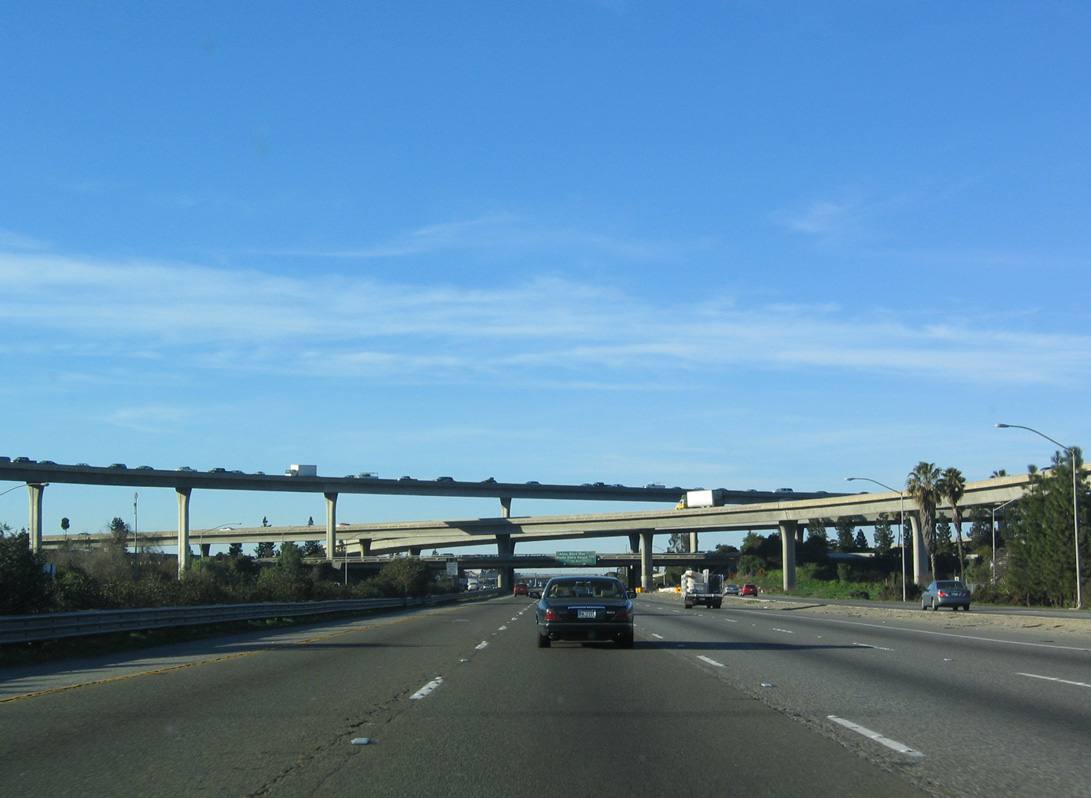
Southbound U.S. 101 reaches Exit 385B for I-280 and I-680 north. Interstate 280 initially travels west through Silicon Valley before it turns north toward San Francisco. 11/29/04