
Interstate 285 Georgia
Overview
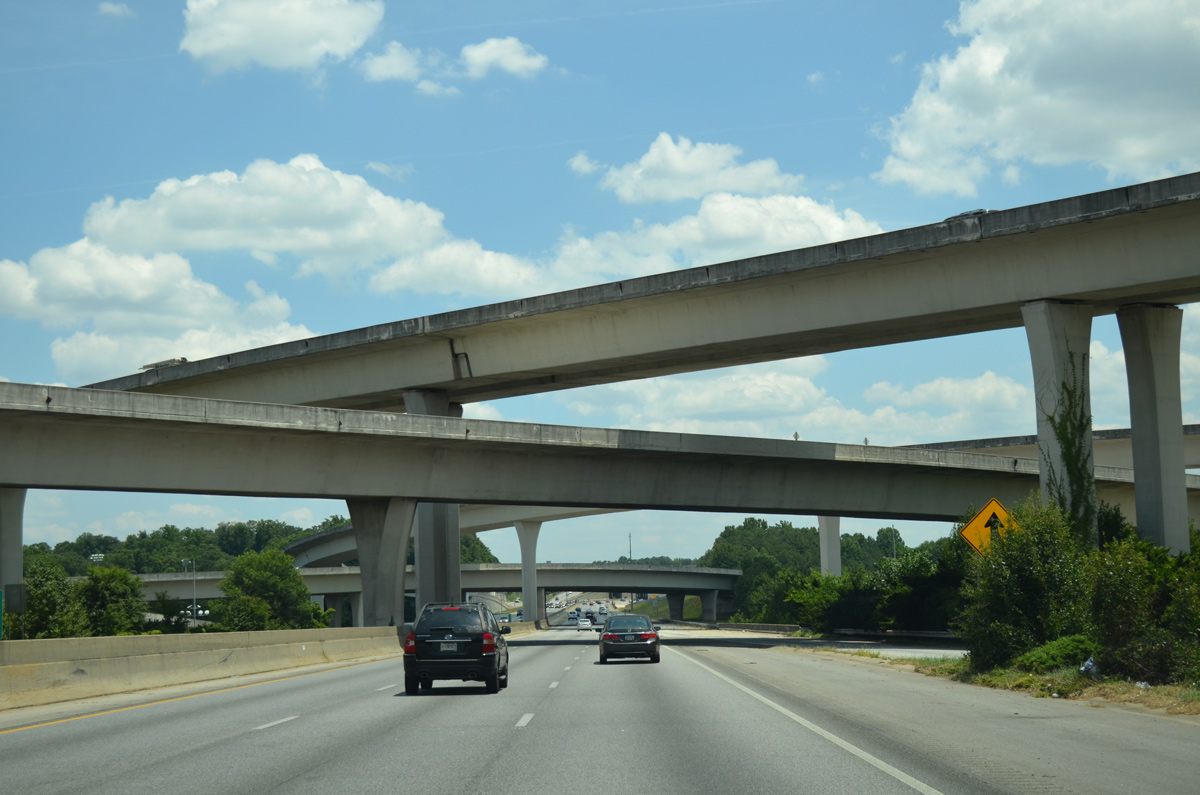
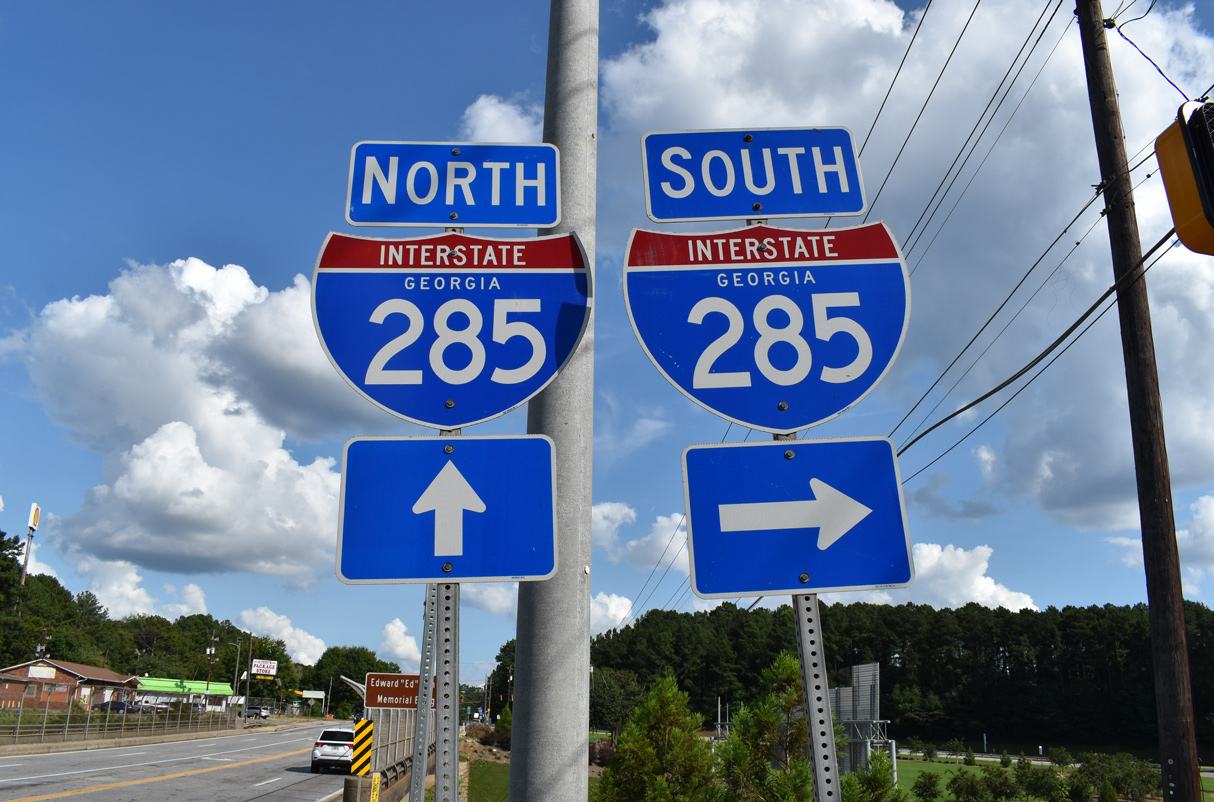
Interstate 285 forms a beltway around the city of Atlanta through Cobb, Dekalb and Fulton Counties in north Georgia. The mostly urban route runs north-south through western reaches of the city while entering East Point, College Park, Forest Park, Doraville and Sandy Springs. Originally intended to allow through traffic to bypass the city, the freeway is heavily used by local traffic as a result of suburban growth.
Atlanta has been fast growing for decades now, and area development has reached far beyond the scope of the Atlanta Beltway. Many corporations established their presence near beltway interchanges, as opposed to center city. This can be seen in the many high-rise buildings along the northern portion of I-285 through Sandy Springs.
Mileage by State
| Georgia | 63.98 mi |
Data Sources
December 31, 2021 Interstate Route Log and Finders List
History
Construction on Interstate 285 commenced in August 1958. The loop was completed in July 1970.5 The Perimeter Highway was expanded by a lane in each direction between I-75 at Marietta and I-85 by Doraville as part of the $1.3 billion "Free the Freeways" mega project by 1988.6
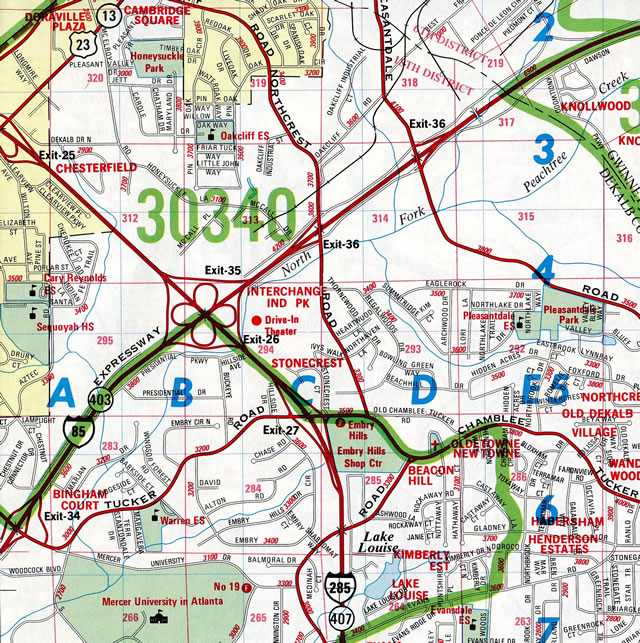
Relief for I-285, the Outer Perimeter
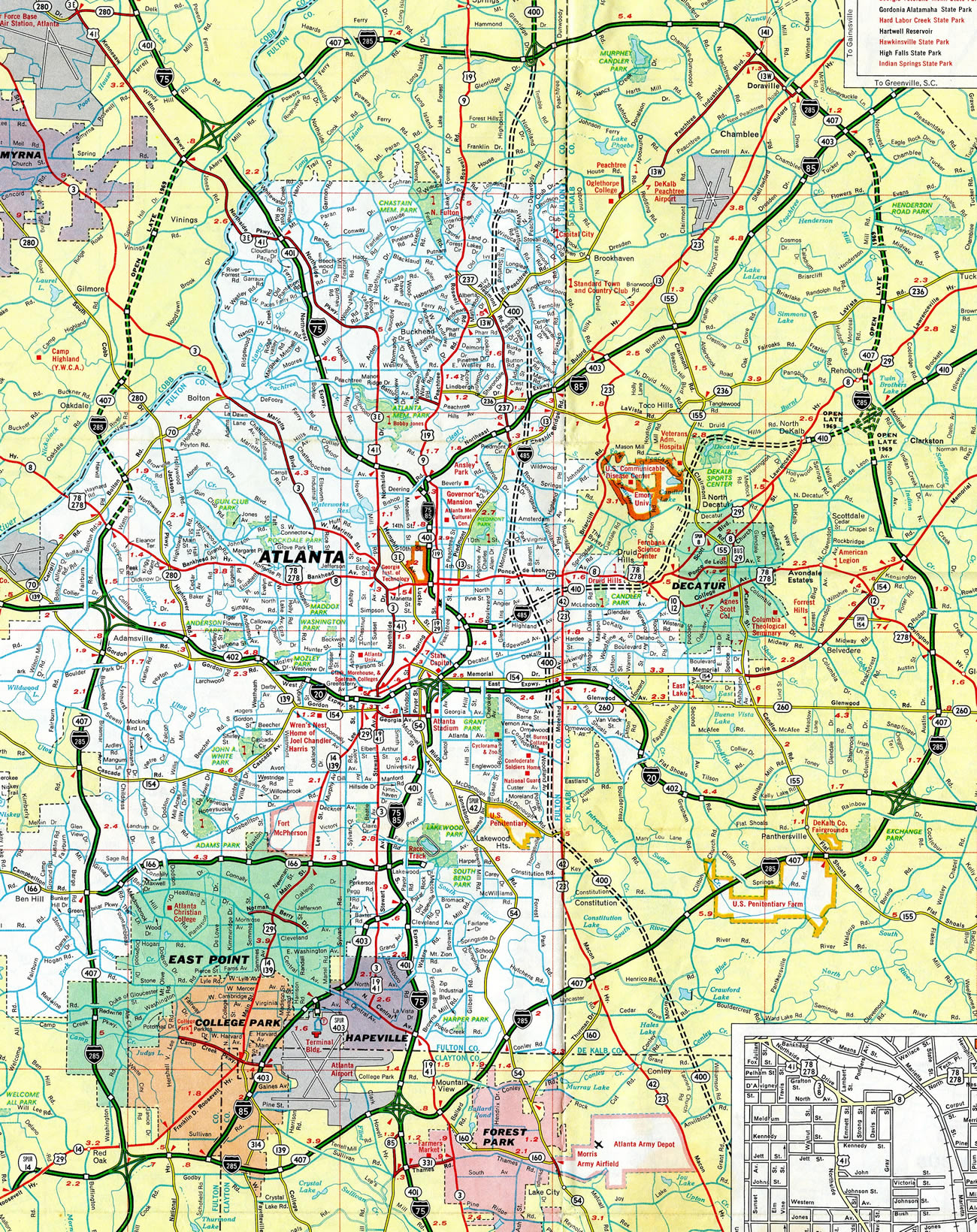
Due to increasing congestion along I-285, a 211 mile long Outer Loop, 20 to 25 miles beyond the Perimeter Highway,2 was proposed from the 1980s onward to alleviate area traffic and provide a new bypass for regional travelers. An Atlanta Regional Commission (ARC) planning document released in 1992 scheduled construction of the Outer Perimeter northern section. Included was a $64 million interchange on Interstate 575 in Cherokee County, slated to begin in early 1993. This would tie into a 12 mile or so stretch from I-575 east to the Forsyth County line. Total costs were estimated to be $91.8 million with completion sometime in 1995. Work would follow on the majority of the over $700 million northern section by 2000.1
Funding woes ensued by November 1992, leading to the dropping of the I-575 interchange from the priority list under consideration by the Atlanta Regional Commission. This allowed for environmentalist opposition to continue to mount against the Outer Loop.2
A portion of the Outer Loop, the Northern Arc, was still under consideration by 1999. It was supported by Governor Roy Barnes in a transportation initiative introduced on January 25, 1999. The 59 mile long road would connect I-75 near Cartersville to I-85 at Buford, mostly parallel to SR 20. Interchanges in Cherokee County included those proposed at SR 20 in Macedonia, I-575 in north Canton, SR 140 south of Waleska and SR 108 north of Sutallee.3
By 2002, costs for the project ballooned to $2.2 billion with plans calling for the Northern Arc to be built as a toll road. Governor Barnes no longer supported the road by the 2002 elections. When Governor Sonny Perdue took office, he formally canceled the Northern Arc. $38 million in right of way had been acquired for the scuttled project by that point, including 750 of 1,200 acres needed for the 12.6 mile segment between Peachtree Industrial Parkway and SR 316 in Gwinnett County.4
North End  ‐ southeast of Doraville, GA
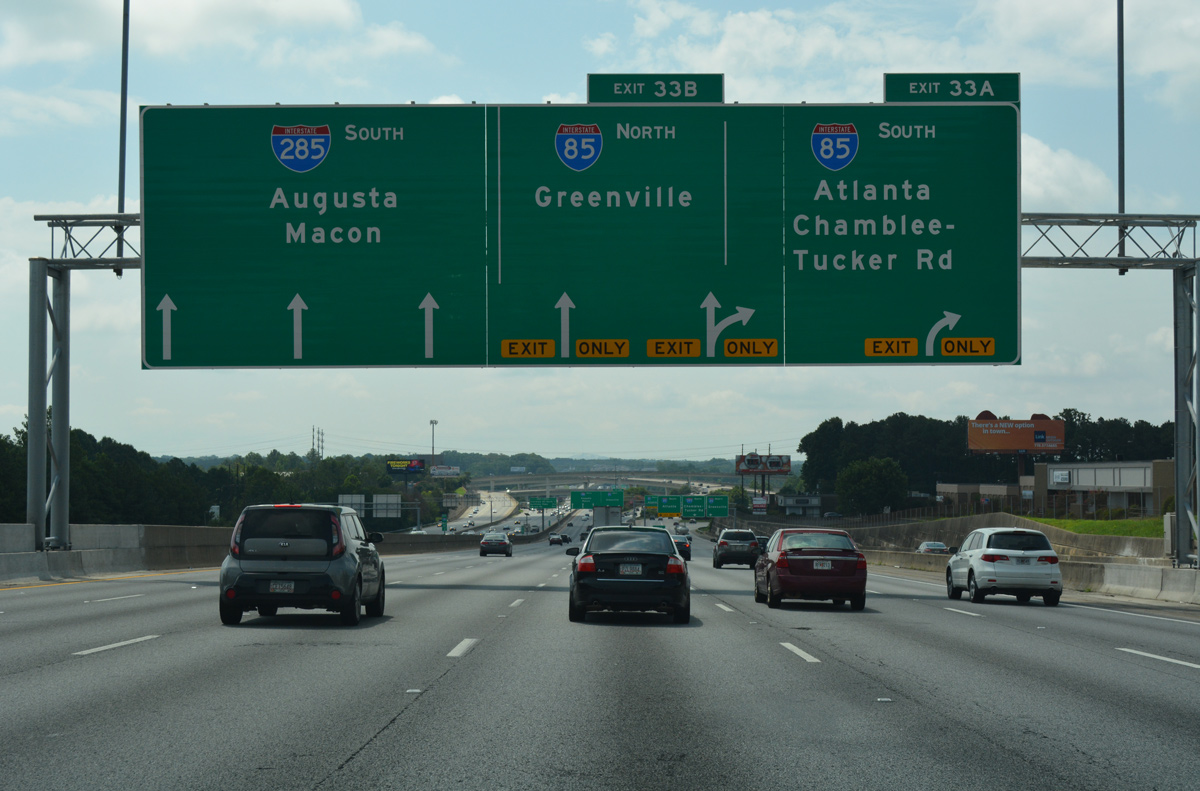
 East at
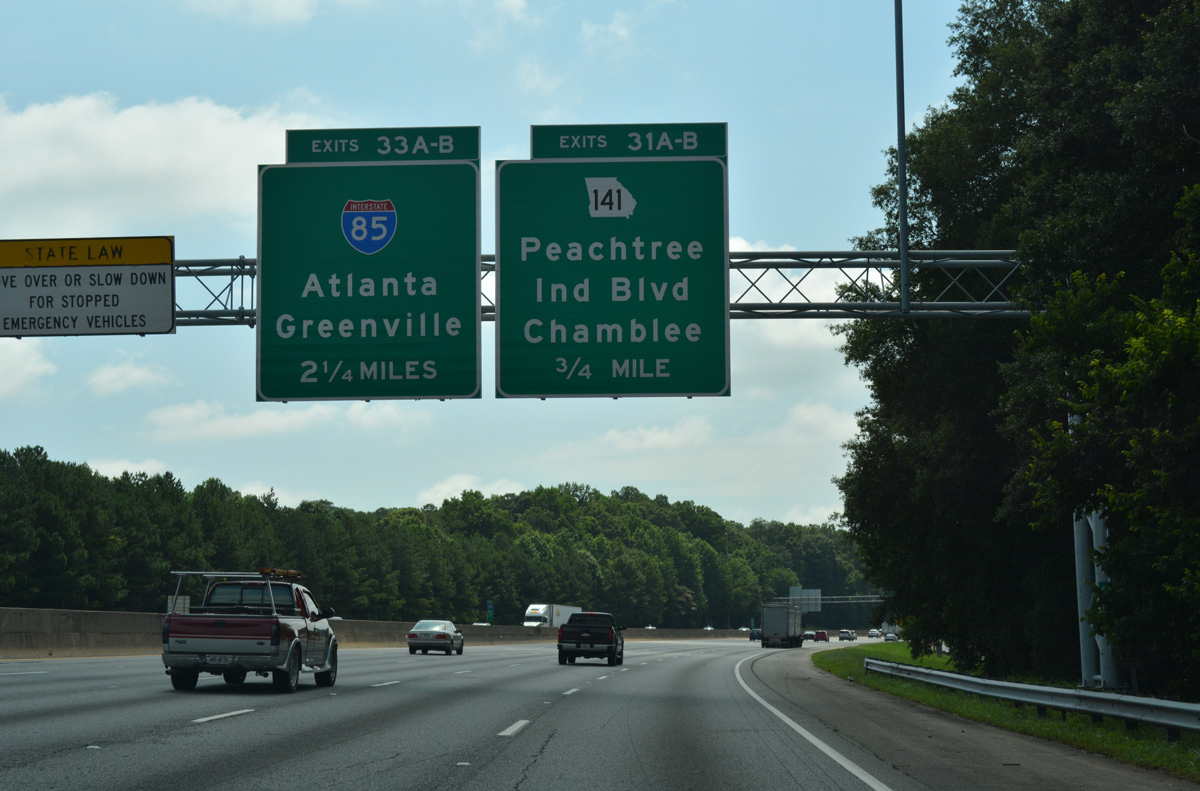
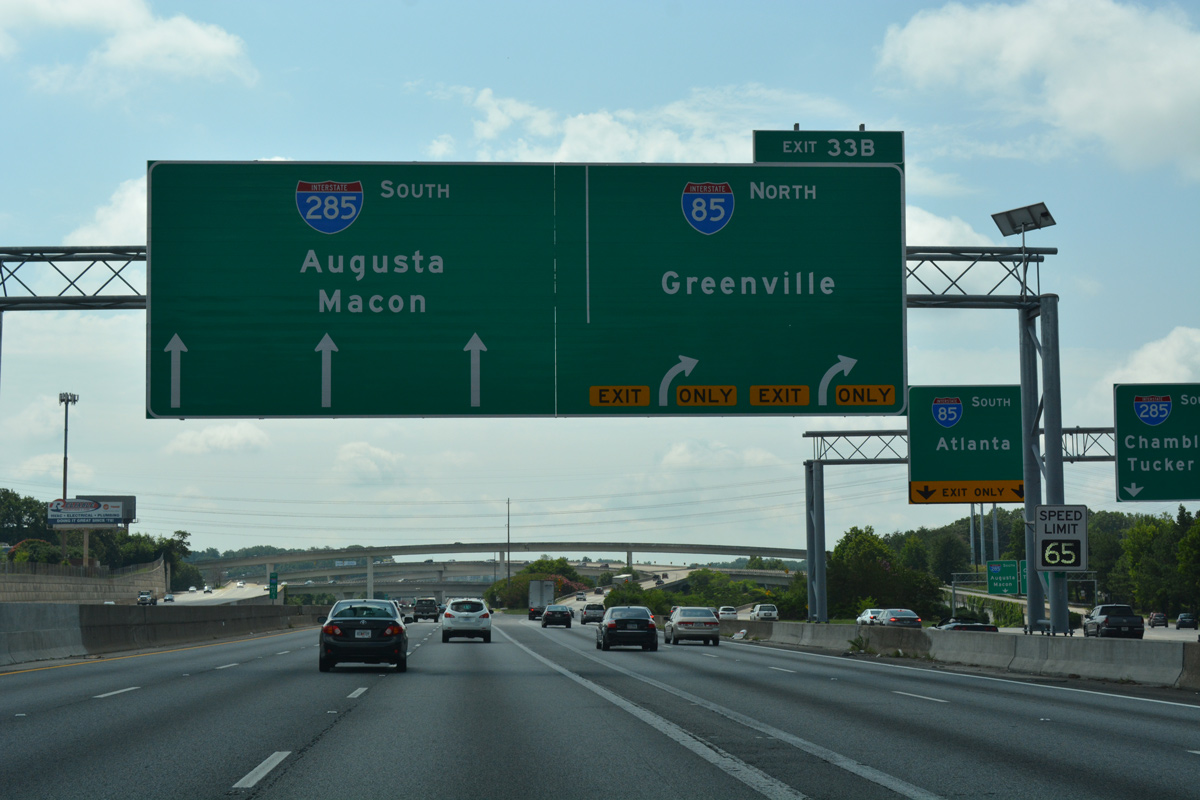
Interstate 285 arcs southeast from Dunwoody through Doraville on the 2.25 mile approach to Exit 33 for I-85. SR 141 (Peachtree Industrial Boulevard), a freeway leading northeast to Norcross, meets the beltway at the ensuing exit. 07/02/17
North at
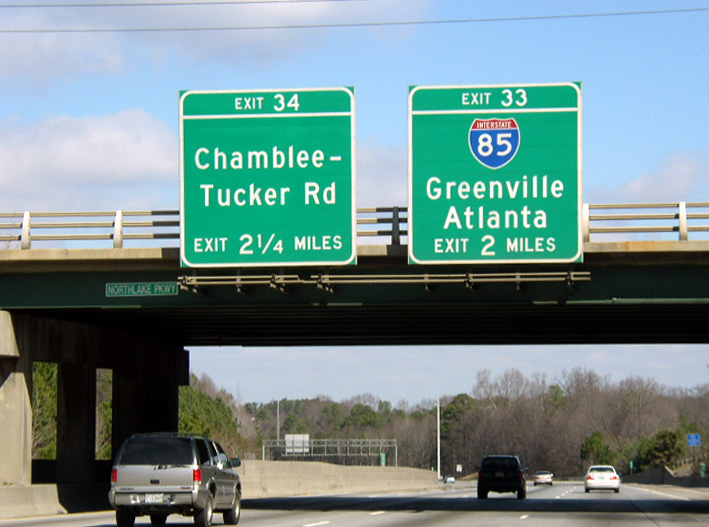
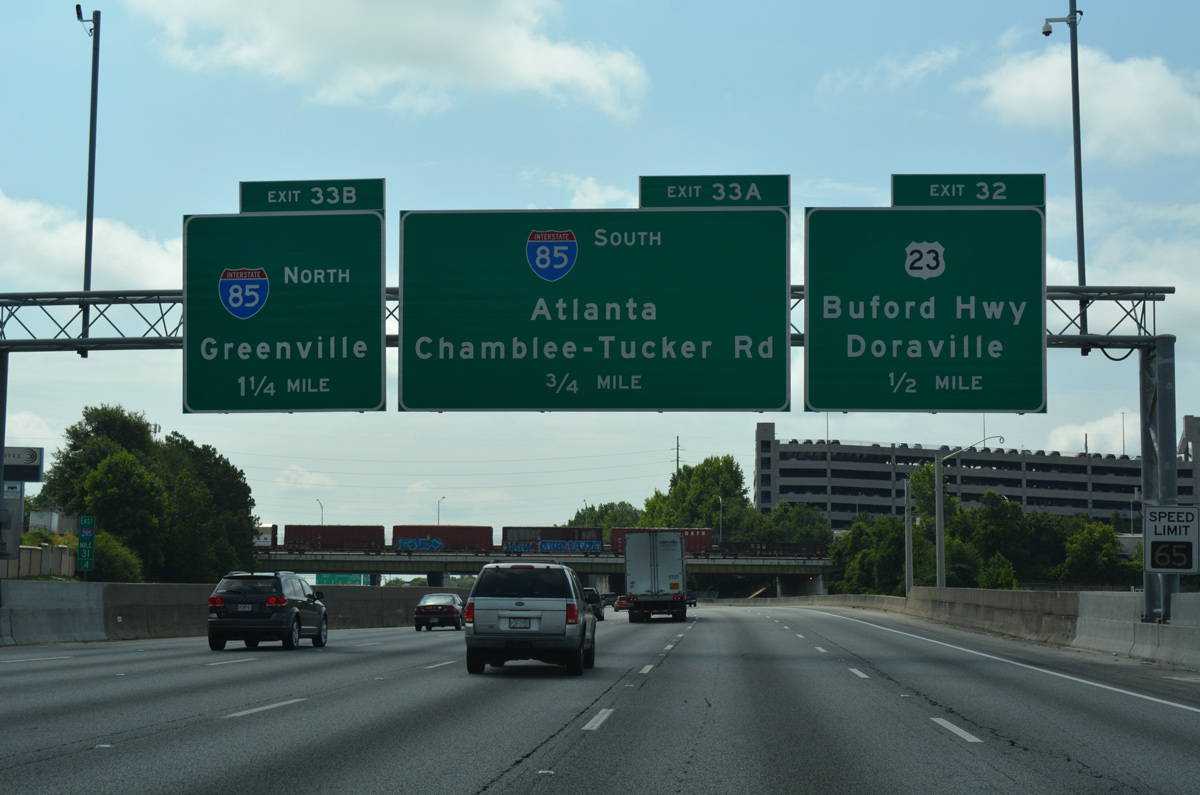
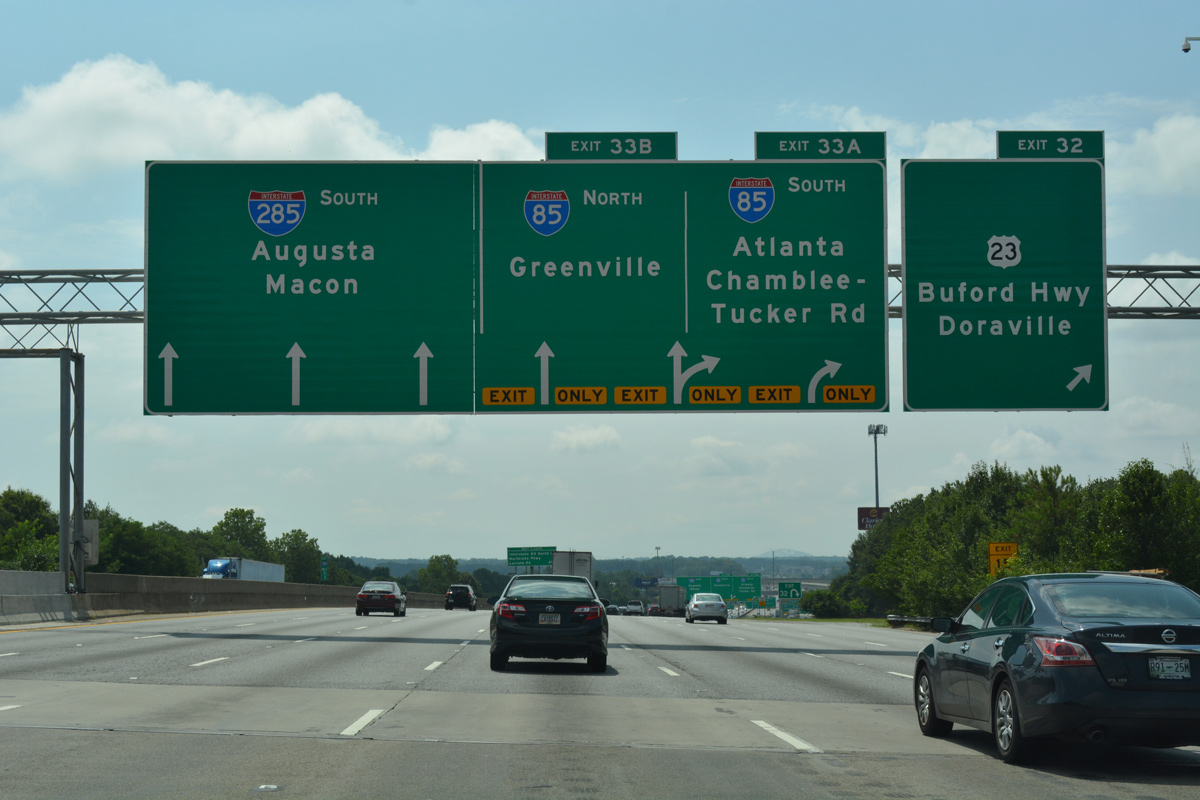
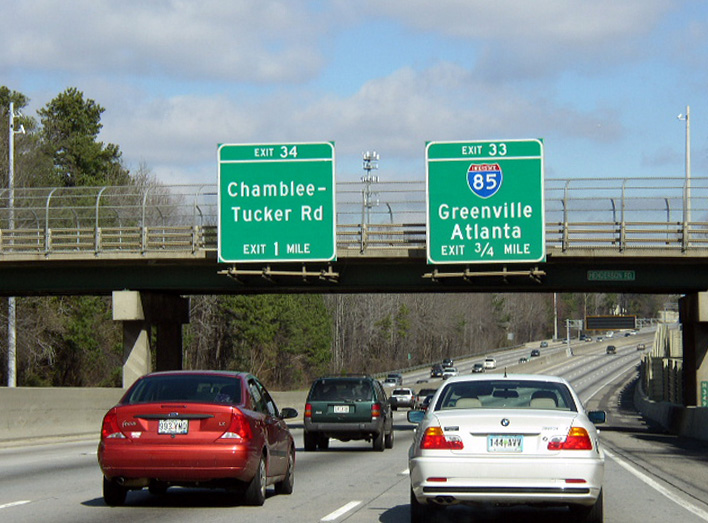
Interstate 285 straddles the Tucker city line northward to Henderson Road. A long c/d roadway (Exit 33) branches away from the freeway mainline a short distance beyond there for Interstate 85. Photo by Chris Patriarca (02/23/03).
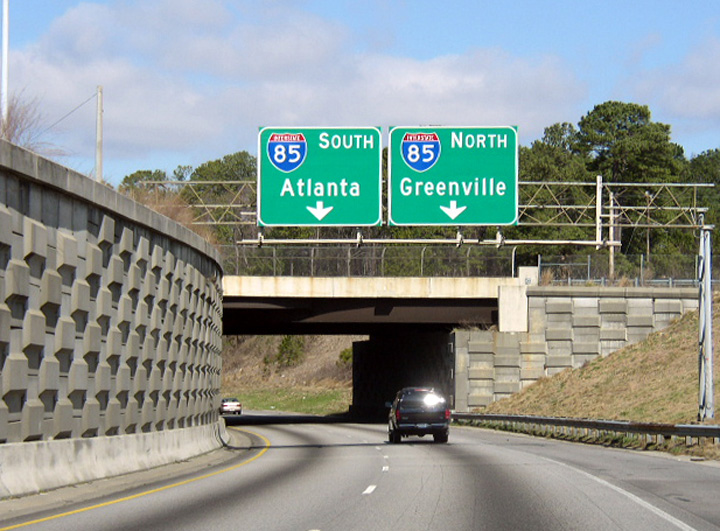
South at
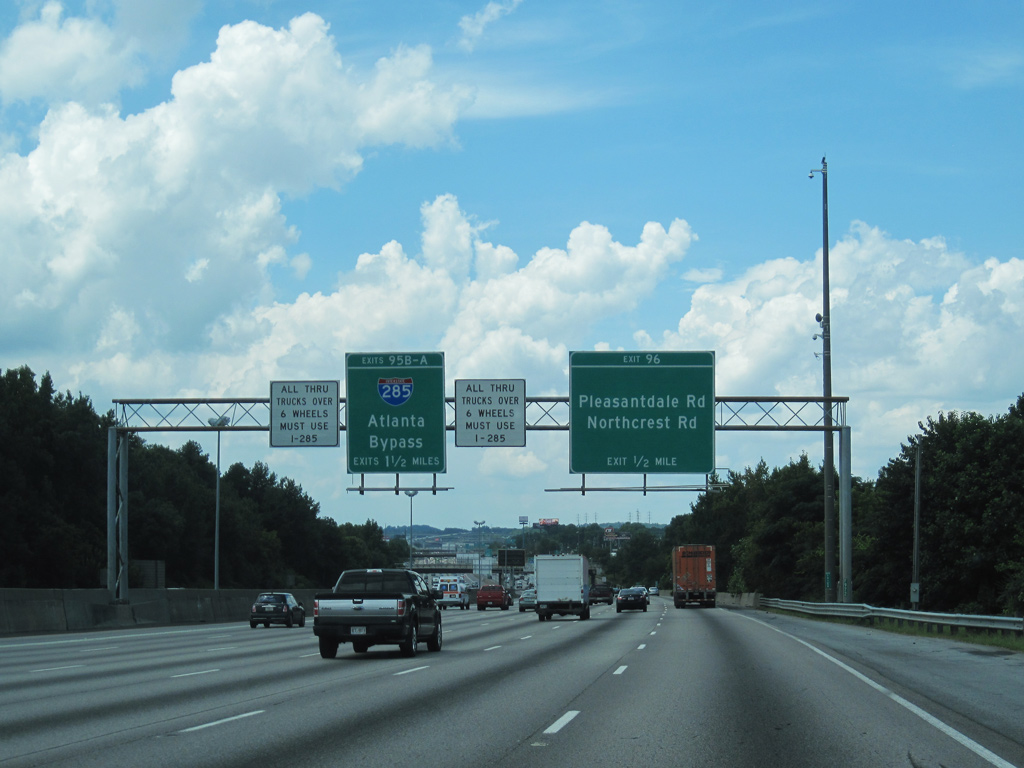
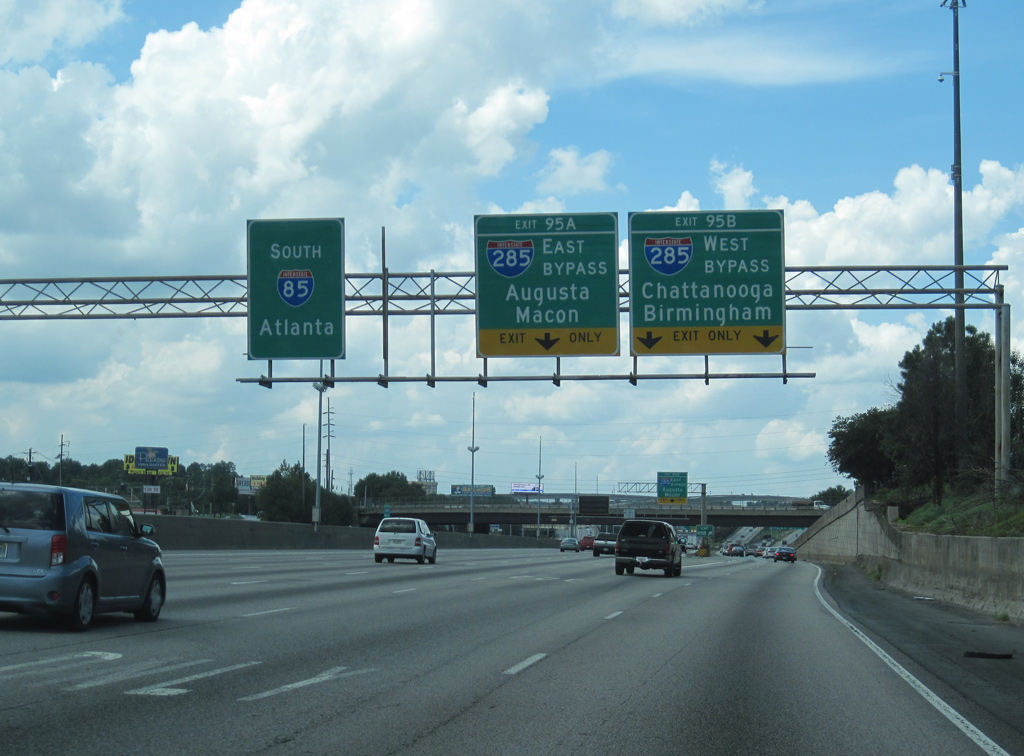
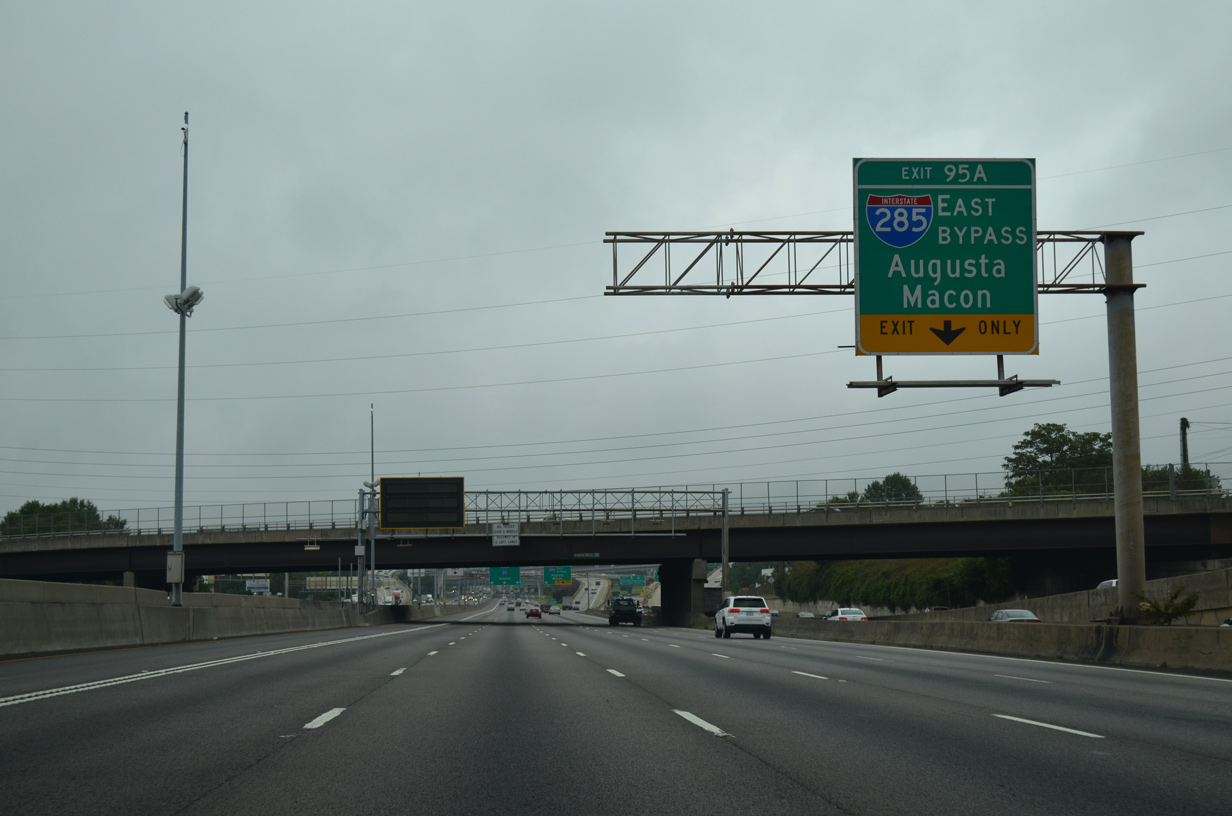
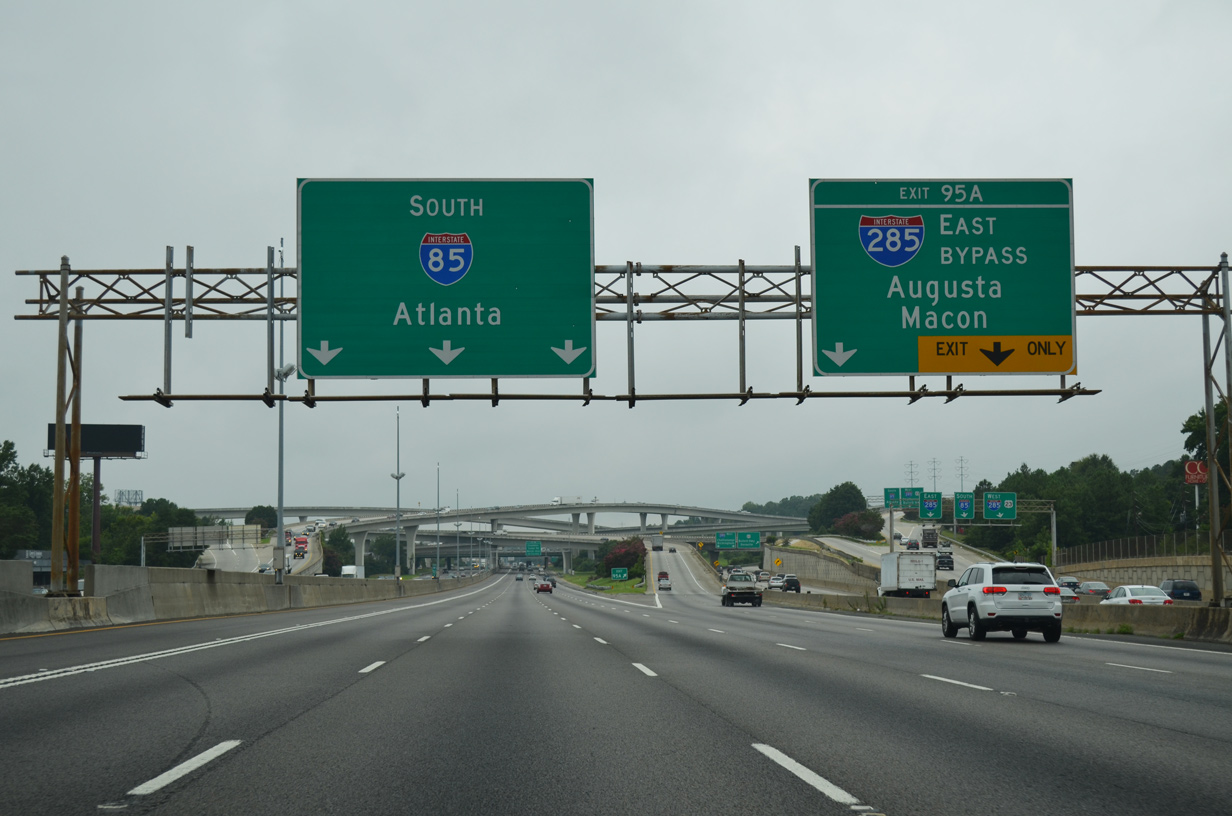
1.5 miles ahead of the Tom Moreland Interchange (Exits 95B/A) with I-285 on Interstate 85 south. All through trucks are directed to use the Perimeter Highway in lieu of I-85 and the Downtown Connector. Photo by Carter Buchanan (08/10/13).
North at
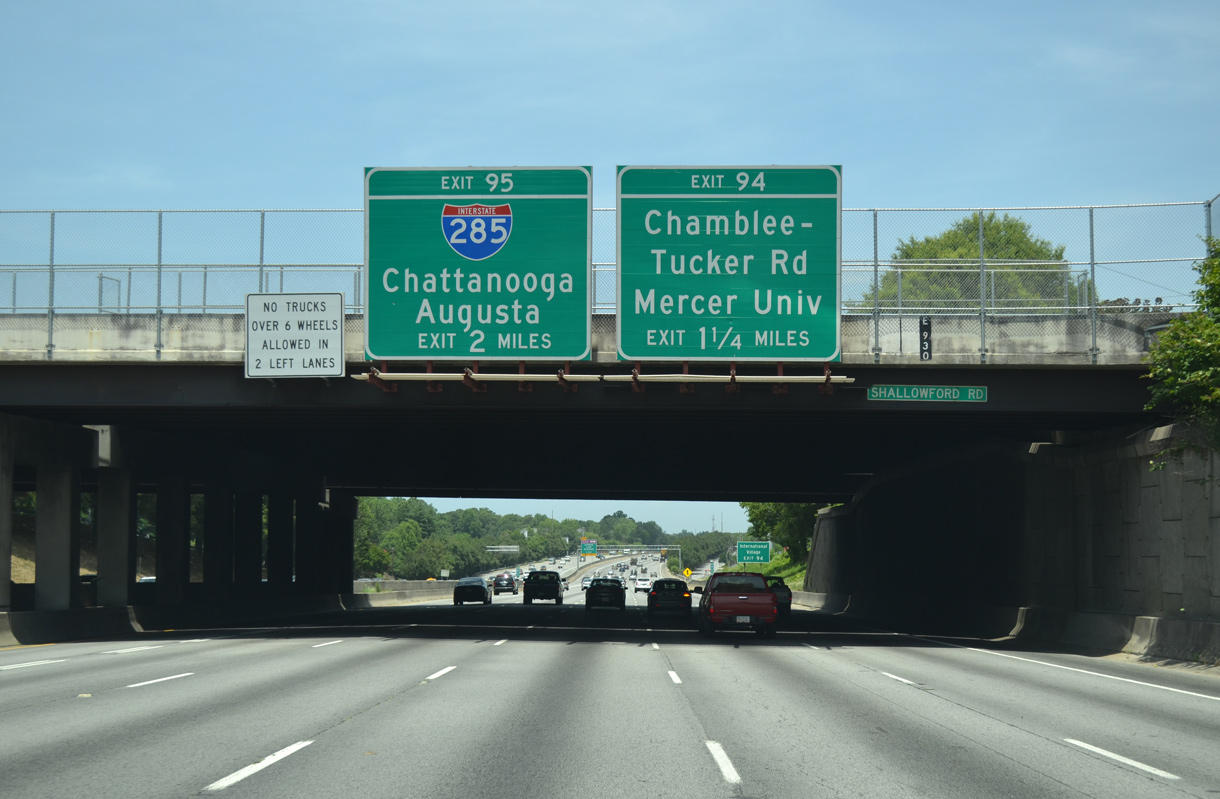
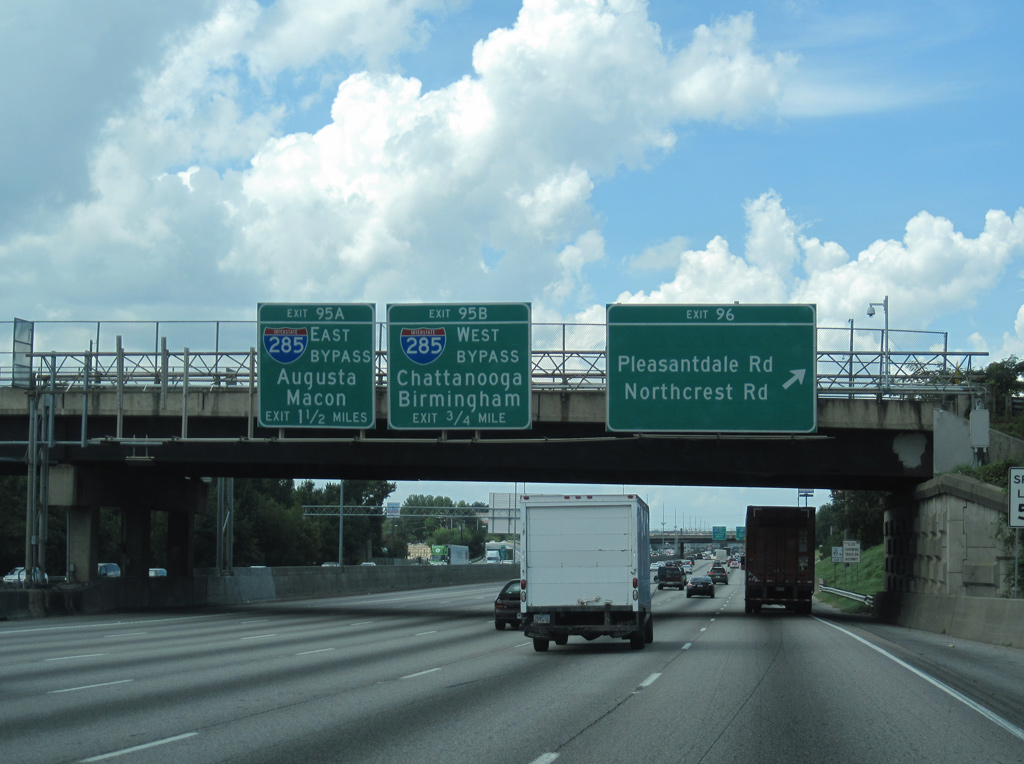
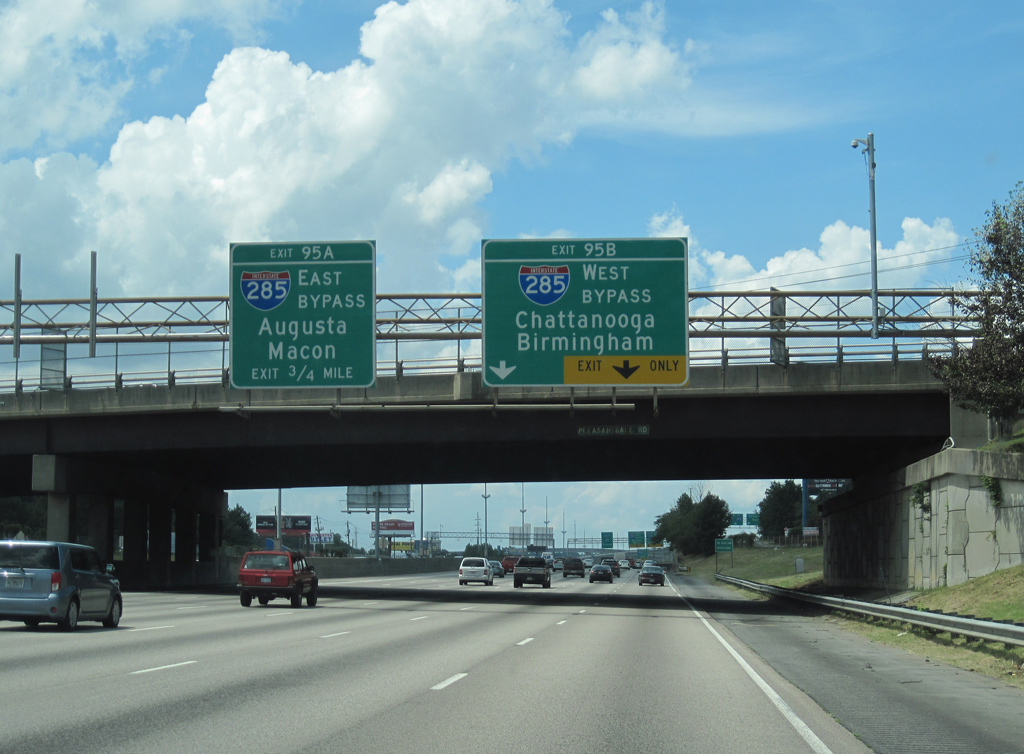
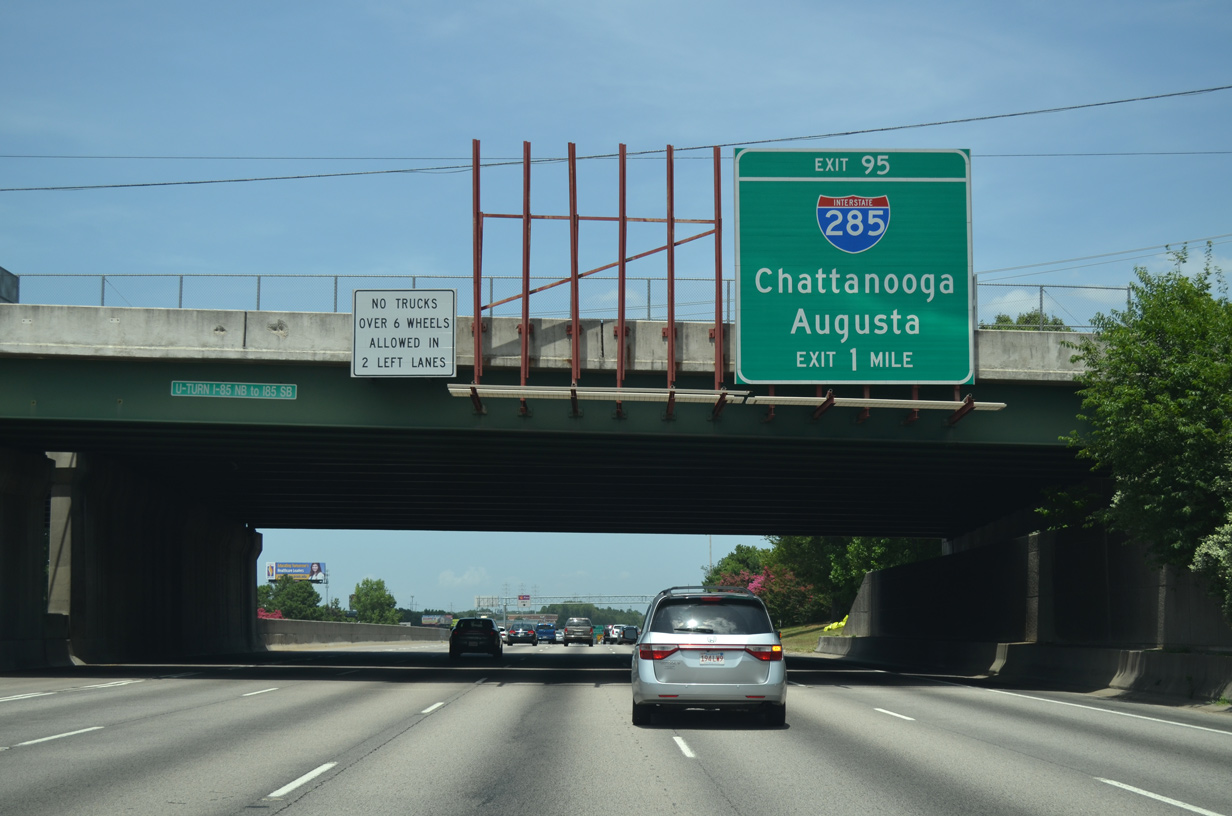
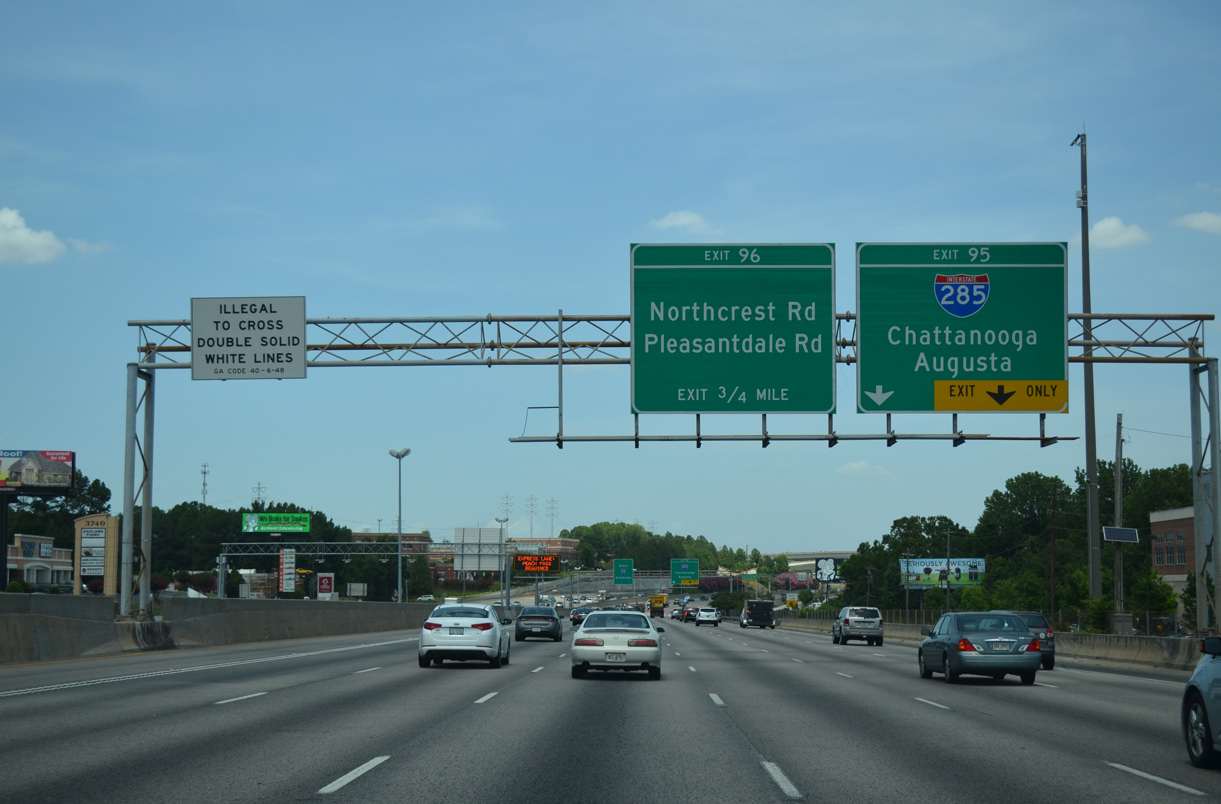
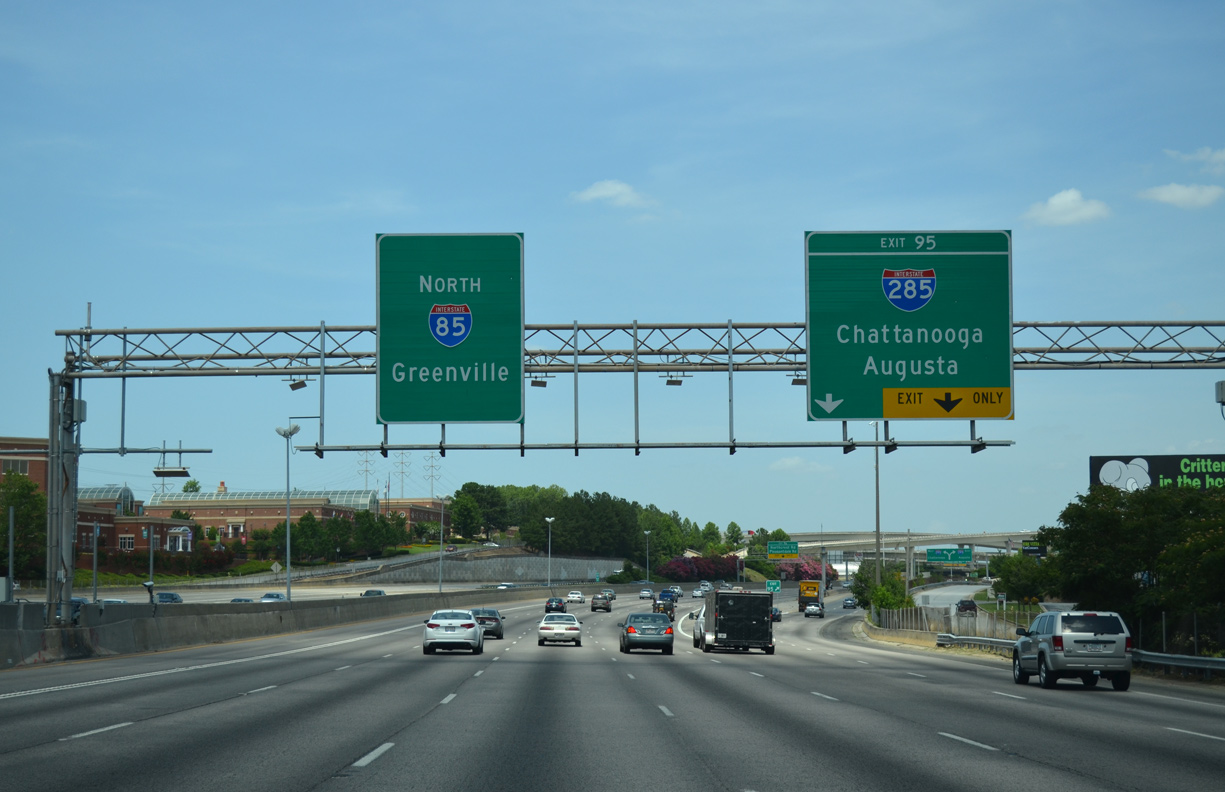
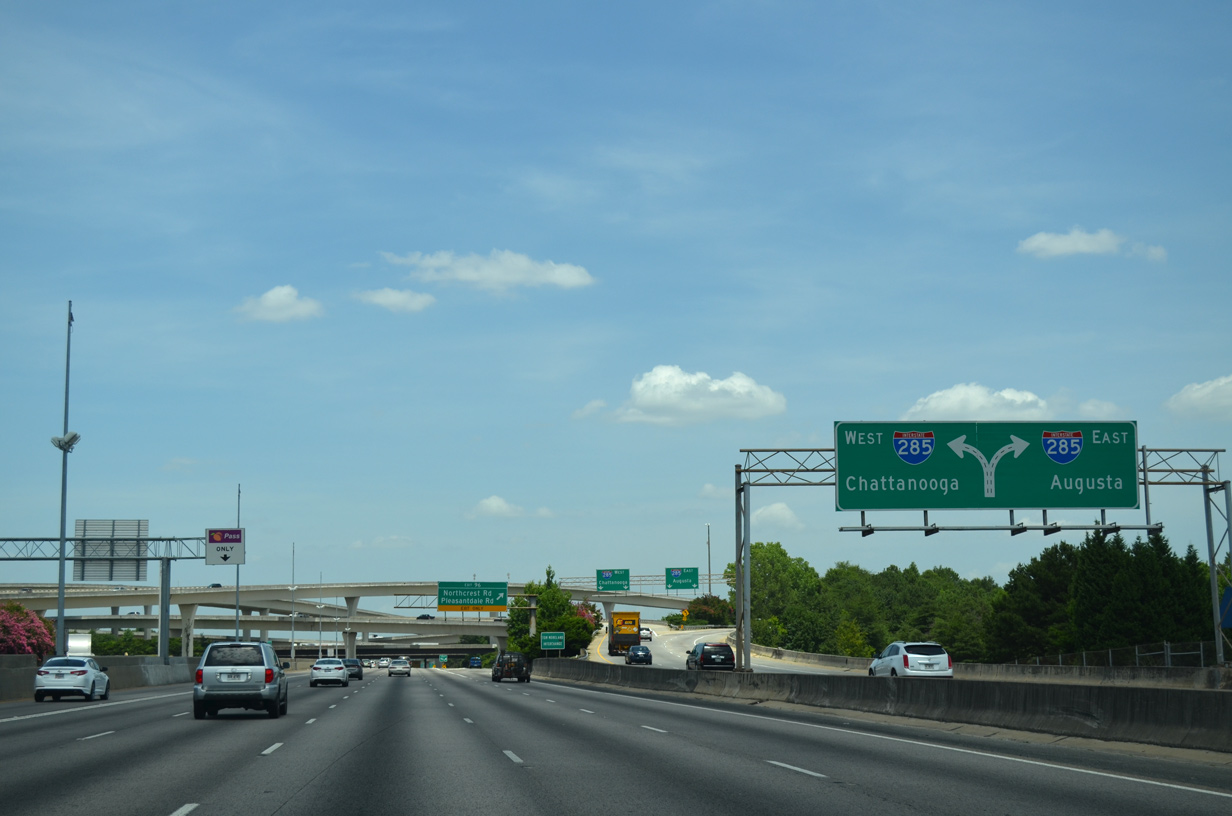
Two miles south of the Tom Moreland Interchange (Exit 95) with Interstate 285 on I-85 north at the Shallowford Road overpass by Chamblee. 07/02/14
South End  ‐ College Park, GA
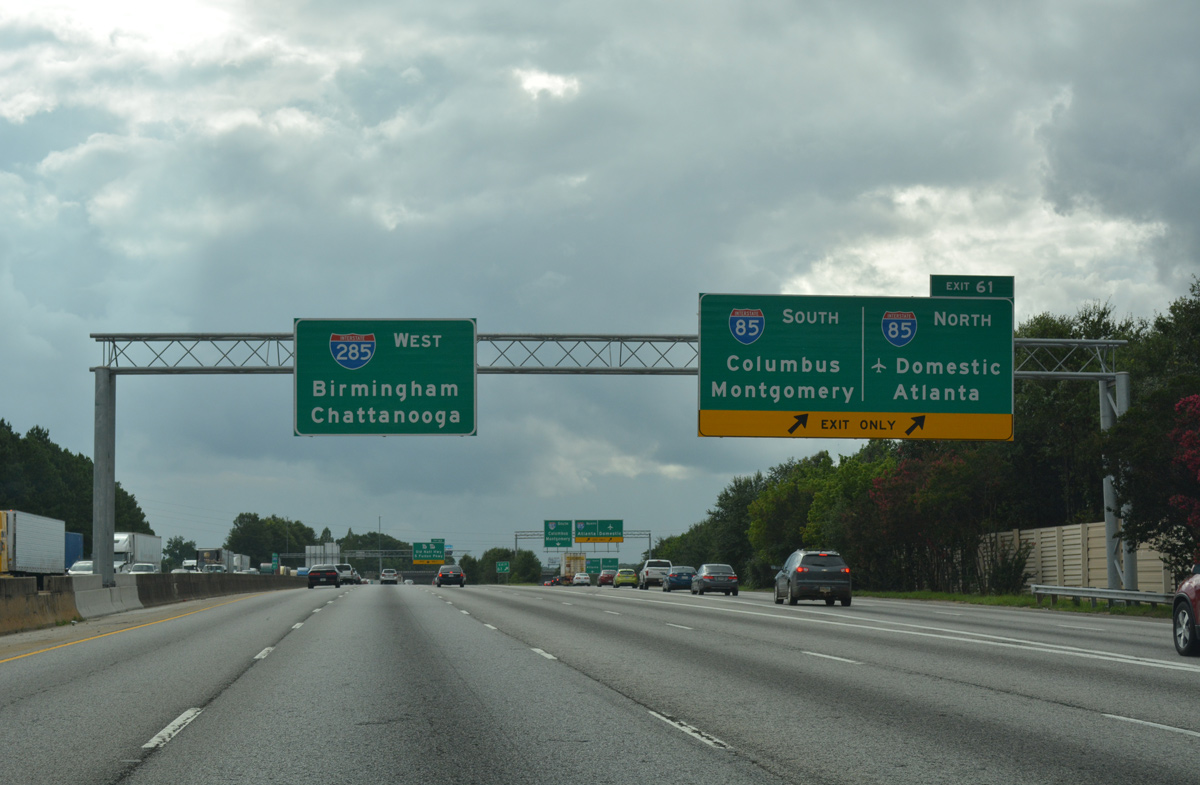
South at
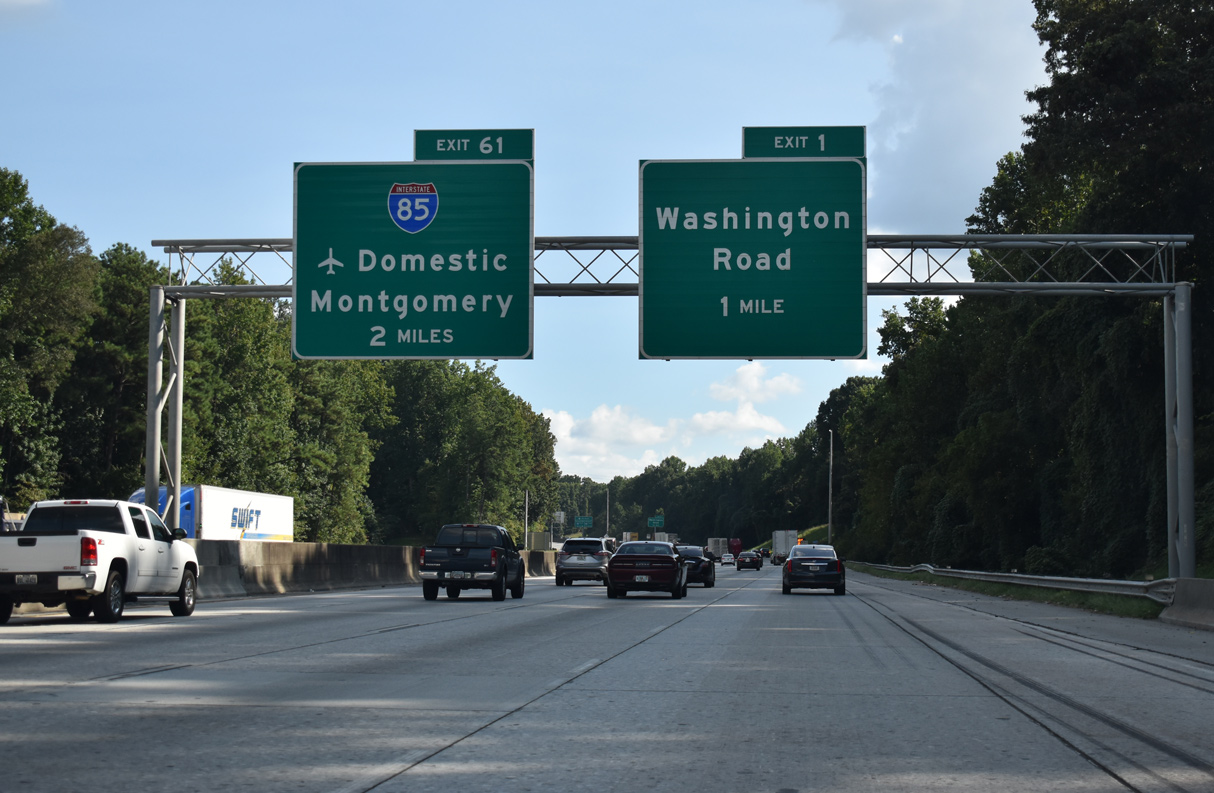
Two miles north of Interstate 85 (Exit 61) on I-285 southbound. The succeeding two exits of the beltway serve the city of College Park. 09/11/20
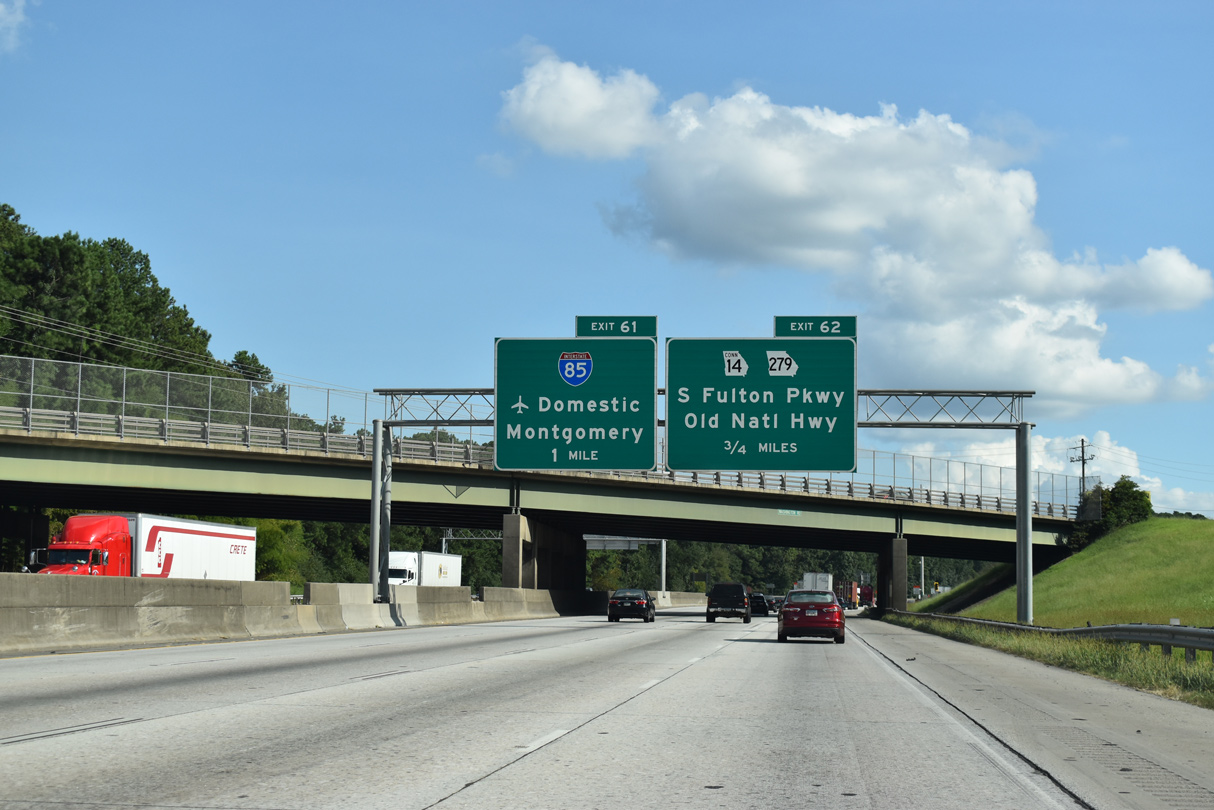
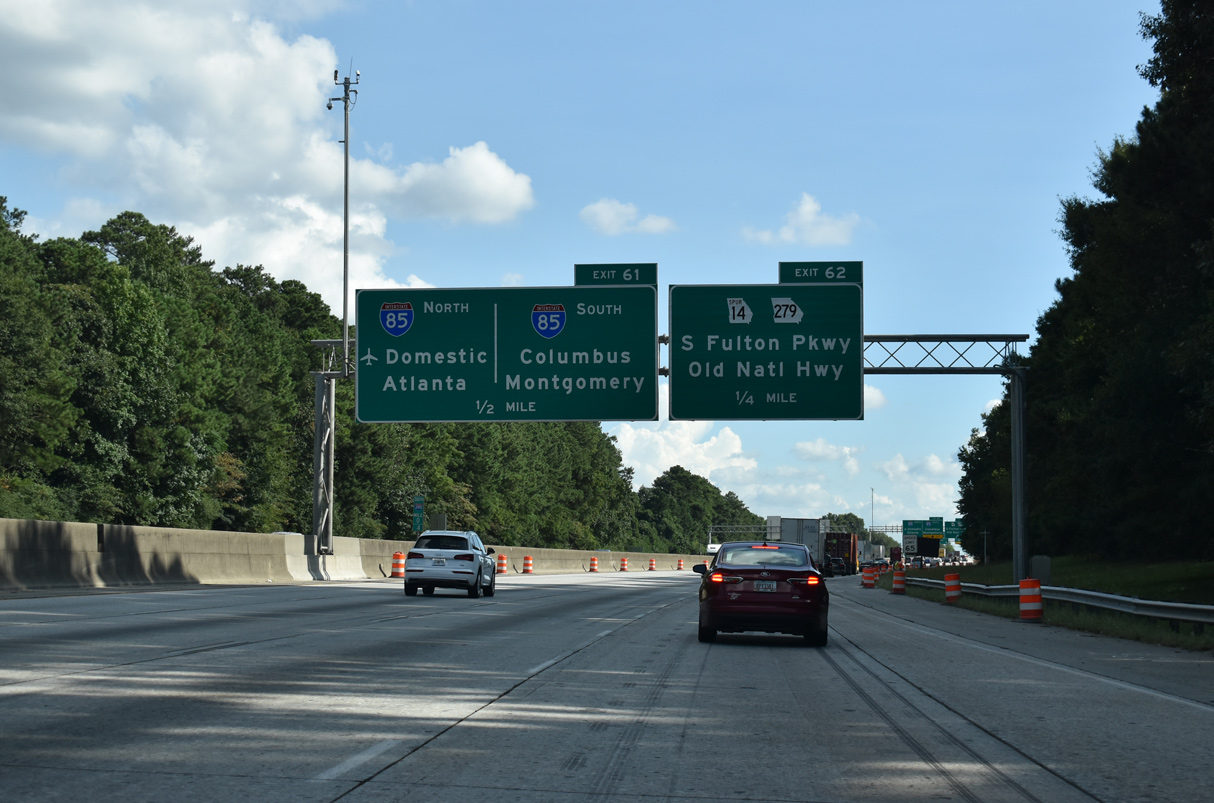
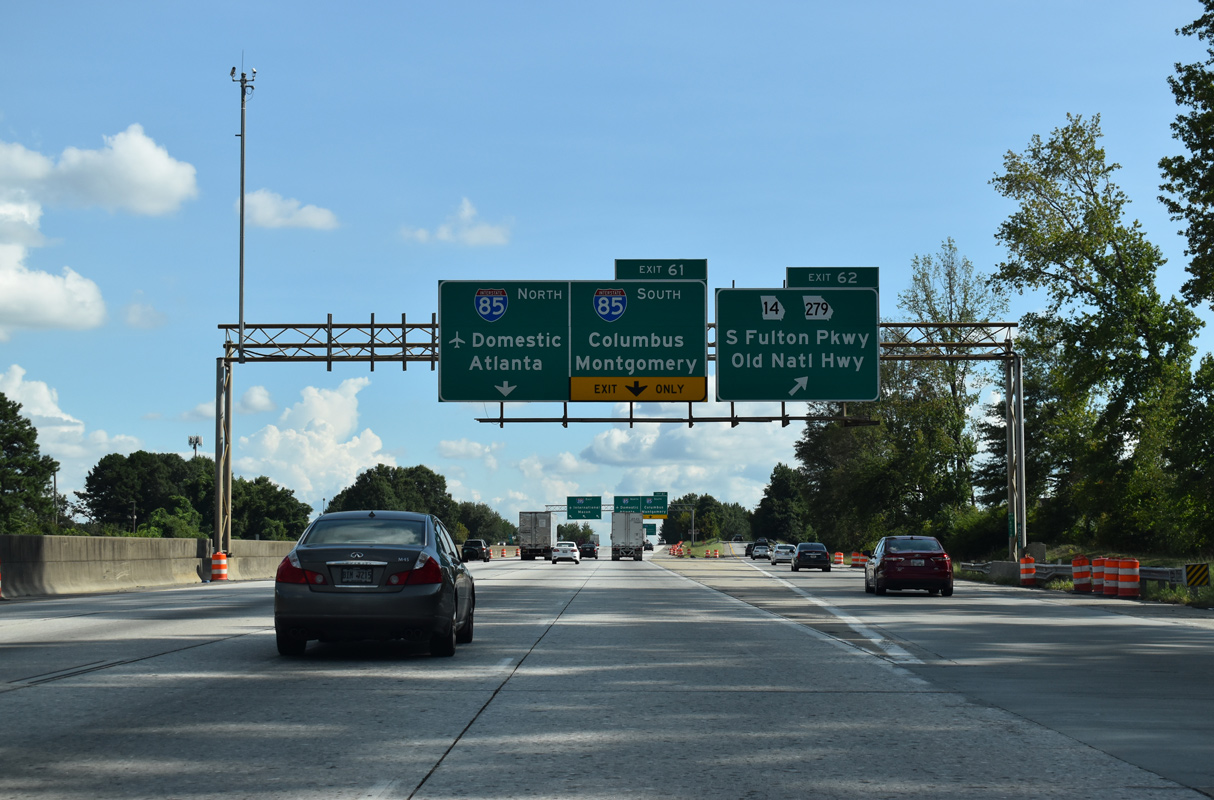
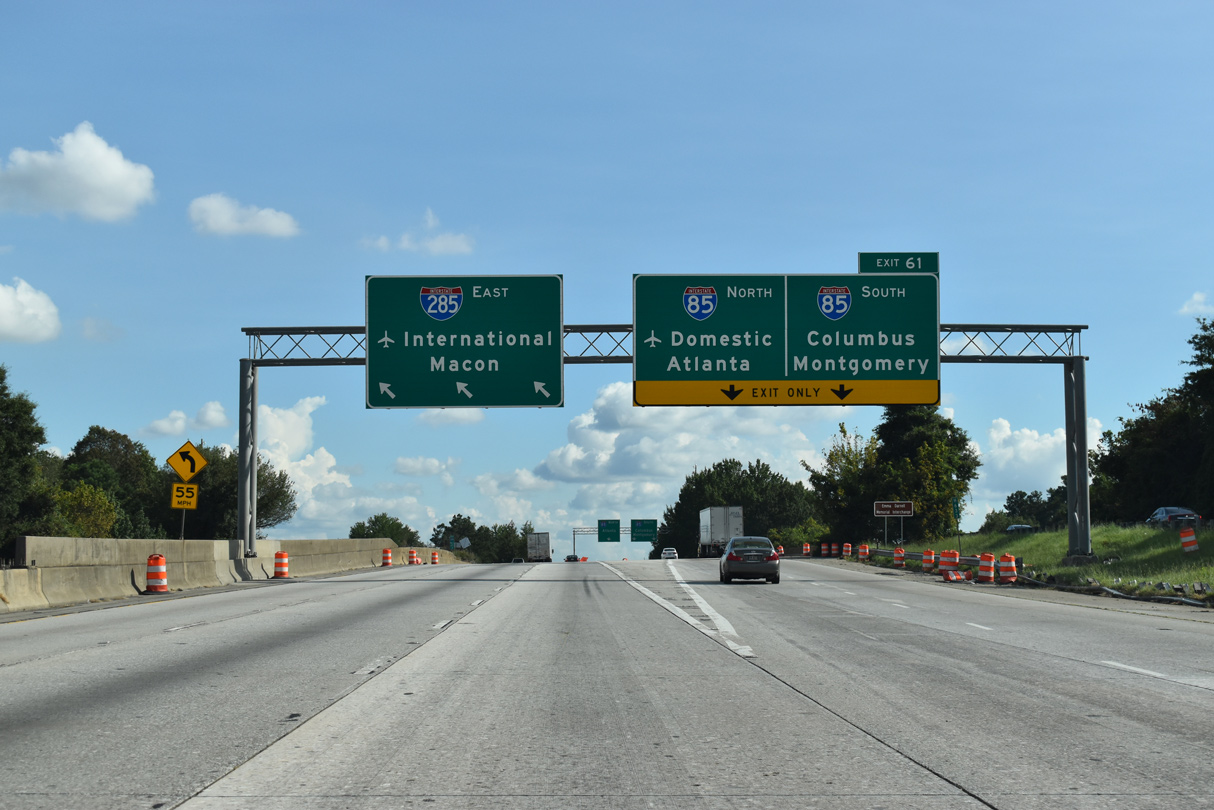
West at
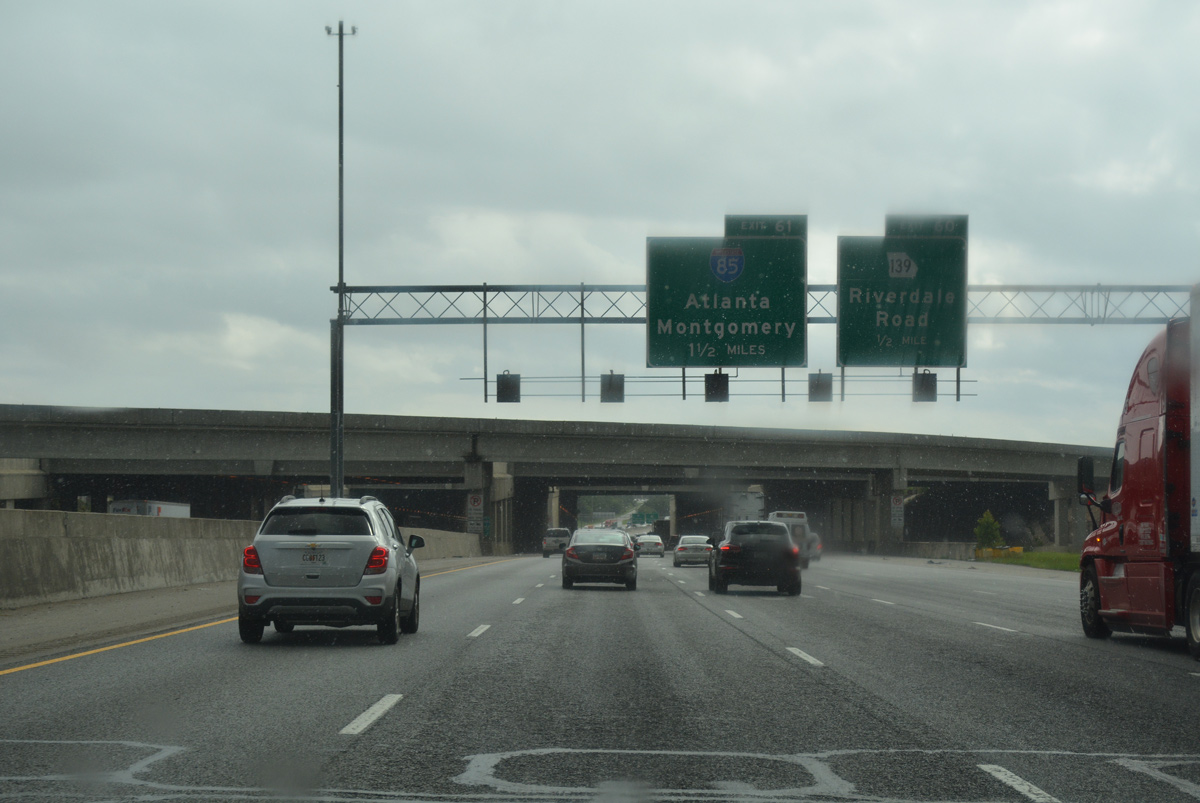
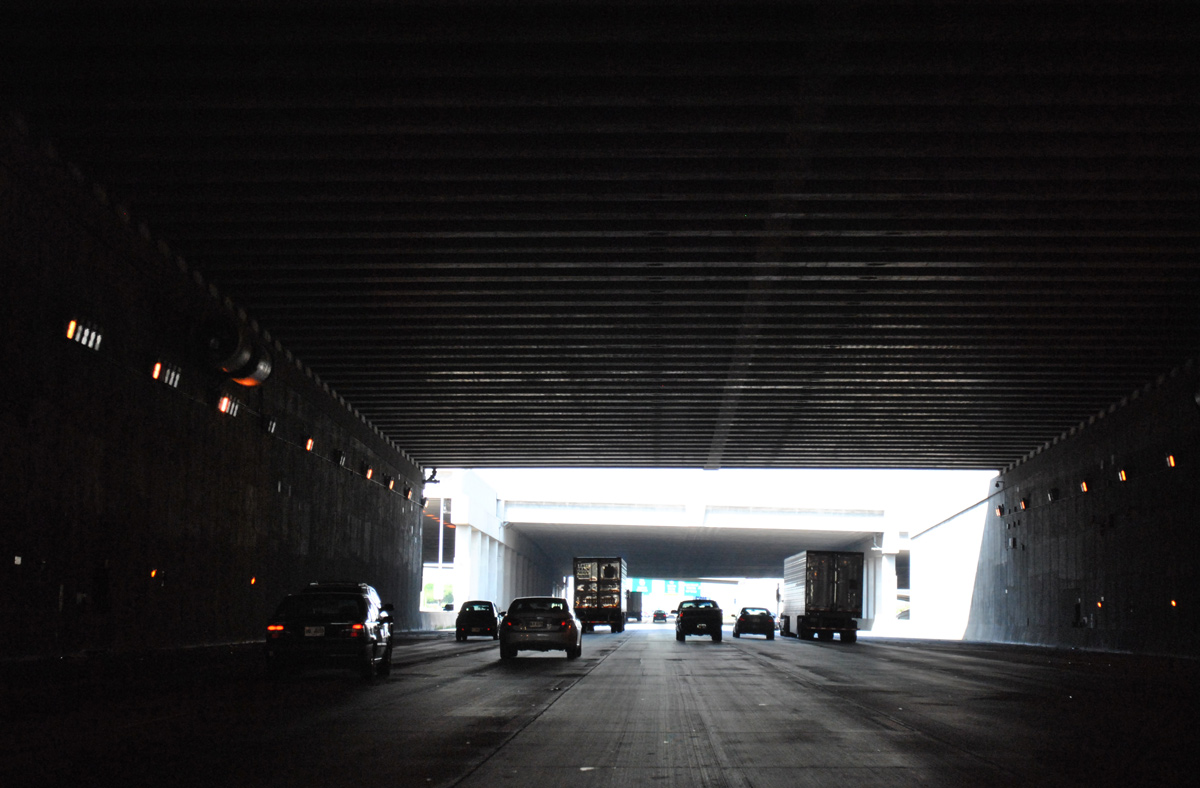
Interstate 285 angles southwest and passes under a pair of tunnels below the 5th Runway of Hartsfield-Jackson Atlanta International Airport (ATL), 1.5 miles from the exchange with I-85. 06/30/17
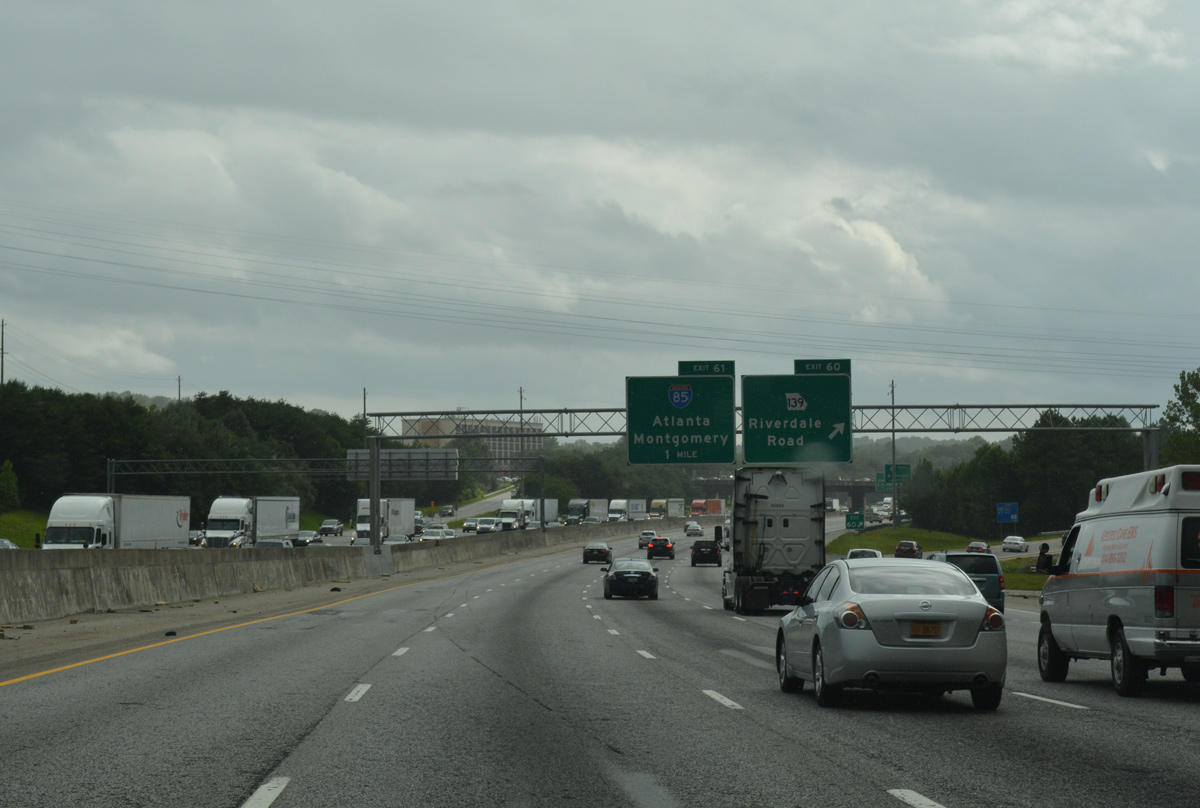
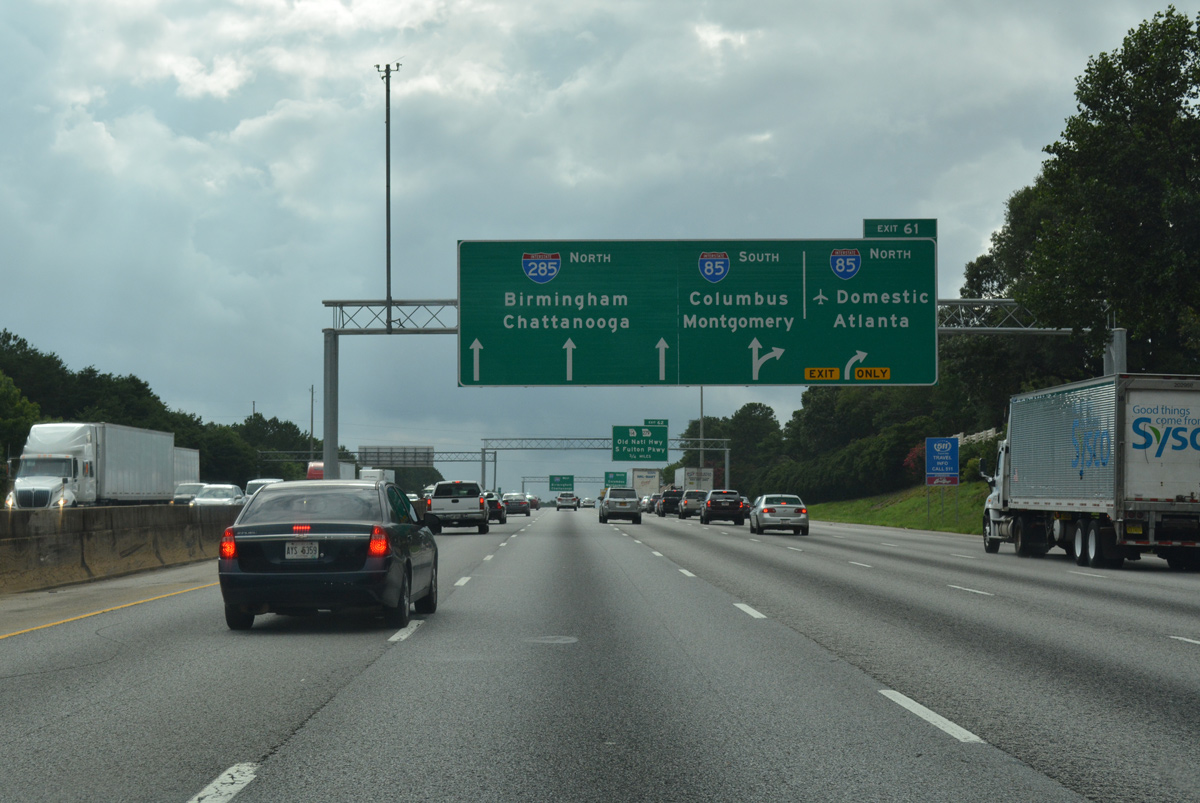
North at
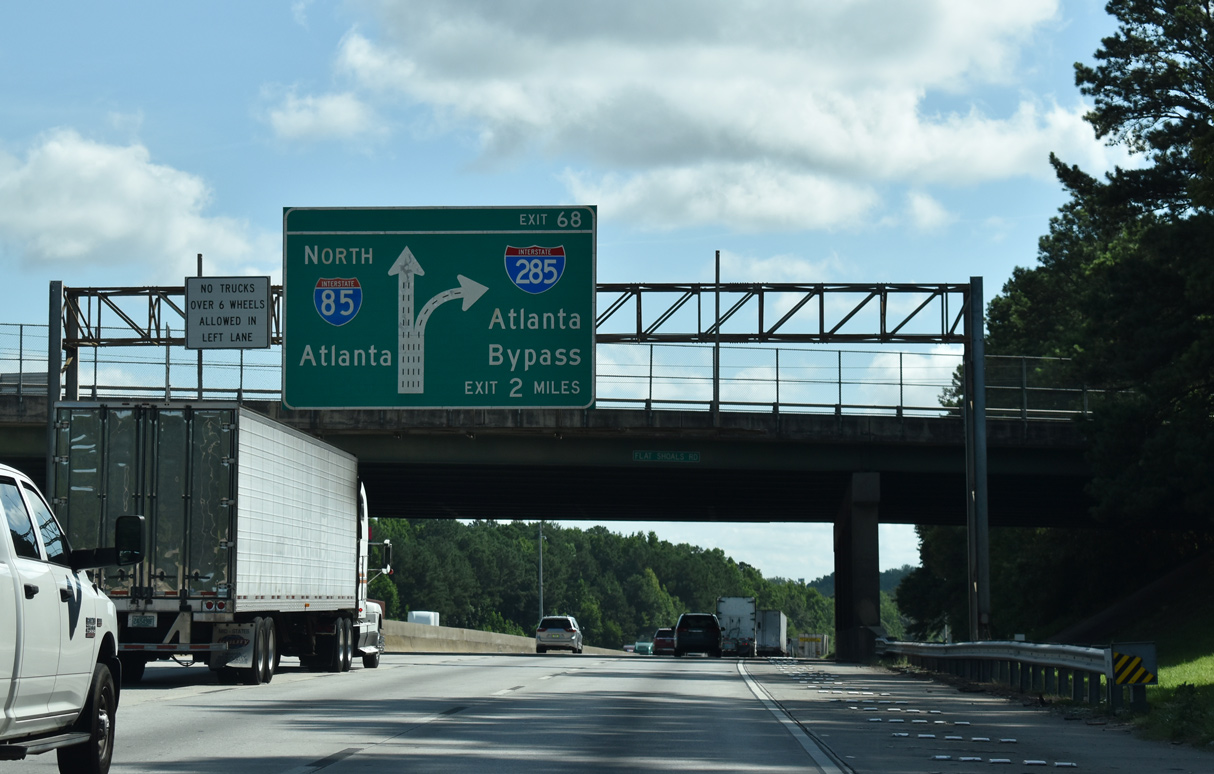
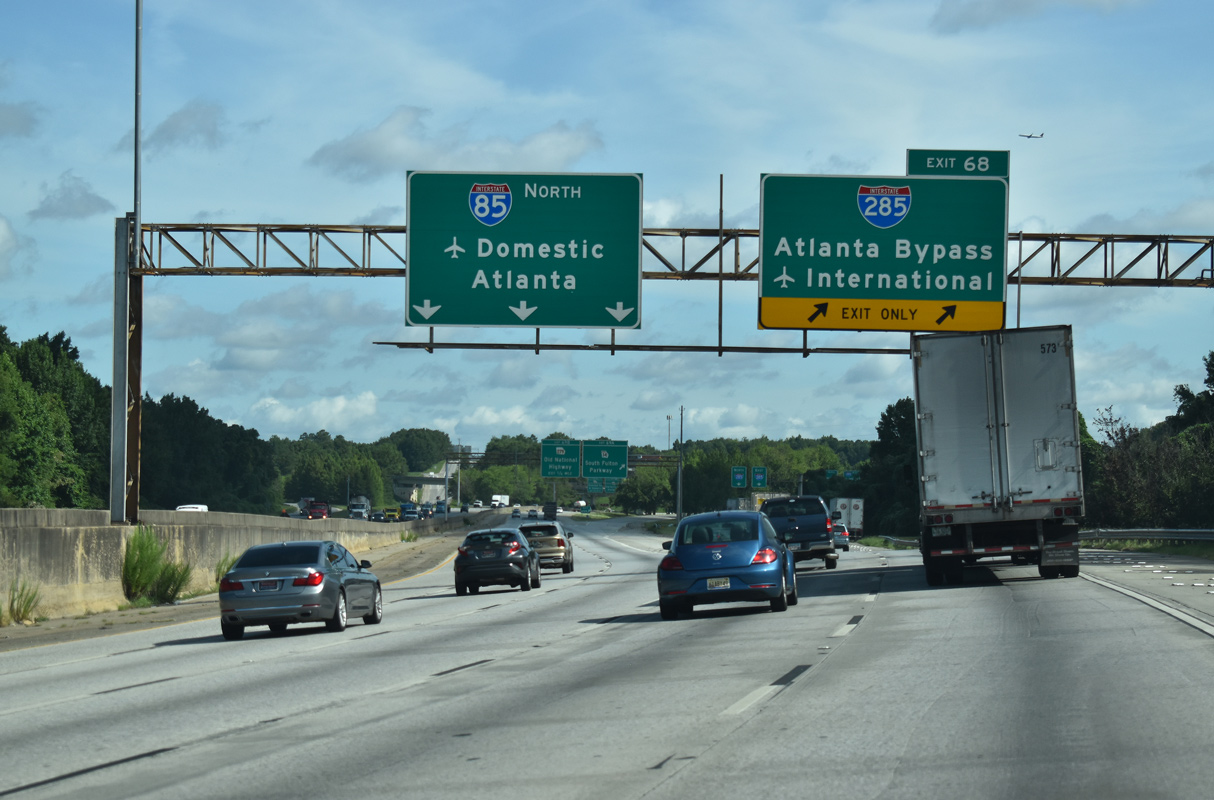
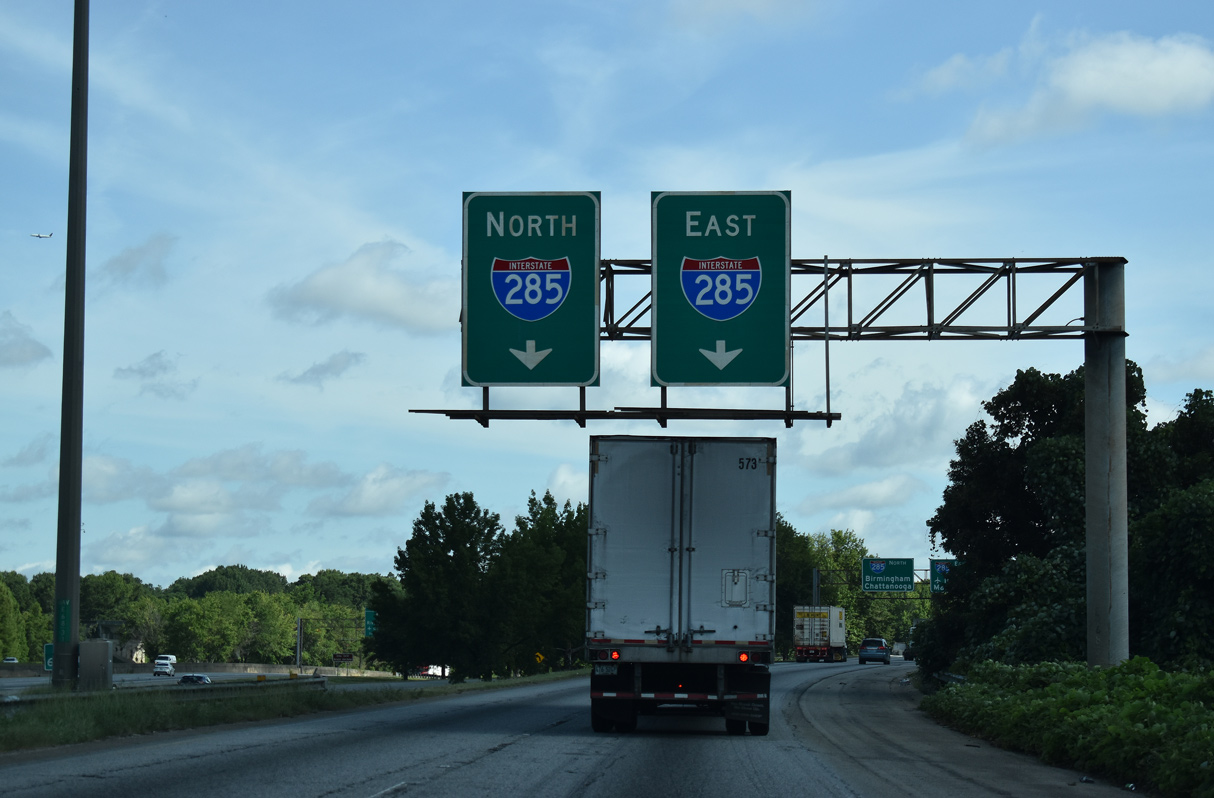
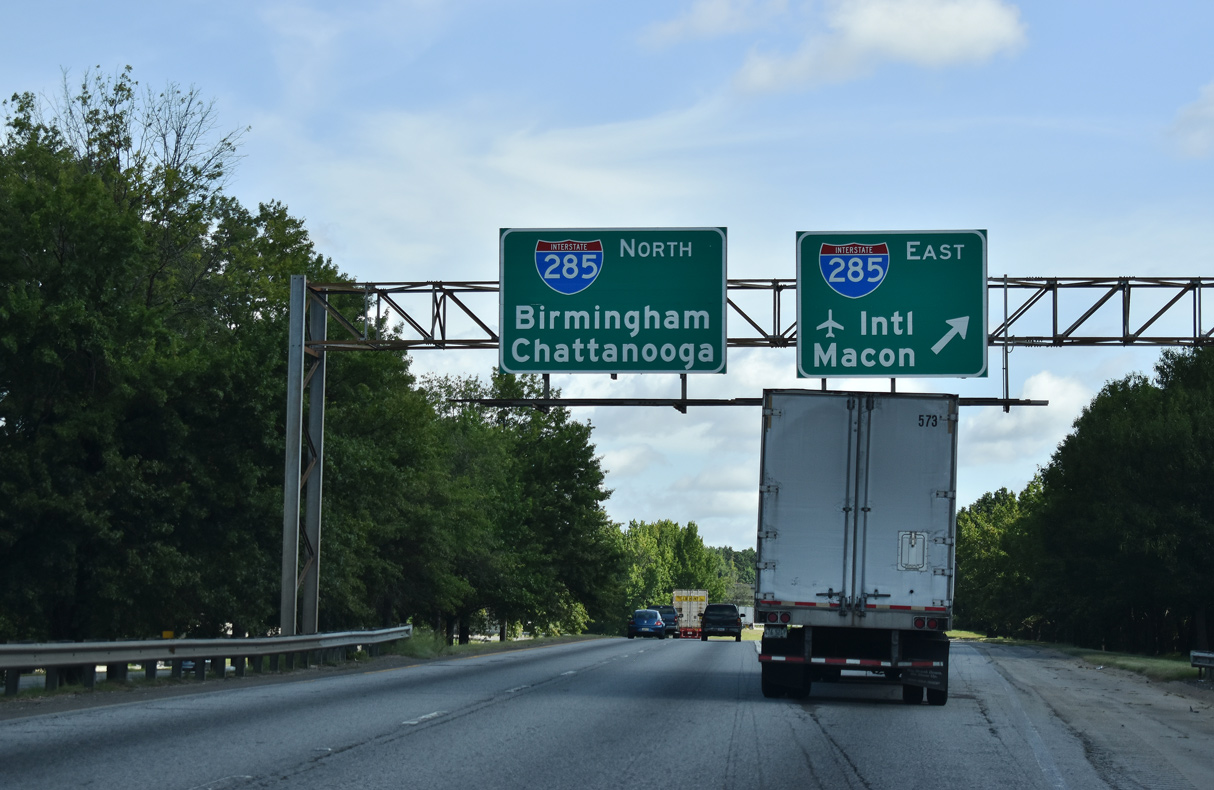
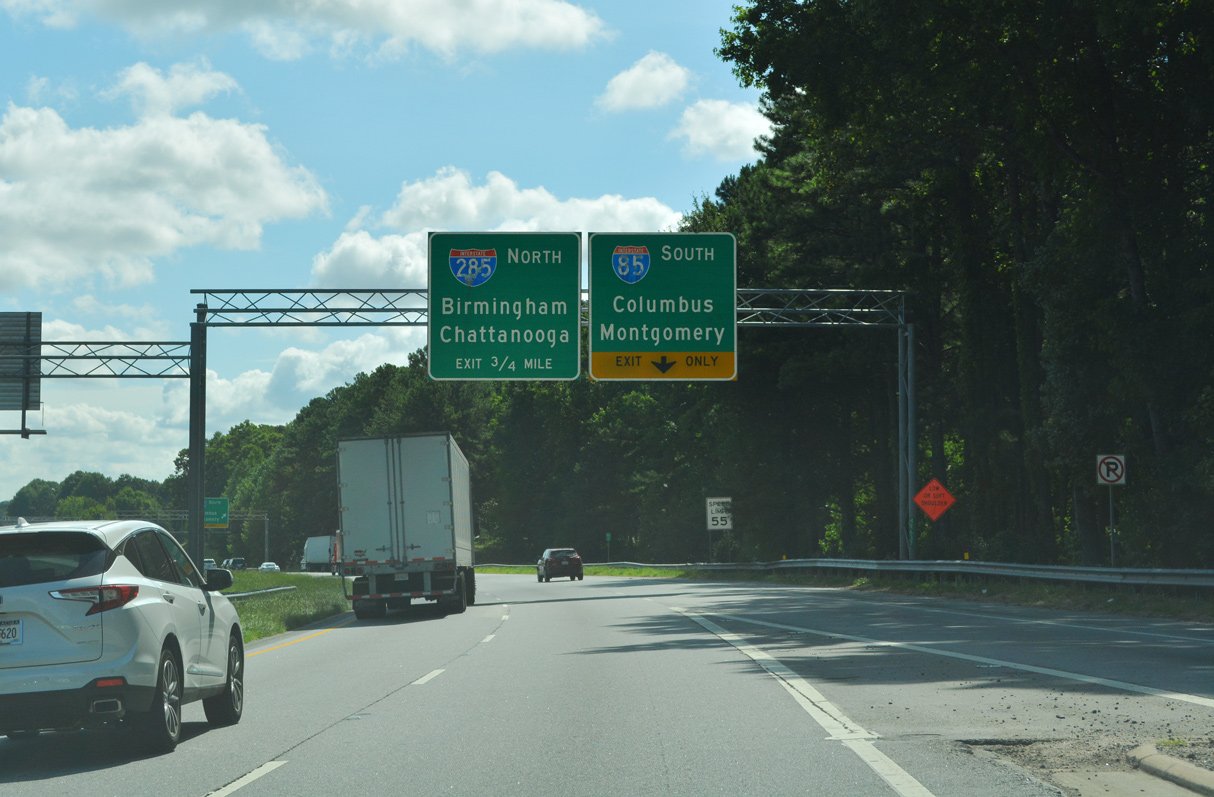
Two miles ahead of the cloverstack interchange (Exit 68) with Interstate 285 and SR 14 Connector (S Fulton Parkway) on I-85 north at the Flat Shoals Road overpass. 07/26/22
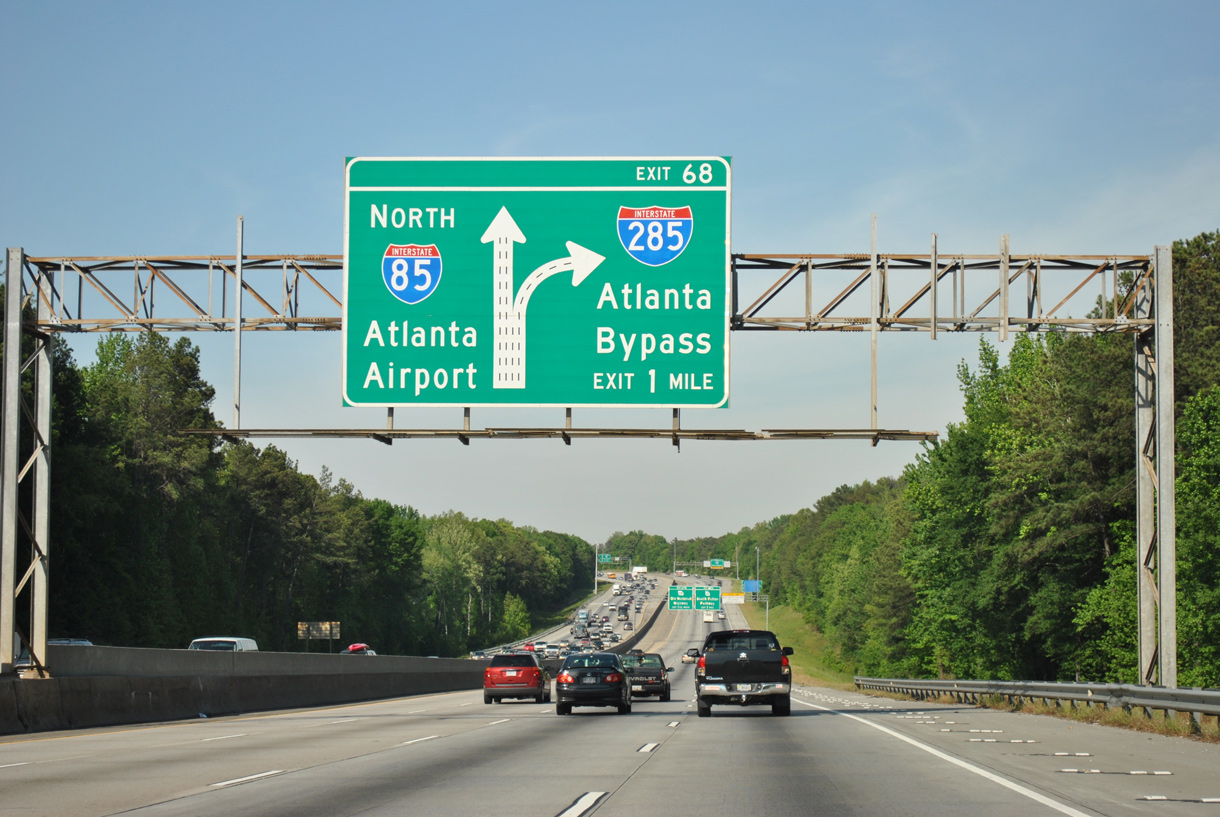
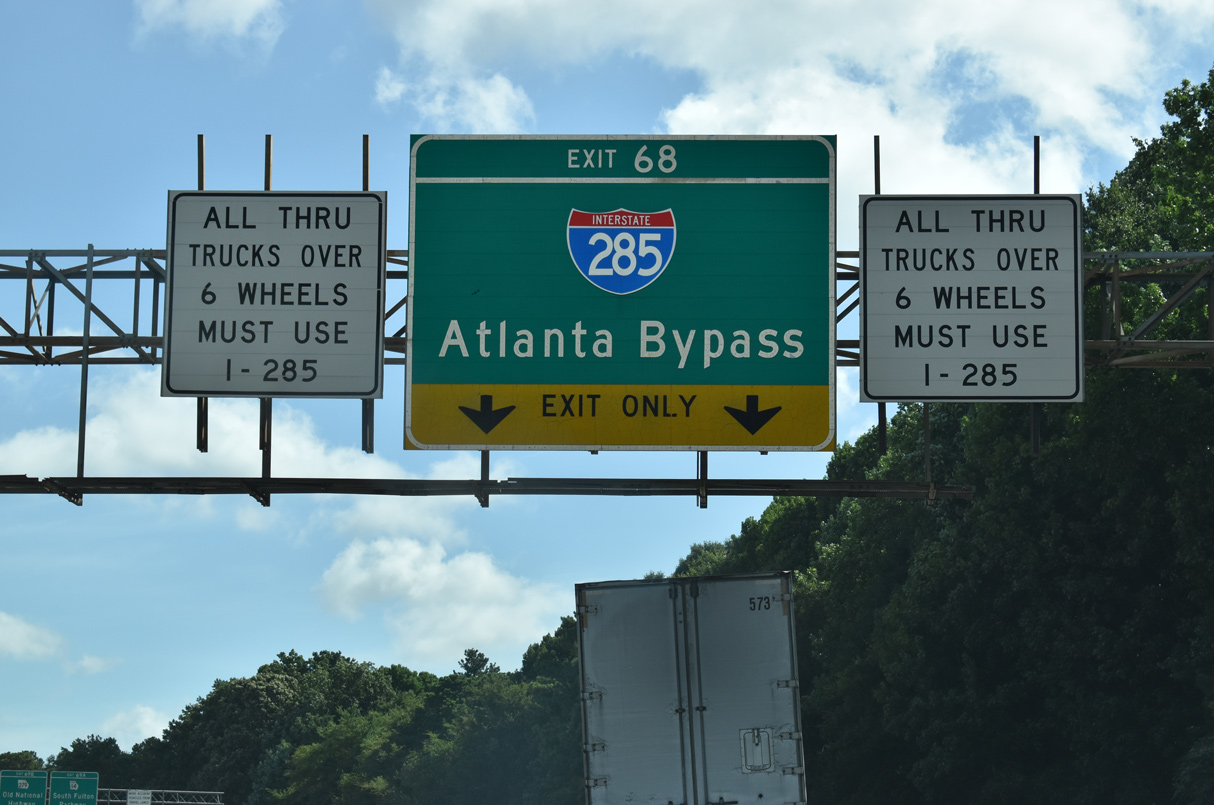
South at
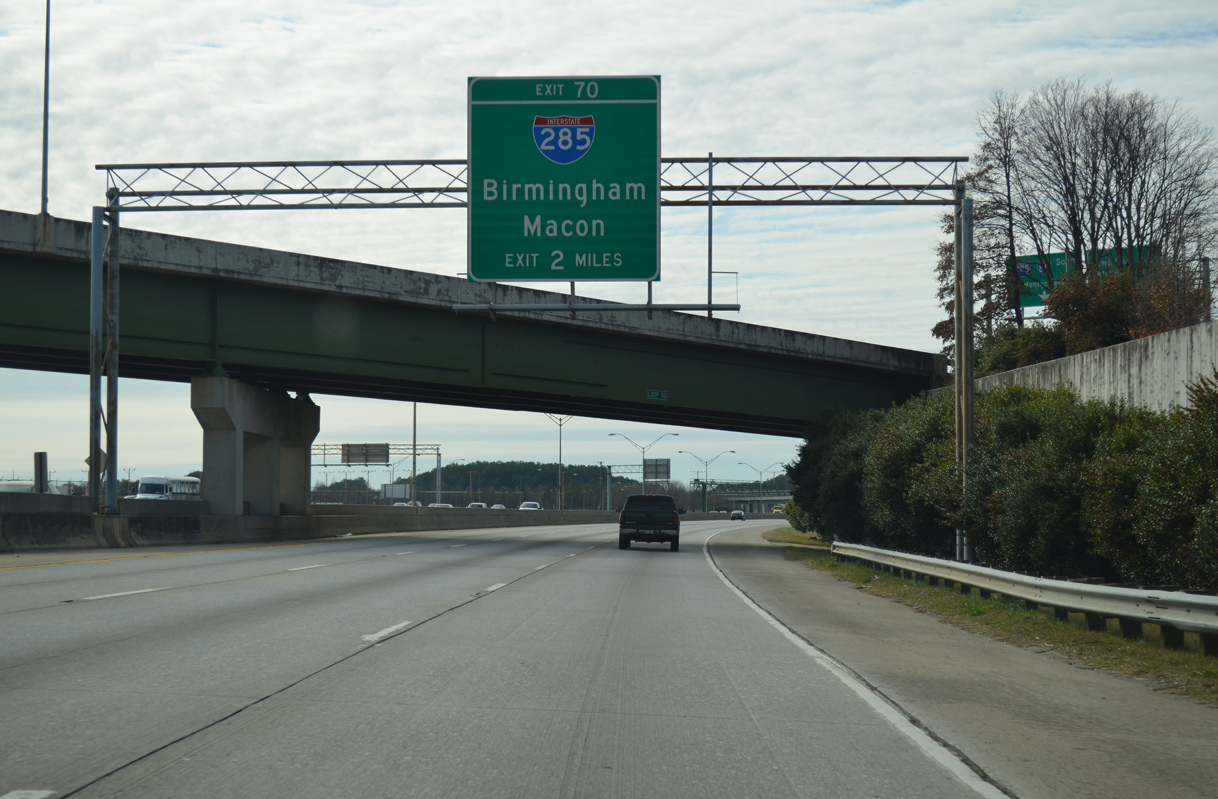
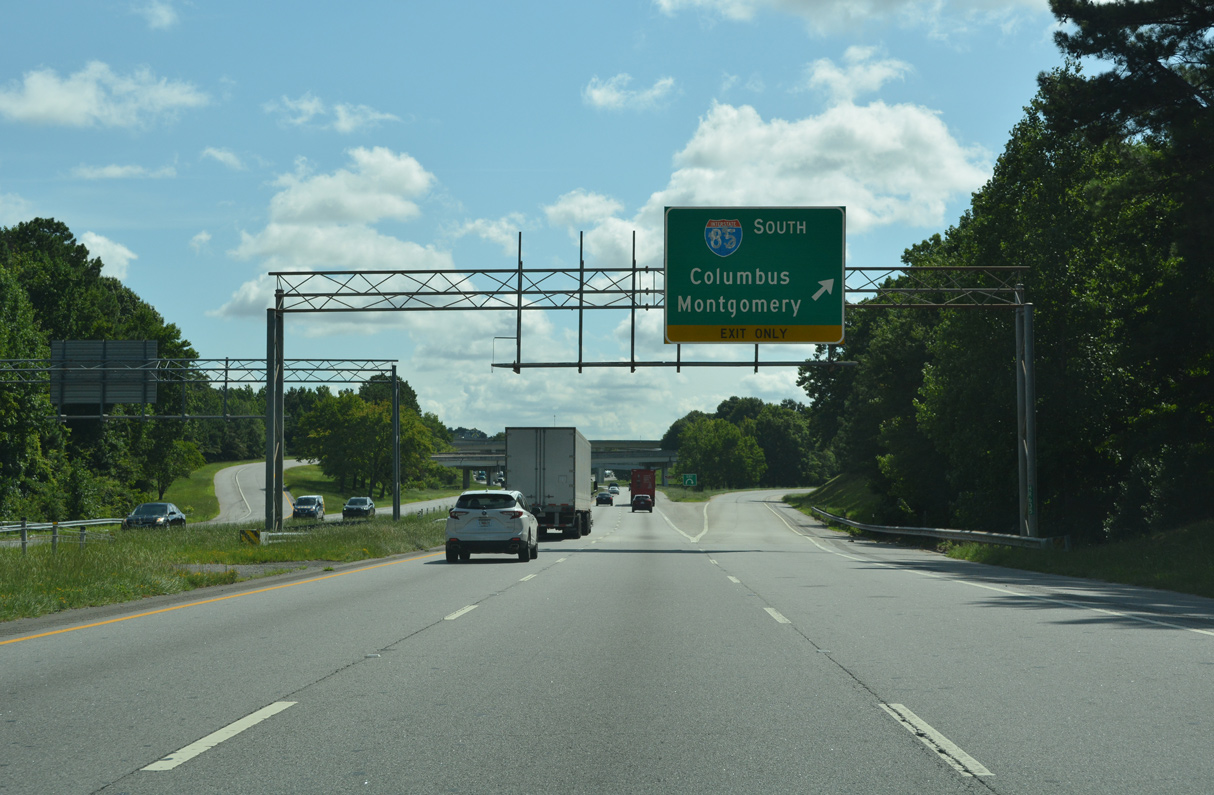
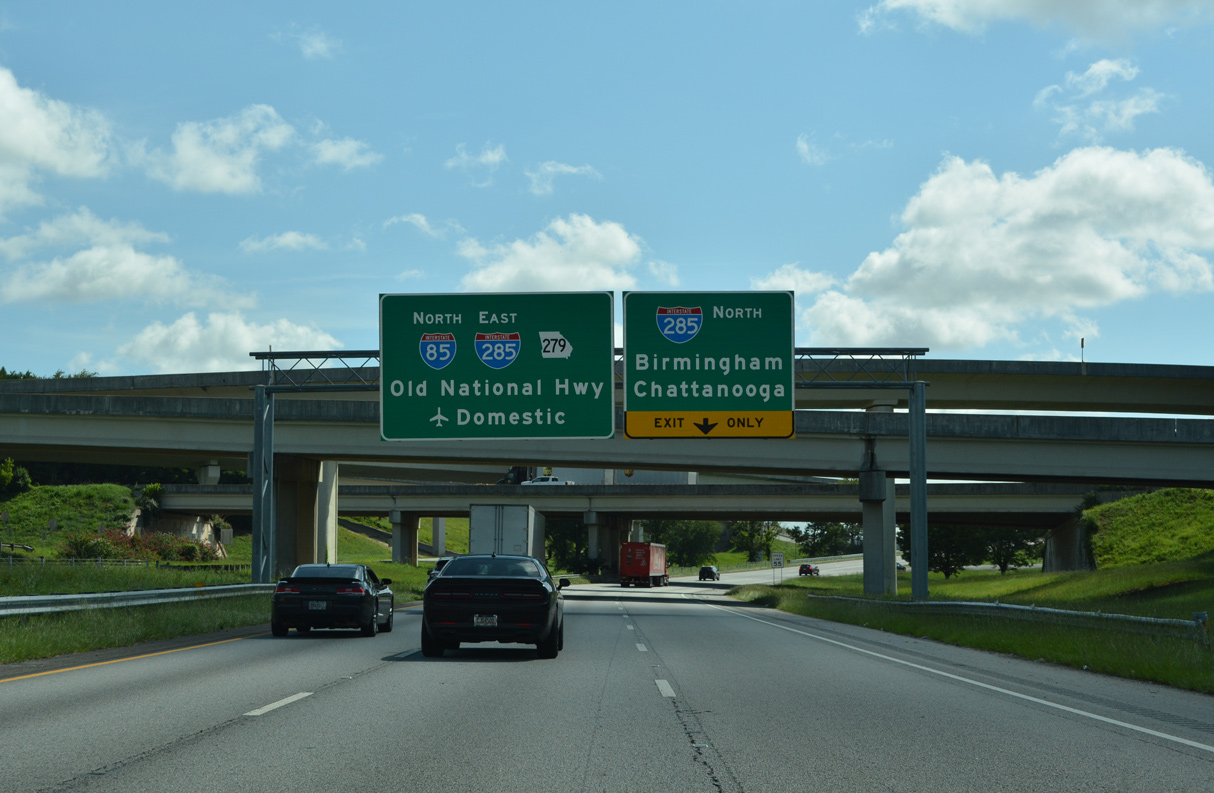
I-85 south makes a gradual S-curve from the Domestic Terminal of Hartsfield-Jackson Atlanta International Airport (ATL) to Exit 70 with the Perimeter Highway. 12/31/12
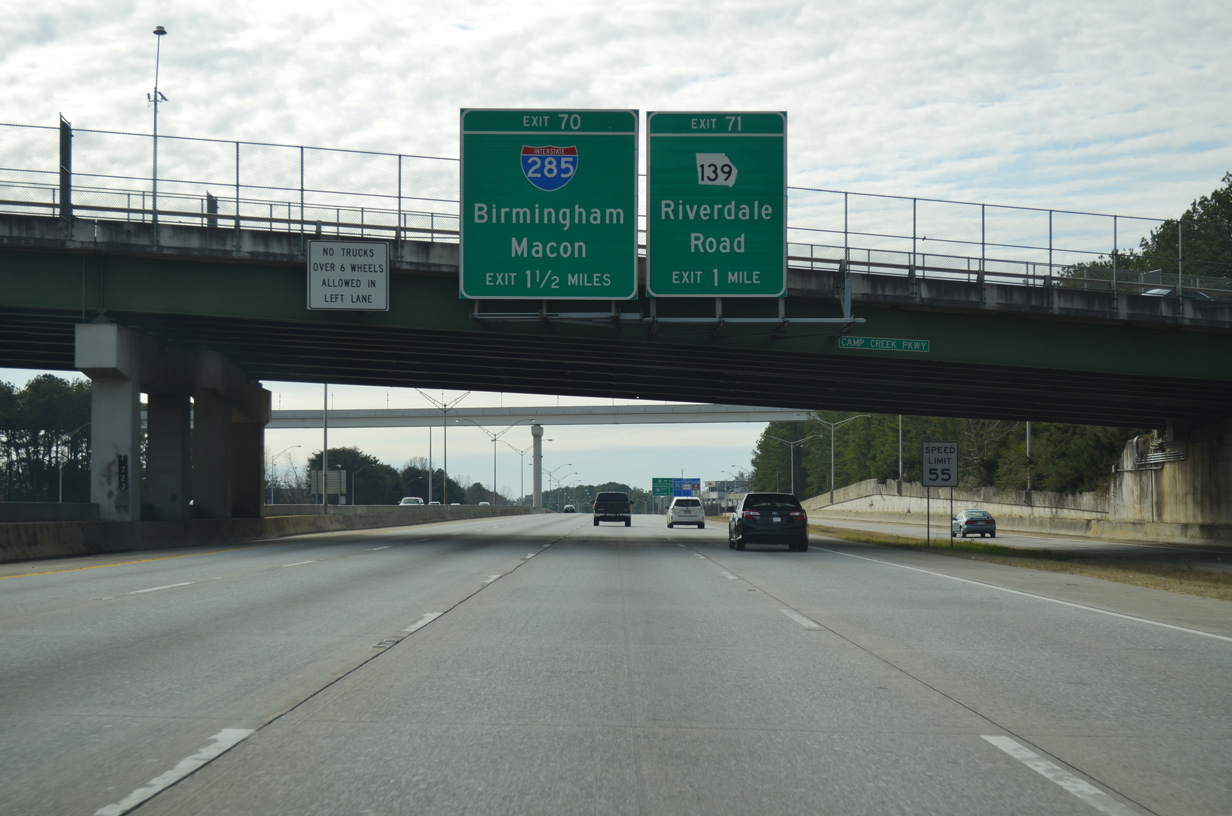
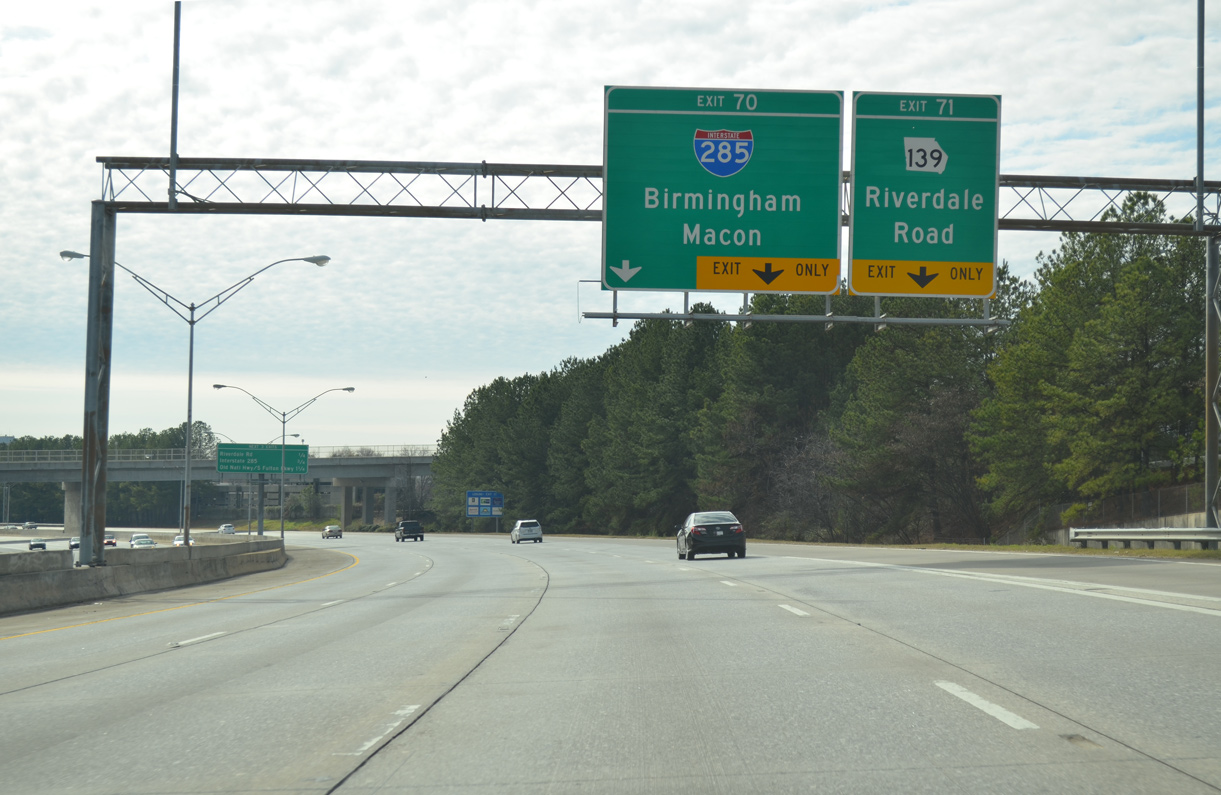
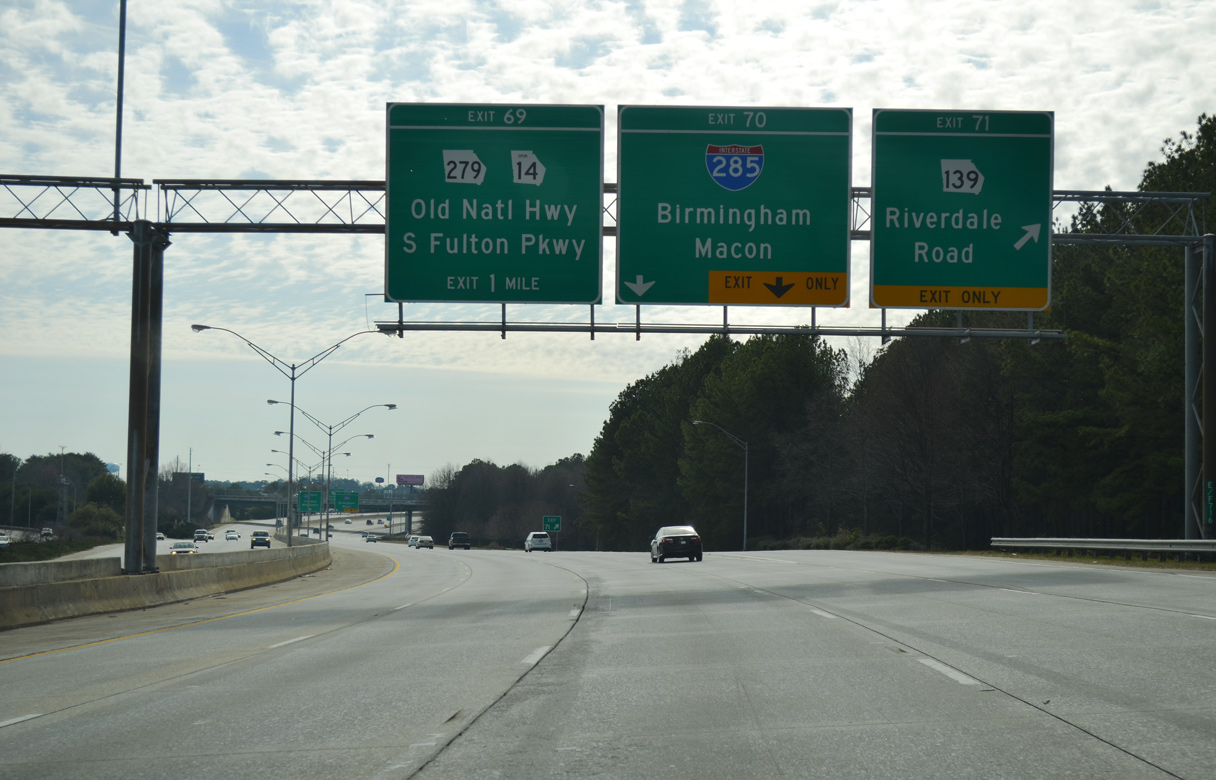
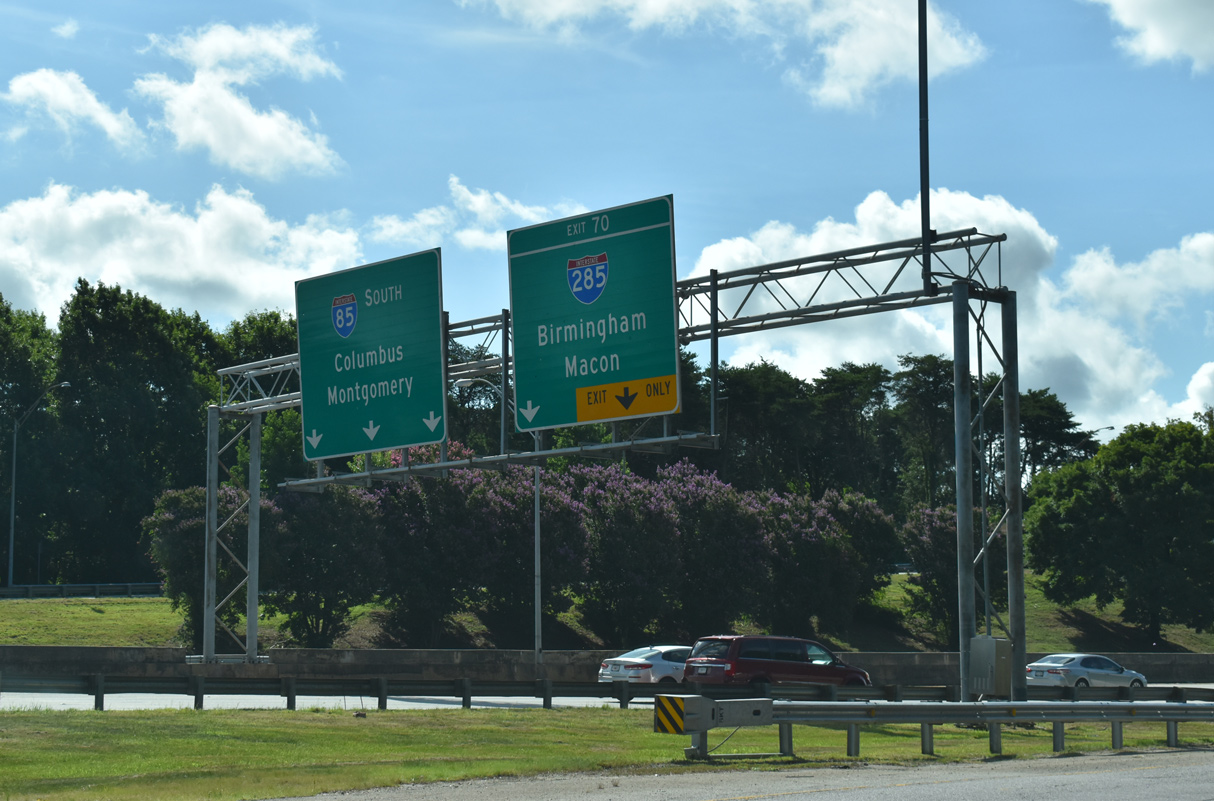
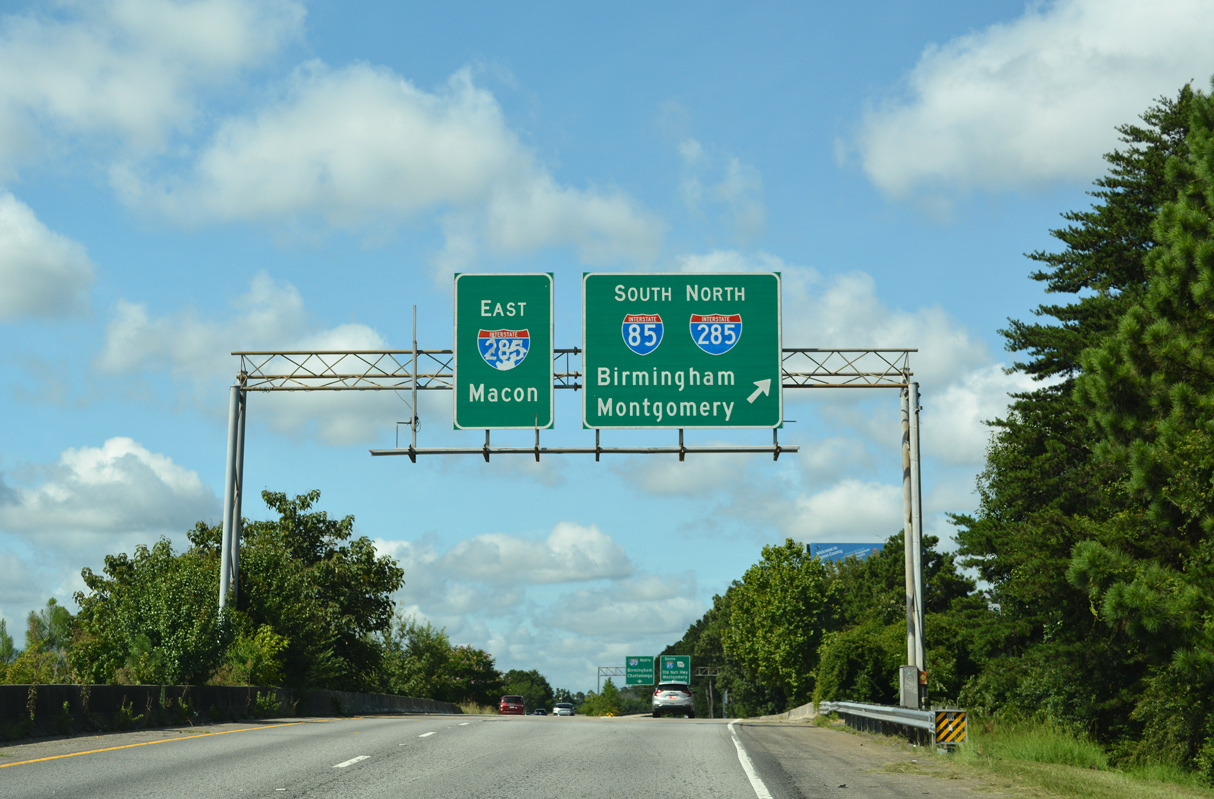
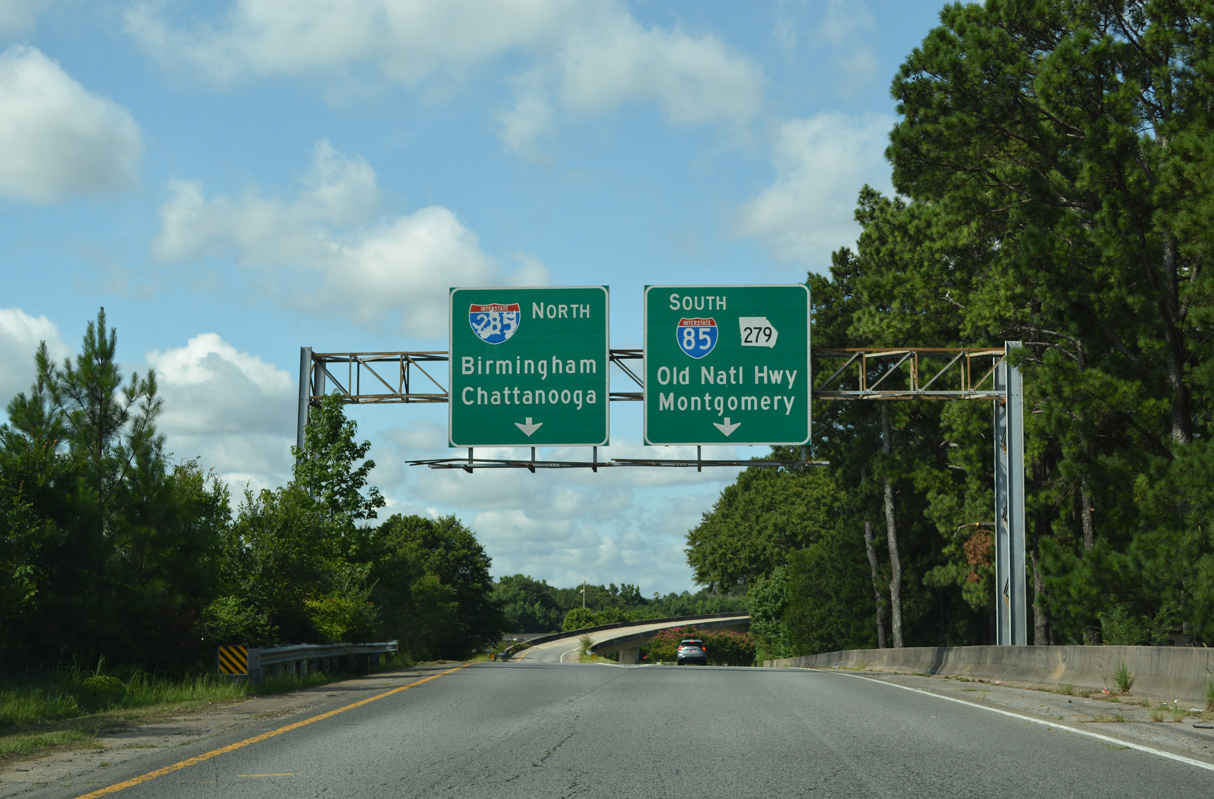
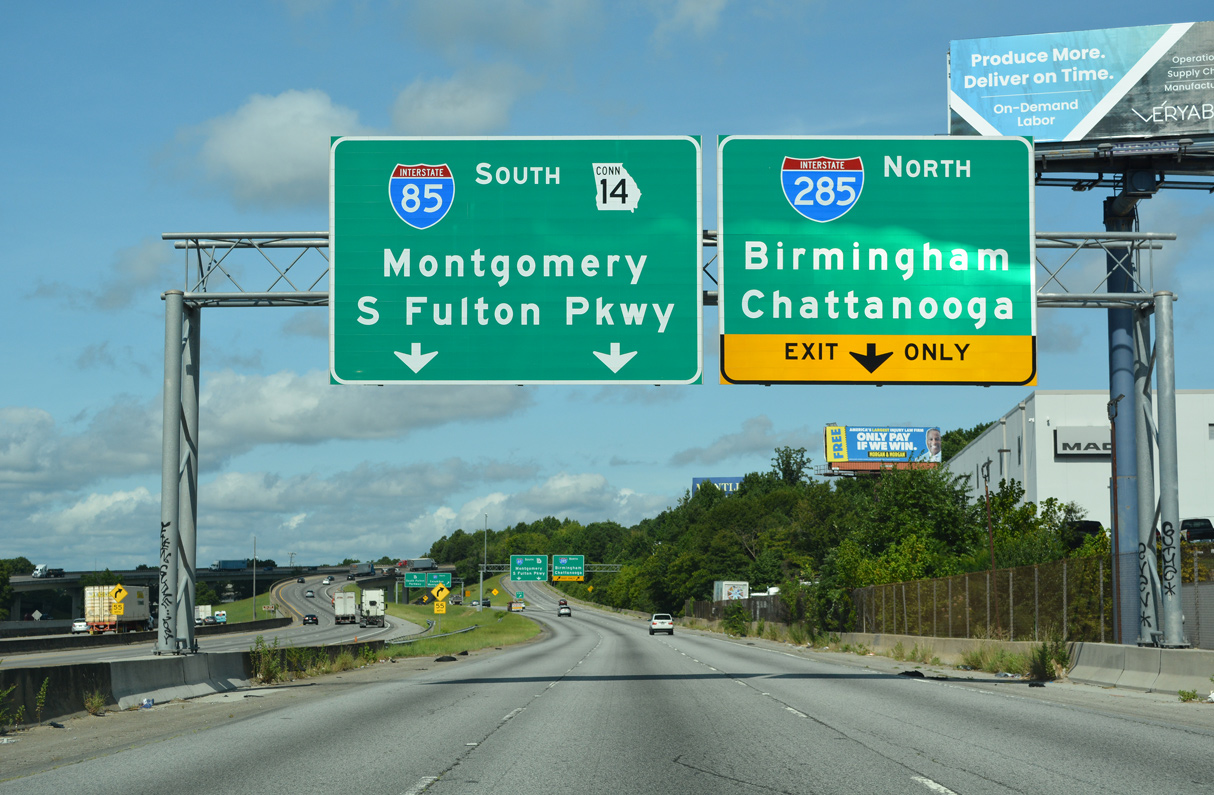
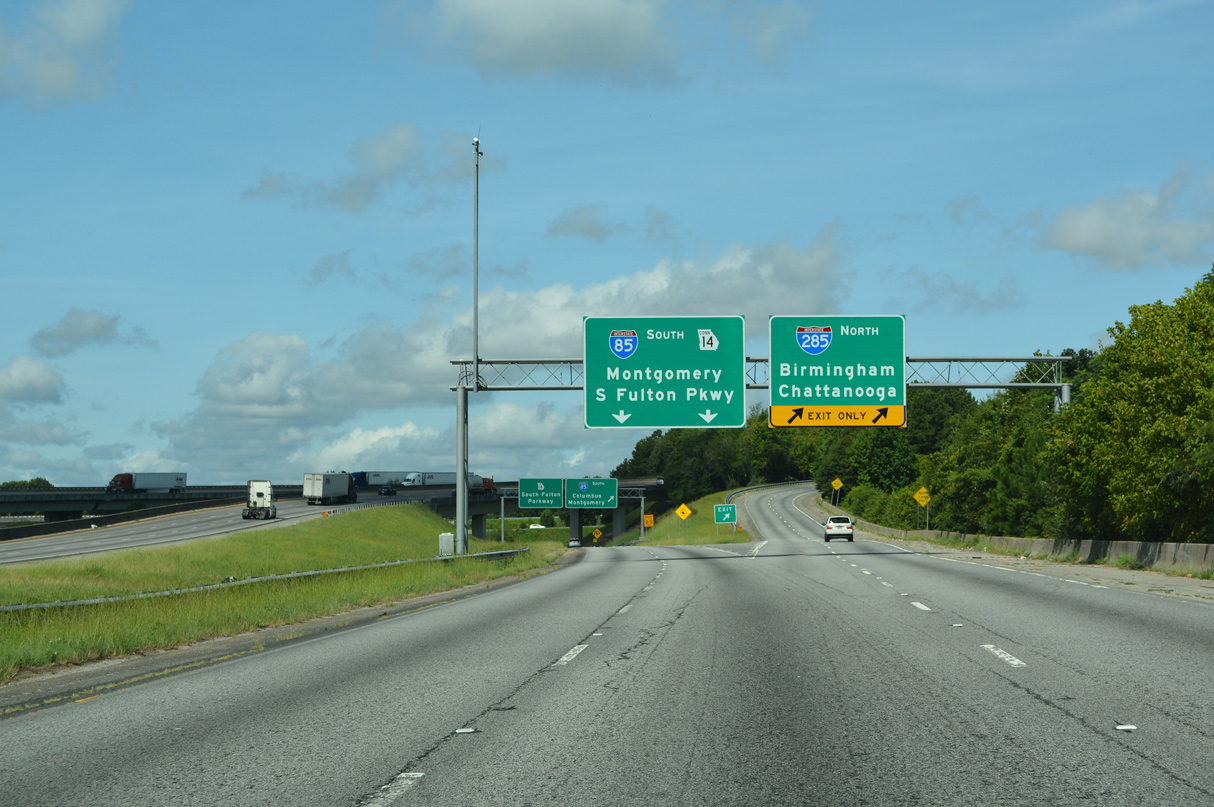
East at
SR 14CO (S Fulton Parkway) links U.S. 29/SR 14 (Roosevelt Highway) with both I-85 and I-285 in southwestern reaches of College Park. 07/26/22
South End – Past Views
Past Views Gallery (Tap to Expand / Collapse Section)
West at
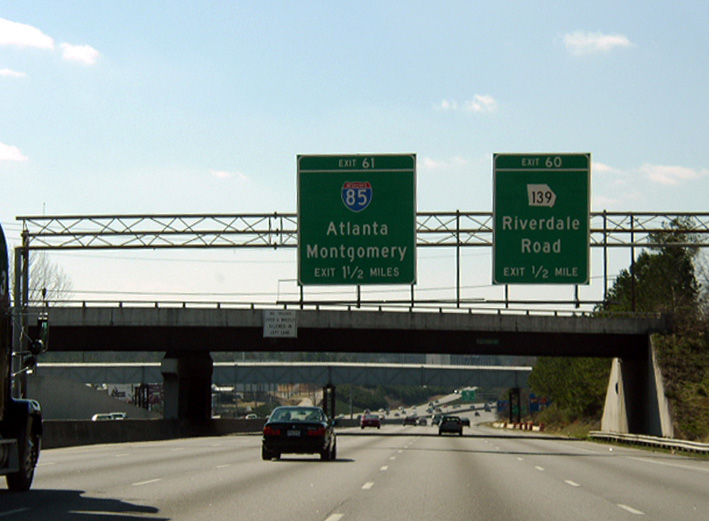
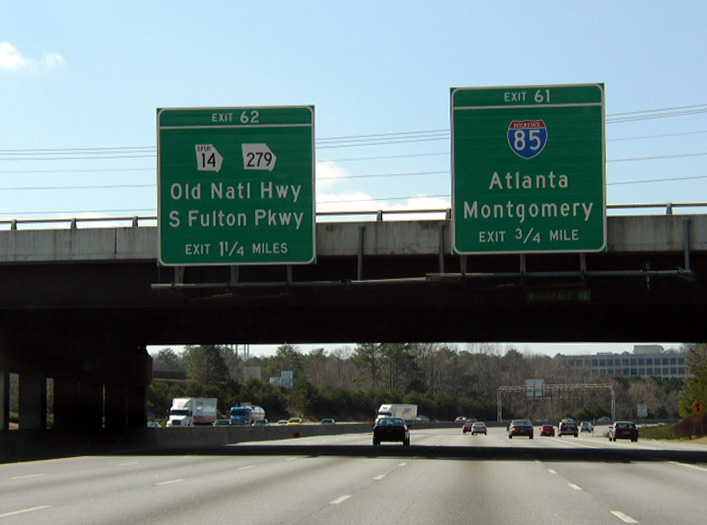
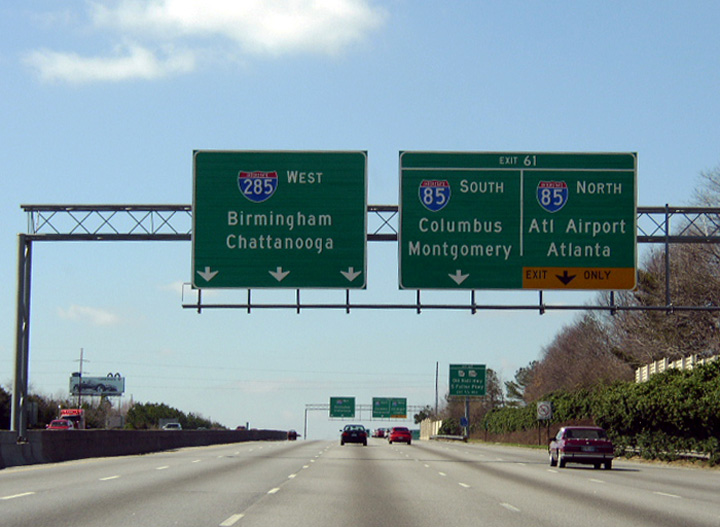
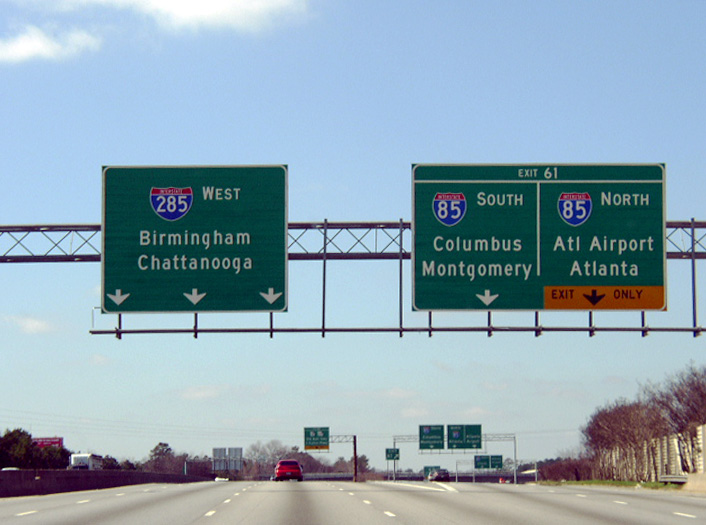
I-285 curved westward around the periphery of ATL Airport with five lanes from Airport Loop Road toward SR 139 (Exit 60) and I-85 (Exit 61). Completed in 2006, the 5th Runway project added two tunnels along the Atlanta Beltway on this stretch. Photo by Chris Patriarca (02/23/03).
References
- "New report puts dates on start of Outer Loop." The Atlanta Journal and The Atlanta Constitution (GA), October 22, 1992.
- "Outer Loop on back burner again." The Atlanta Journal and The Atlanta Constitution (GA), November 5, 1992.
- "Northern arc through Cherokee endorsed by Barnes." Cherokee Tribune (Canton, GA), January 16, 1999.
- "Counties eye Arc right-of-way - Gwinnett floats parkway plan." The Atlanta Journal and The Atlanta Constitution (GA), February 20, 2003.
- "Happy Birthday to the open road." Gwinnett Daily Post (Lawrenceville, GA), June 25, 2006.
- "I-75, I-285 on north side to be widened ... again." The Atlanta Journal and The Atlanta Constitution (GA), May 28, 1986.
- "Light at end of the tunnel for Interstate 85 construction."" The Atlanta Journal and The Atlanta Constitution (GA), September 17, 1987.