
Interstate 97
Overview
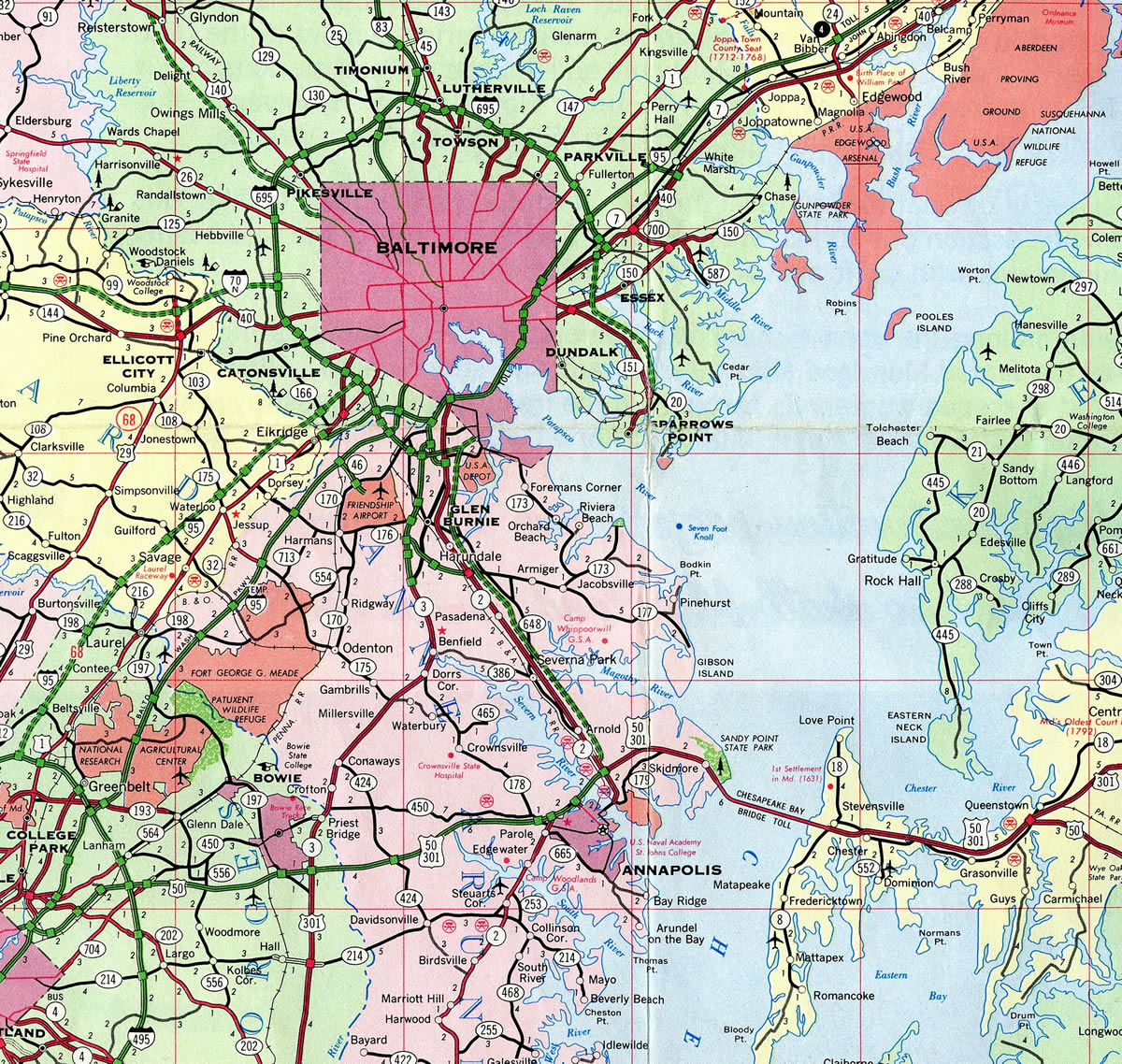
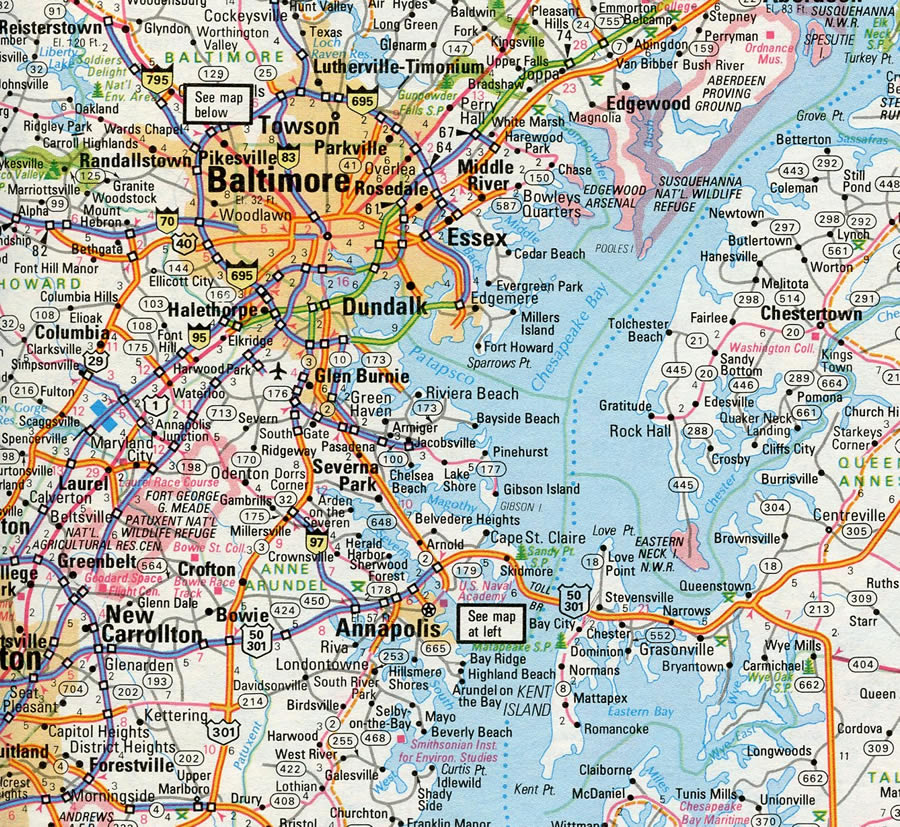
I-97 is the shortest two-digit Interstate in the 48 contiguous states. With only 17 miles, I-97 also lies wholly within Anne Arundel County. Connecting U.S. 50/301 (John Hansen Highway) with Interstate 695 along the Baltimore Beltway, it generally serves as a commuter route between Baltimore and Annapolis.
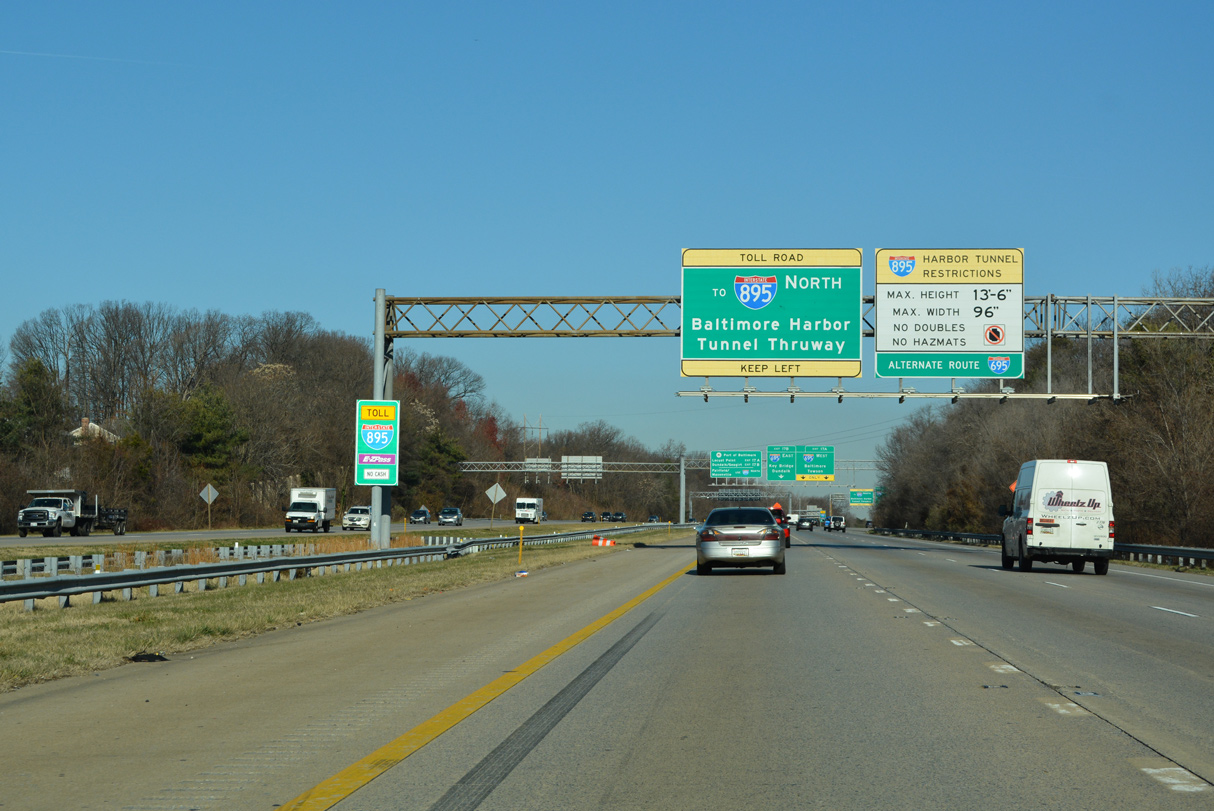
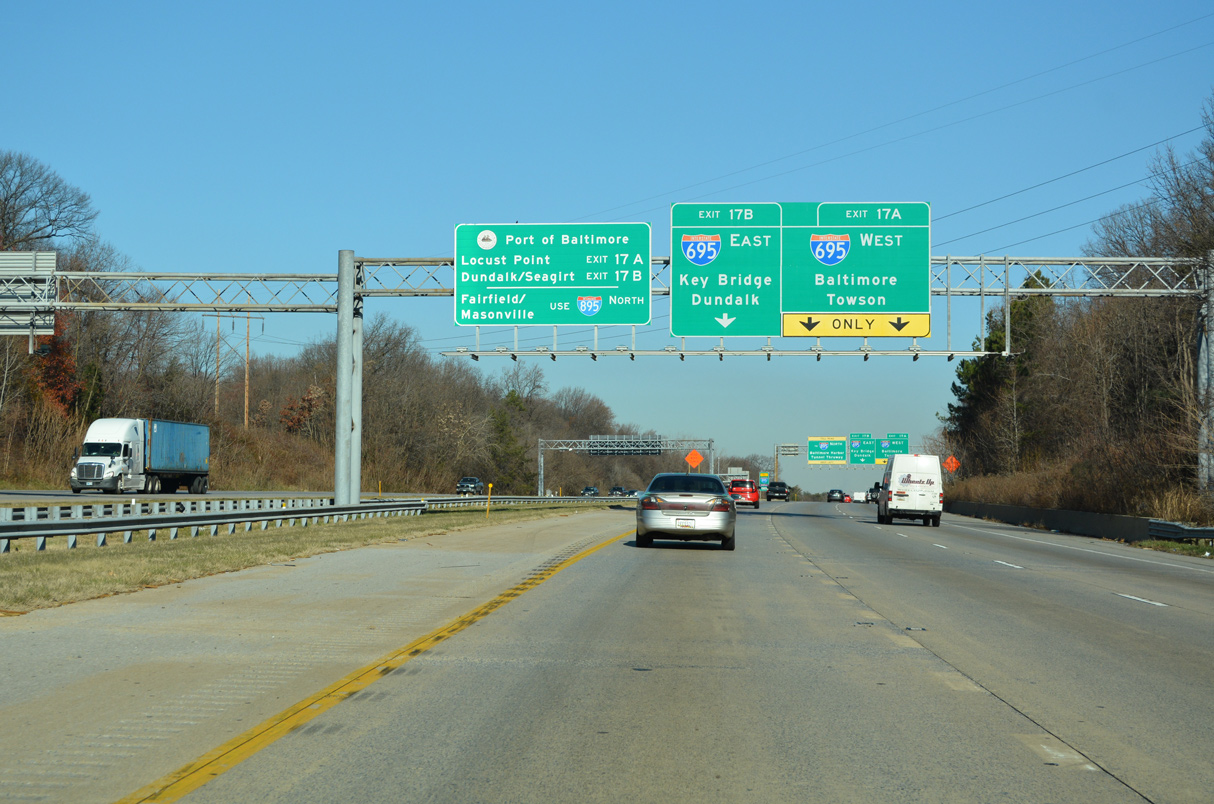
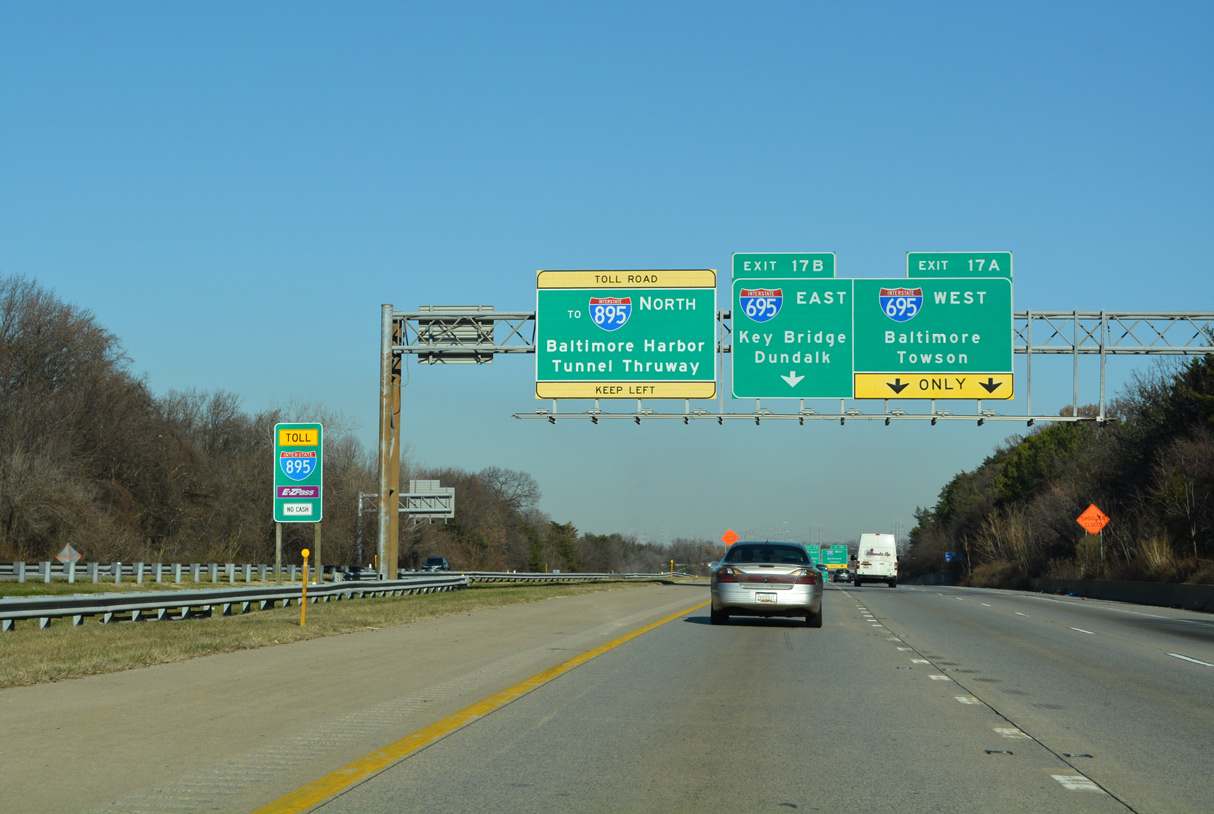
Two freeways make up the alignment of Interstate 97: the Glen Burnie Bypass (former MD 3) to the north, and the former eastern extent of MD 32 to the south. The north end includes a direct connection with I-895 Spur to the Baltimore Harbor Tunnel.
Mileage by State
| Maryland | 17.62 mi |
Data Sources
December 31, 2025 Interstate Route Log and Finders List
Parallel U.S. Routes
Interstate 97 replaced portions of MD 3, which was the northernmost extent of U.S. 301 until 1960, when it was redirected to end at Glasgow, Delaware.
History
The Annapolis Expressway (MD 10) was first proposed as the freeway route between Annapolis and Baltimore. Studied initially in 1956, MD 10 was to run southeast along side MD 2 to U.S. 50. Community opposition halted work on the expressway south of Pasadena in the late 1970s, leading to a cancellation of those sections. The remainder north from MD 2 to I-695 was finally completed on March 2, 1991.4
During the 1970s, Maryland proposed routes for both I-68 and Interstate 97 in the Annapolis area. I-68 was planned for U.S. 50 between the Capital Beltway and a point west of Annapolis. I-97 was projected for a north to south route from the end of I-68 to the Baltimore Beltway. In addition, the freeway along U.S. 50 east from I-68 and I-97 to the present end of I-595, was incorporated as Interstate 197. Interstate 297 was also introduced as the replacement for MD 3, from U.S. 50/301 north to MD 32. The American Association of State Highway and Transportation Officials (AASHTO) approved I-97 north of U.S. 50 and I-297 on November 15, 1975. Conditional approval was granted to I-197 and to the I-68 segment as an extension of I-97.
Further changes from Maryland regarding Interstate 97 were submitted to AASHTO on October 3, 1981. Again Interstate 68 was proposed in place of I-97 for the U.S. 50 freeway between the Capital Beltway and the previously referenced point west of Annapolis. The I-197 spur east from there to MD 70 was then proposed as Interstate 168. These changes were approved AASHTO by subject to Federal Highway Administration (FHWA) concurrence. Interstate 197 was never signed, Interstate 297 was never built, and by 1989, both proposed I-68 and I-168 were instead renumbered as Interstate 595.
The Glen Burnie Bypass was constructed during the 1960s as a new alignment for MD 3. This resulted in the designation of MD 3 Business, which still runs east of I-97 along Crain Highway. The freeway south from the MD 3/ 32 intersection to U.S. 50/301 opened to traffic in 19891
Construction for Interstate 97 between Dorrs Corner (MD 178) and New Cut Road (Exit 12) ran from 1988 to February 13, 1991. The $31 million project wrapped up with the opening of the new northbound lanes through the Millersville area.2
Portions of old MD 3 were converted into an east side frontage road (Veterans Highway) along the newly opened Interstate 97 in 1991.2 A traffic light on I-97 at Old Mill Road remained in operation along this stretch until July 2, 1991, as work to convert Veterans Highway to two-way traffic was delayed by six weeks.3
North End 
 ‐ Baltimore, MD
 North at
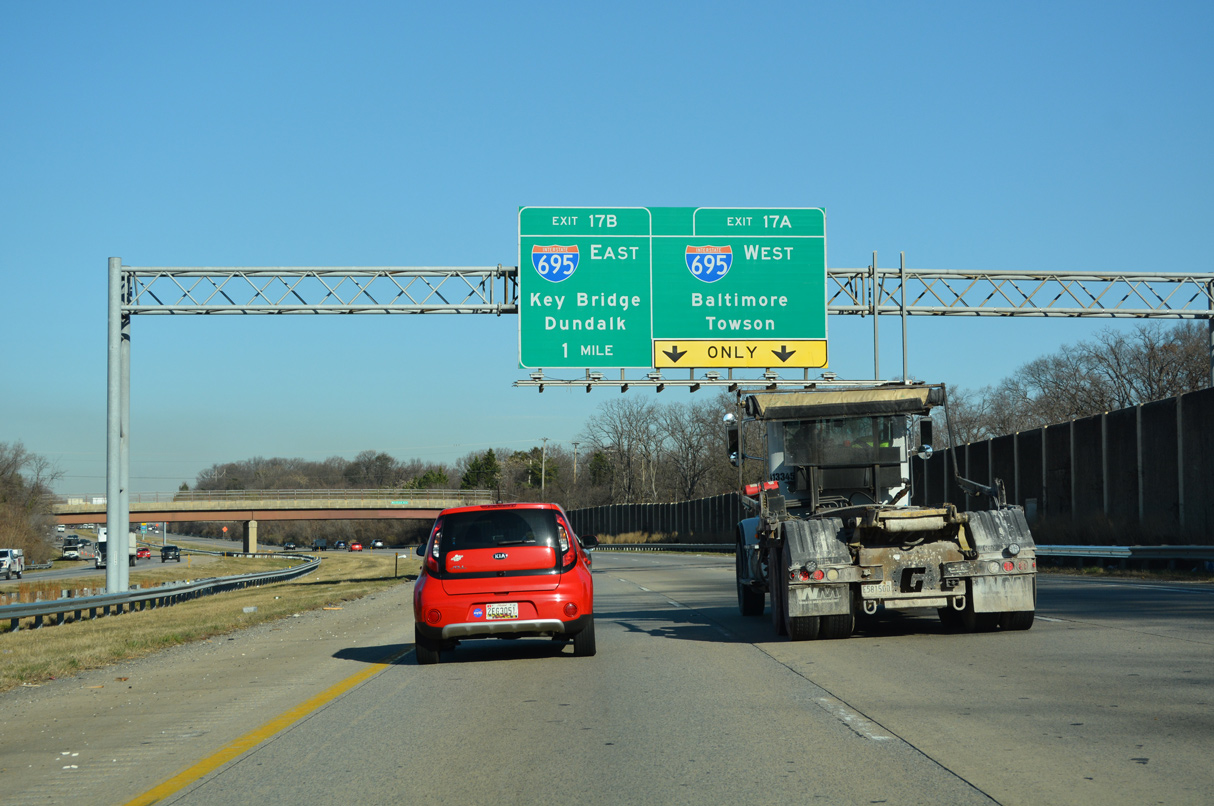
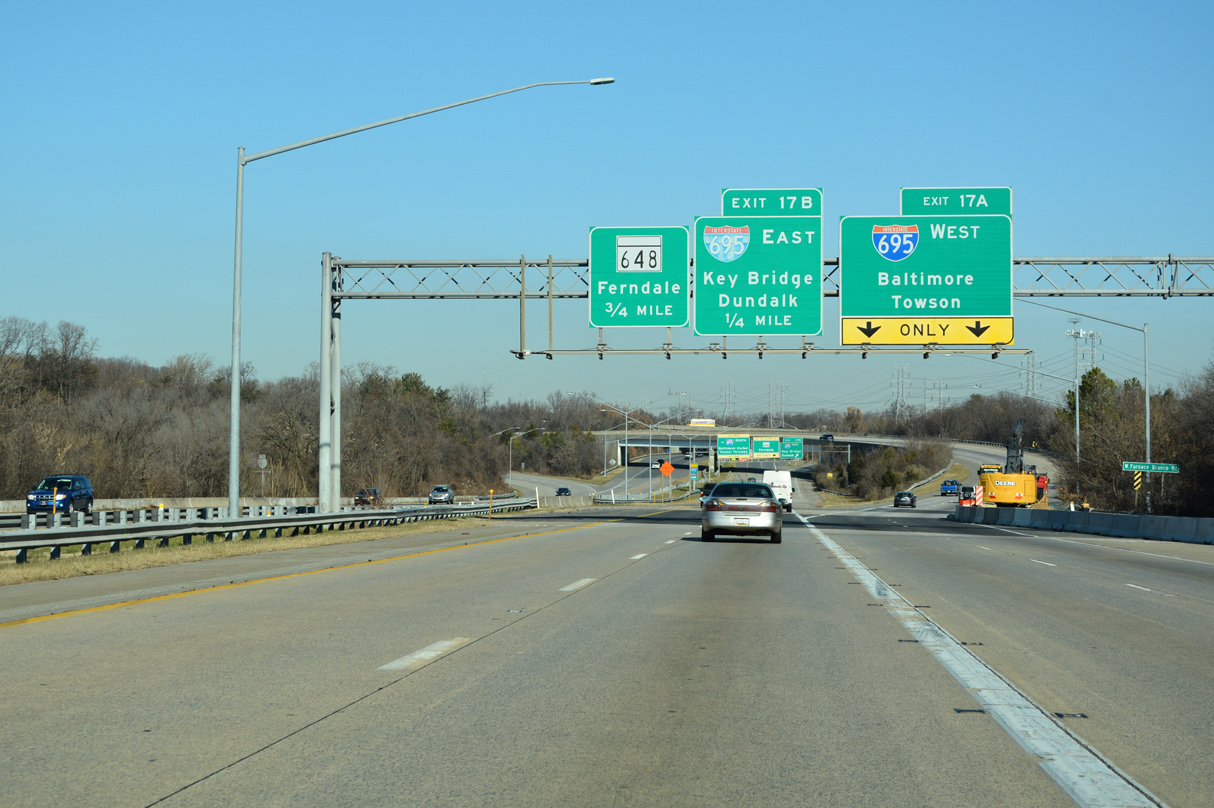
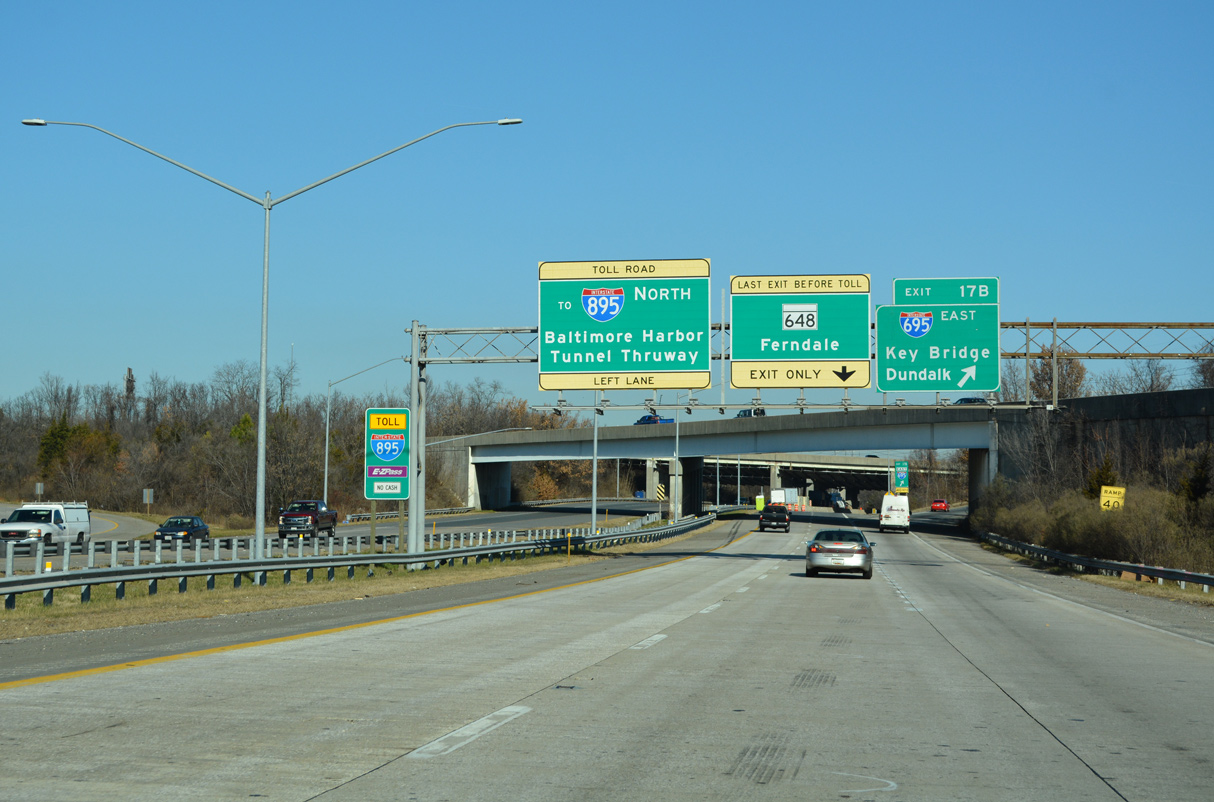
Interstate 97 progresses through Ferndale with three northbound lanes to Exit 17 with the Baltimore Beltway. 12/21/22
West at
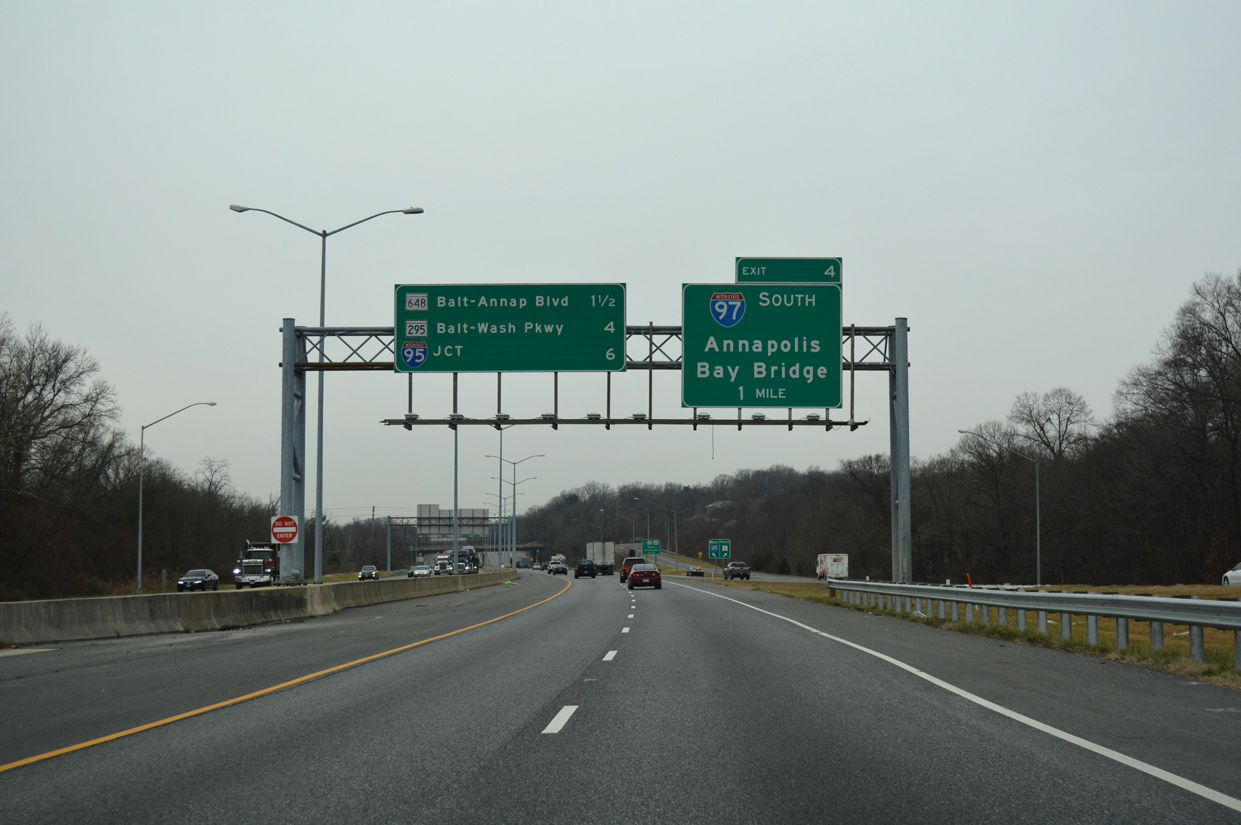
Advancing one mile to Interstate 97, a c/d roadway accompanies I-695 west through the exchange with MD 10 (Arundel Expressway) south to MD 2 (Govenor Ritchie Highway) north into Brooklyn Park. 01/04/19
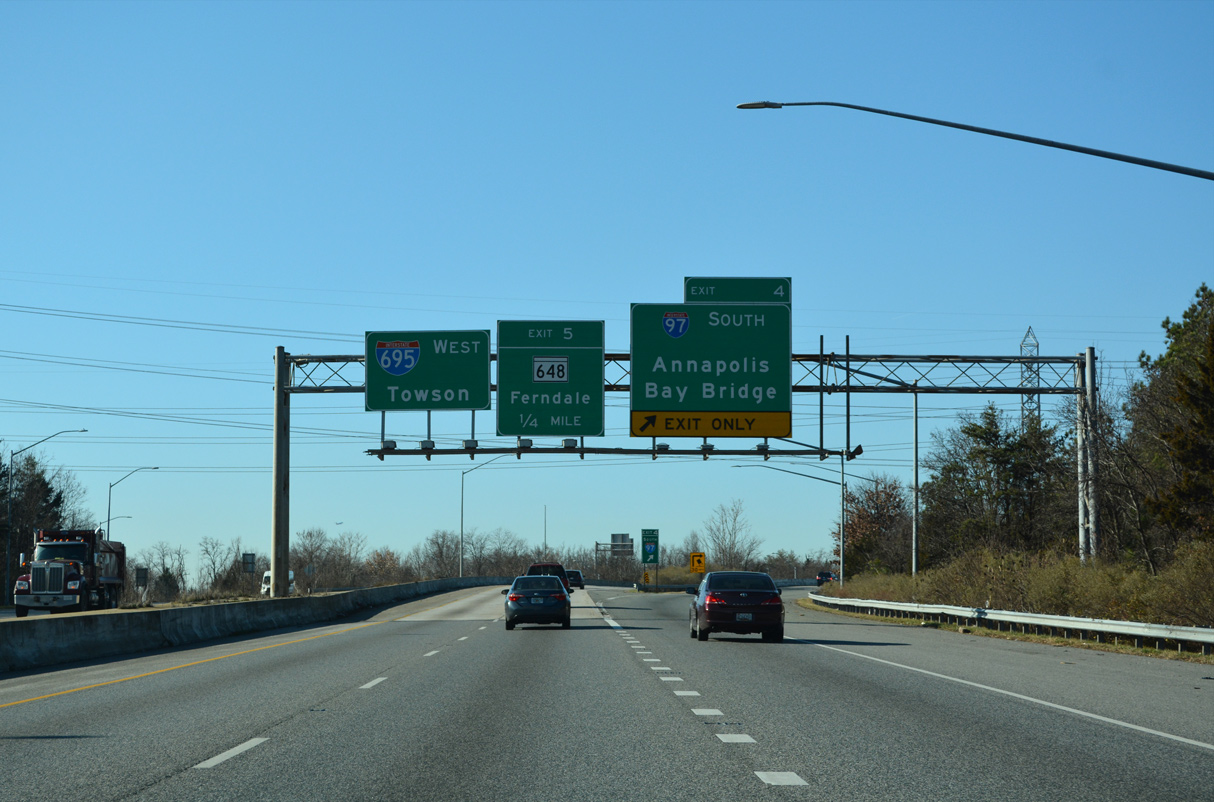
East at
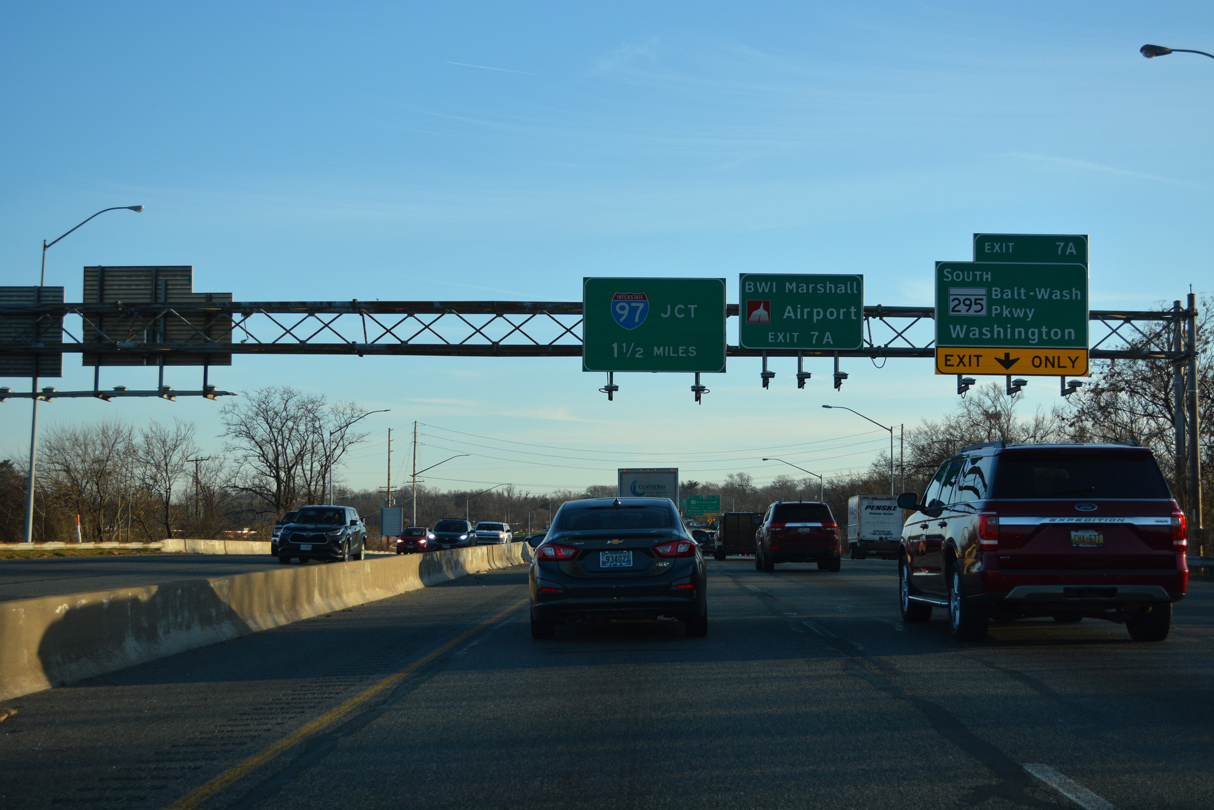
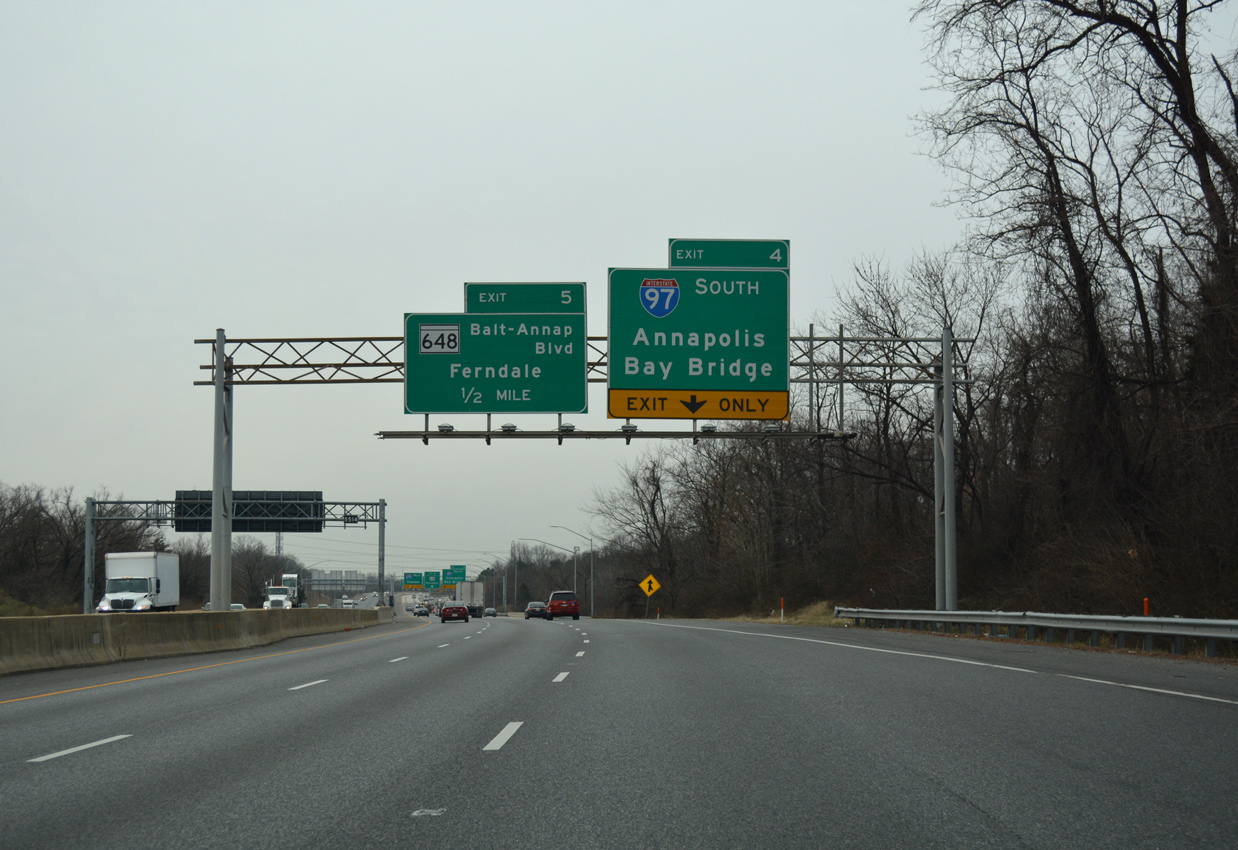
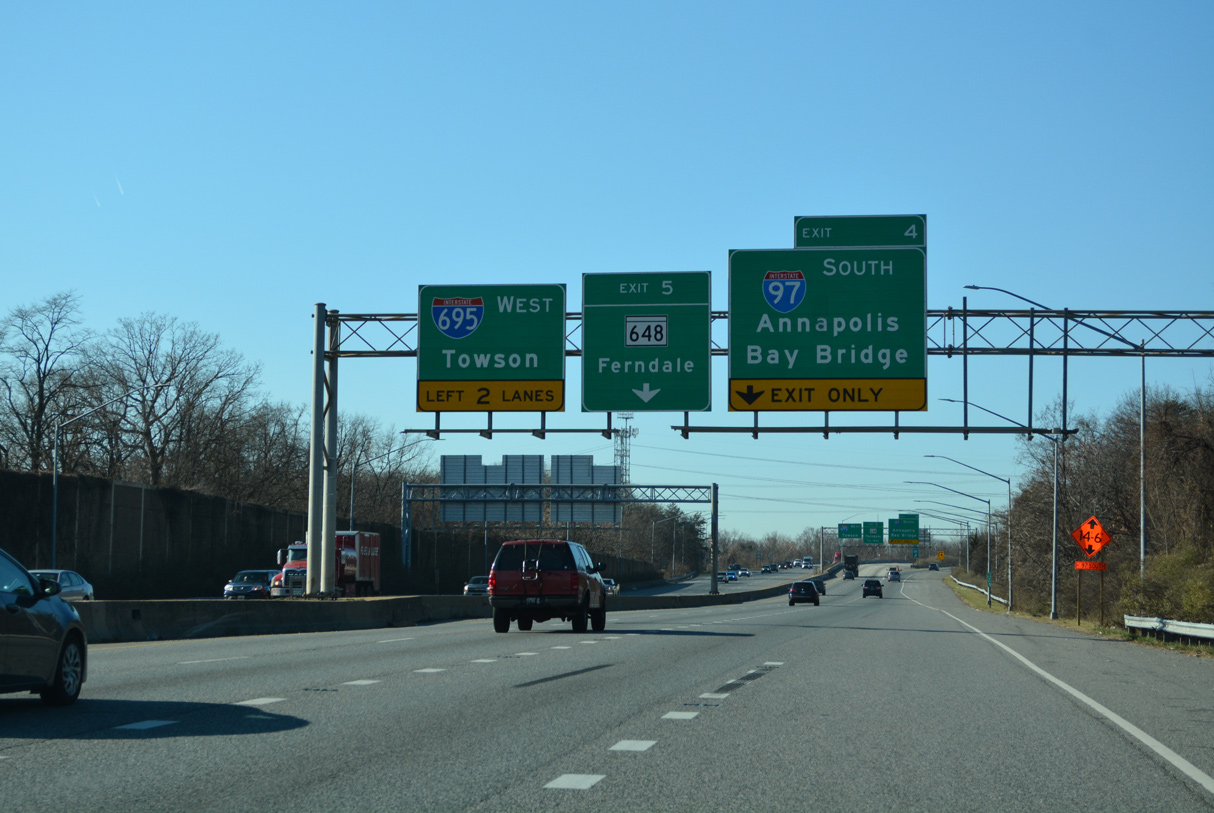
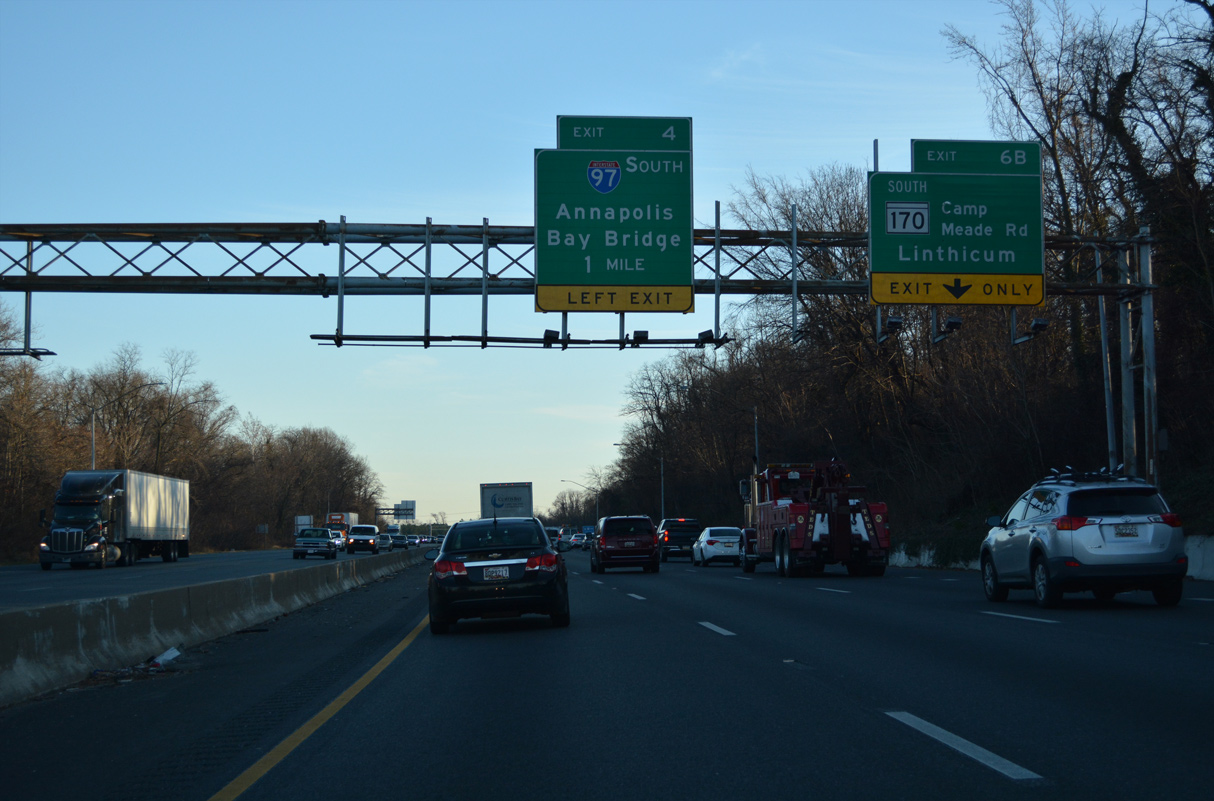
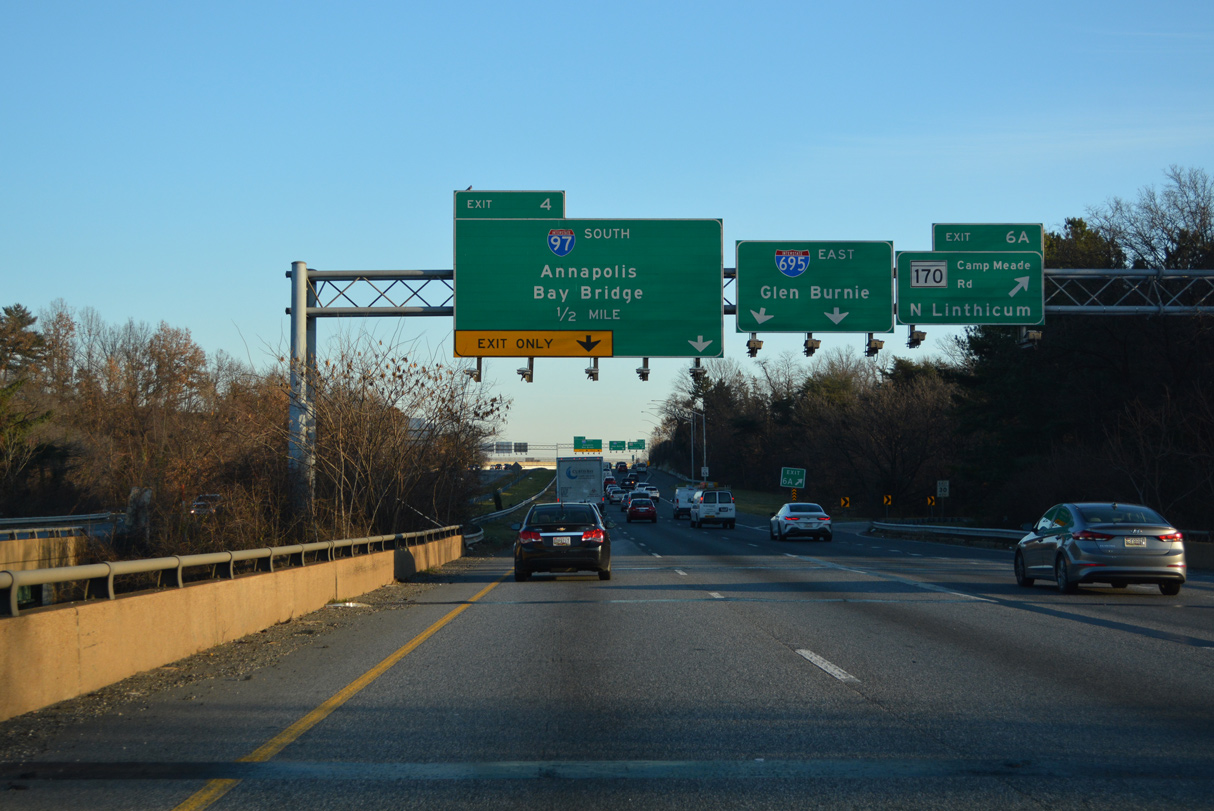
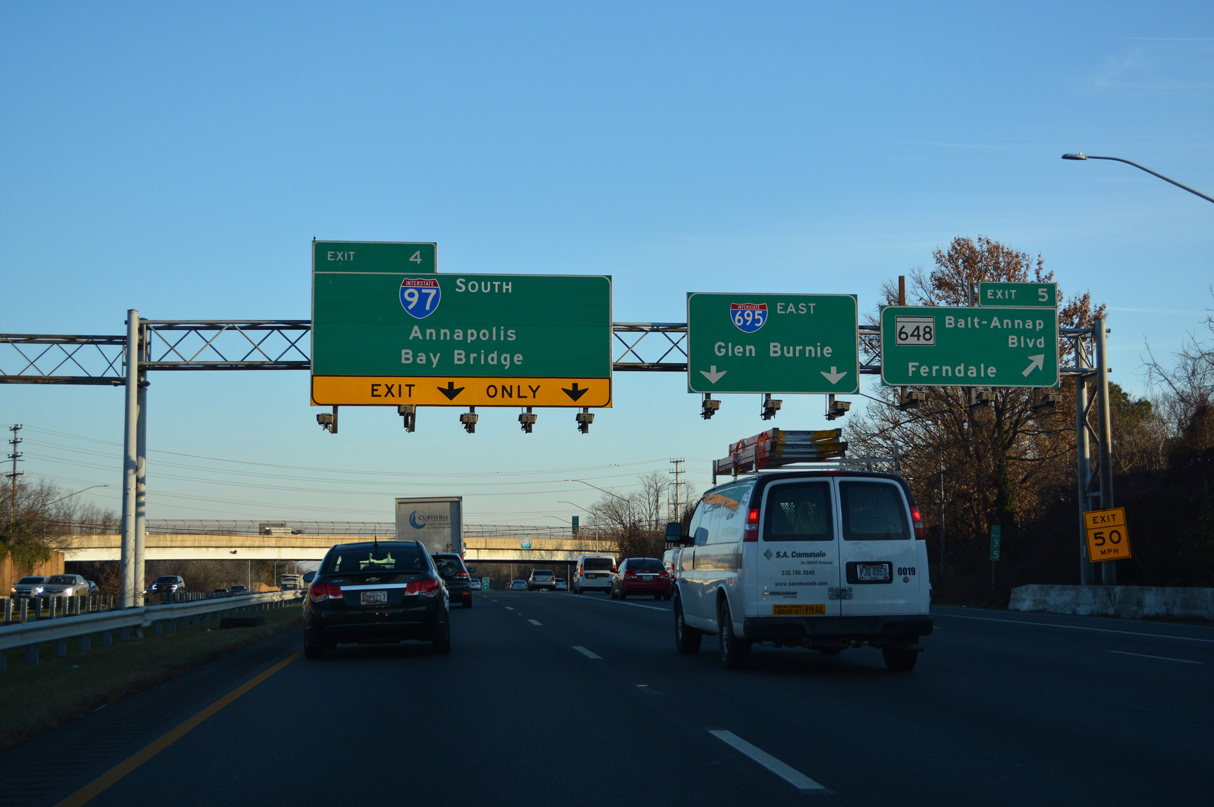
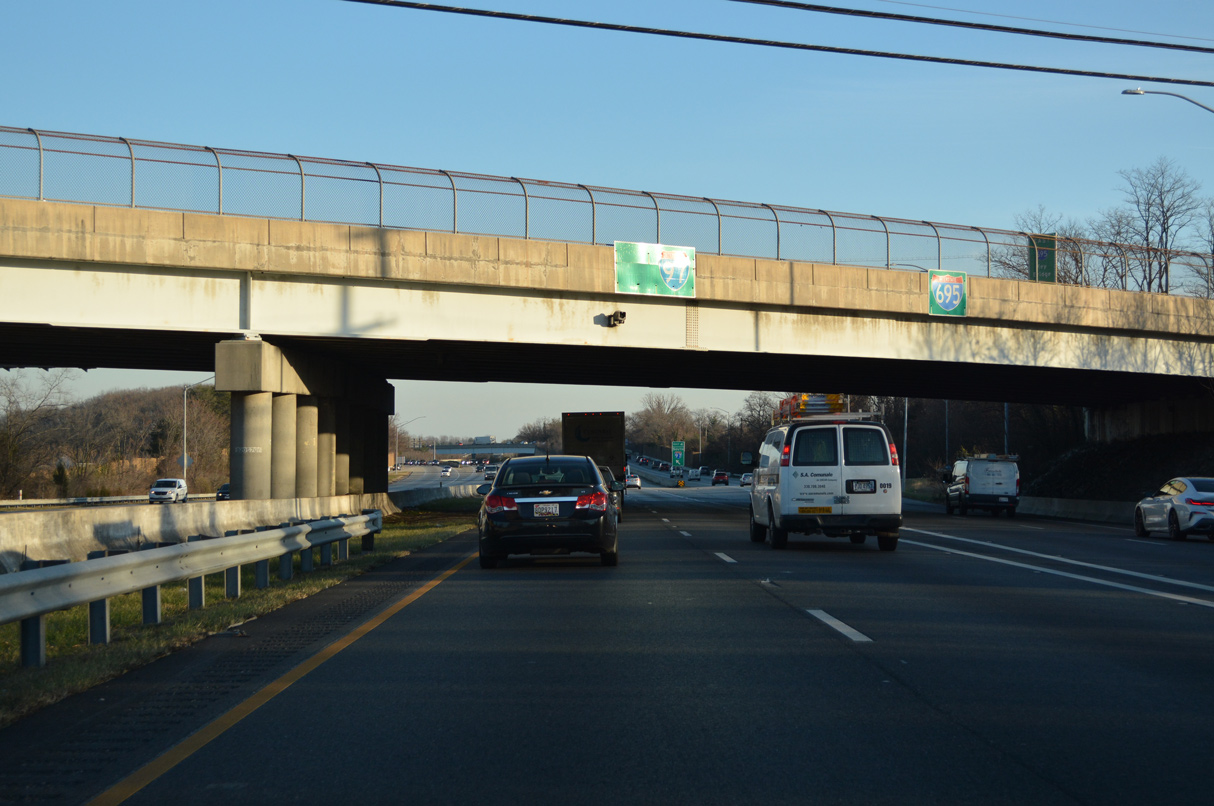
Interstate 695 arcs southeast from MD 295 (Baltimore-Washington Parkway) between the Linthicum Heights and Pumphrey communities to I-97 at Exit 4. 12/21/22
South
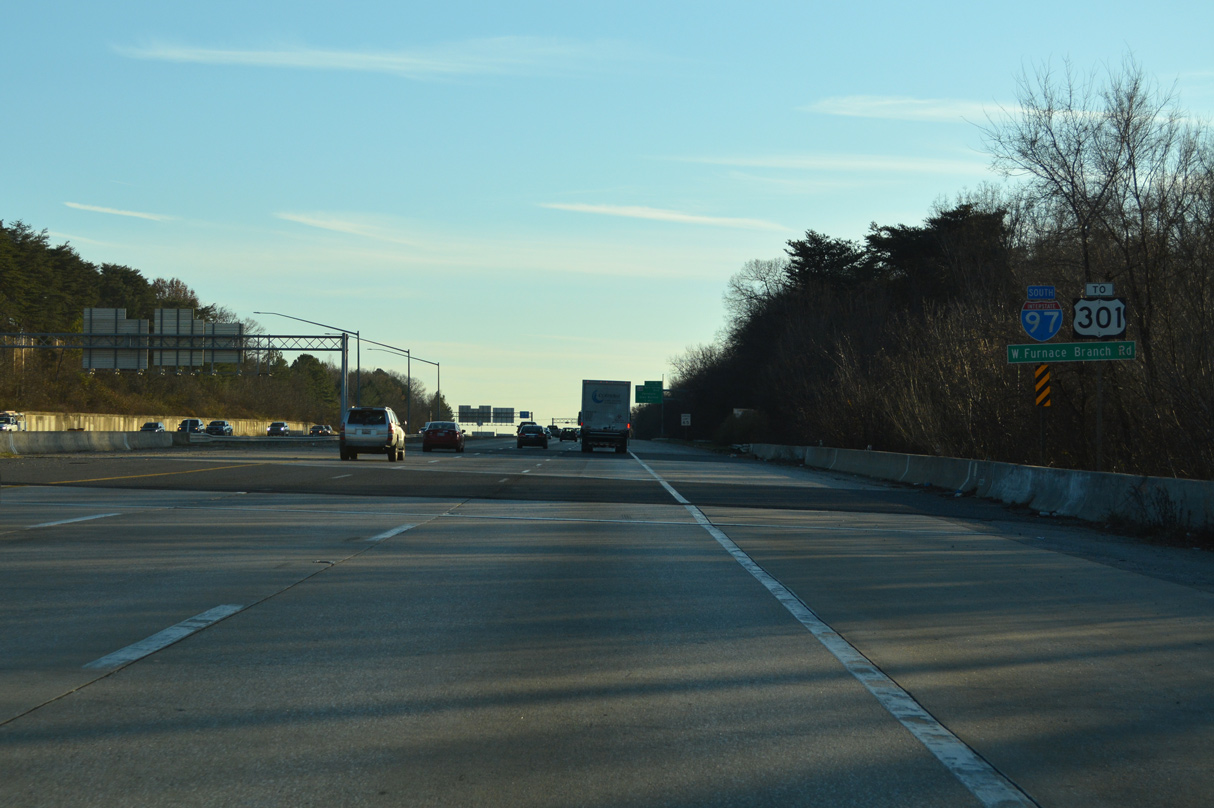
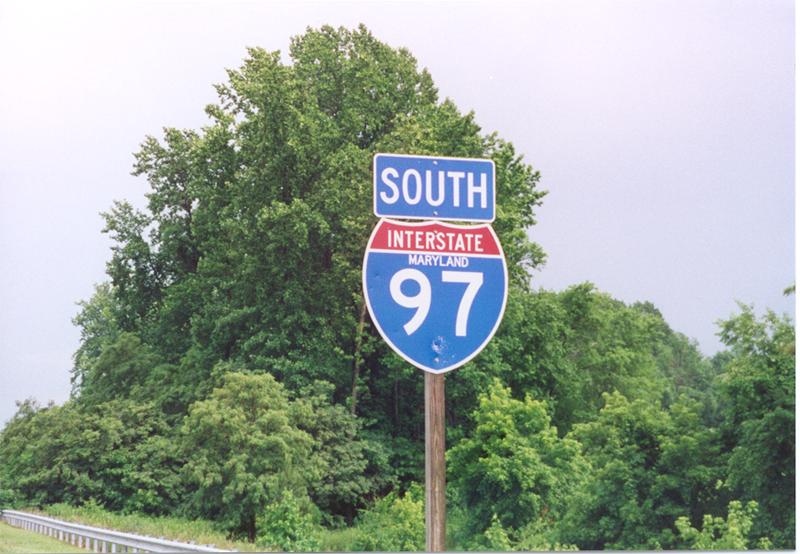
The first confirming marker for Interstate 97 appears at the W Furnace Branch Road underpass in Ferndale, just south of I-695.
South End 

 ‐ Annapolis, MD
South at
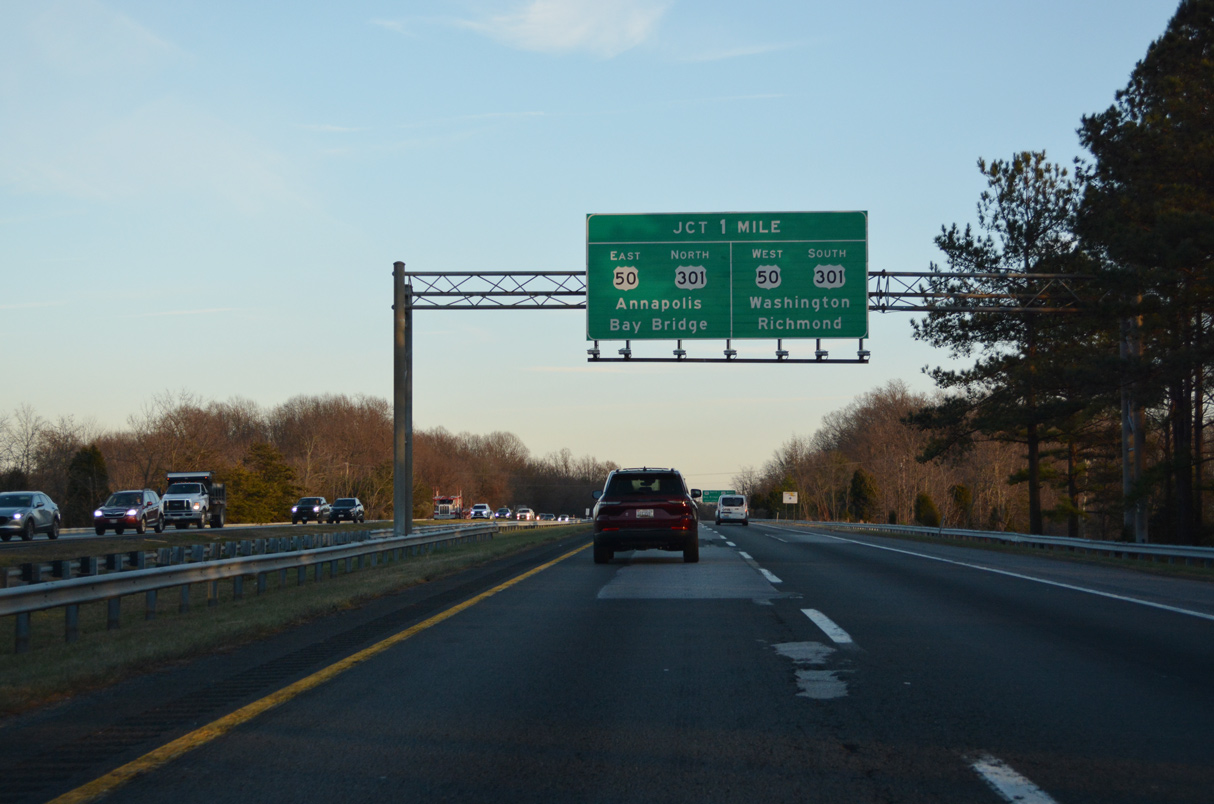
Interstate 97 navigates southeast through a series of S-curves through wood land areas toward U.S. 50/301 (John Hanson Highway) at Exit 1. 12/21/22
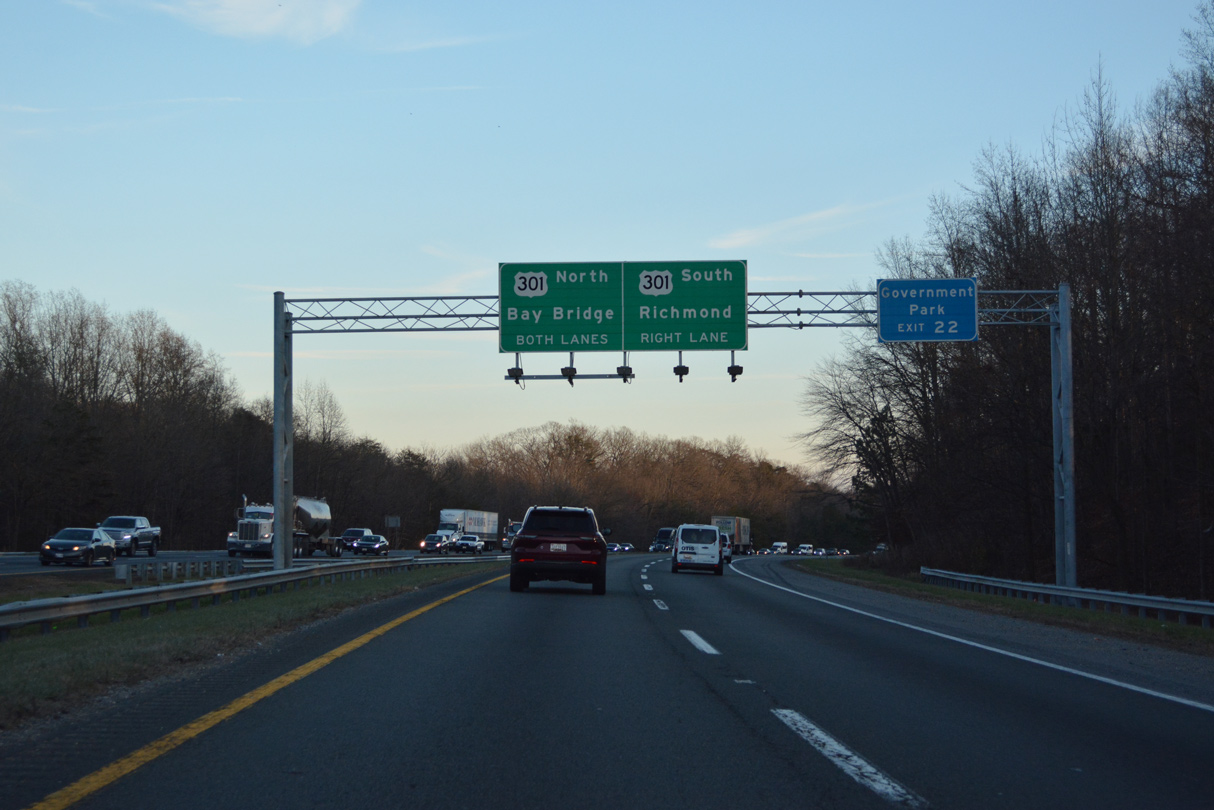
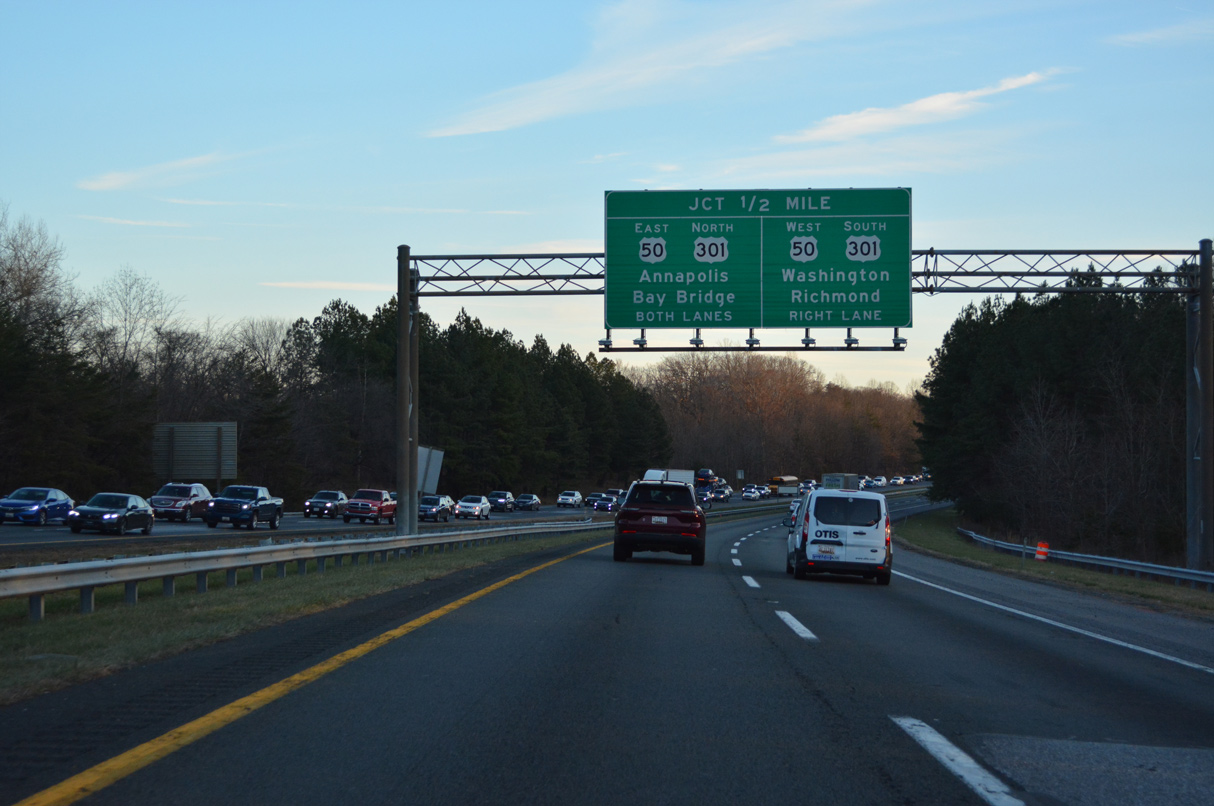
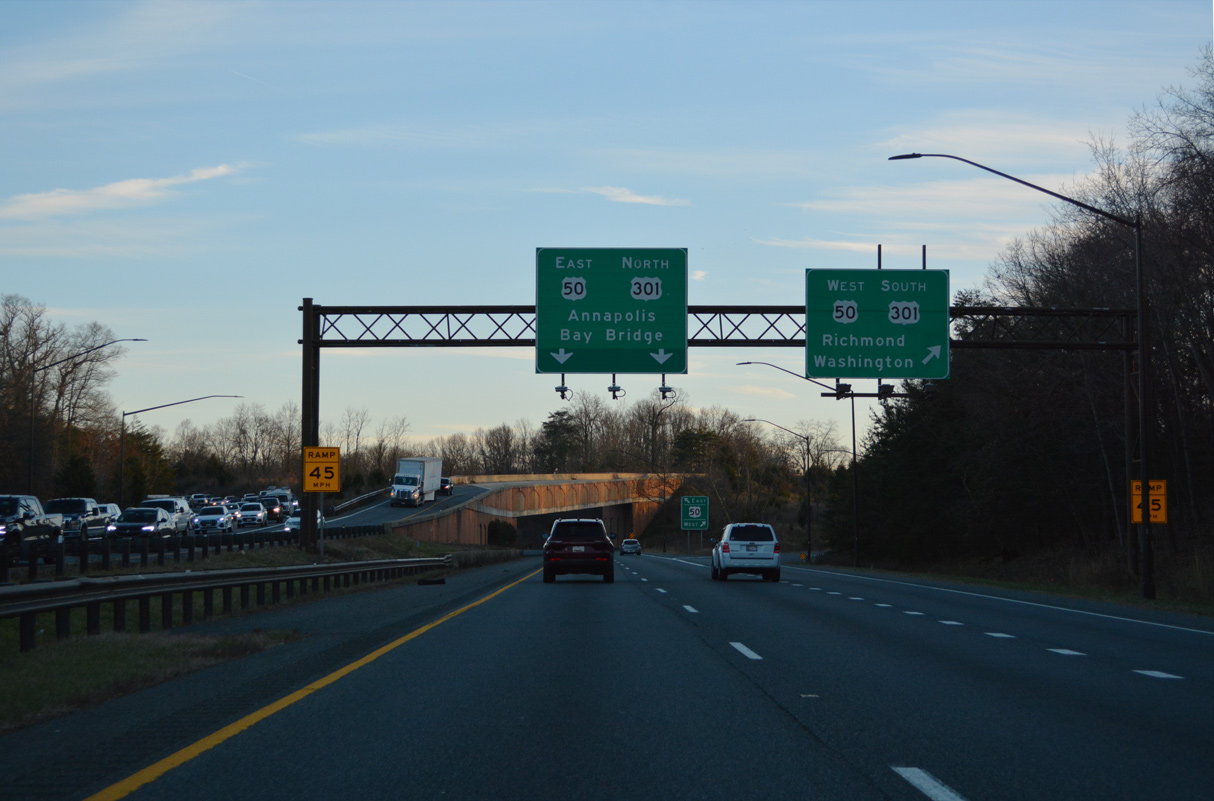
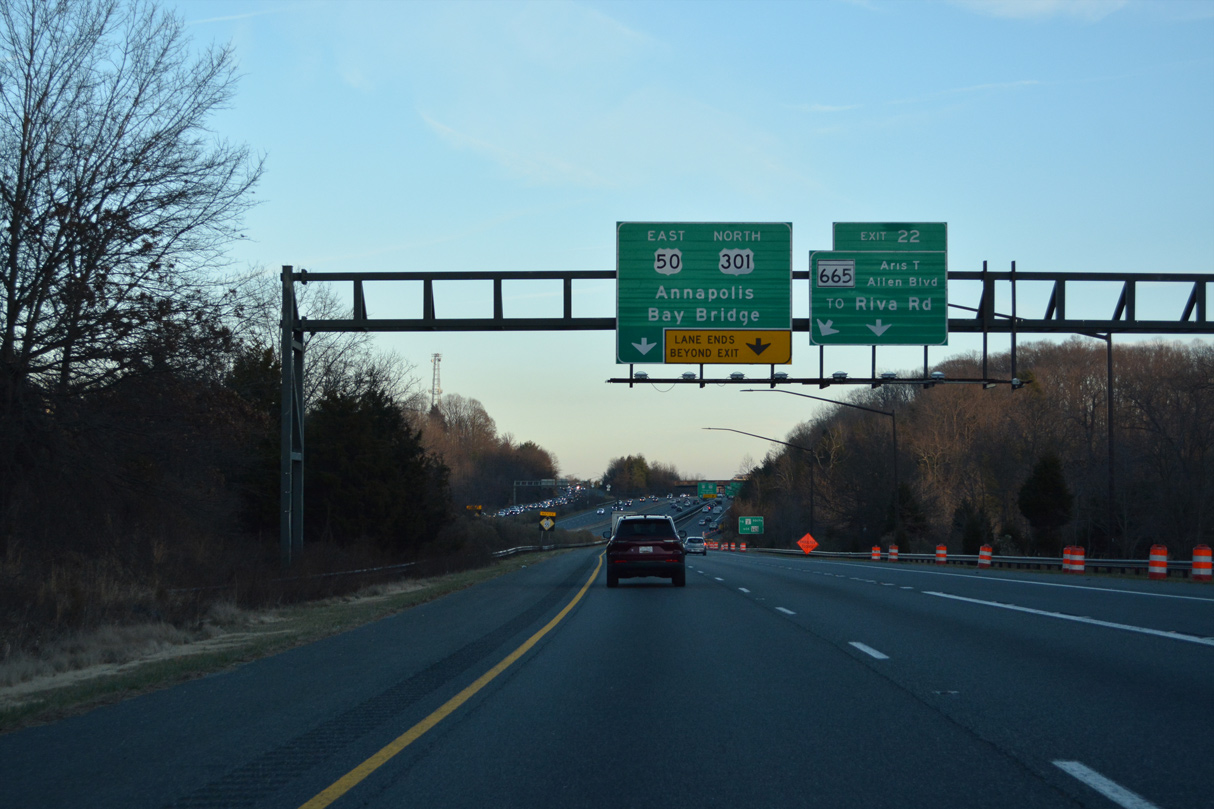
West South at
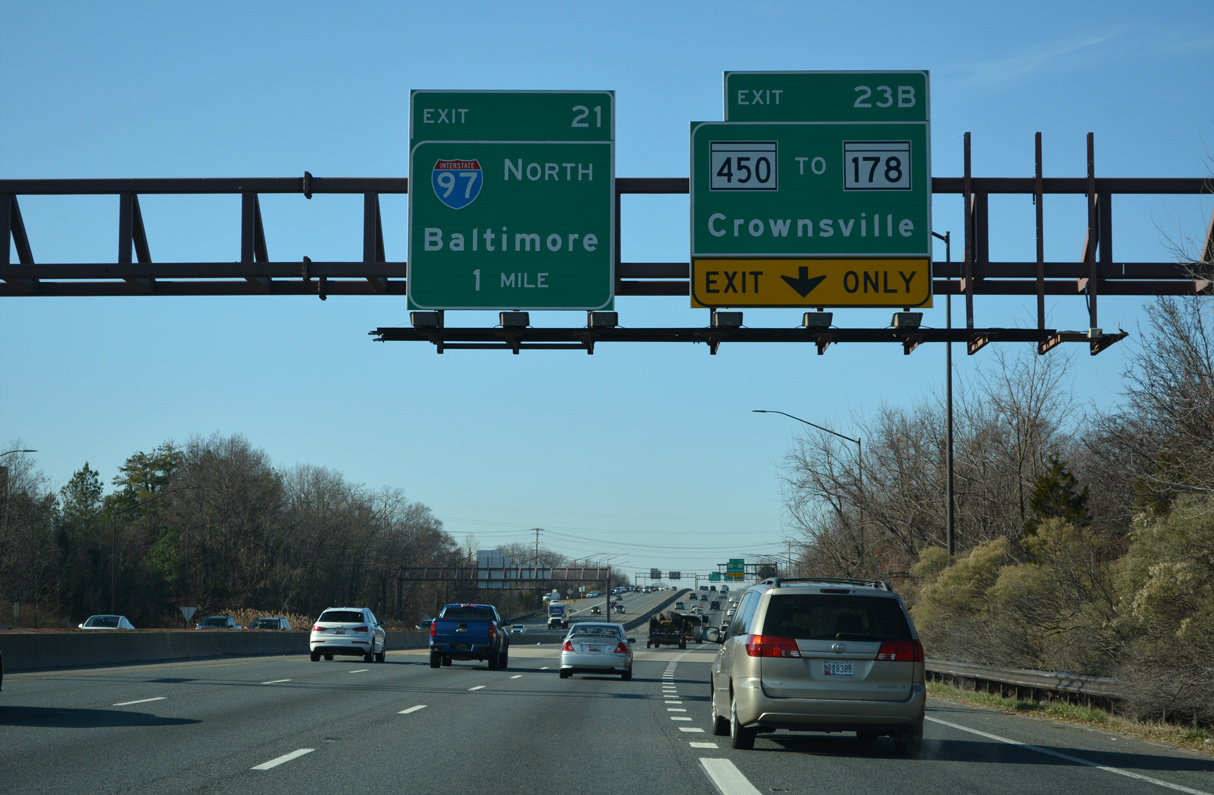
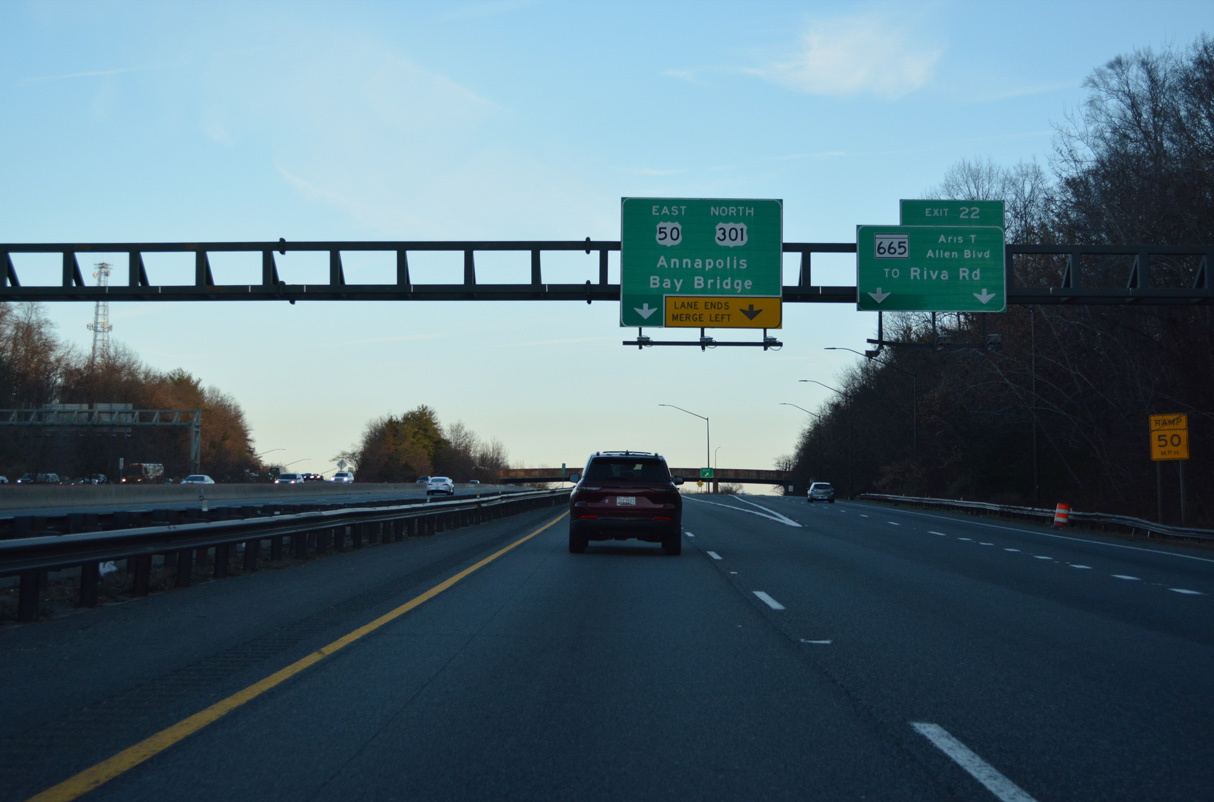
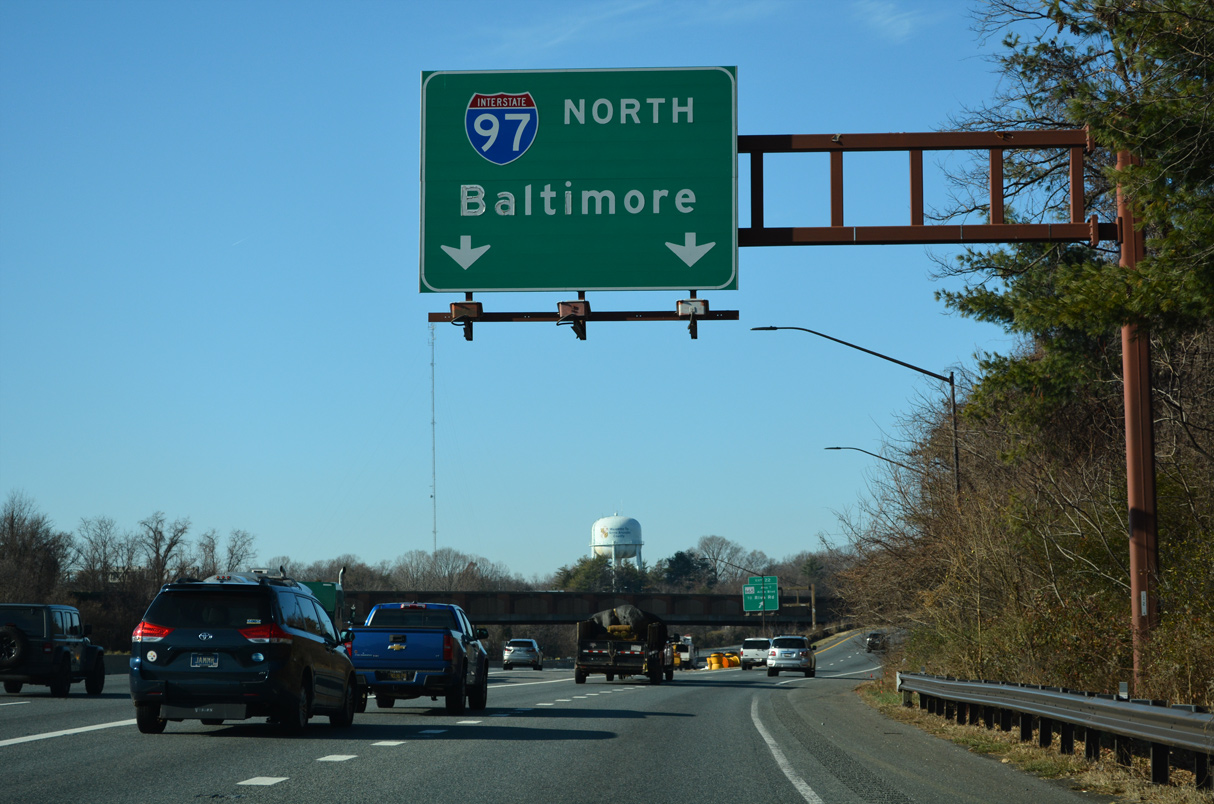
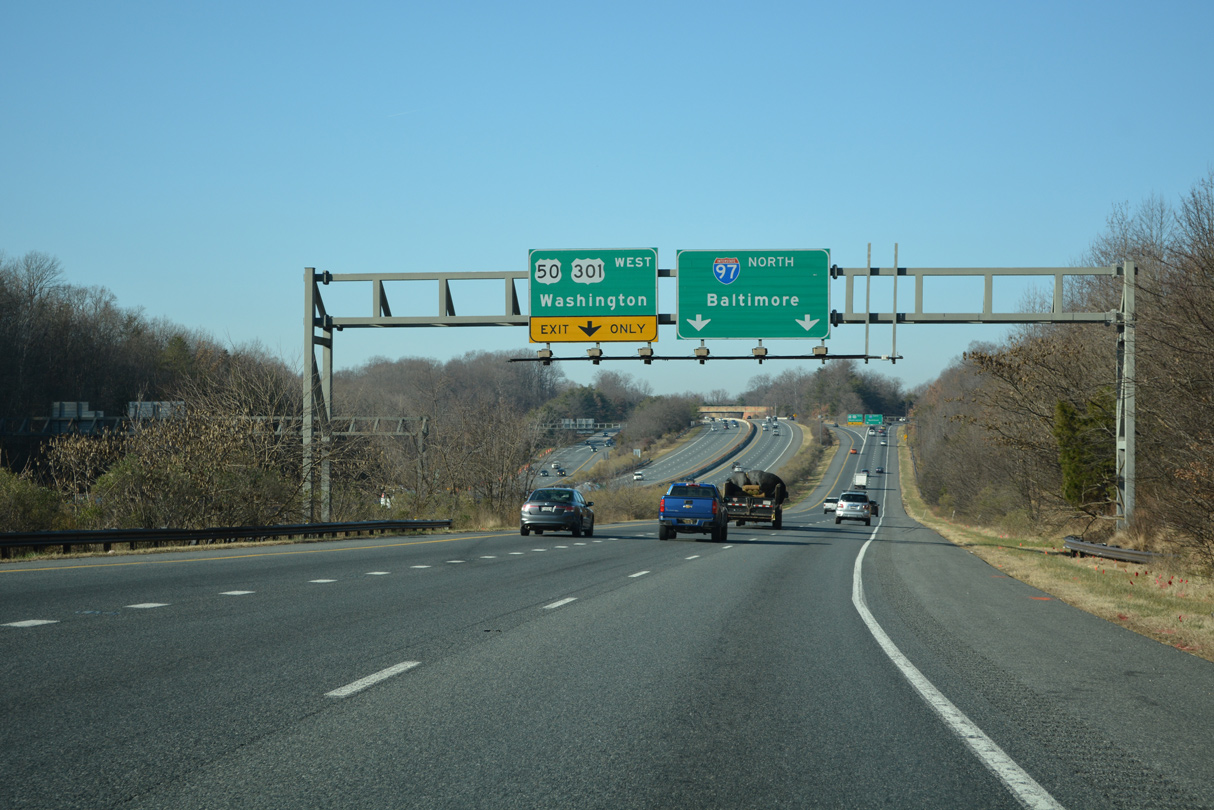
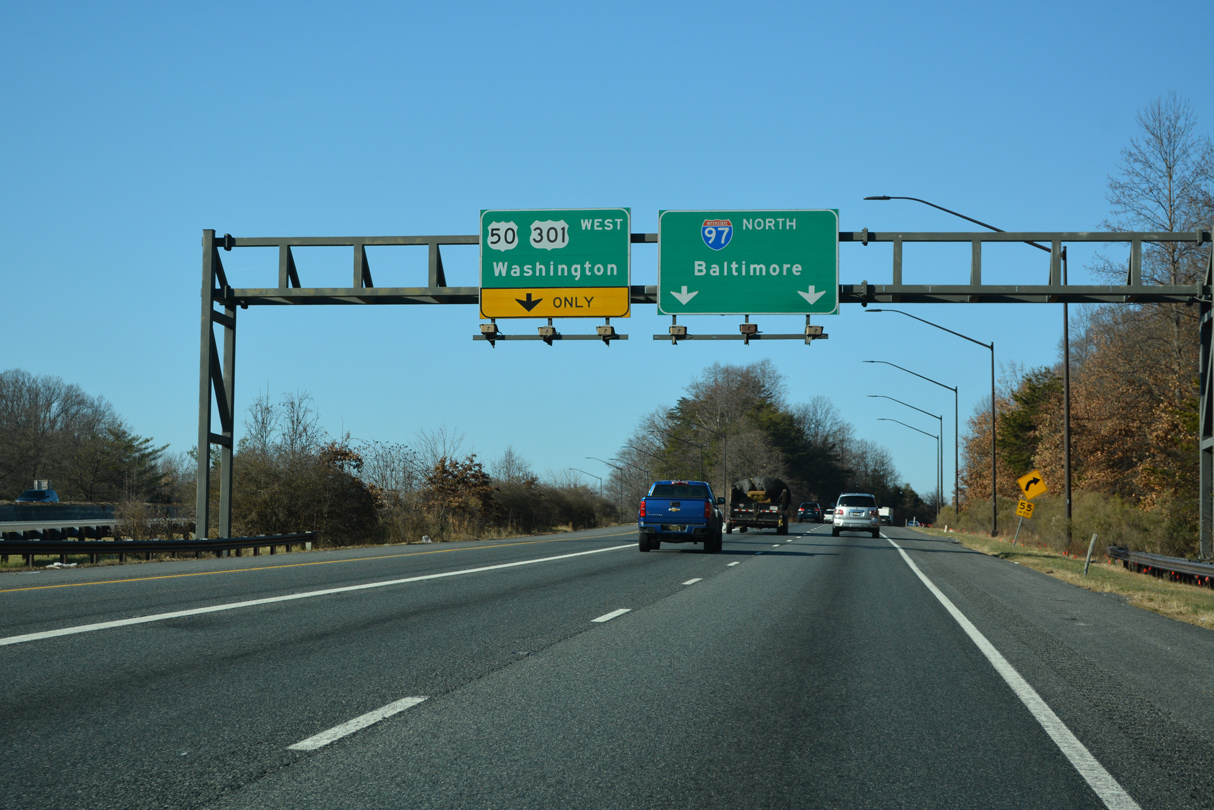
Succeeding off-ramps depart unsigned I-595-U.S. 50 west / U.S. 301 south over the course of 1.25 miles for MD 2 south, MD 450 (West Street) and Interstate 97 north. 12/21/22
East North at
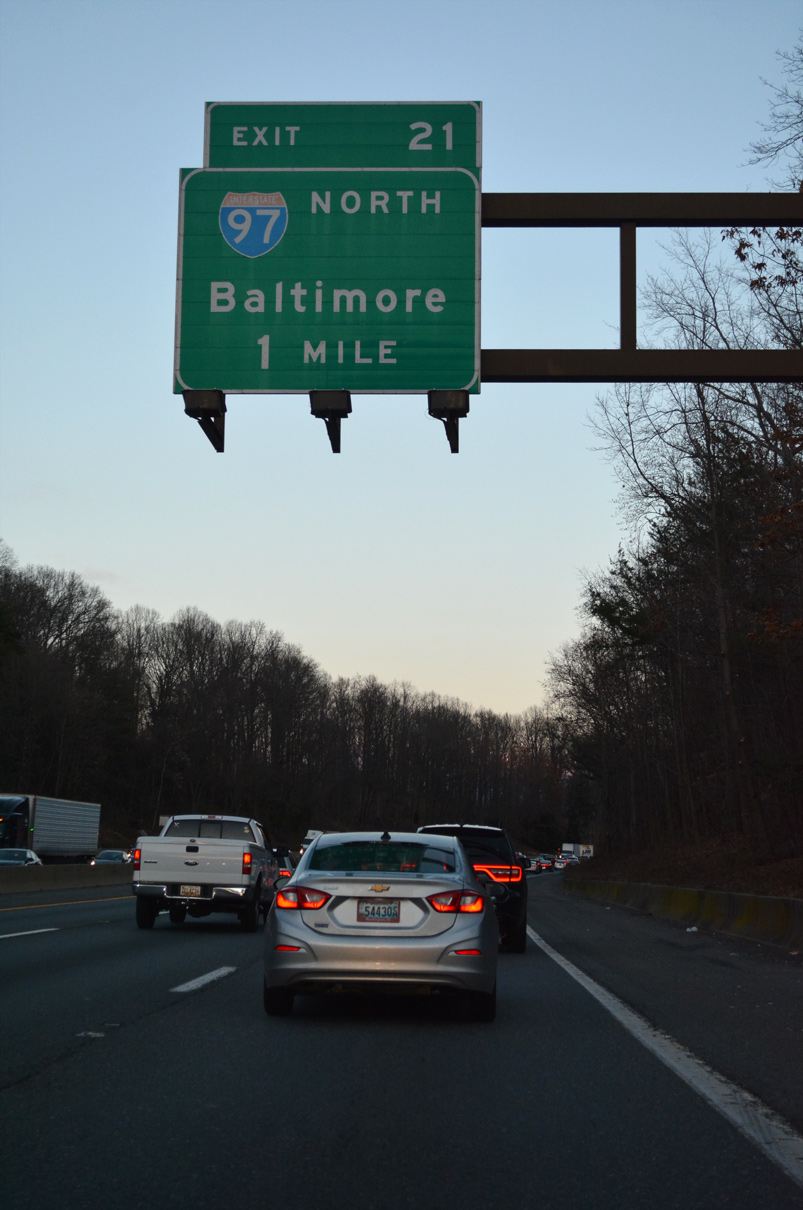
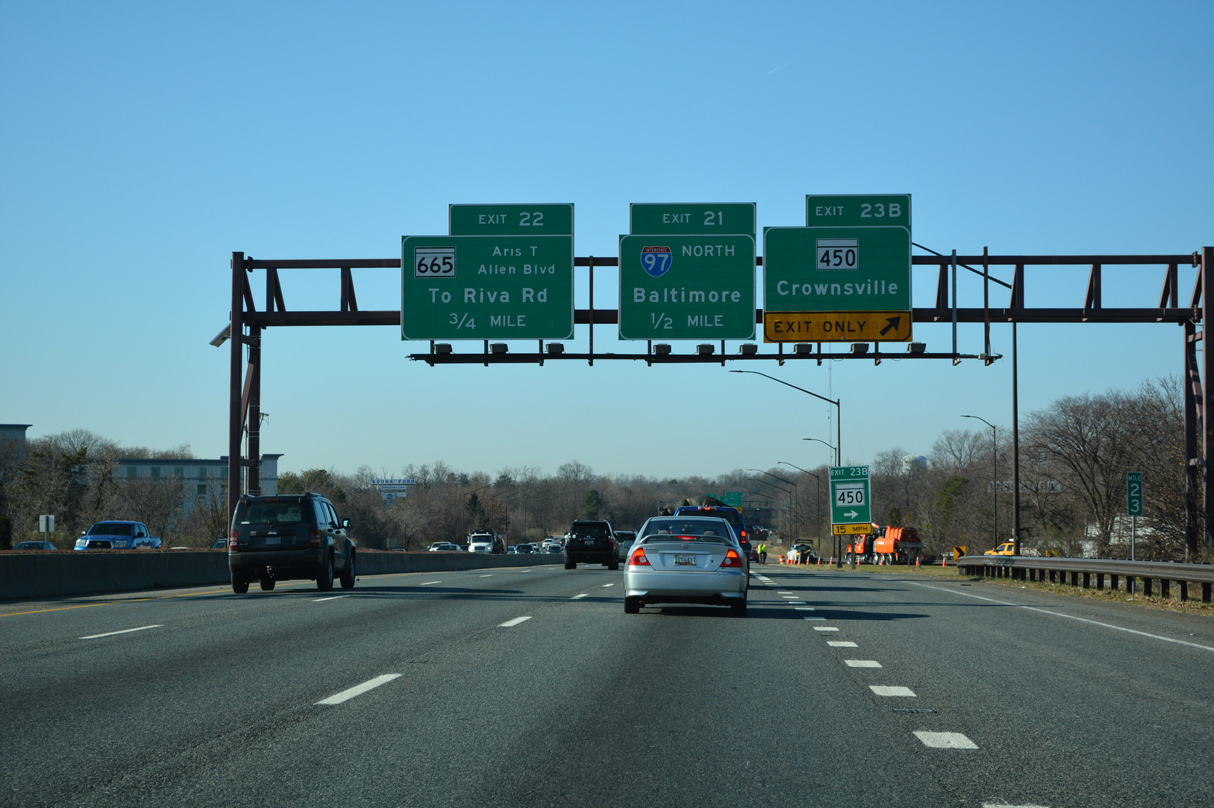
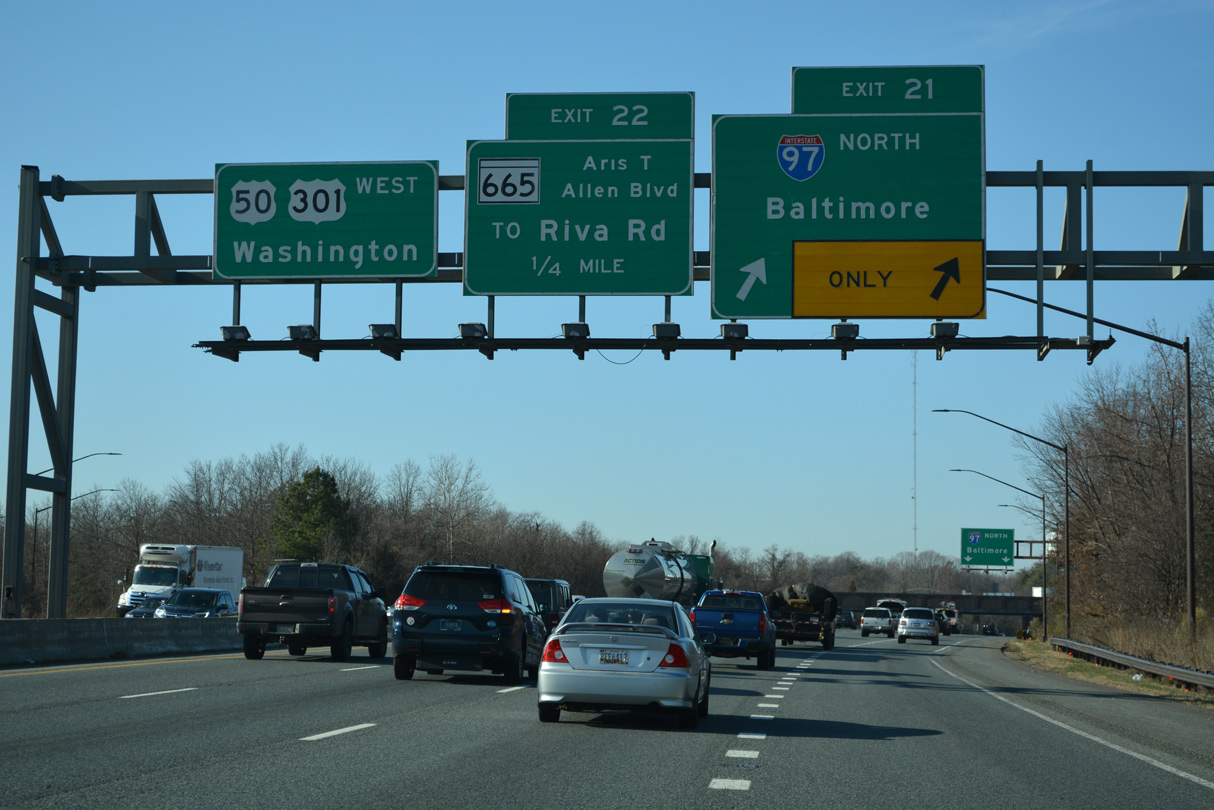
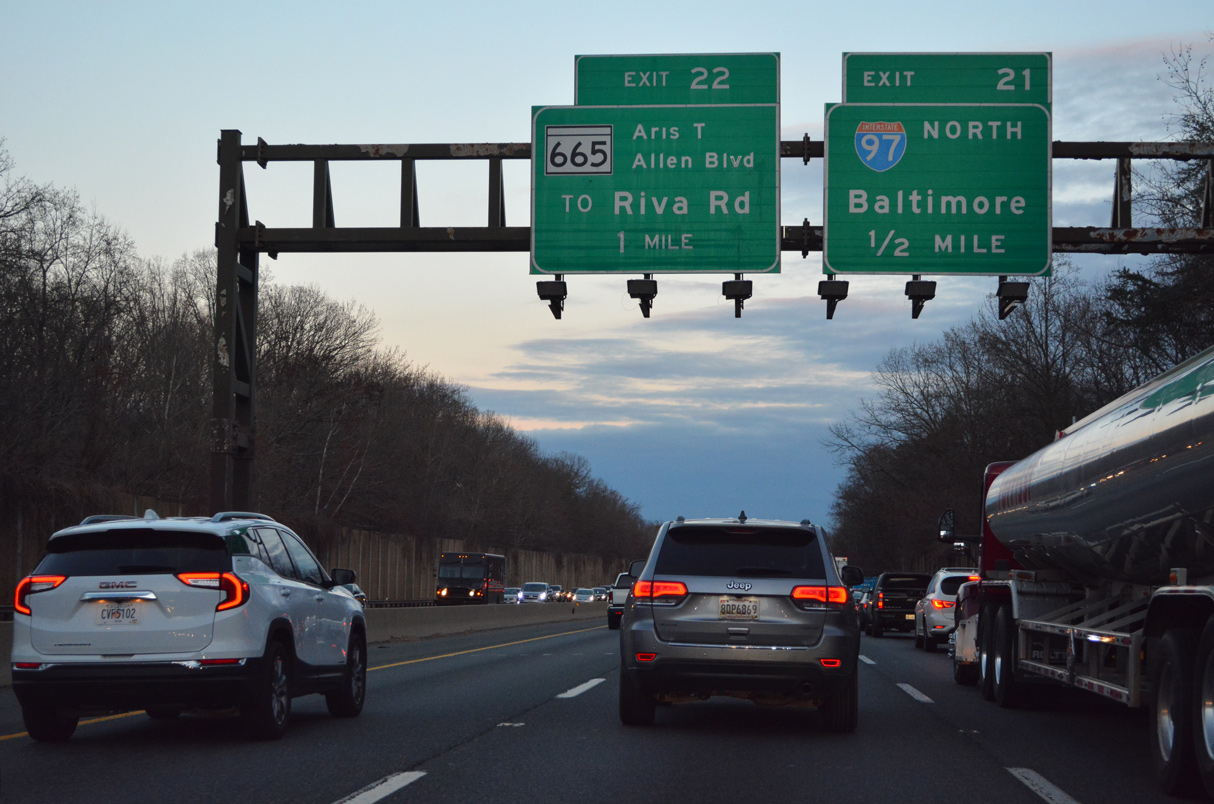
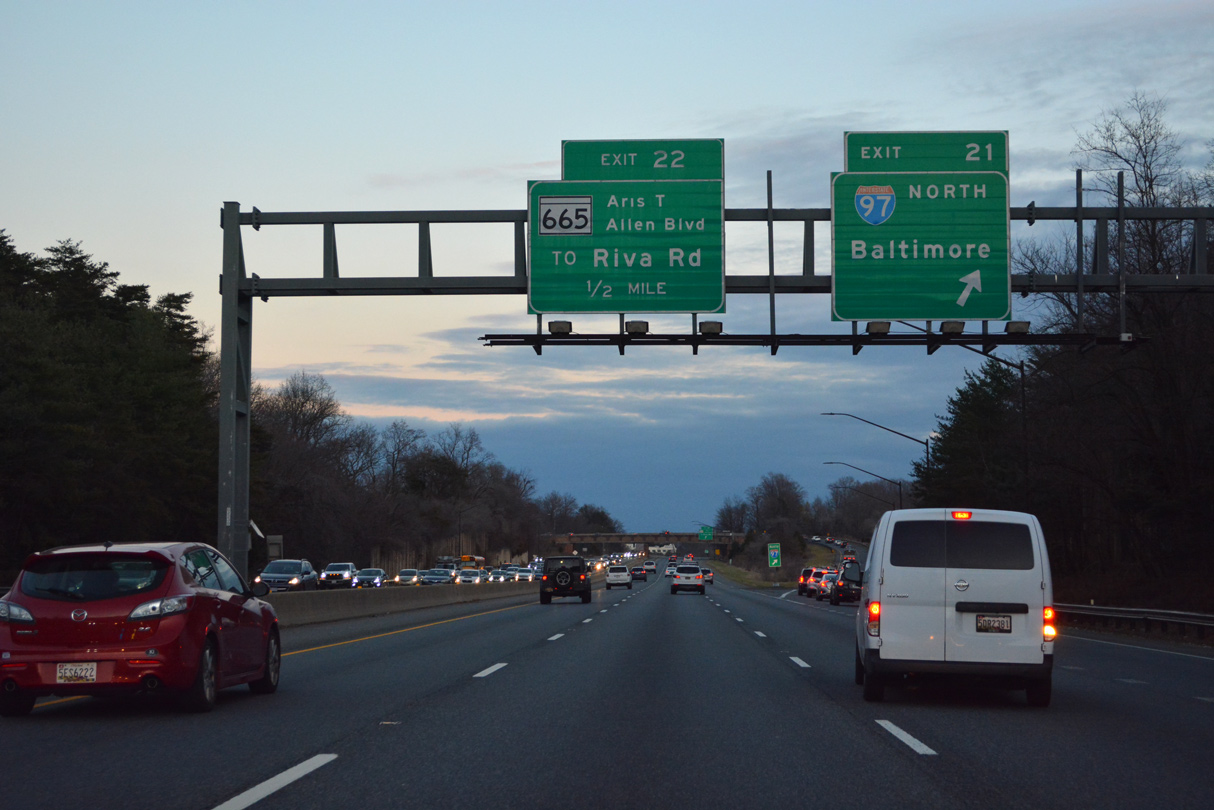
Advancing east from the South River, U.S. 50 east / U.S. 301 (John Hanson Highway) north run alongside suburban areas at Parole to Exit 21 with Interstate 97 north. 12/16/22
North
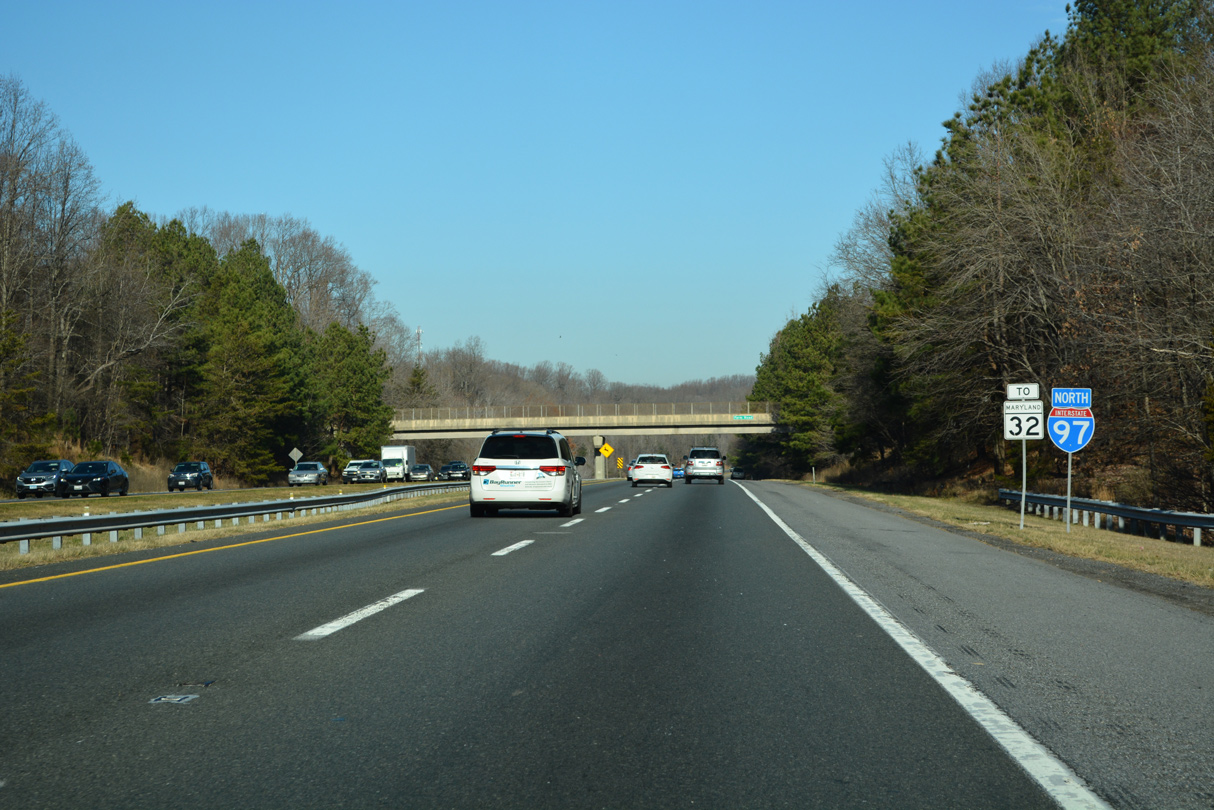
The first shield for Interstate 97 north precedes the Farm Road overpass at Crownsville, Maryland. 12/21/22
References
- Pruett, M. (n.d.). I-97. MDRoads. Retrieved from http://www.mdroads.com/routes/is097.html
- "New Segment Of I-97 Opens" The Capital (Annapolis, MD), February 17, 1991.
- "State Pulls Out All The Stops On I-97" The Capital (Annapolis, MD), July 6, 1991.
- "Baltimore Connector Opens." The Capital (Annapolis, MD), March 12, 1991.