Interstate 235 Iowa
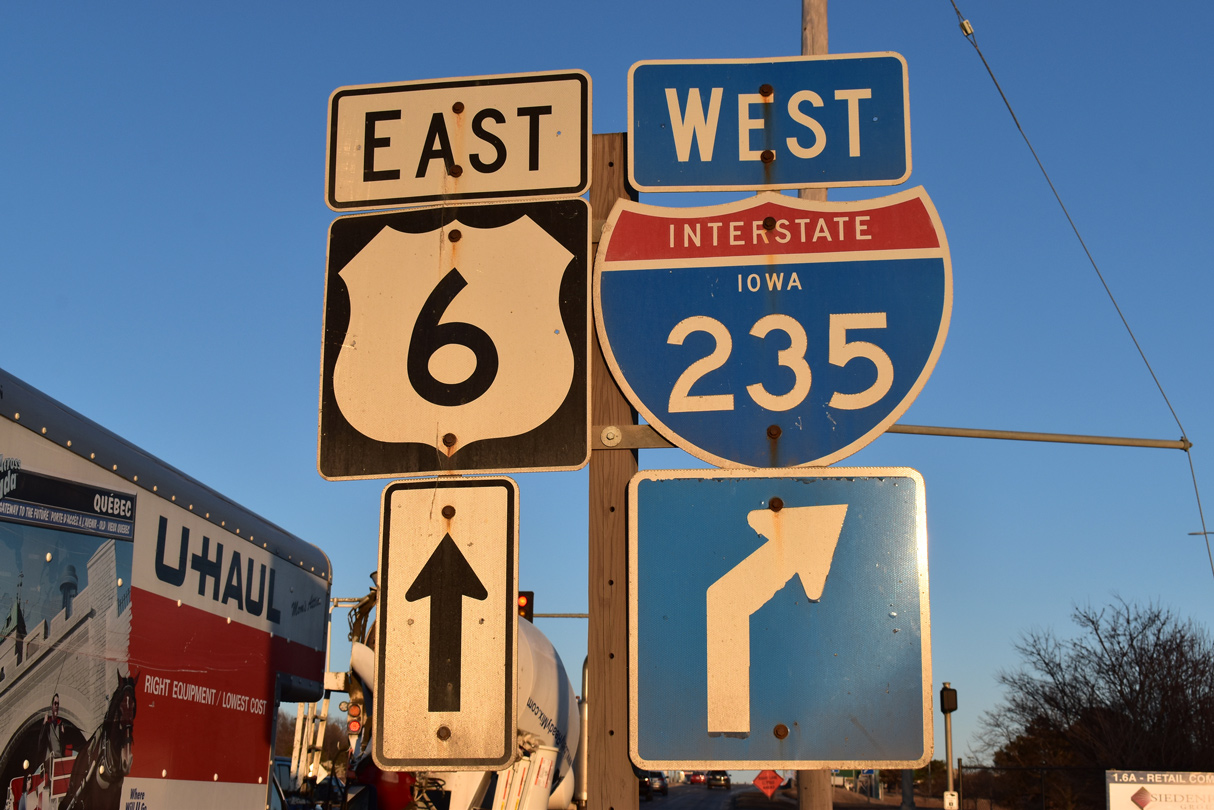
Overview
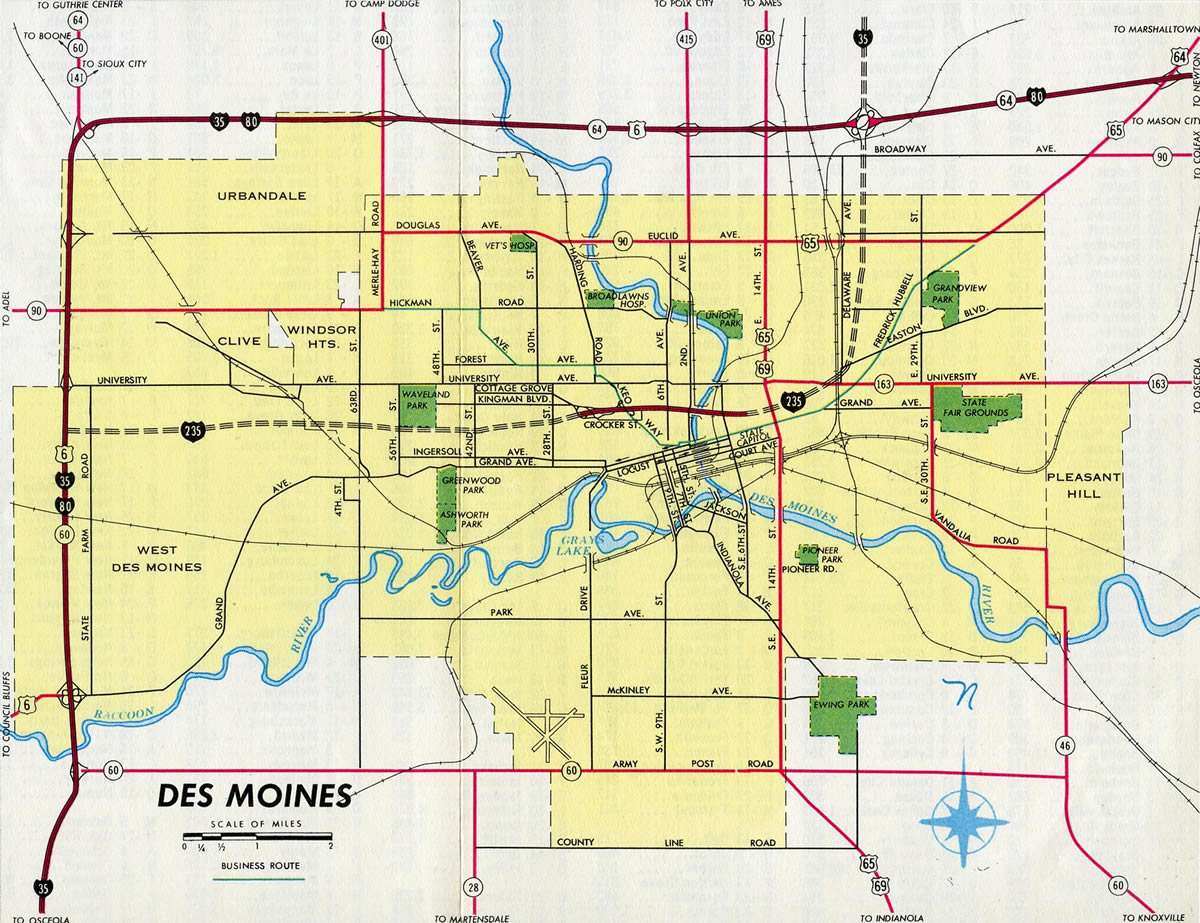
Interstate 235 forms an urban loop from West Des Moines east to Downtown Des Moines, then north to unincorporated Polk County and Ankeny. I-35/80 bypass the capital city to the north, but along a suburban route through Clive, Urbandale and by the cities of Grimes and Johnston.
Heading east from the merge of I-35 and I-80 (West Mixmaster Interchange) through West Des Moines, I-235 travels below grade with six overall lanes and auxiliary lanes to 22nd Street. Crossing Walnut Creek, the freeway straddles the south city limits of Windsor Heights to Iowa 28 and Des Moines. Sound walls line portions of the route east as I-235 expands to eight lanes.
Staying below grade, Interstate 235 increases to ten lanes in width with auxiliary lanes as it crosses northern reaches of Downtown Des Moines by Mercy Medical Center. While approaching the Des Moines River, the freeway reduces to six lanes as it begins the northern turn toward Ankeny. The state capitol appears just south of I-235 by Exit 9 with U.S. 65.
Sound walls again line the freeway right of way northward from Iowa 163 to the return of I-35/80. Within the East Mixmaster Interchange, the freeway mainline defaults motorists onto I-35 north toward Ames, Mason City and Minneapolis while the original roadway serves movements back west to Johnston and east along I-80 to the Quad Cities.
Mileage by State
| Iowa | 13.78 mi |
Data Sources
December 31, 2021 Interstate Route Log and Finders List
Major Projects
Northeast Mixmaster Interchange
The first of several phases upgrading the exchange joining the east end of I-235 with I-35/80 in Polk County north of Des Moines got underway in Fall 2022. Work reconstructing the 1950s-era junction into a multi level systems interchange commenced with work building new ramps from I-80 west to I-235 north and I-35/80 east with I-235 north. Costing $55 million, work on phase one was anticipated for completion in June 2024 (WHO TV-13, 2022).
Succeeding phases add flyovers from I-35 south to I-80 east and from I-80 west to I-235 west while all other ramps are be realigned. The Full Build Conceptual Layout of the exchange was established in October 2017.
Grading for the new eastbound I-80 ramp to I-235 west and the ramp taking I-35 north from I-80 were completed in 2023, as was grading for the ramp from I-80 west to I-35 north. Paving for the ramps and bridges was completed in 2024. 2025/26 construction added new westbound lanes for I-80 and rebuilds the eastbound lanes (IowaDOT, 2026a).
Southwest Mixmaster Interchange
Following construction at the East Mixmaster Interchange, the Iowa Department of Transportation will begin work upgrading the interchange built in the early 1960s that joins I-35/80/235 at West Des Moines. $79 million was previously budgeted for the improvements at the exchange in the IowaDOT five-year draft plan. The project outlines building new a flyover from I-35/80 south to I-235 east and a flyover for the continuation of the westbound I-80 mainline from I-35. The project was anticipated for completion by late 2028 (Des Moines Register, 2023).
The project went out to bid in July 2026. Construction commences in the right-of-way, followed by work on the existing facilities in 2027. Budgetted at $114.5 million, staged construction is expected through 2029 (IowaDOT, 2026b).
History
The Des Moines City Council voted 5-0 in support of the freeway plan for Interstate 235 in 1957. That same year, the Federal Bureau of Public Roads gave final approved to the Iowa Highway Commission to build the route. Costs were estimated at $54,763,000 for construction on the first urban freeway project in Iowa (IowaDOT, n.d.).
Preliminary design work was completed in 1958, indicating that the route would serve area needs through 1978. Right of way purchases totaled $21,078,000, with five hundred acres acquired including 1,100 dwelling units, 50 businesses, three schools and two churches. The freeway was designed for 50 mile per hour speeds (IowaDOT, n.d.).
Interstate 235 was designated the John MacVicar Freeway in the 1960s by the Des Moines City Council. John MacVicar was mayor of the city from 1896 to 1900 and again from 1916-18. He also served stints as streets commissioner and public safety commissioner and mayor for a third time in 1928 before his death. His son, also named John MacVicar, held the position of streets commissioner twice to 1940 and as mayor from 1942 to 1950. He passed away in 1950 (IowaDOT, n.d.).
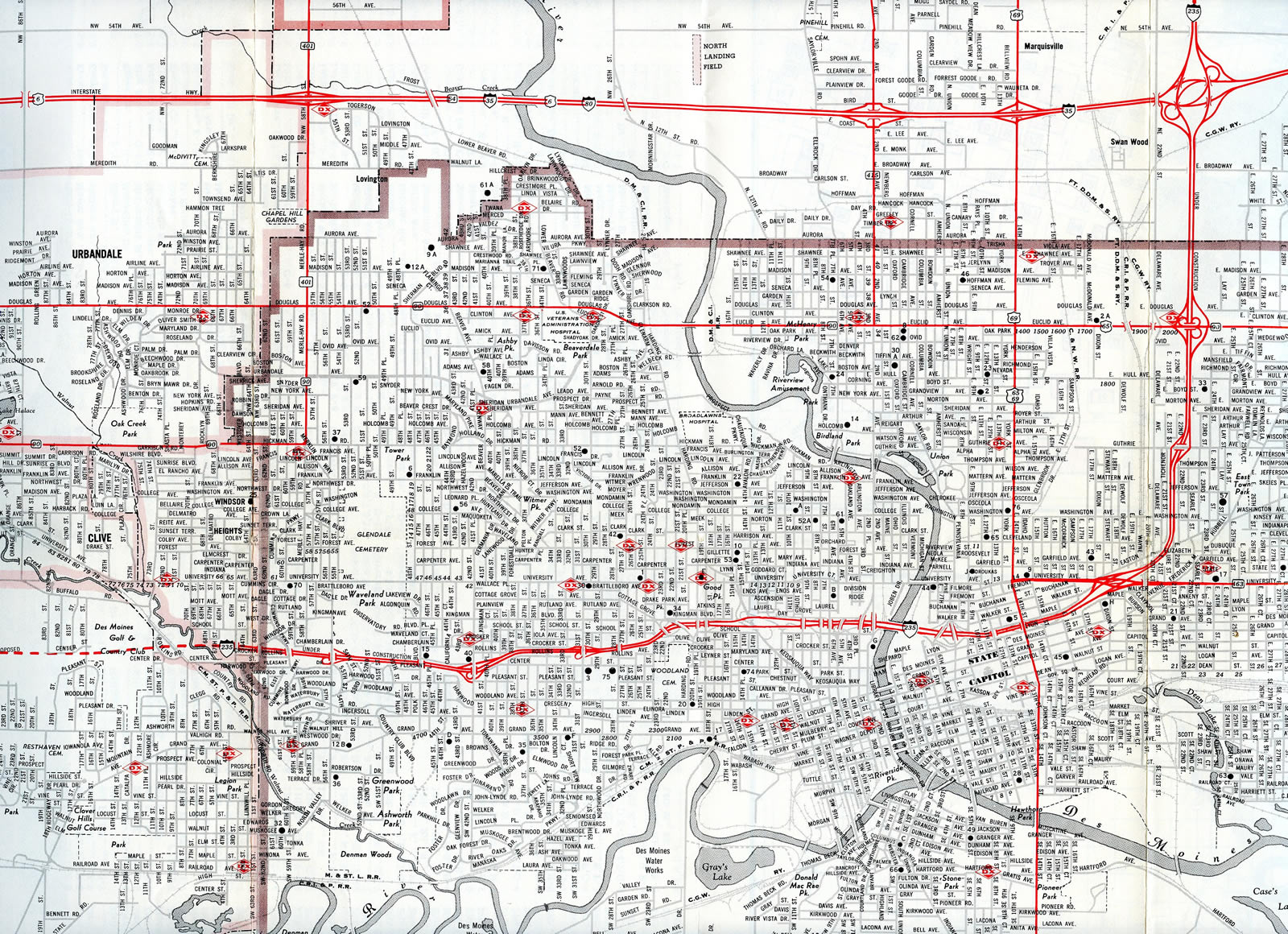
The first portion of I-235 opened was the 1.2 mile long section from Cottage Grove Avenue to 12th Street, including the bridges across the Des Moines River. This stretch took three years to build and cost $9.5 million. Further north, the exchange between I-35, I-80 and I-235 was nicknamed the [East] "Mixmaster" by highway engineers in 1961, due to the intricate nature of its design (IowaDOT, n.d.). The junction between I-35, I-80 and I-235 in West Des Moines was nicknamed the West Mixmaster Interchange.
Early design elements of Interstate 235 called for bridge clearances of 14.5 feet, instead of the recommended 16 foot clearance to accommodate the movement of military equipment. The reduced height meant that military traffic was routed around Des Moines to offset the cost with raising overpasses and their approaches (IowaDOT, n.d.).
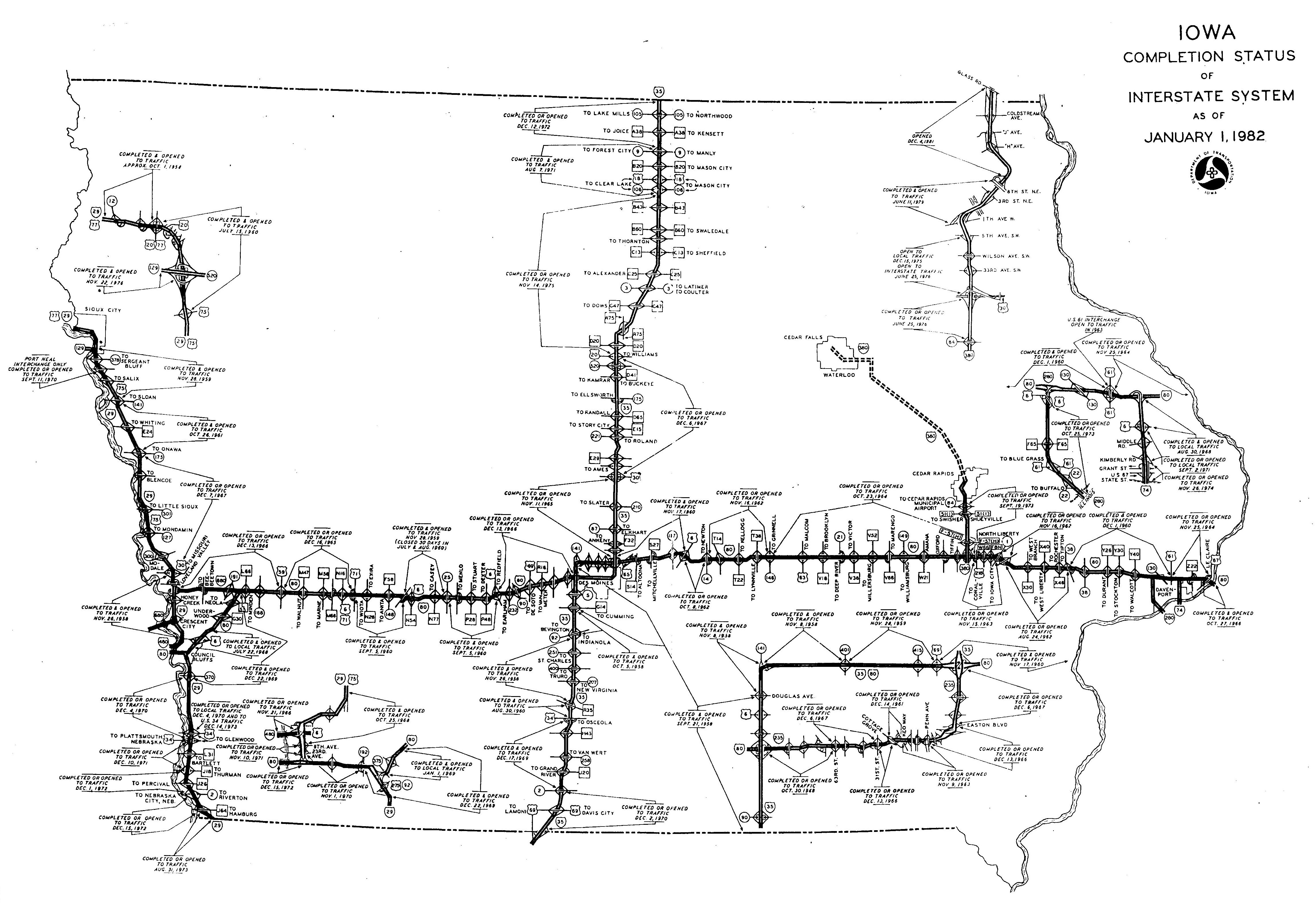
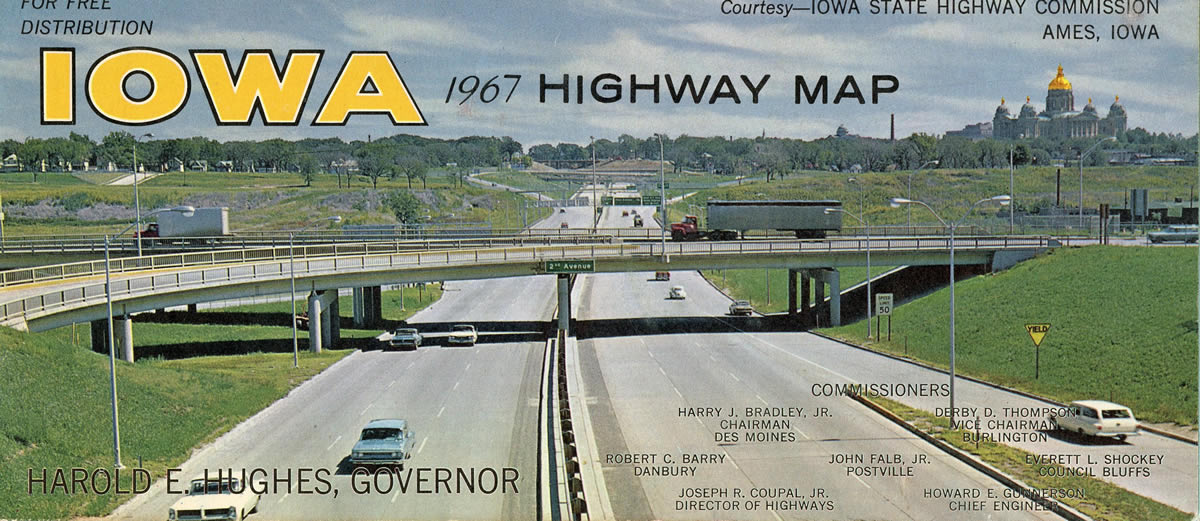
Construction on Interstate 235 was completed in 1968, four years ahead of schedule.3 Segments of the MacVicar Freeway opened as follows from west to east (IowaDOT, 1982):
- I-35/80 east to 63rd Street: October 30, 1968
- 63rd Street to 31st Street: December 6, 1967
- 31st Street to Cottage Grove Avenue: December 13, 1966
- Cottage Grove Avenue to Keo Way: December 14, 1961
- Keo Way to Penn Avenue: November 9, 1963
- Penn Avenue to Easton Boulevard: December 13, 1966
- Easton Boulevard to I-35/80 (Mixmaster interchange): December 6, 1967
Rebuilding I-235
All of Interstate 235 was reconstructed to modern design standards during the $429 million Rebuilding I-235 project underway from March 2002 to 2007. Construction replaced all low clearance bridges, expanded the freeway to at least six lanes in width, lengthened exit and entrance ramps and added lighting and landscaping.
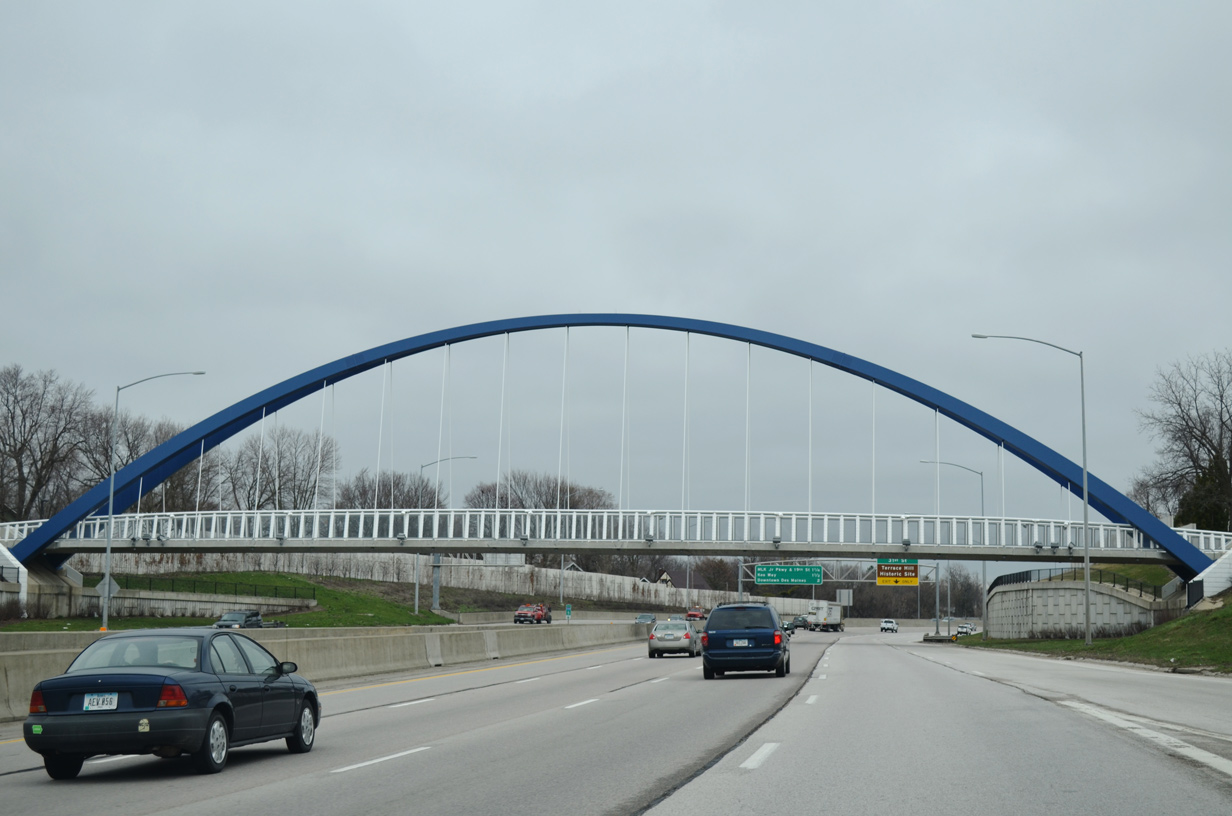
Three steel pedestrian bridges were added at 44th, 40th and E 6th Streets. The basket-handle arch bridges replaced preexisting structures. The span design celebrates the arched river bridges that are symbolized in the city logo. The Edna M. Griffin Memorial Bridge near East 6th Street was completed in January 2004. The 40th and 44th Street bridges were constructed from October 2004 to Fall 2005.
Interchange modifications outlined on the Rebuilding I-235 project web site:
- West West Drive Interchange - March 2003 to November 2003 A new eastbound entrance ramp was added from Valley View Drive north. Ramps along I-235 were were realigned further south and the Valley View Drive overpass was replaced.
- 56th Street Interchange - May to December 2005 The 56th Street overpass was replaced and the loop ramp from southbound to I-235 east was removed.
- 42nd Interchange - March to August 2004 The interchange was reconstructed with a new bridge built over I-235.
- 35th, 31st, 28th Streets - March to December 2005 A diamond interchange replaced the eastbound off-ramp to 35th Street and a loop ramp from 31st Street south to I-235 east. Bridges for I-235 over 35th and 28th Street were replaced, as was the 31st Street overpass.
- MLK, Jr. Parkway, 19th Street, Cottage Grove Avenue - March 2002 to March 2004 Cottage Grove Avenue was realigned onto a new overpass in conjunction with a new eastbound off-ramp to School Street in 2002. New ramps were added from both the new 19th Street bridge and MLK, Jr. Parkway to southbound. The split directions of Cottage Grove Avenue and its associated ramp system to I-235 were demolished.
- Keo Way Interchange - September 2004 to Summer 2007 Keo Way was reconstructed below I-235 while new off-ramps were completed. The service roads connecting I-235 with Keo Way and 19th Street take the place of the former freeway mainline, which previously separated to accommodate left-hand ramps along eastbound to and from Keo Way. A new on-ramp to I-235 was also completed, which passes below the new off-ramp to 7th and 3rd Streets. The loop ramp on the southeast quadrant with Keo Way was removed as well.
- 2nd Avenue / 3rd Street Interchange - September 2002 to December 2003 Overpasses for 2nd Avenue, 3rd Street and 5th Avenue were replaced and ramps reconstructed. The 12th Street on-ramps, which joined the left side of both directions of Interstate 235, were permanently removed.
- 5th Avenue, 6th Avenue, 7th Street Interchange - July 2004 to Summer 2005 New bridges for all three numbered streets. The curved overpass for 5th Avenue was removed and 5th Avenue was made continuous north of Day Street.
- E 6th Street, Pennsylvania Avenue Interchange - April 2003 to December 2003 New bridges were built for East 6th and 9th Streets in 2002. Redesign of the interchange consolidated back to back off-ramps into a wider split-diamond interchange.
- E 14th and 15th Street Interchange - March 2004 to December 2005 Collector distributor roadways added between 12th and 14th Streets as part of interchange reconstruction.
- East University Avenue to Guthrie Avenue - June 2002 to November 2003 A new westbound roadway was constructed for I-235, replacing the westbound ramps to and from Easton Boulevard.
- East University Avenue and Easton Boulevard - January 2004 to spring 2006 The split roadways of Interstate 235 were realigned to eliminate left entrance ramps from Iowa 163. Ramps along I-235 east to Easton Boulevard were rebuilt, while the separate sections of Easton Boulevard below the freeway were linked.
- East Euclid Avenue Interchange - November 2002 to December 2003 The U.S. 6 overpass was replaced and the loop ramp from I-235 north to Euclid Avenue was removed.
East End 
 ‐ Des Moines, IA
 East at
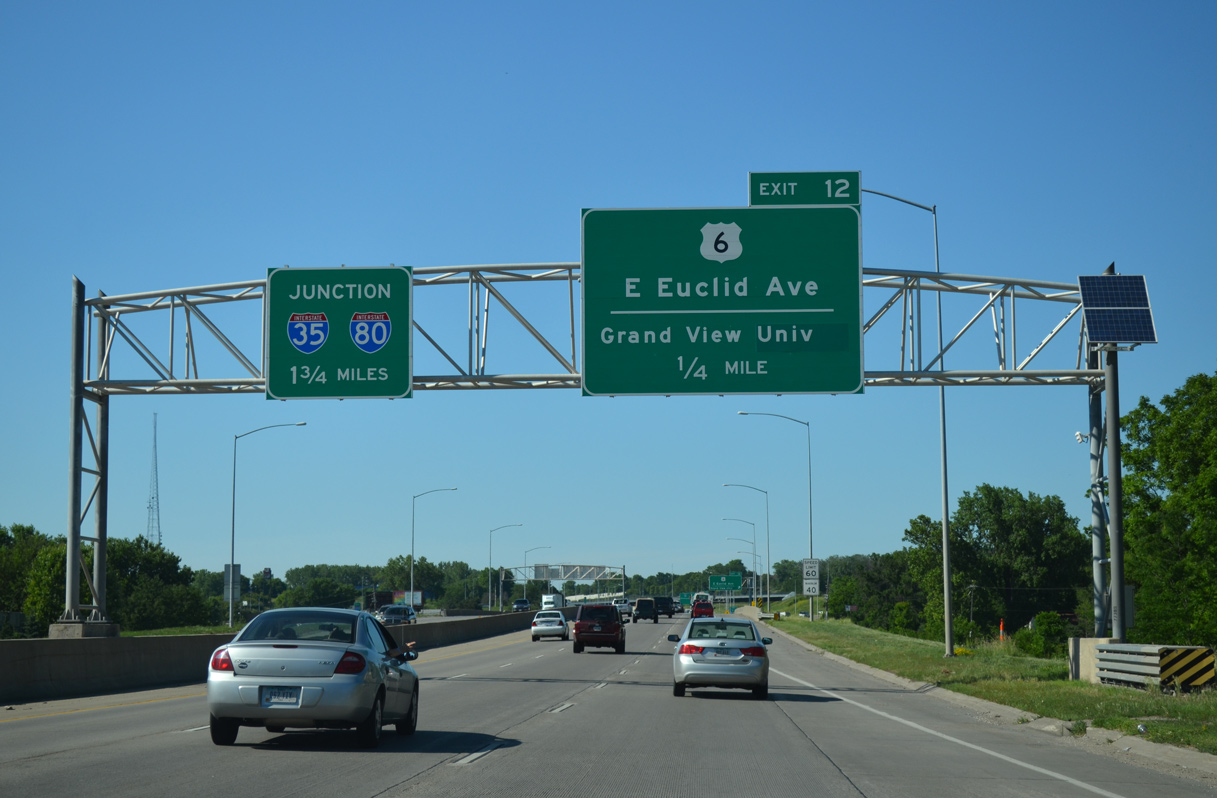
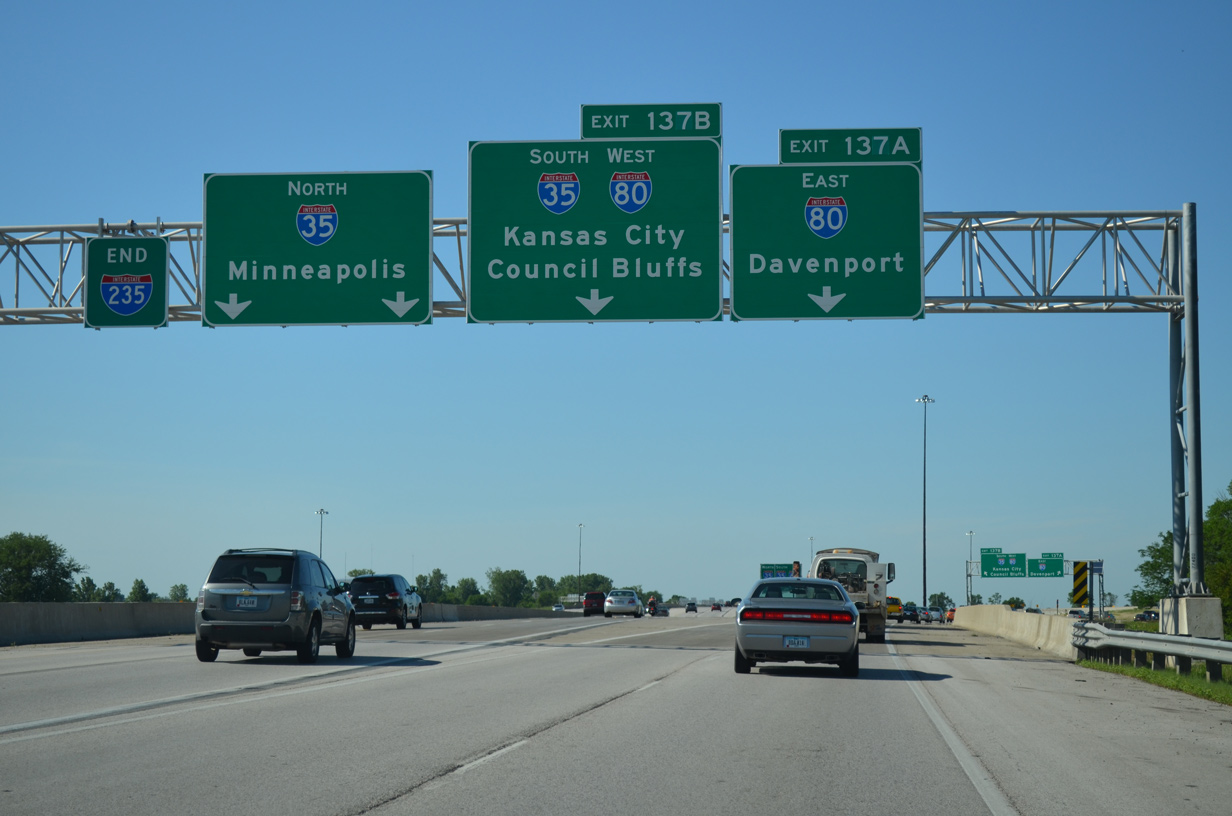
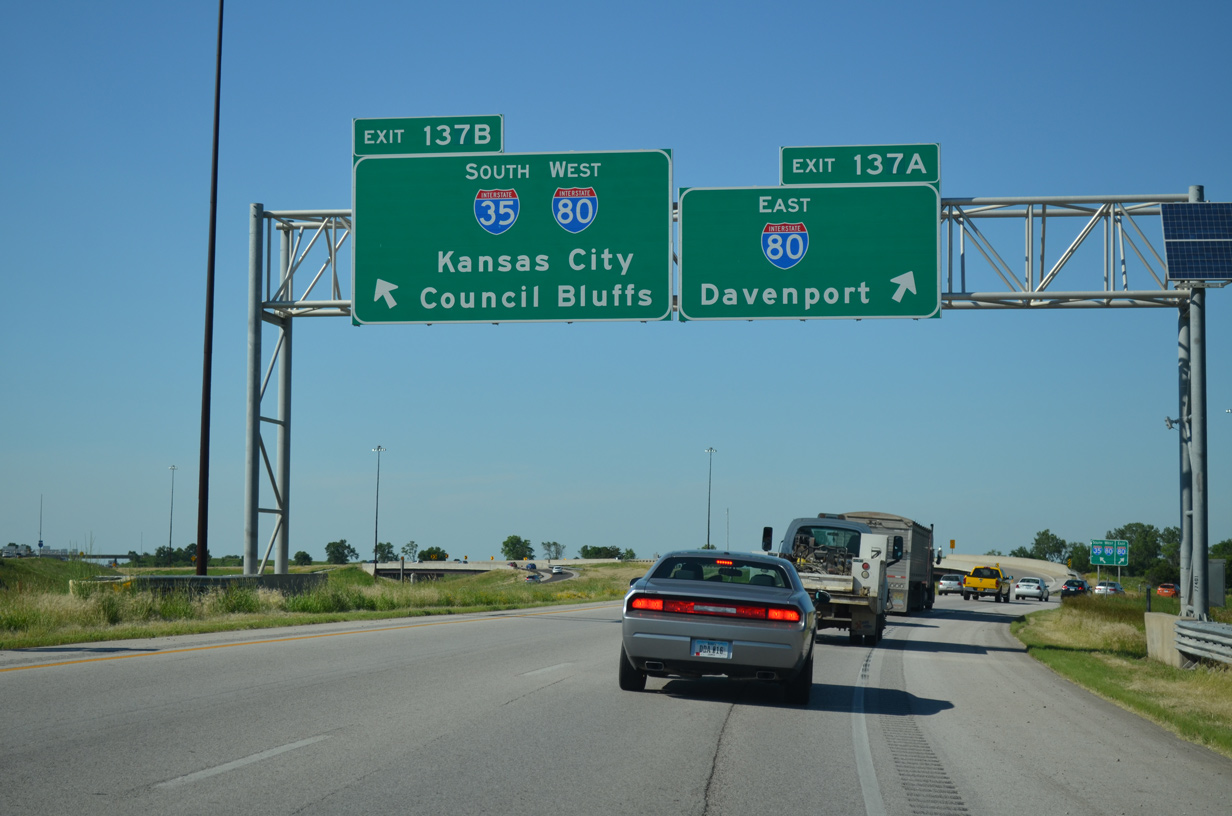
Advancing east to six-ramp parclo interchange (Exit 12) with U.S. 6 (East Euclid Avenue), 1.25 miles from the East Mixmaster Interchange. 06/19/15
West at
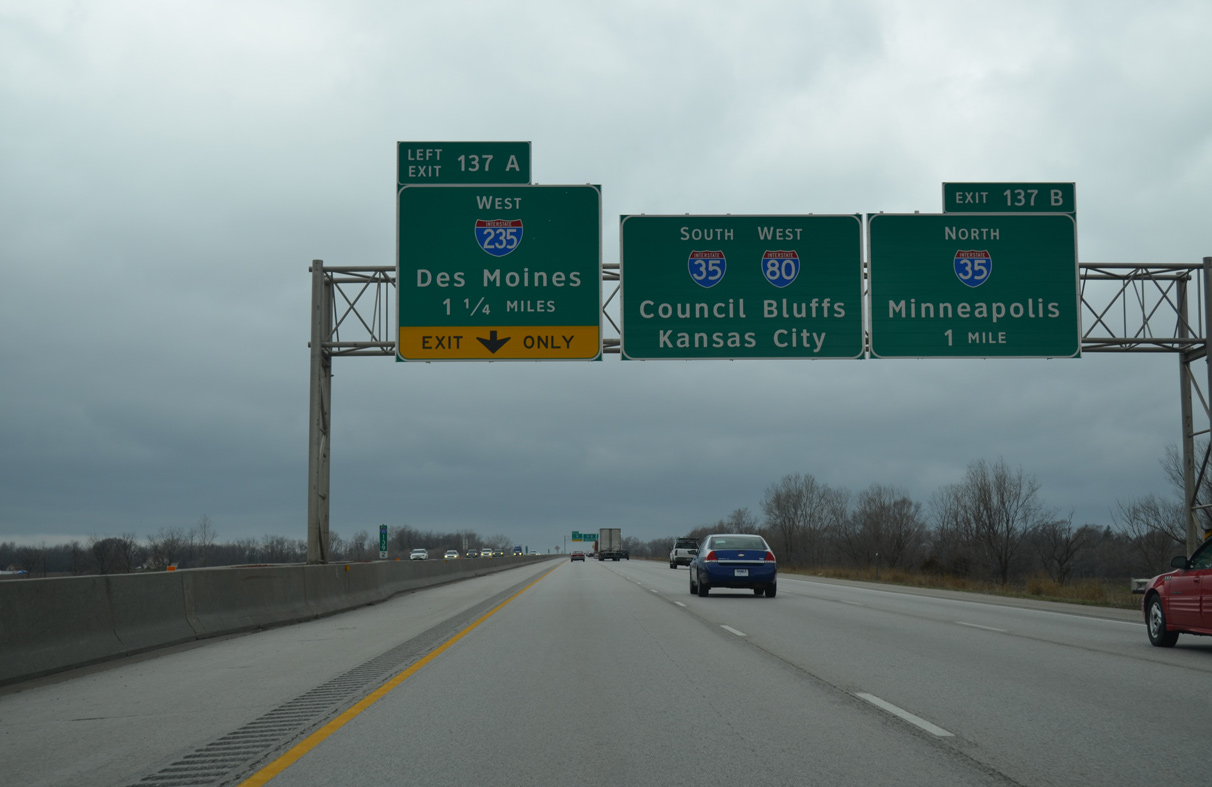
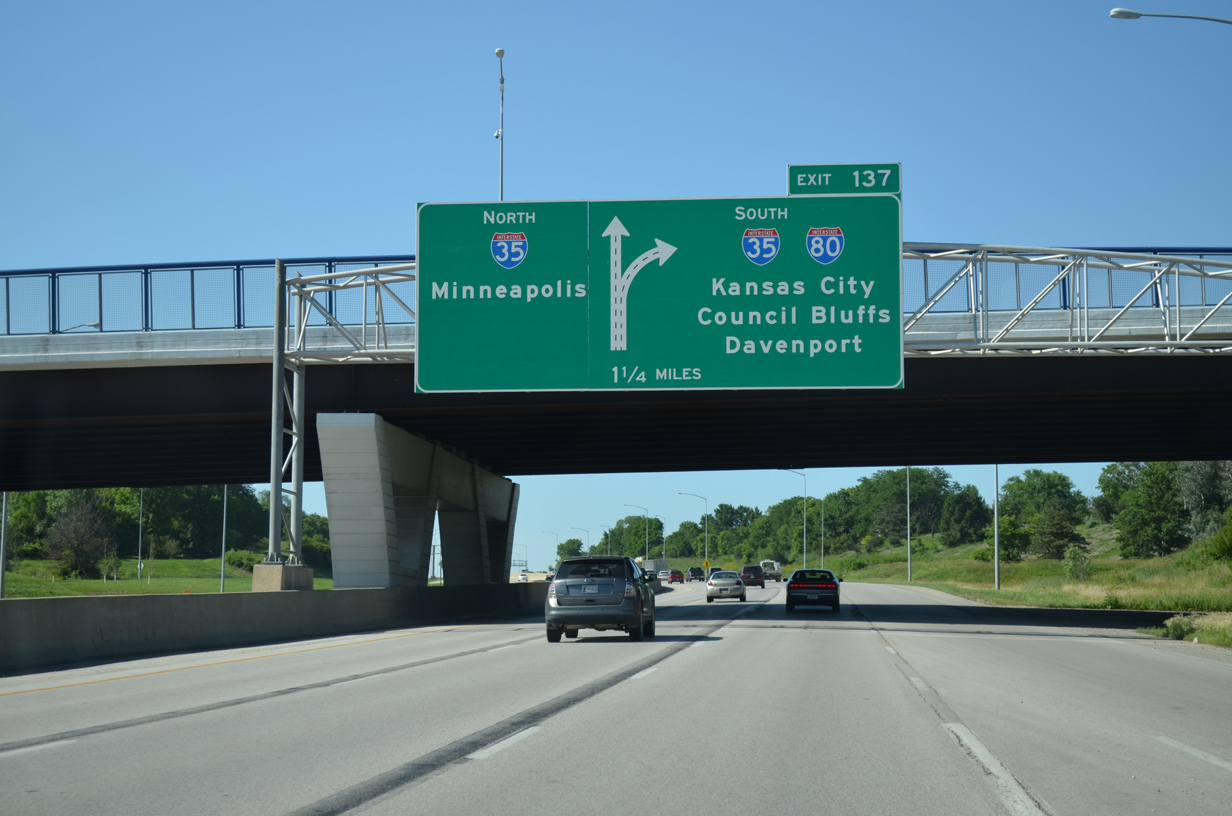
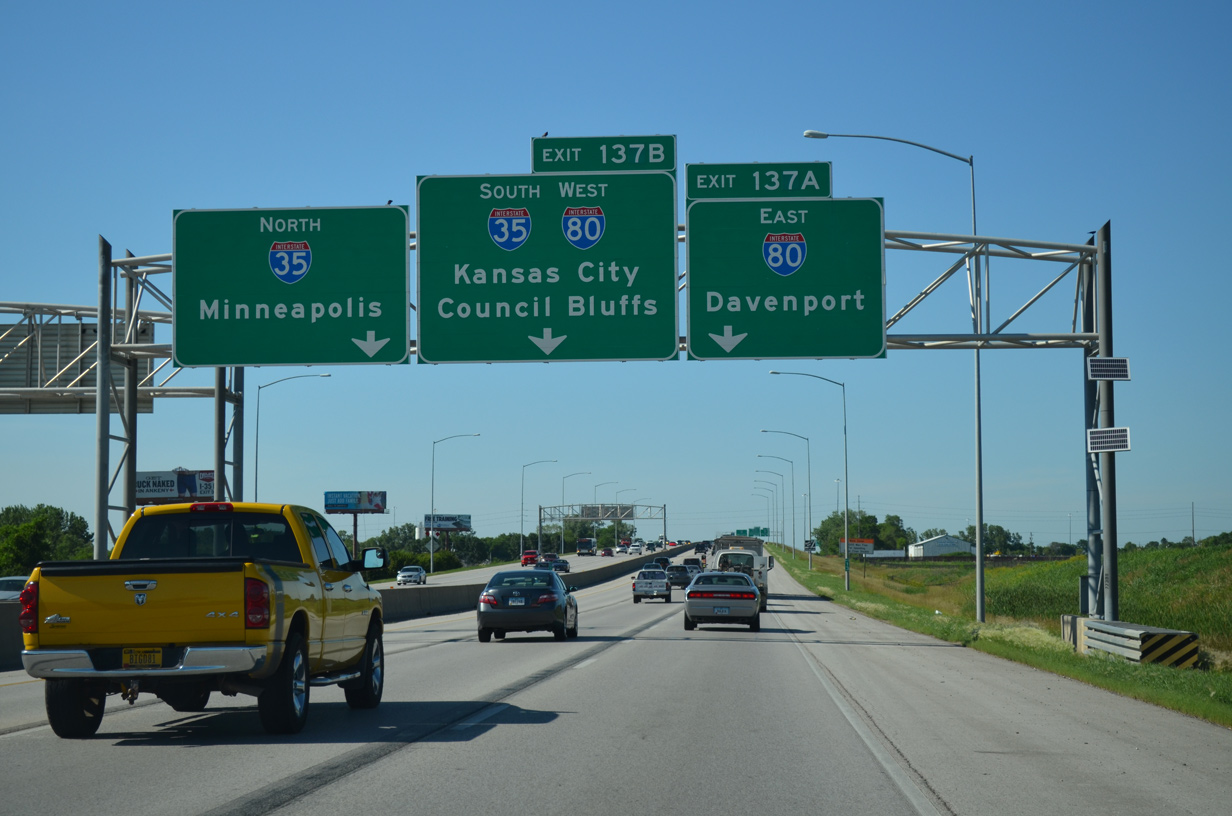
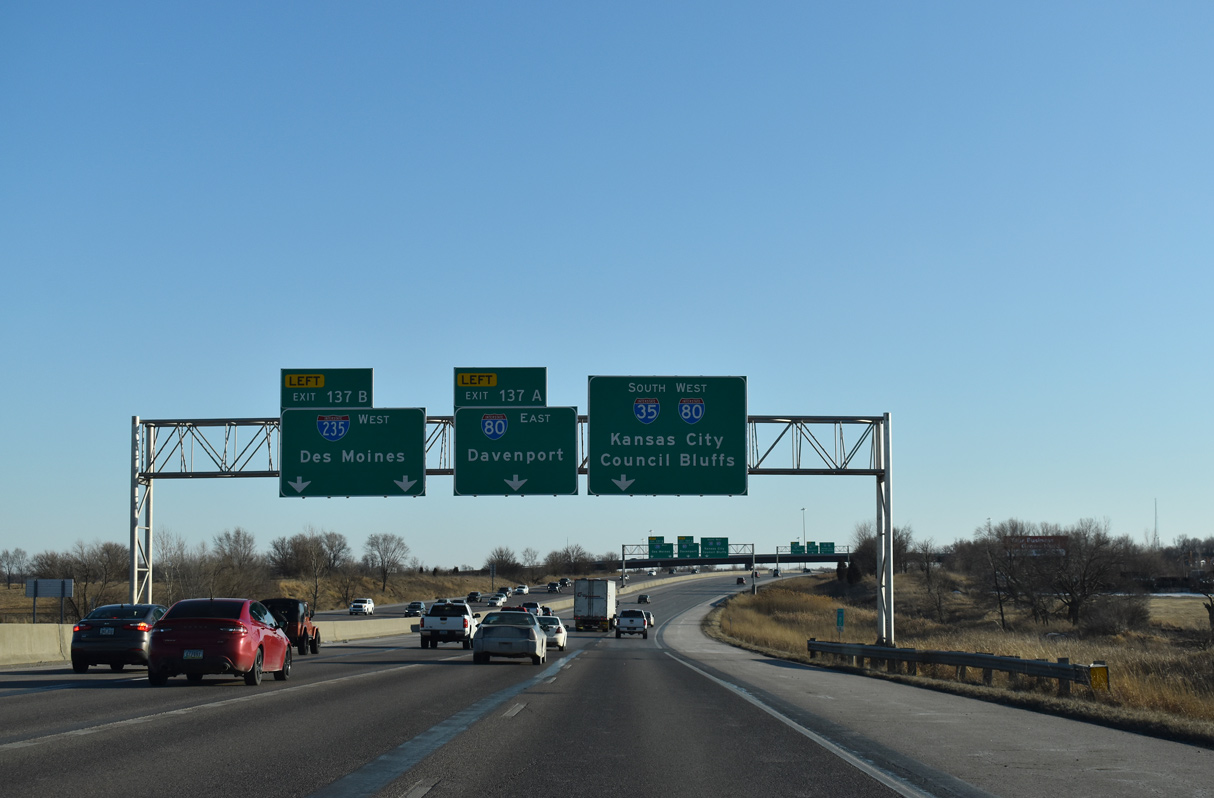
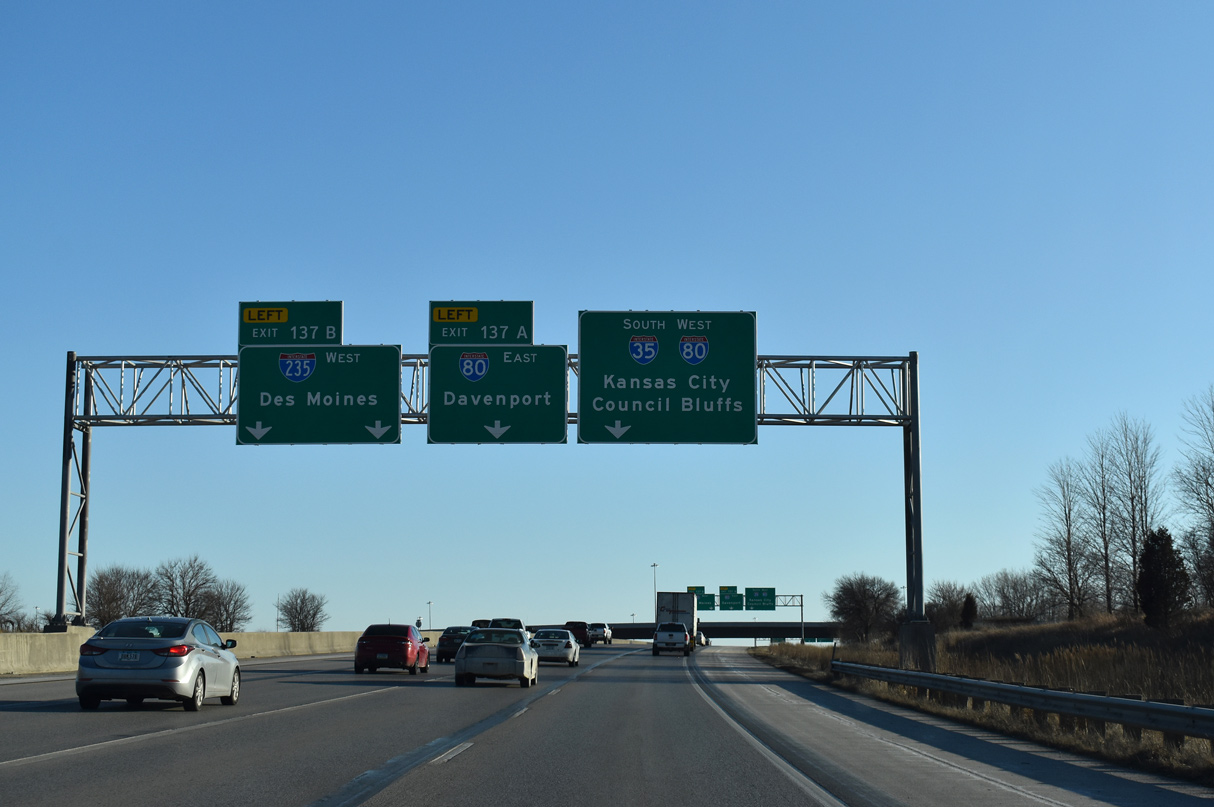
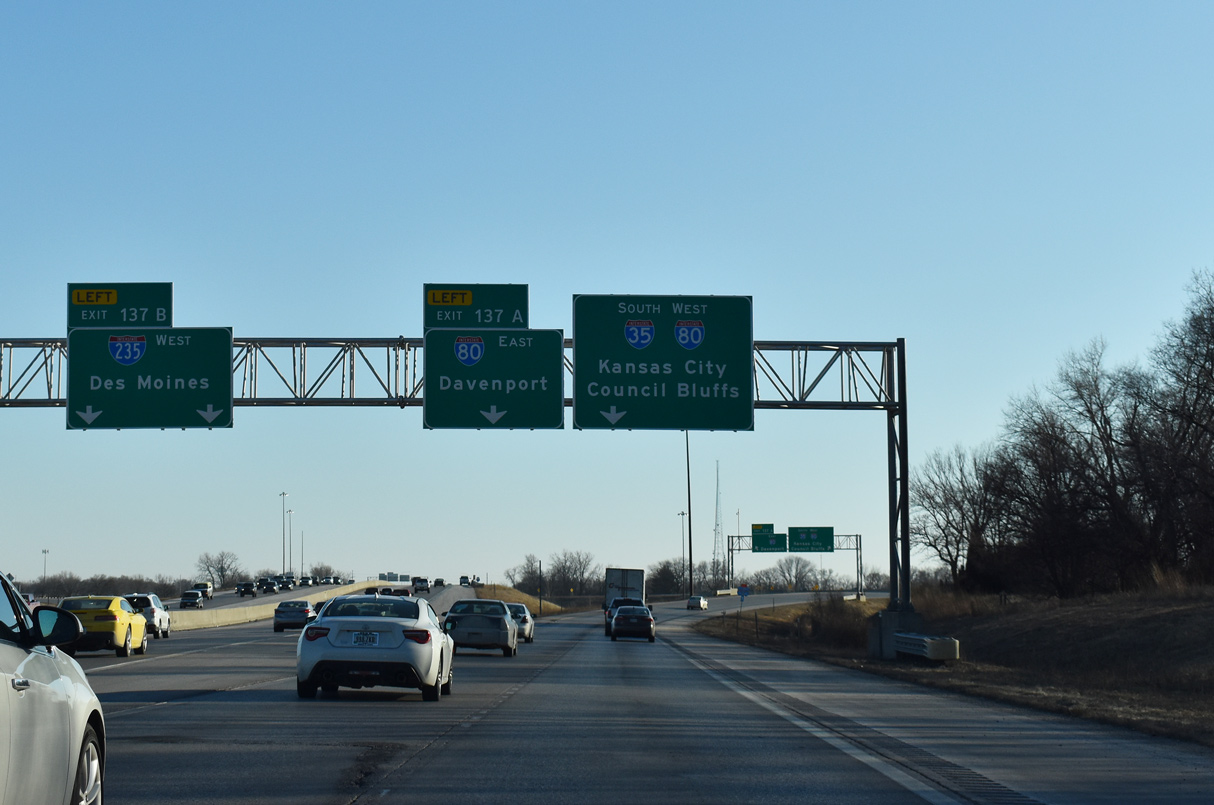
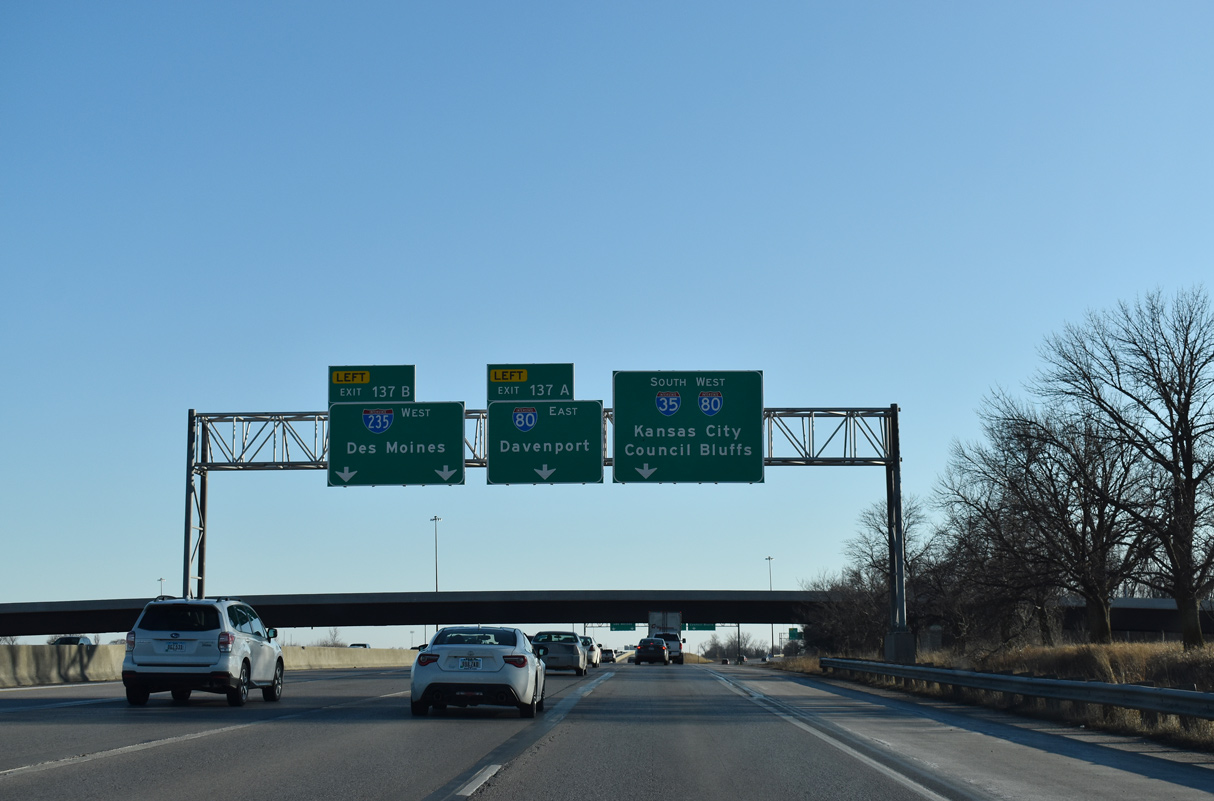
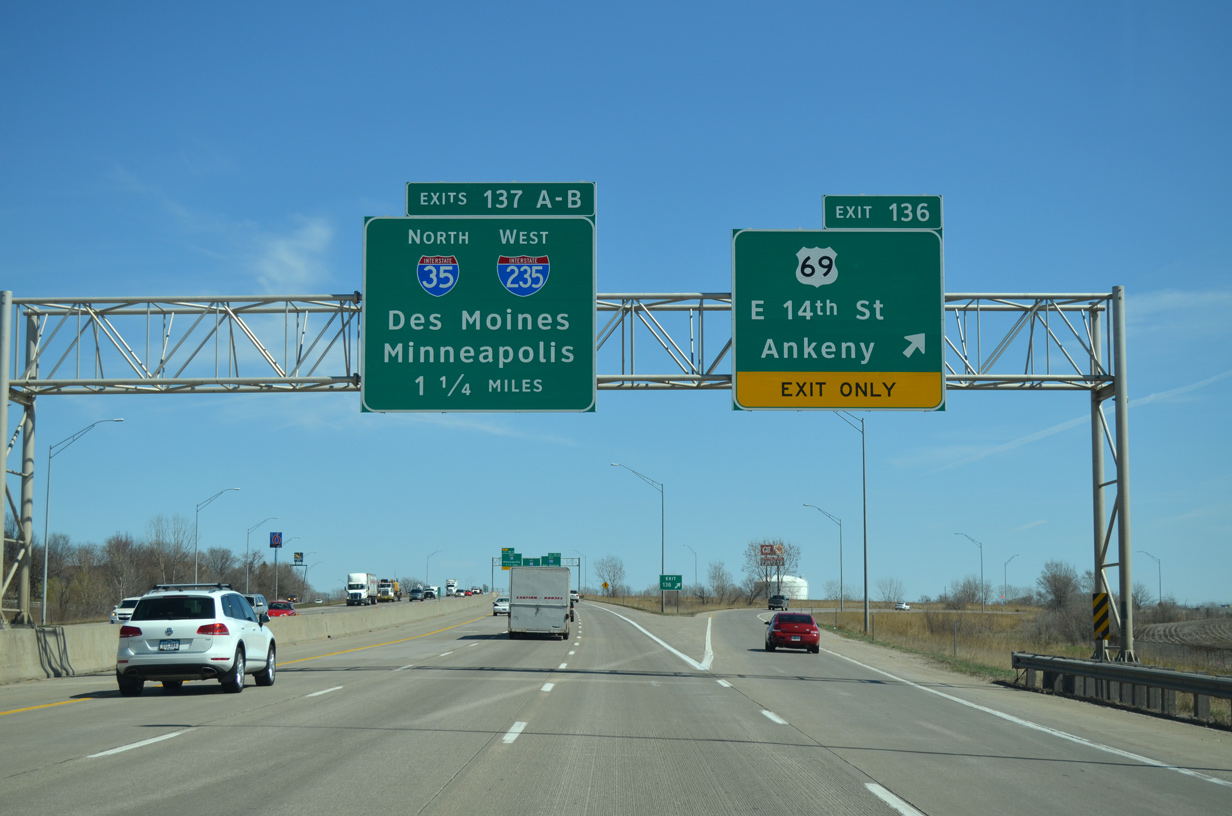
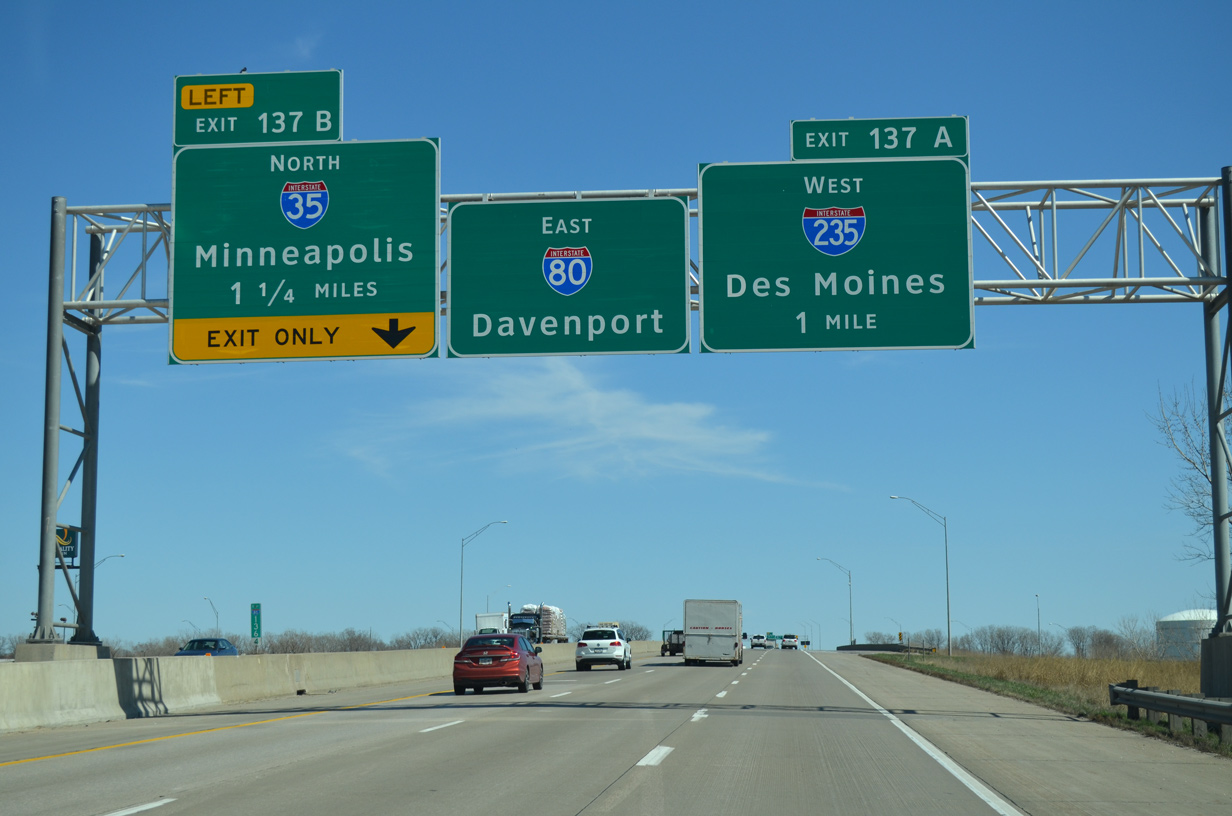
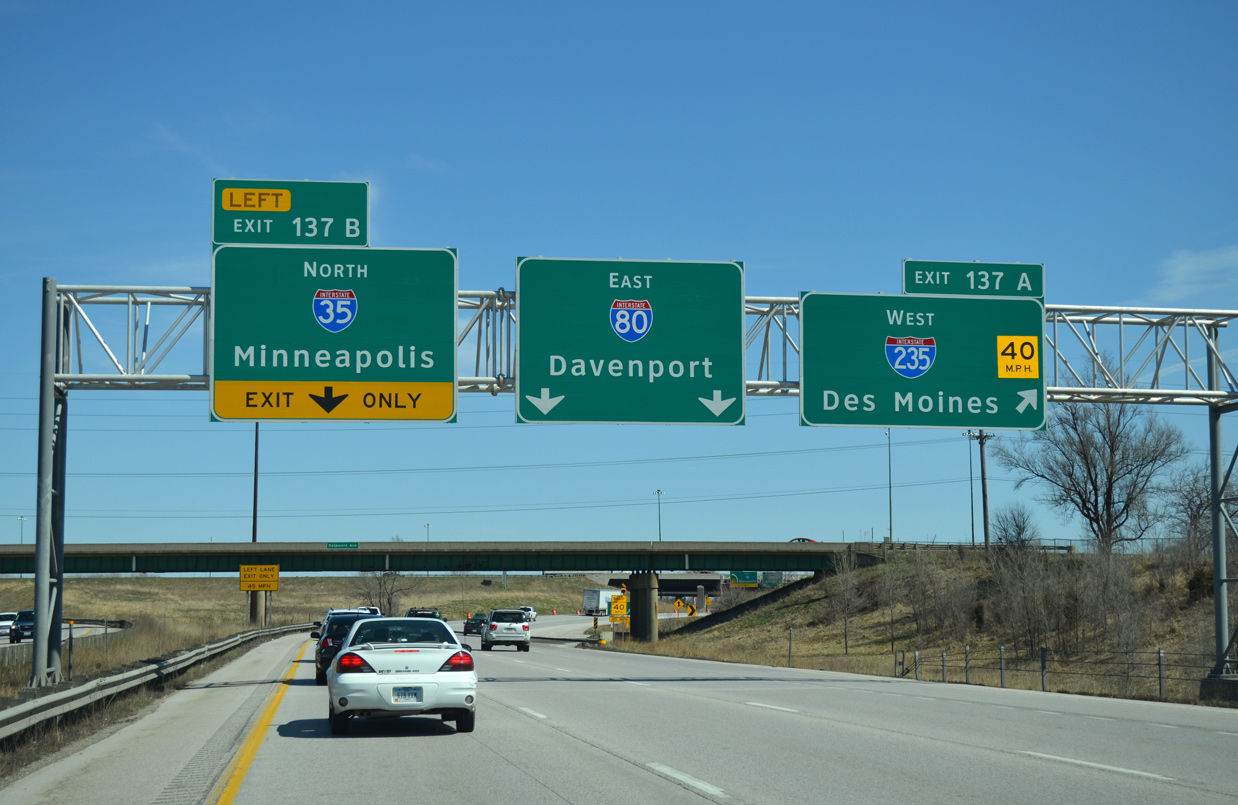
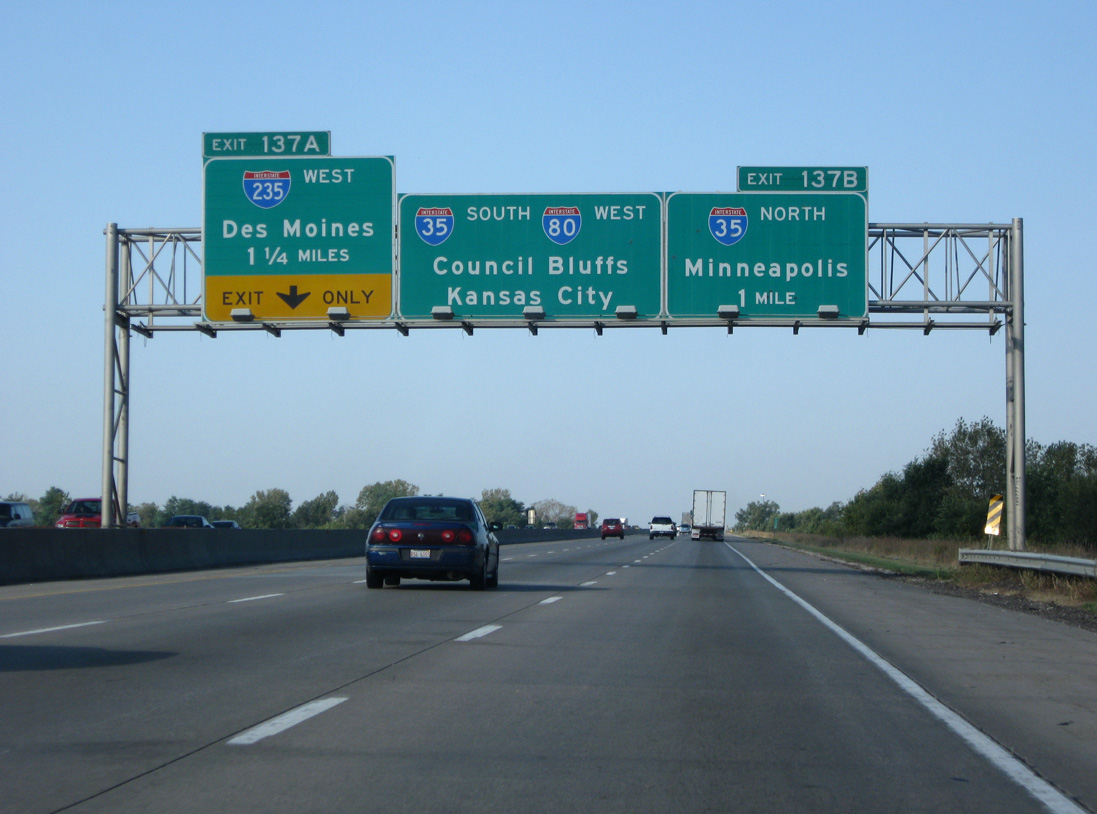
Interstate 80 traverses a rural area from the north end of the Des Moines outer loop (U.S. 65) to the East Mixmaster Interchange (Exits 137 B/A) with I-35 north and I-235 west. 04/12/13
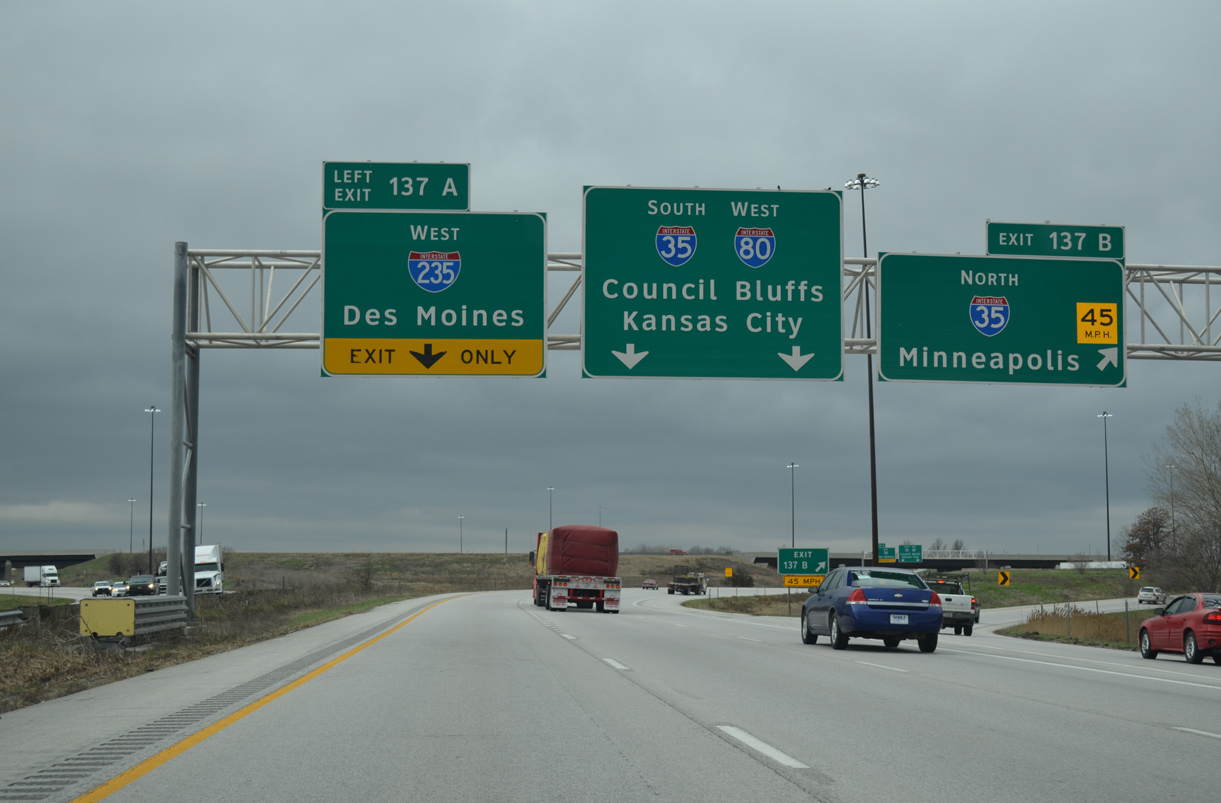
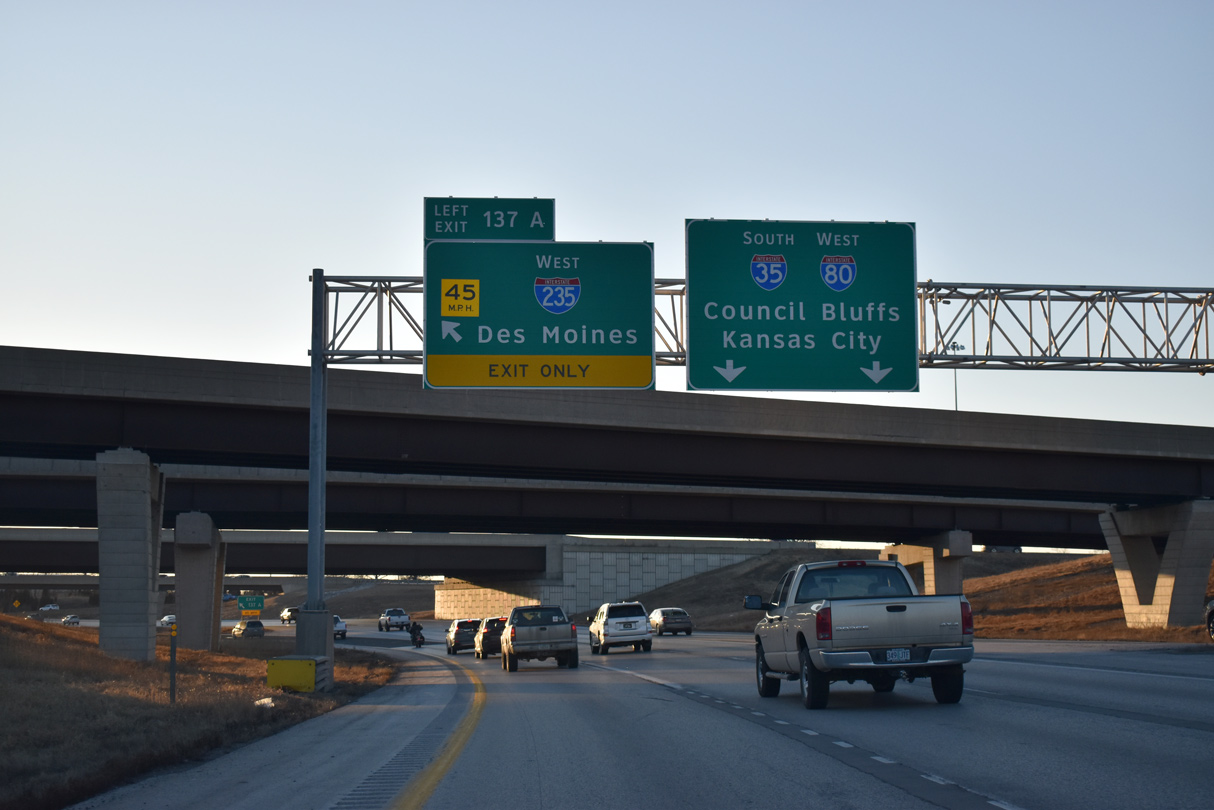
South at
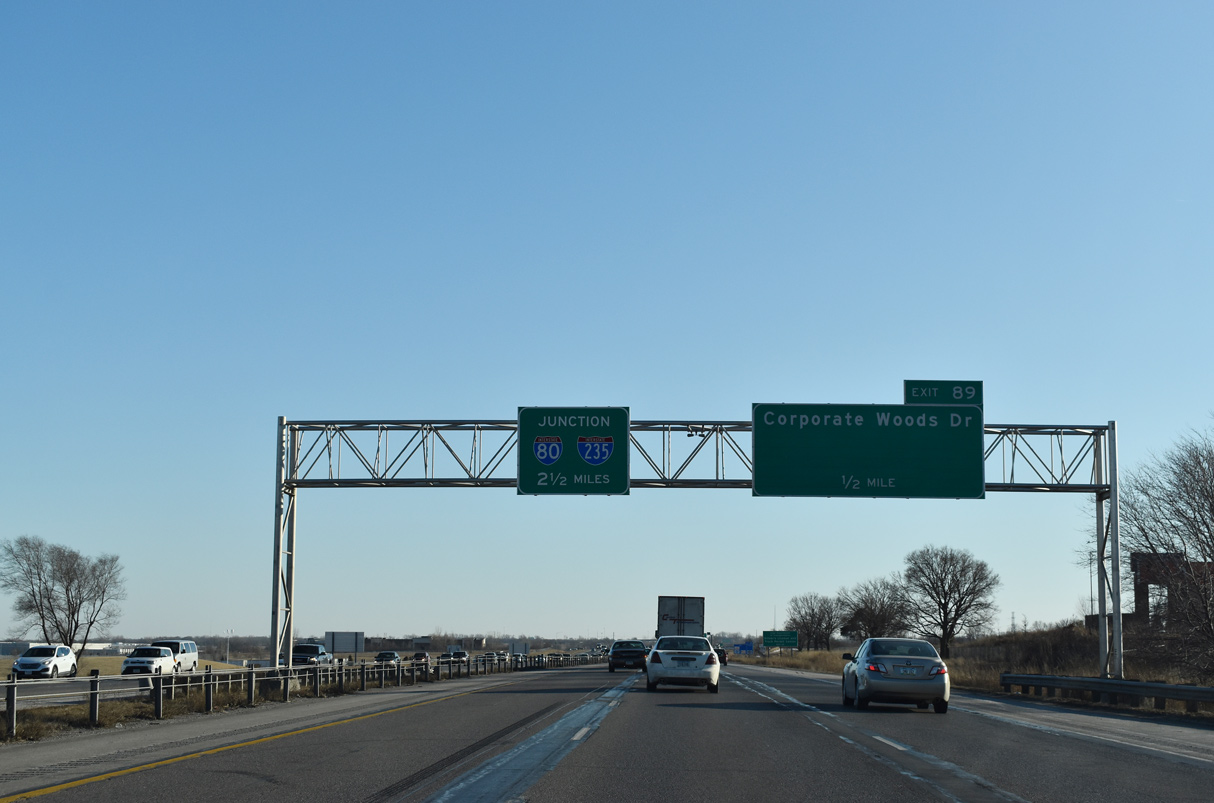
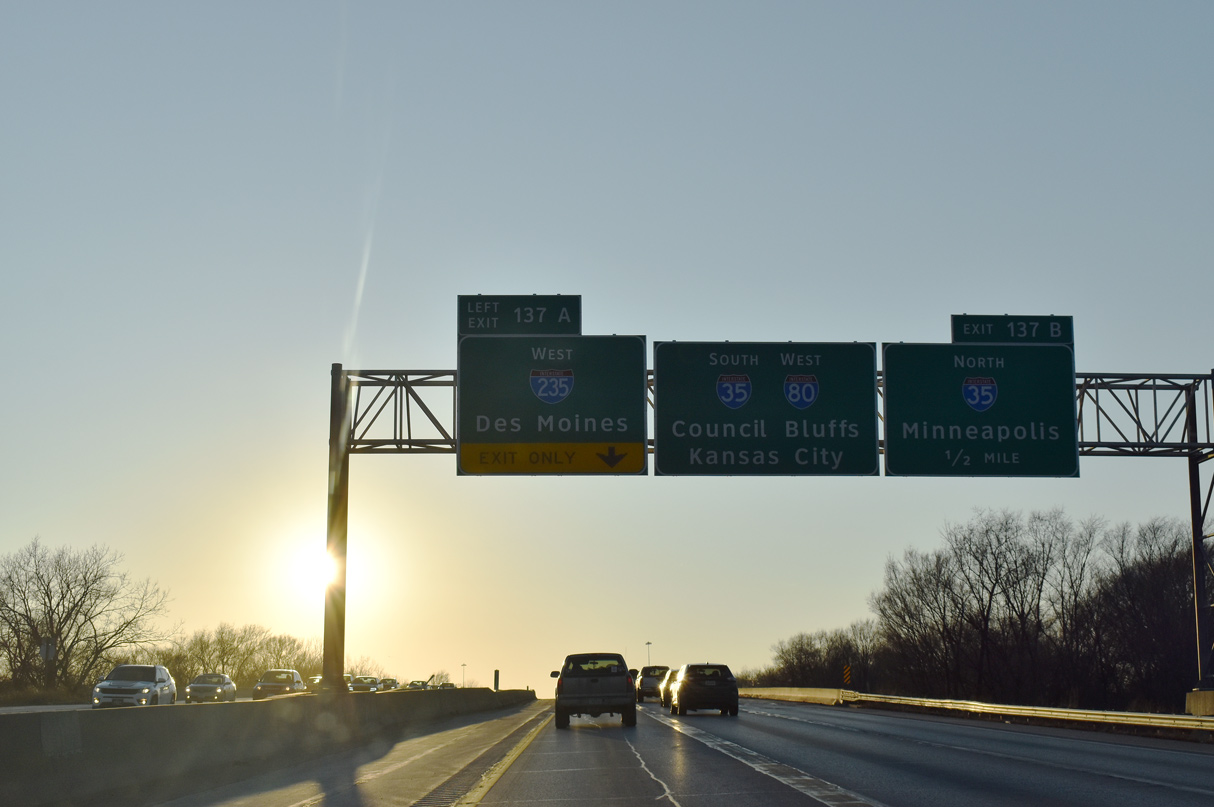
Heading south through Ankeny, Interstate 35 meets Corporate Woods Drive (Exit 89) at a diamond interchange on the 2.5 mile approach to the East Mixmaster Interchange with I-80 and I-235. 02/21/20
North East at
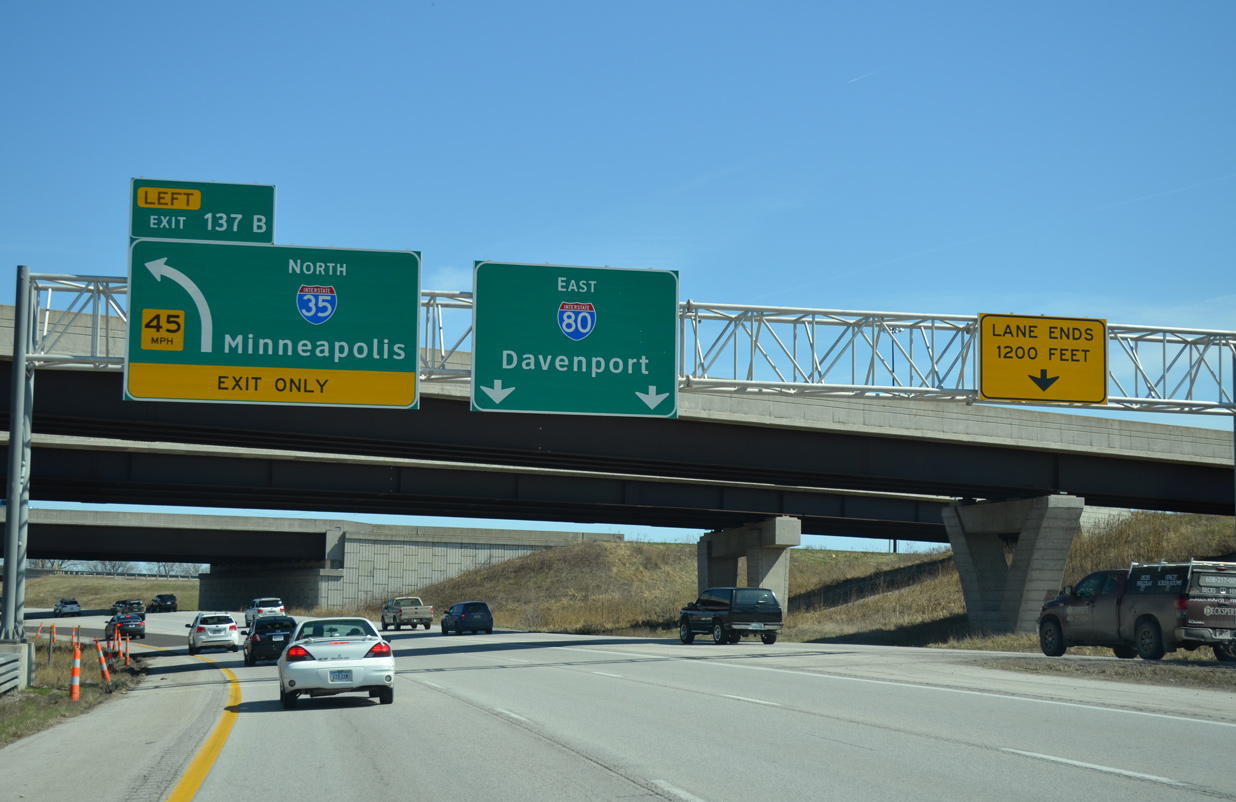
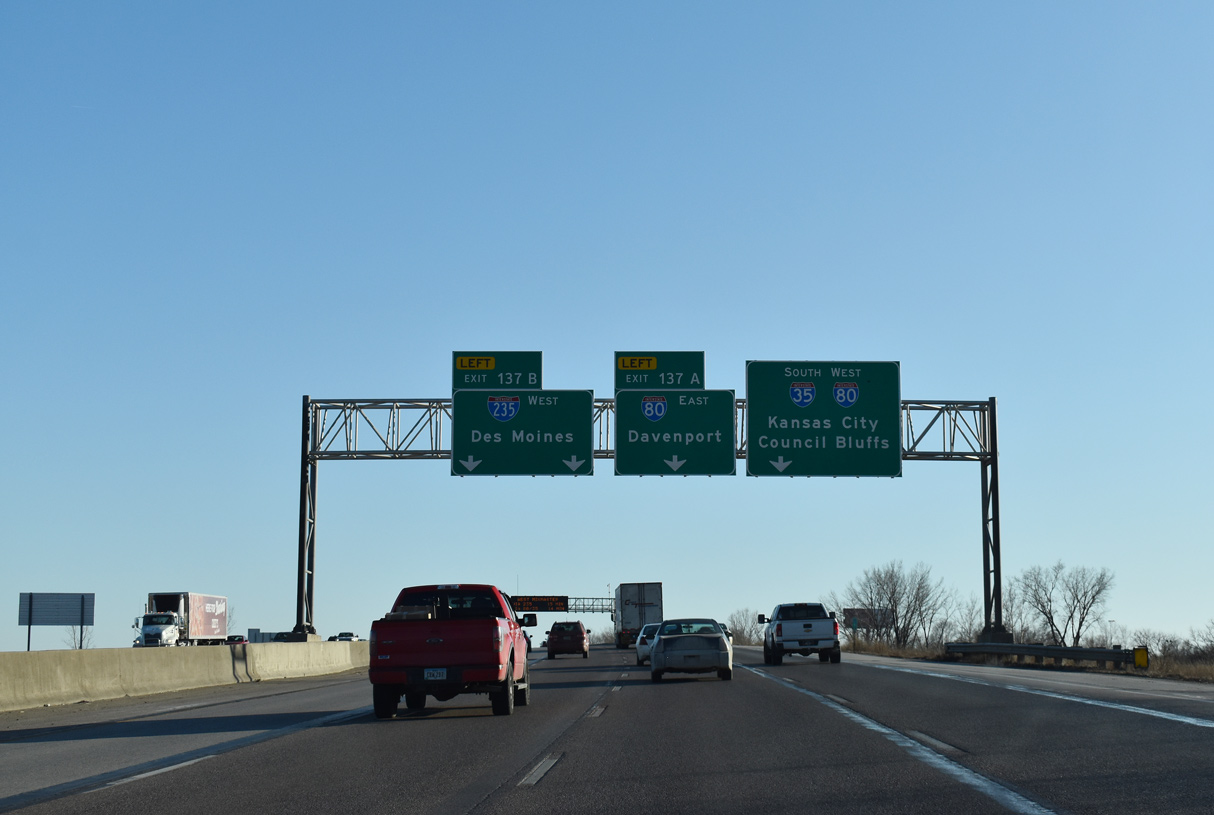
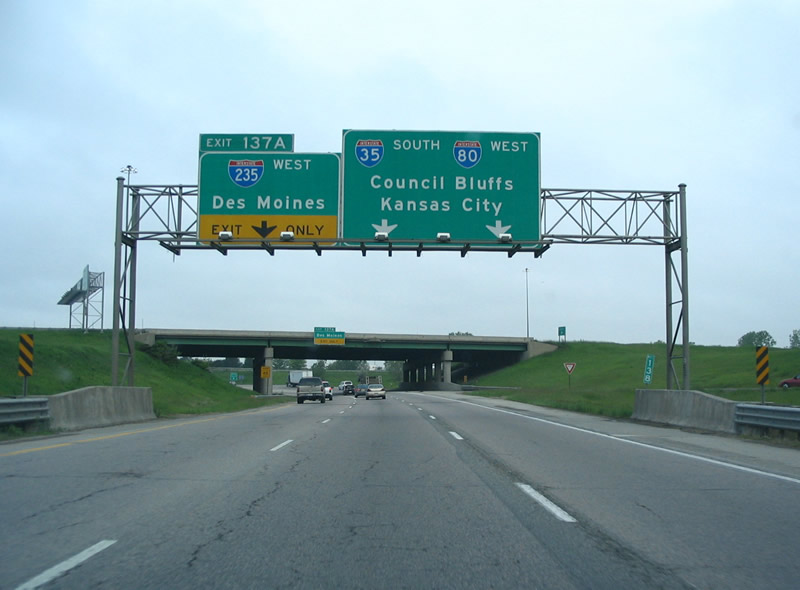
2023-26 construction of the East Mixmaster Interchange eliminated the single lane left exit for Interstate 35. I-35 extends north from the east end of I-235 to Ankeny, Ames and Clear Lake in northern Iowa. 07/14/26


East End – Past Views
Past Views Gallery (Tap to Expand / Collapse Section)
East at
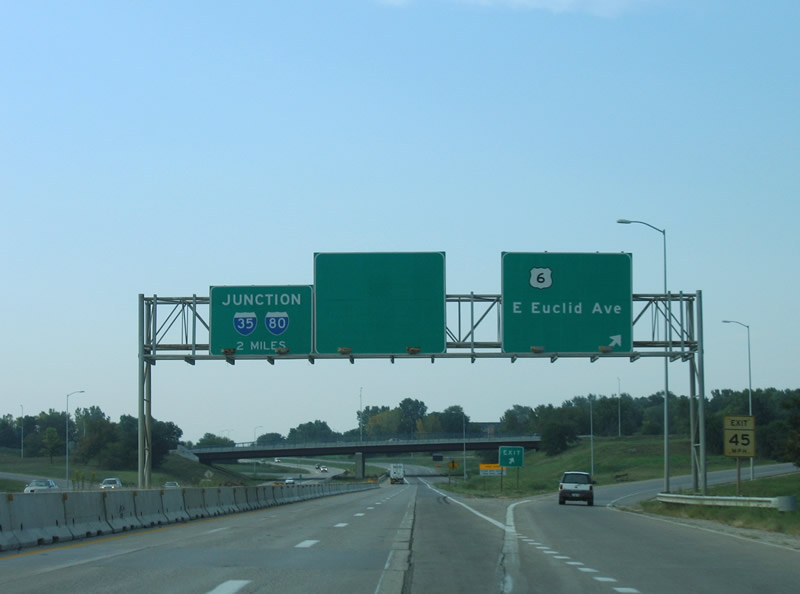
Interstate 235 east at U.S. 6 (E Euclid Avenue) during the Rebuild I-235 construction. A blank sign remained from the closed loop ramp for U.S. 6 west. A new sign bridge added further south revised the distance for I-35/80 to 1.25 miles. 09/04/05
West at
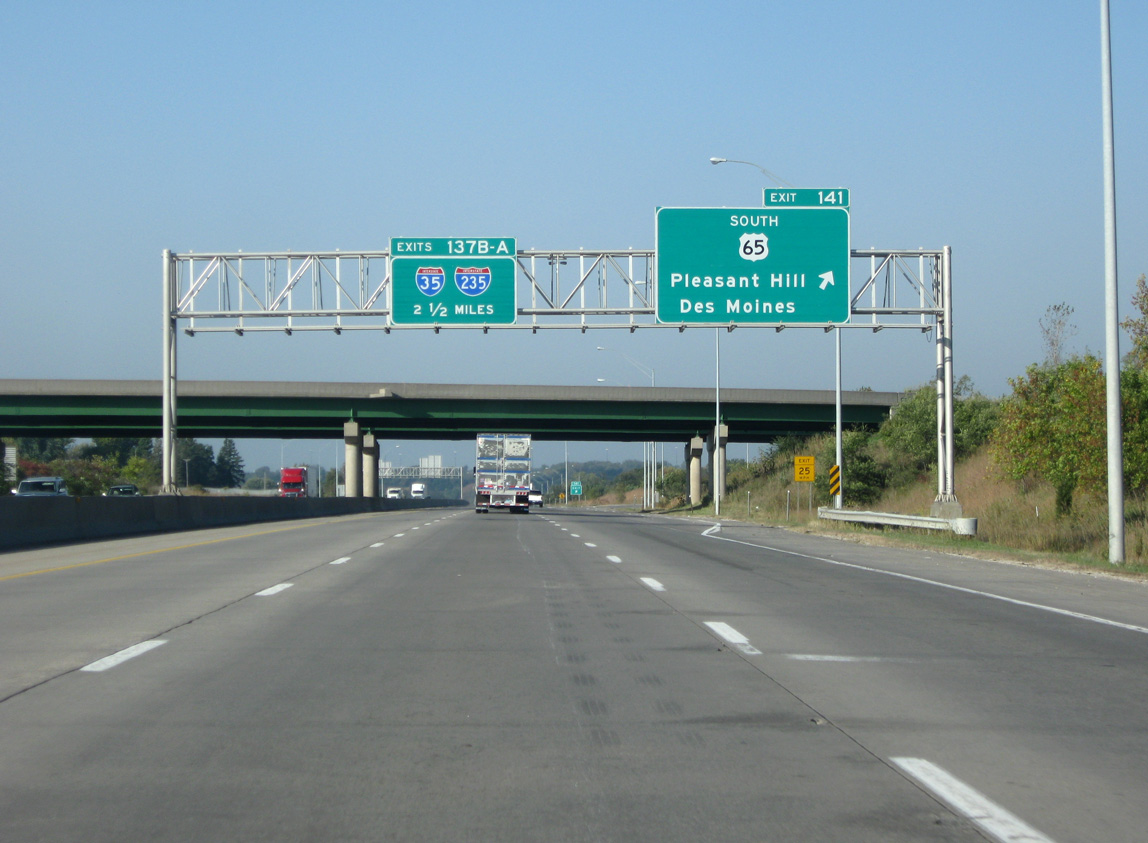
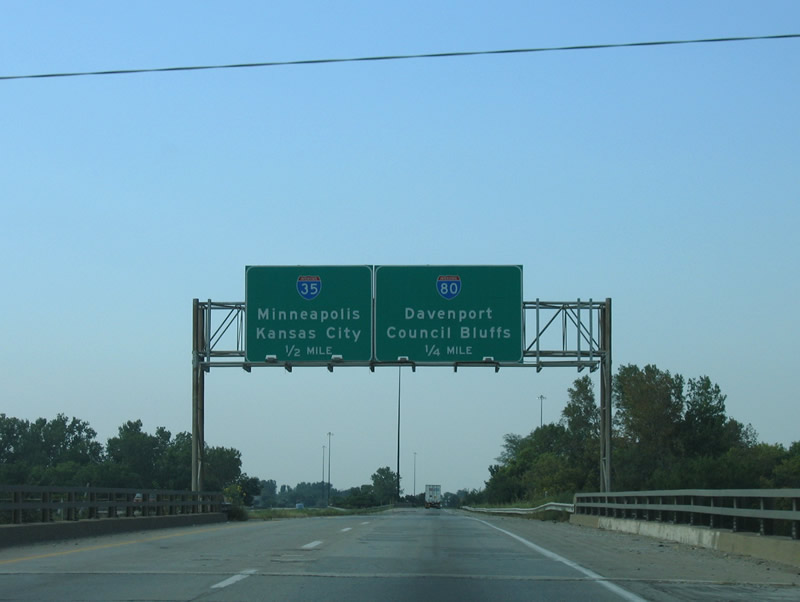
The two advance guide sign for the East Mixmaster Interchange was located at Exit 141 with U.S. 65 south. U.S. 65 south and Iowa 5 from Carlisle west comprise a belt freeway encircling the outer suburbs of Des Moines to the south and west. 10/04/08
North East at
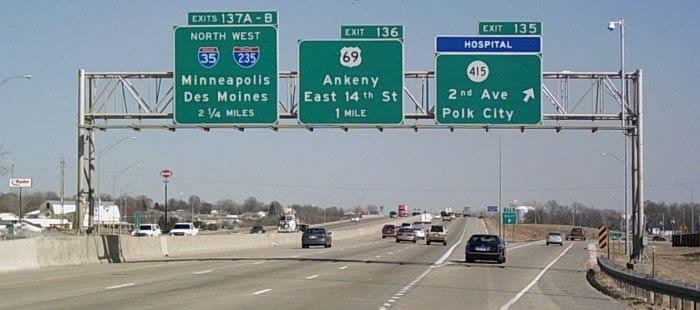
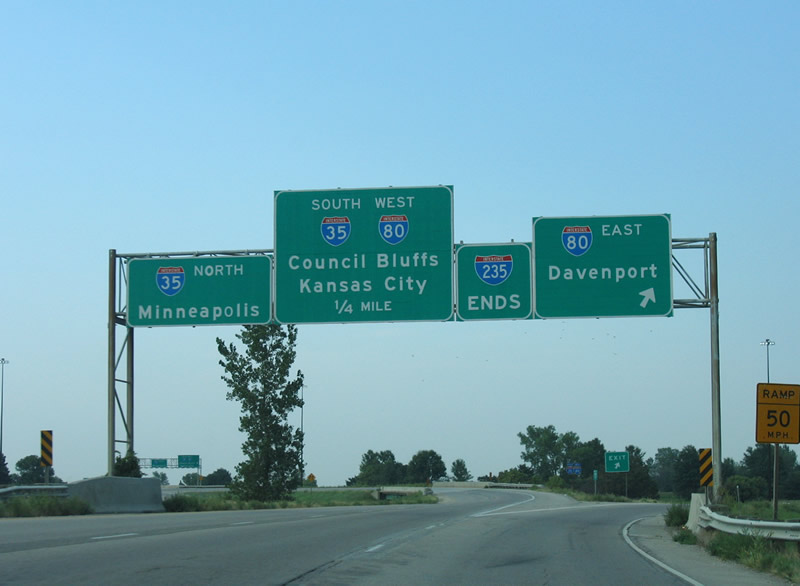
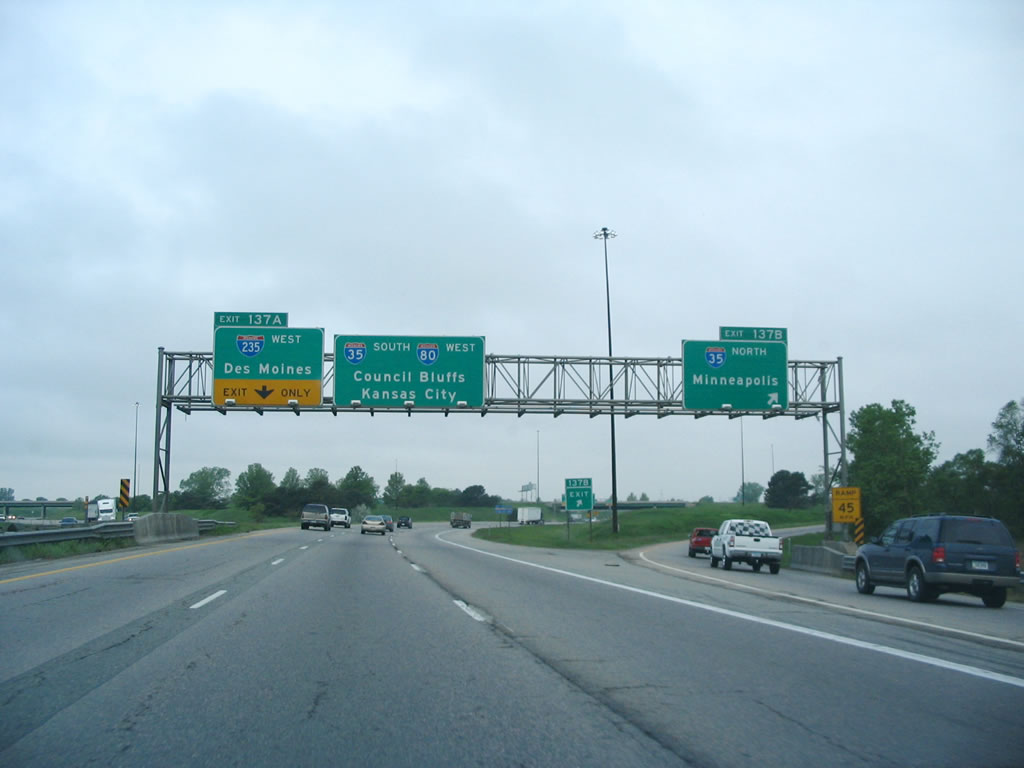
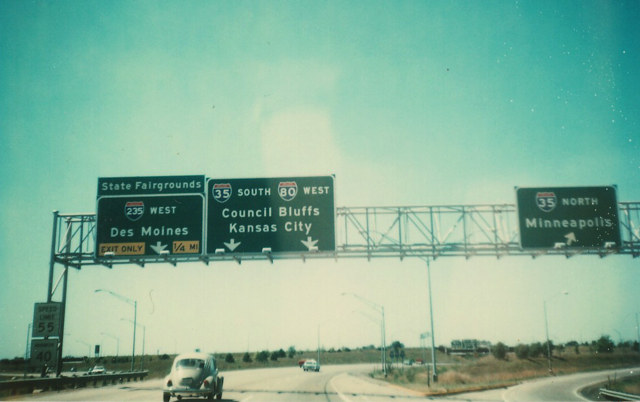
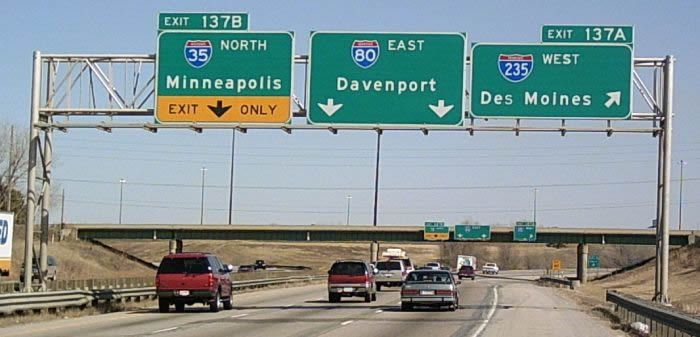
Eastbound at the diamond interchange (Exit 135) with Iowa 415 along I-35/80 east, 2.25 miles ahead of their split. The advance sign for Exit 137 was removed by 2009. Photo by Jason Hancock (05/06/06).




South at
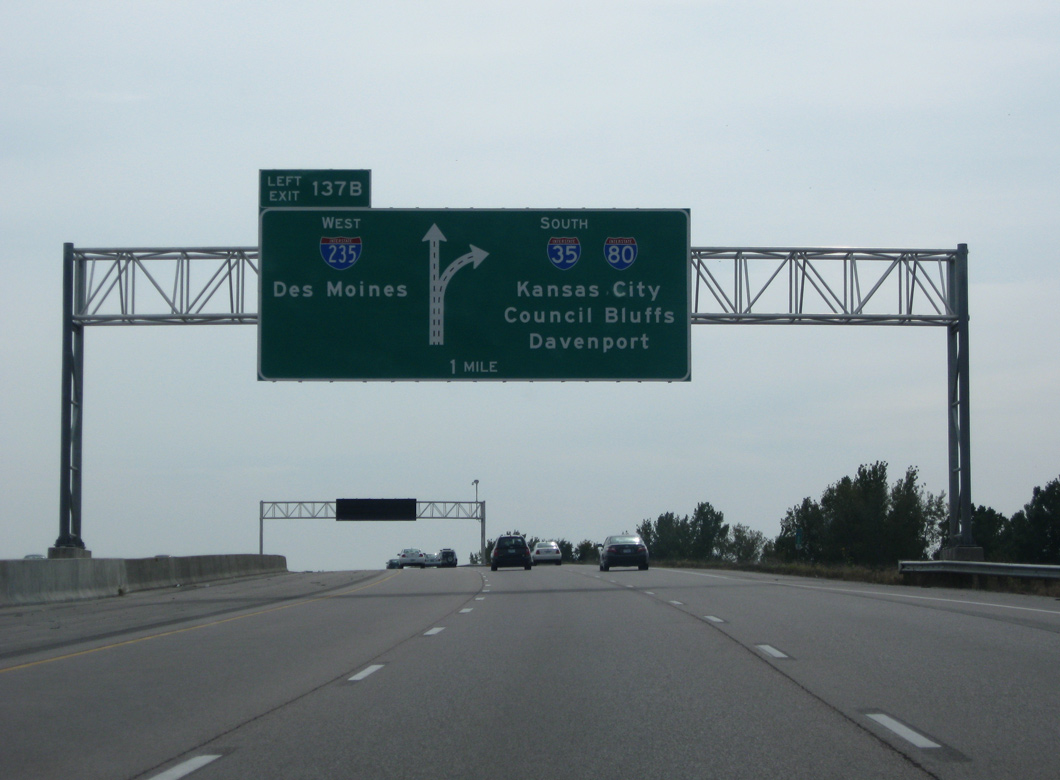
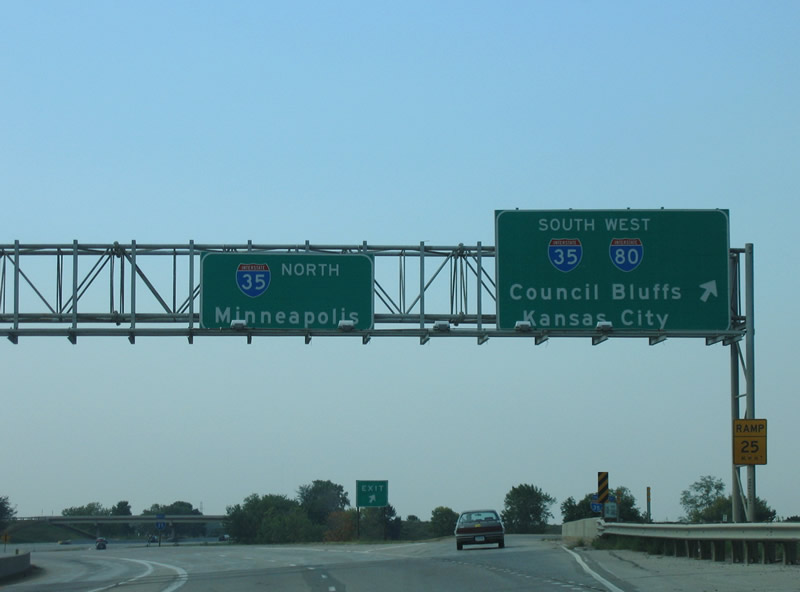
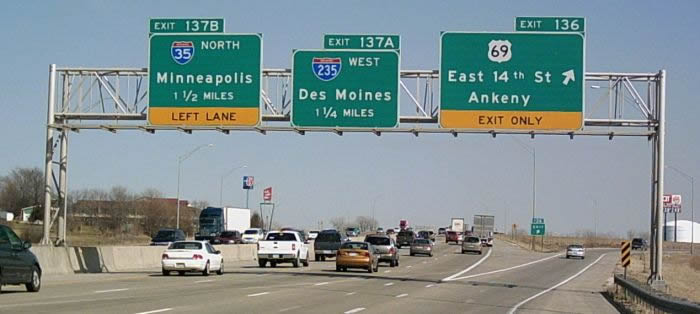
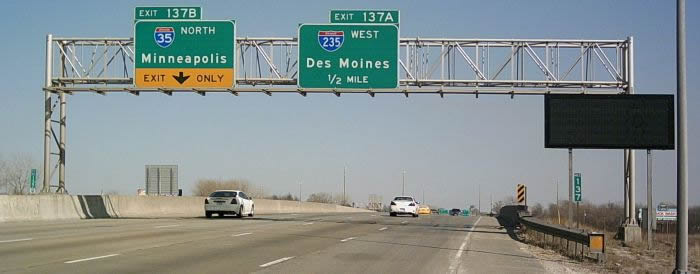
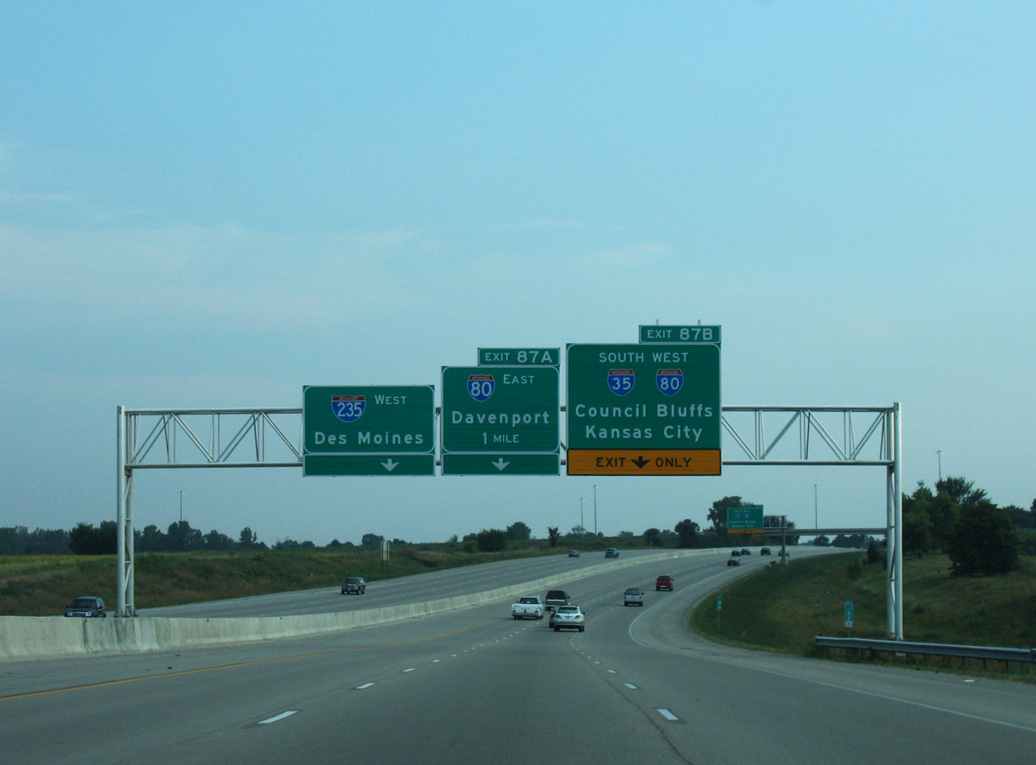
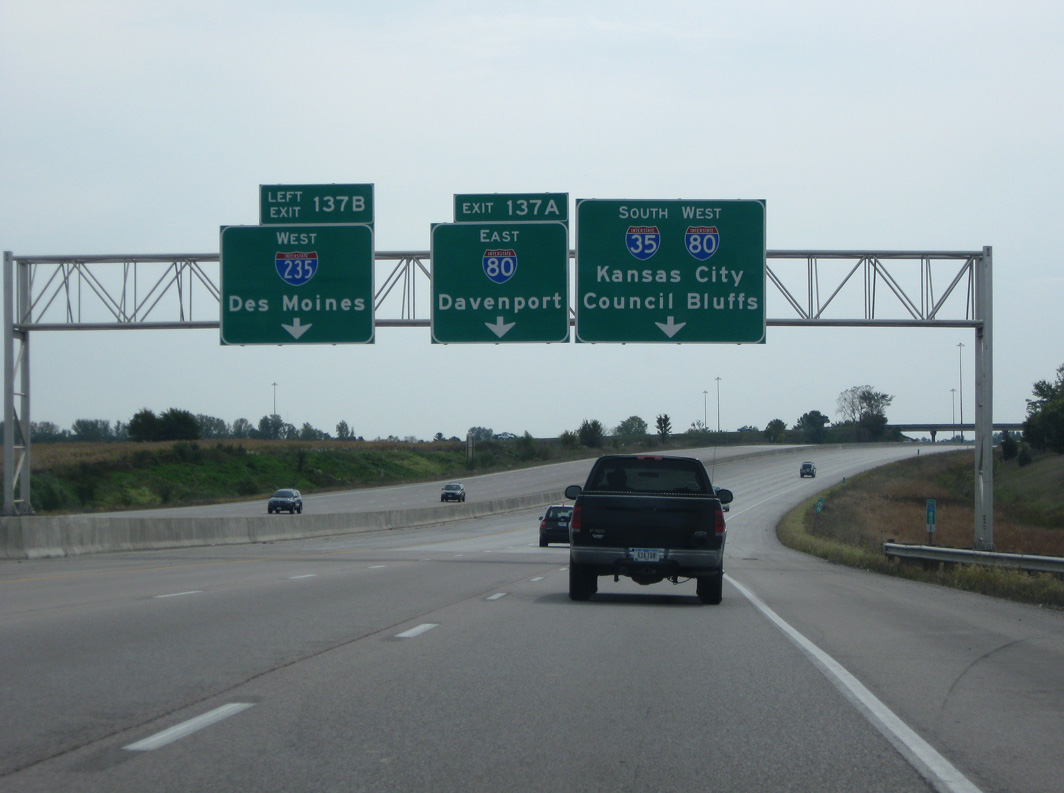
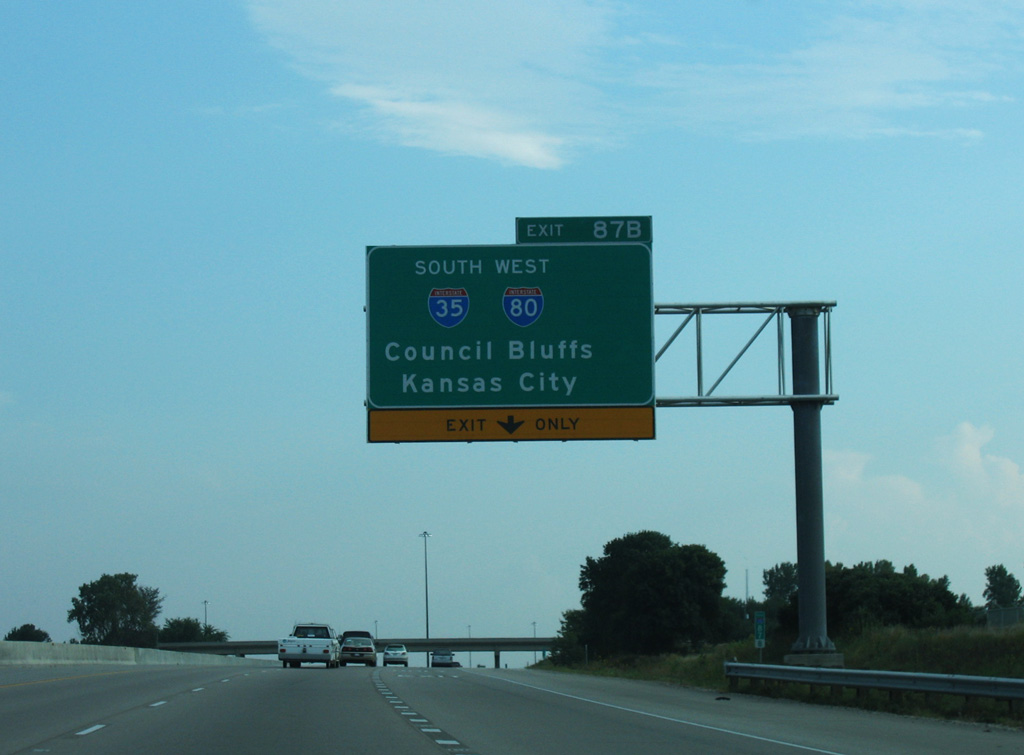
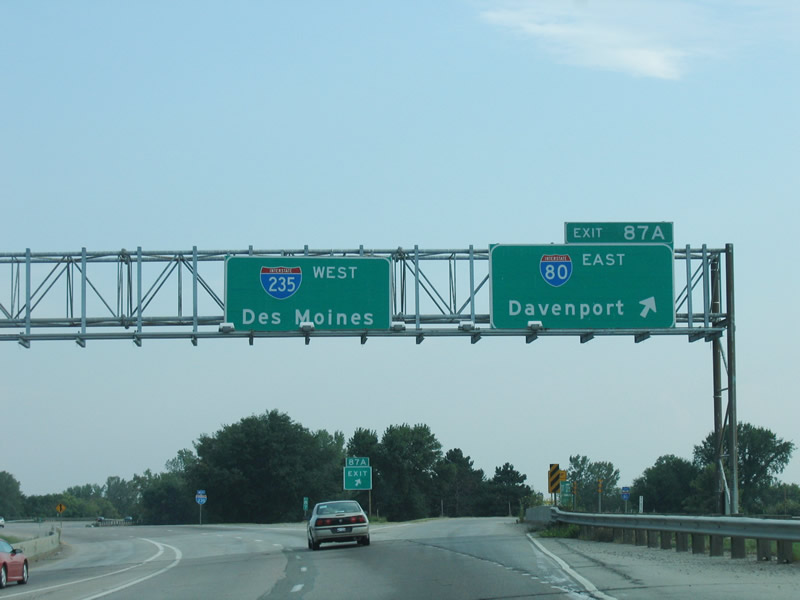
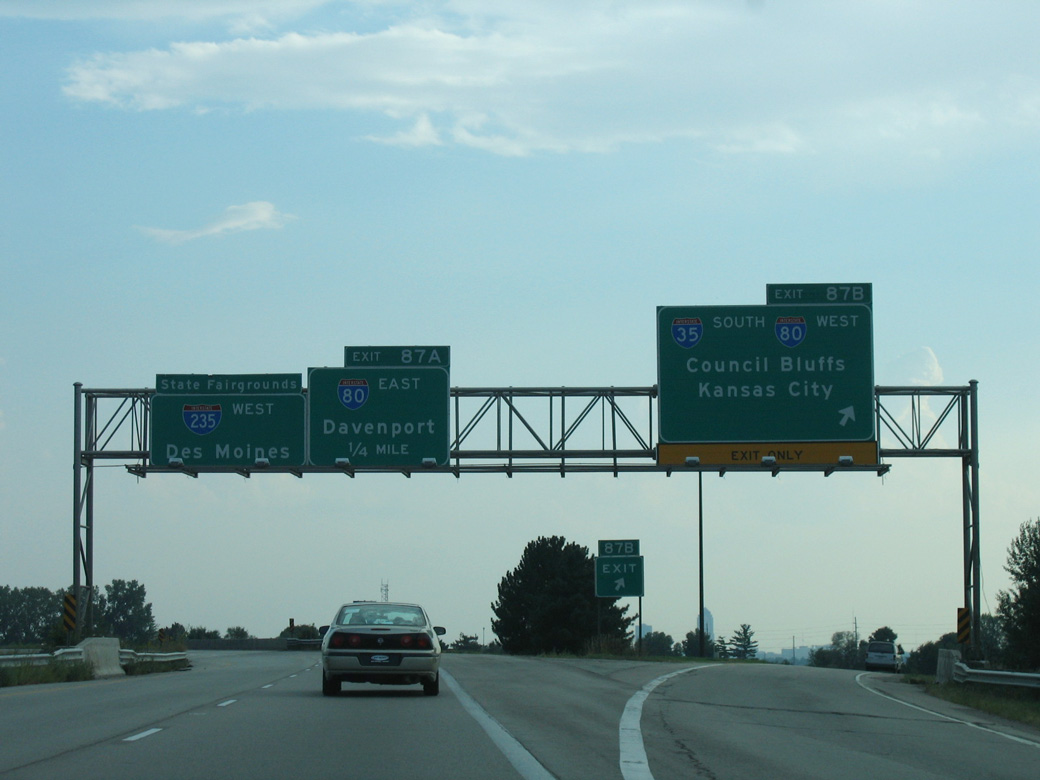
This diagrammatic sign was installed by 2007 to reflect the new freeway mainline leading motorists south from Interstate 35 onto I-235 (MacVicar Freeway). It was replaced by three separate Clearview font based panels by 2011. 10/05/08
West End ‐ Des Moines, IA
West at
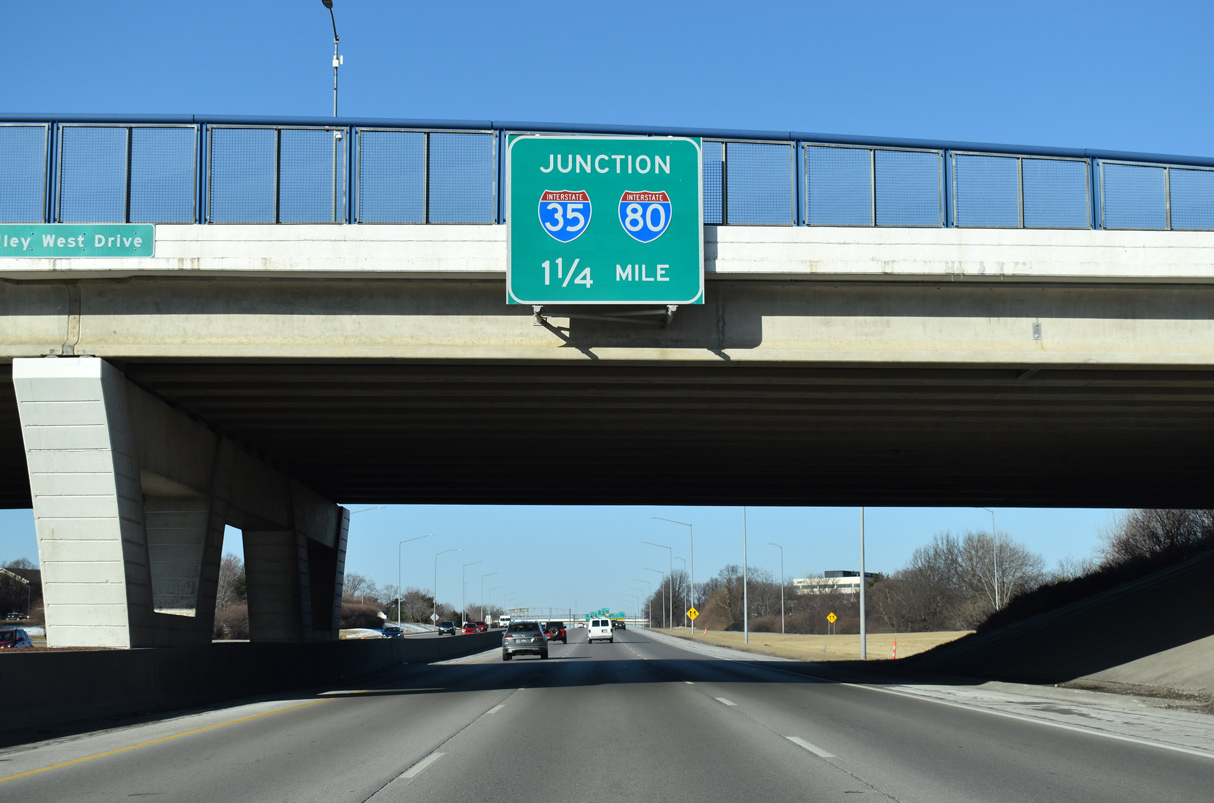
Interstate 235 leads 1.25 miles west from Valley West Drive to the directional cloverleaf interchange with I-35 and I-80. The forthcoming exchange utilizes exit numbers from the mileage of I-80. 02/22/20
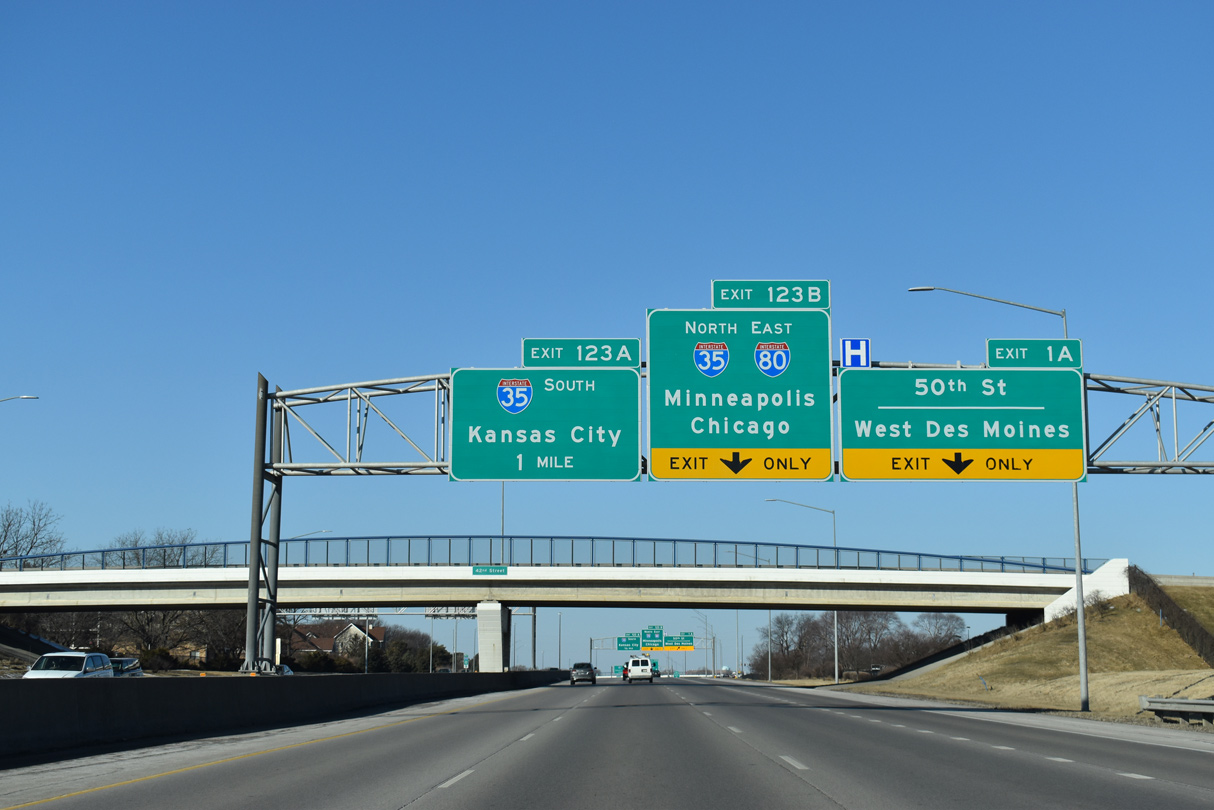
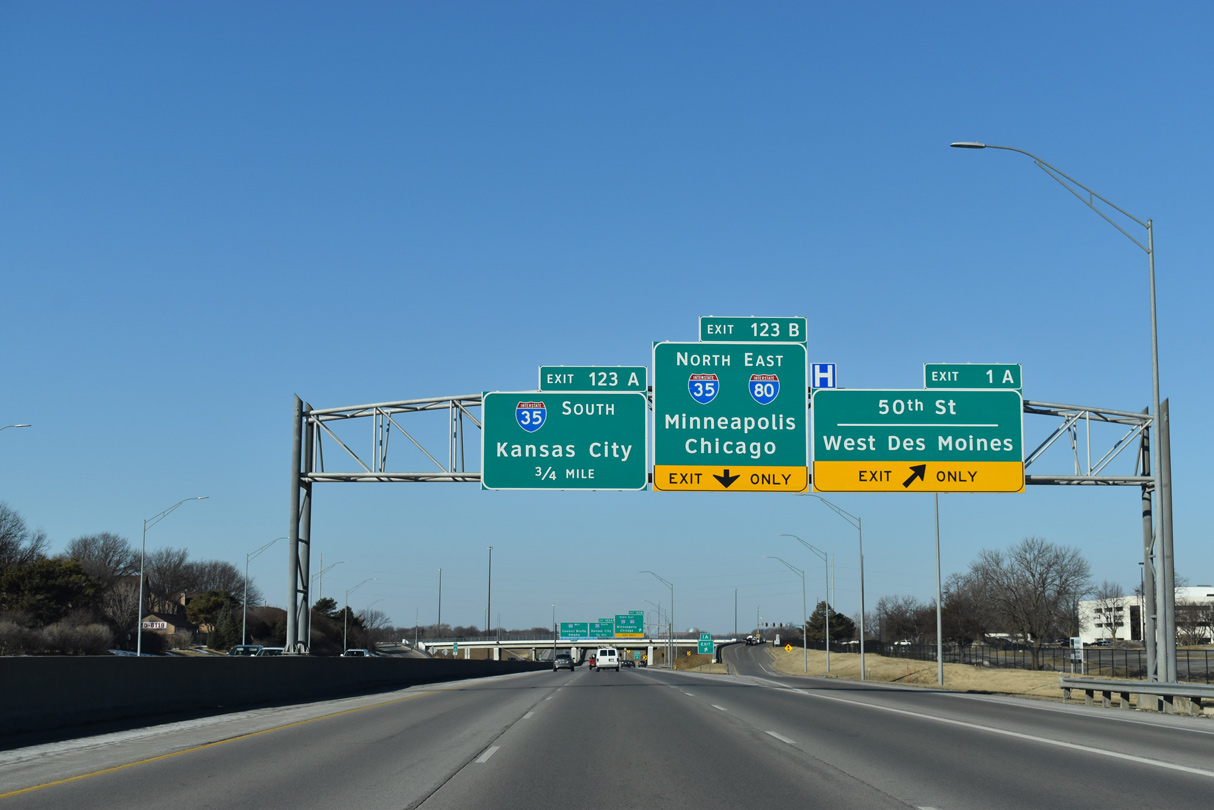
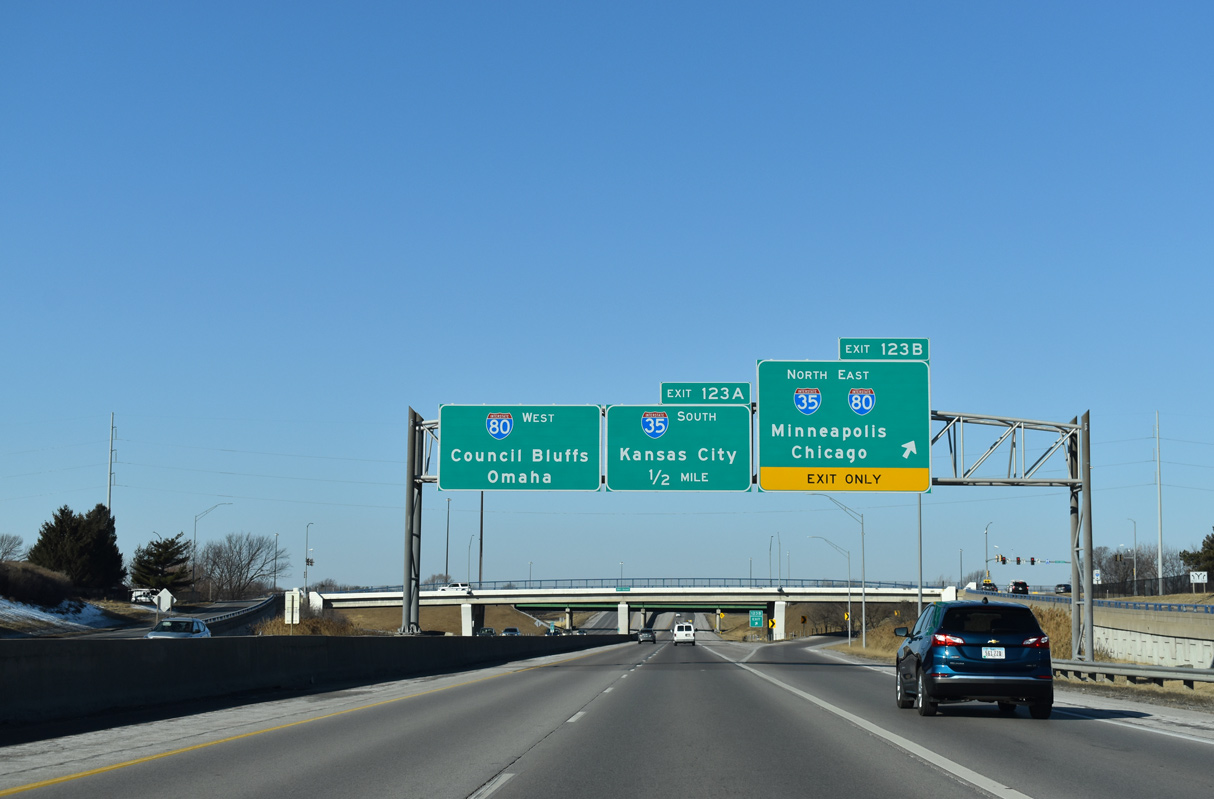
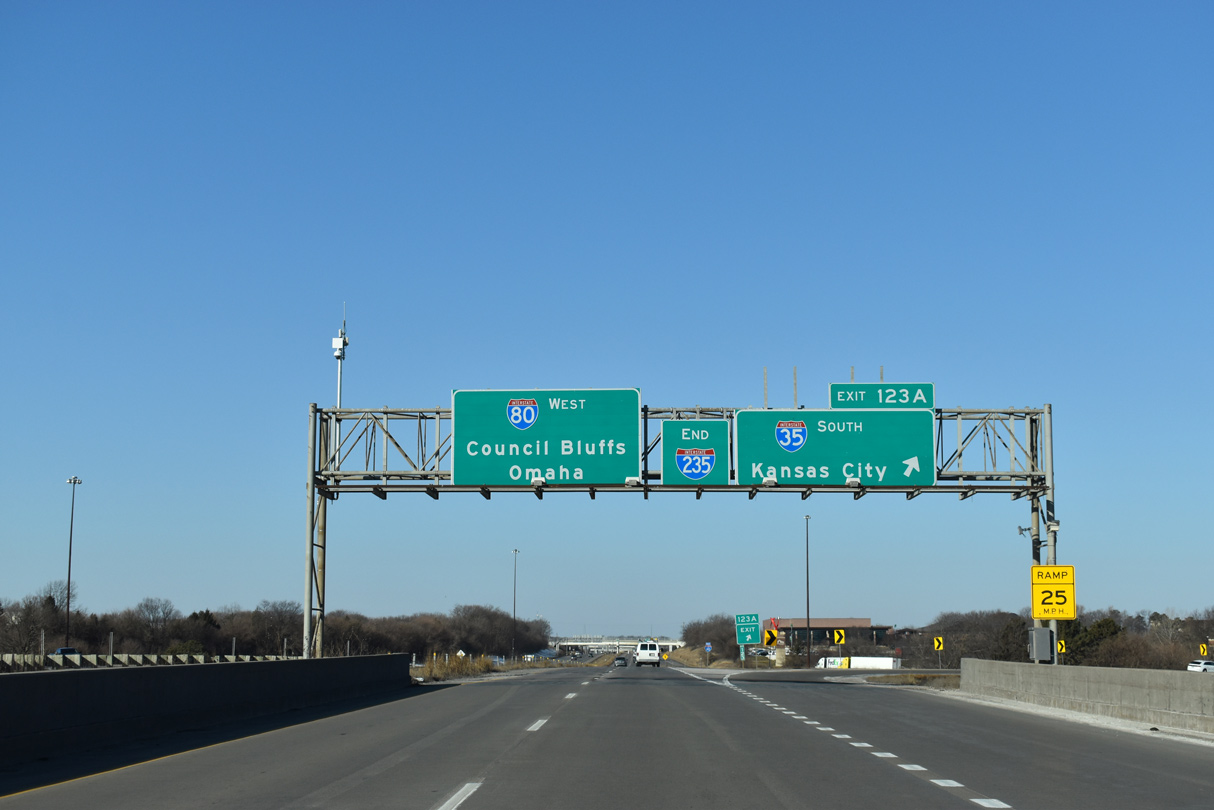
East at
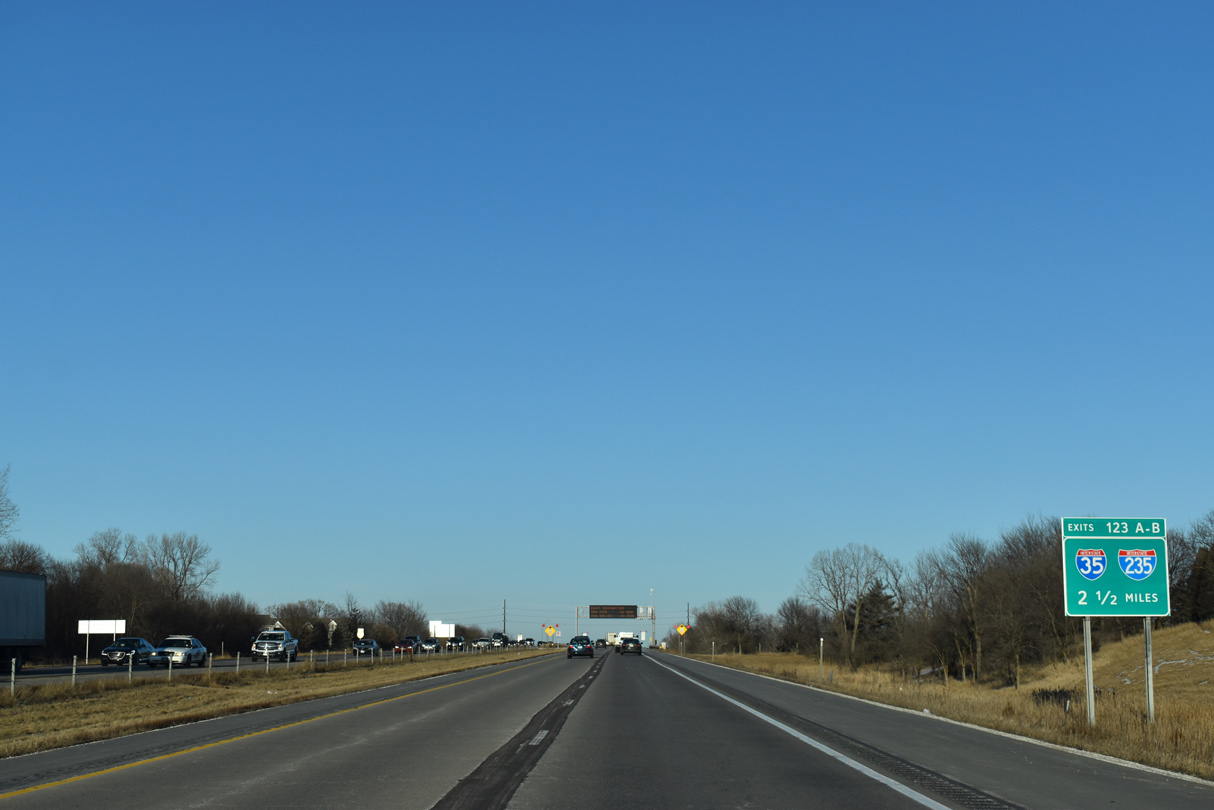
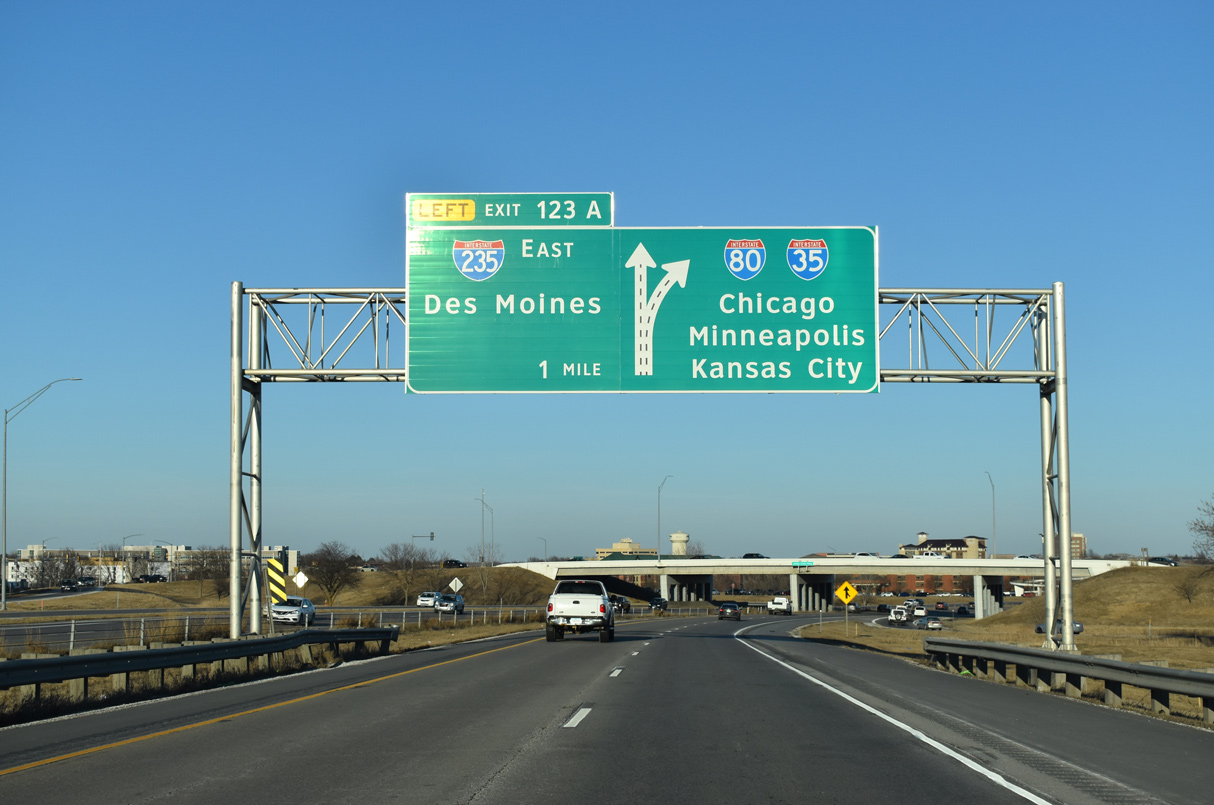
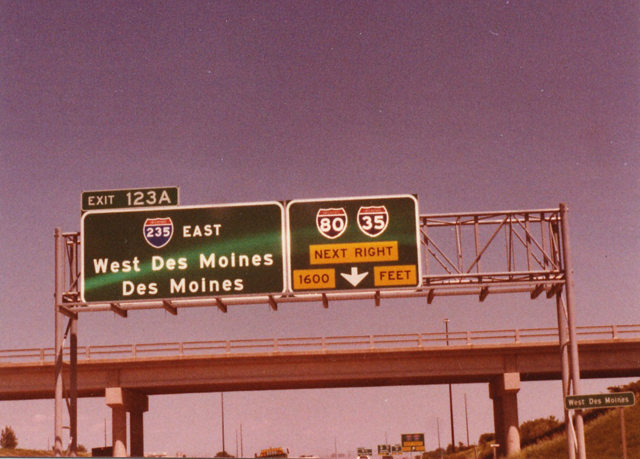
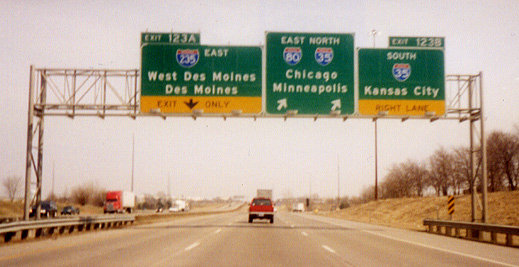
Two miles ahead of the West Mixmaster Interchange joining I-80 east with I-35 and I-235 east in West Des Moines. 02/22/20
North at
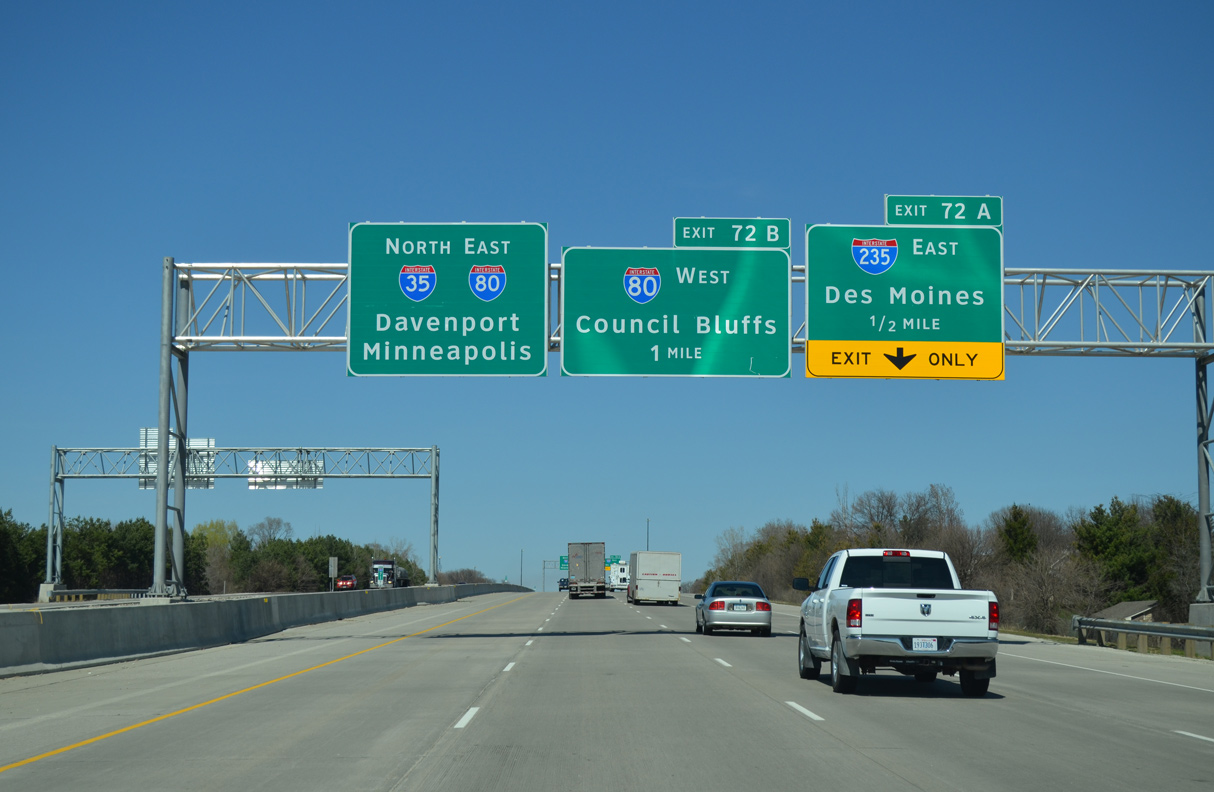
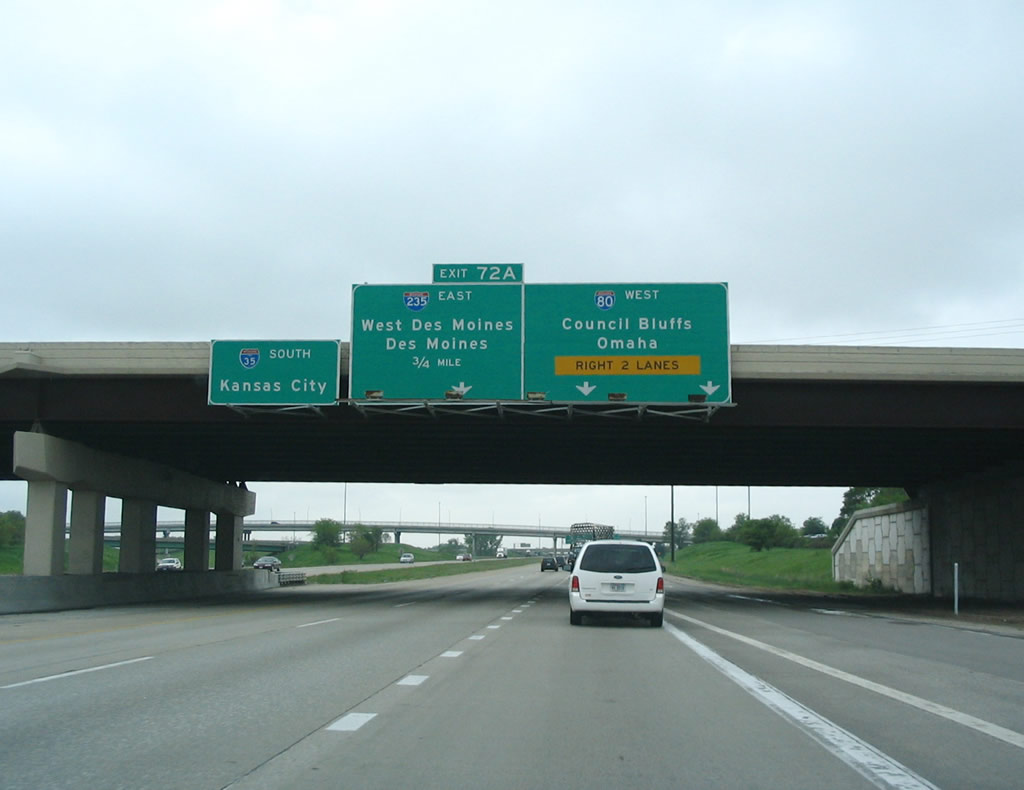
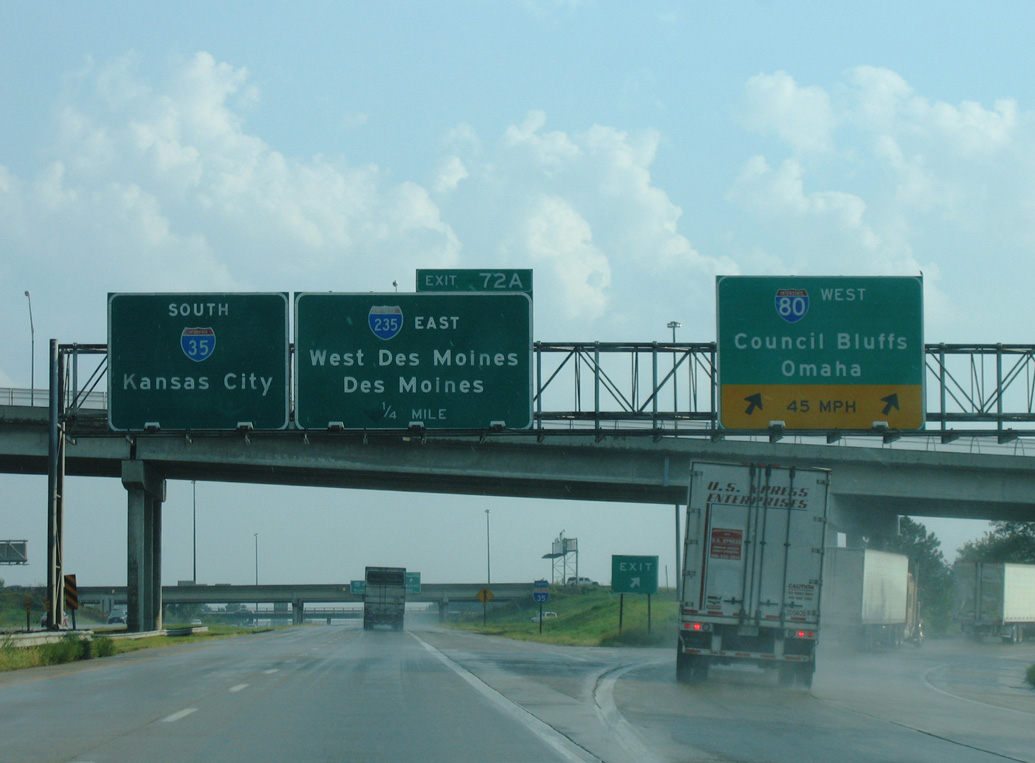
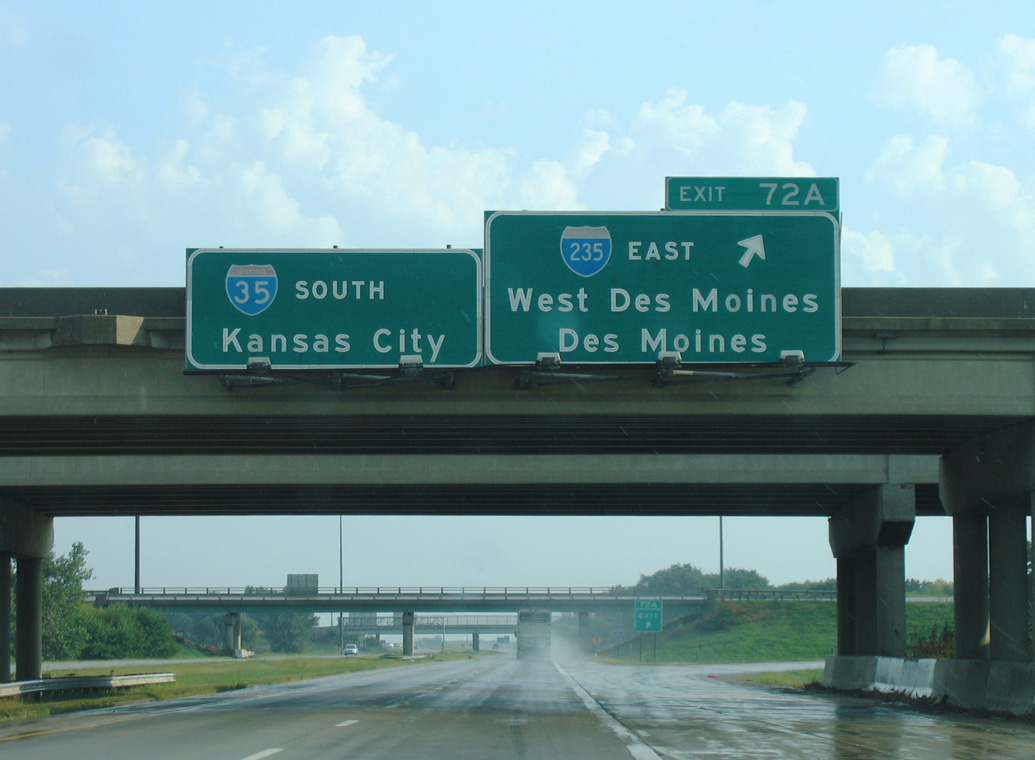
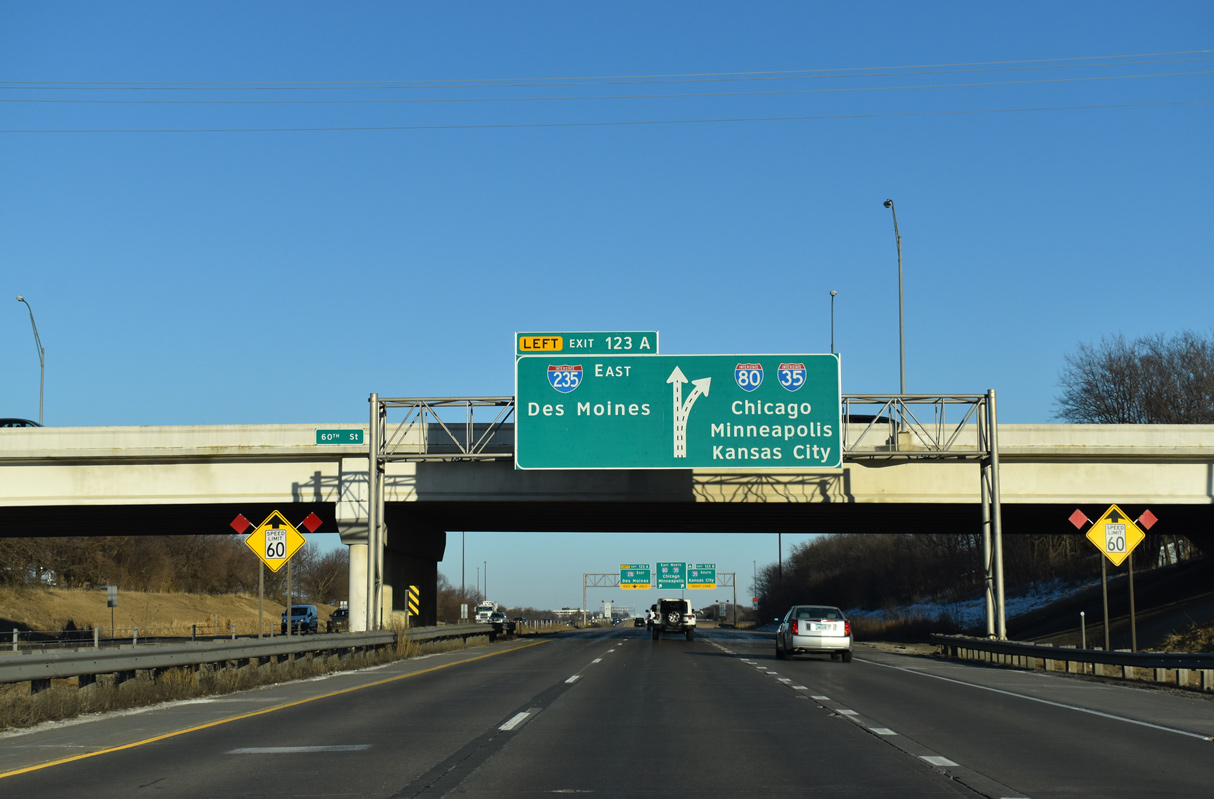
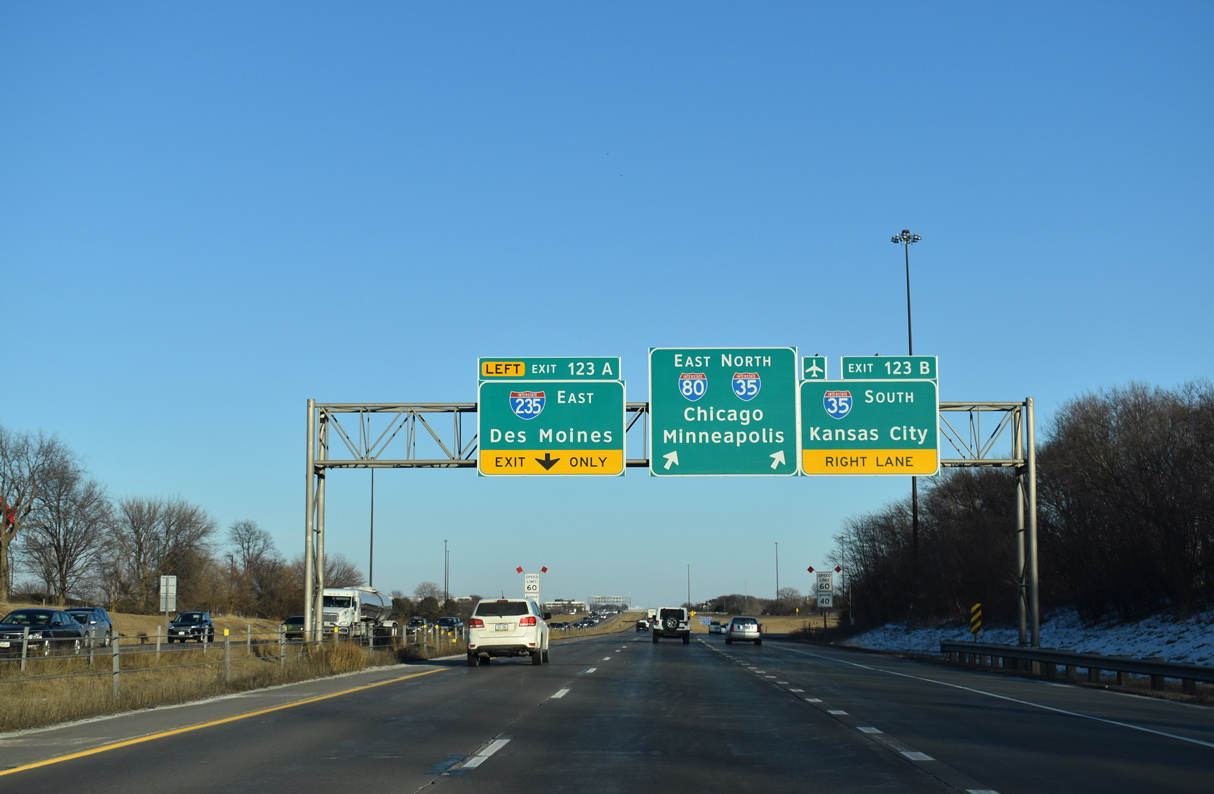
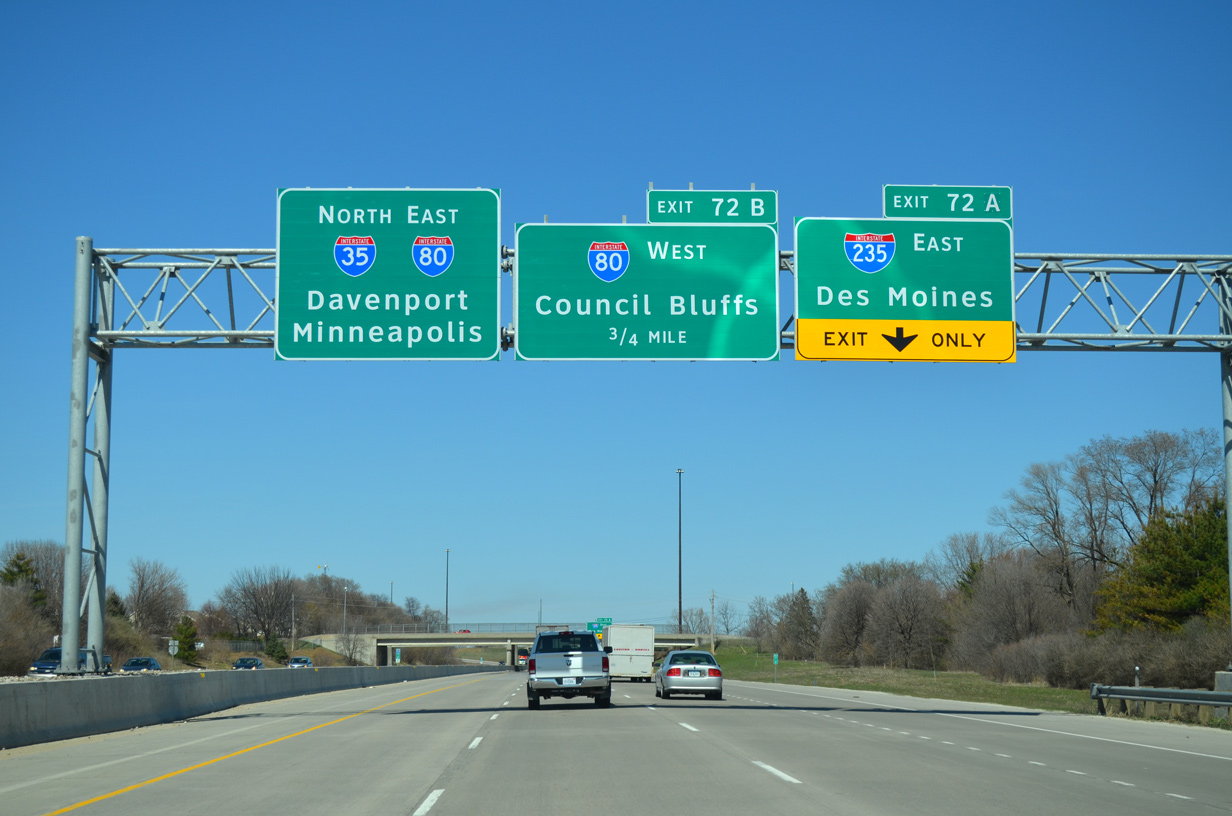
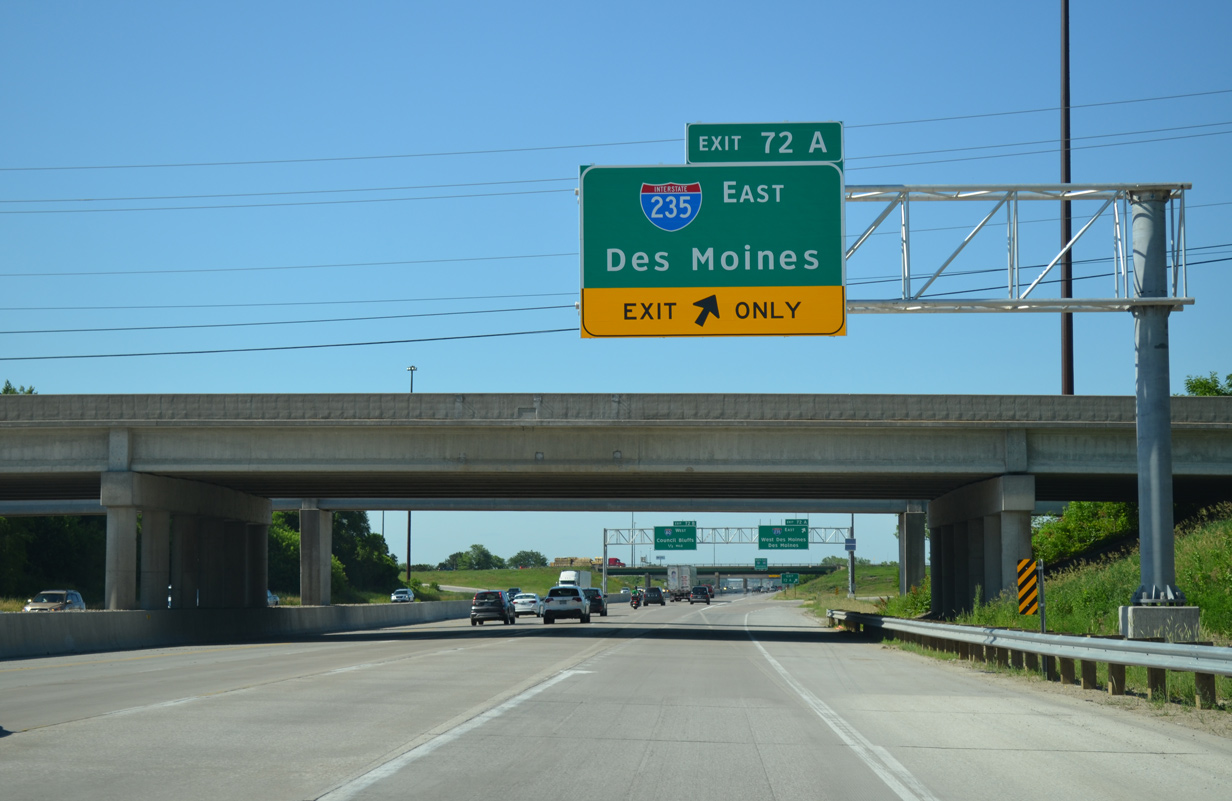
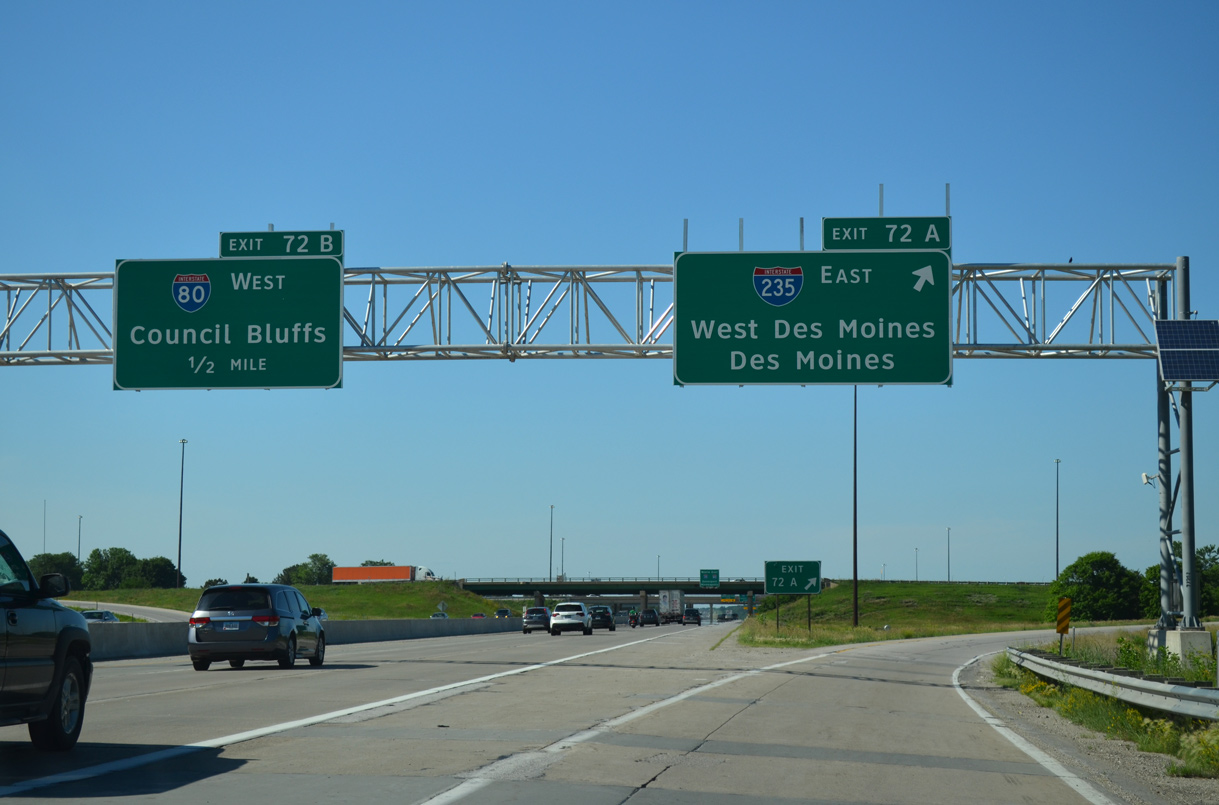
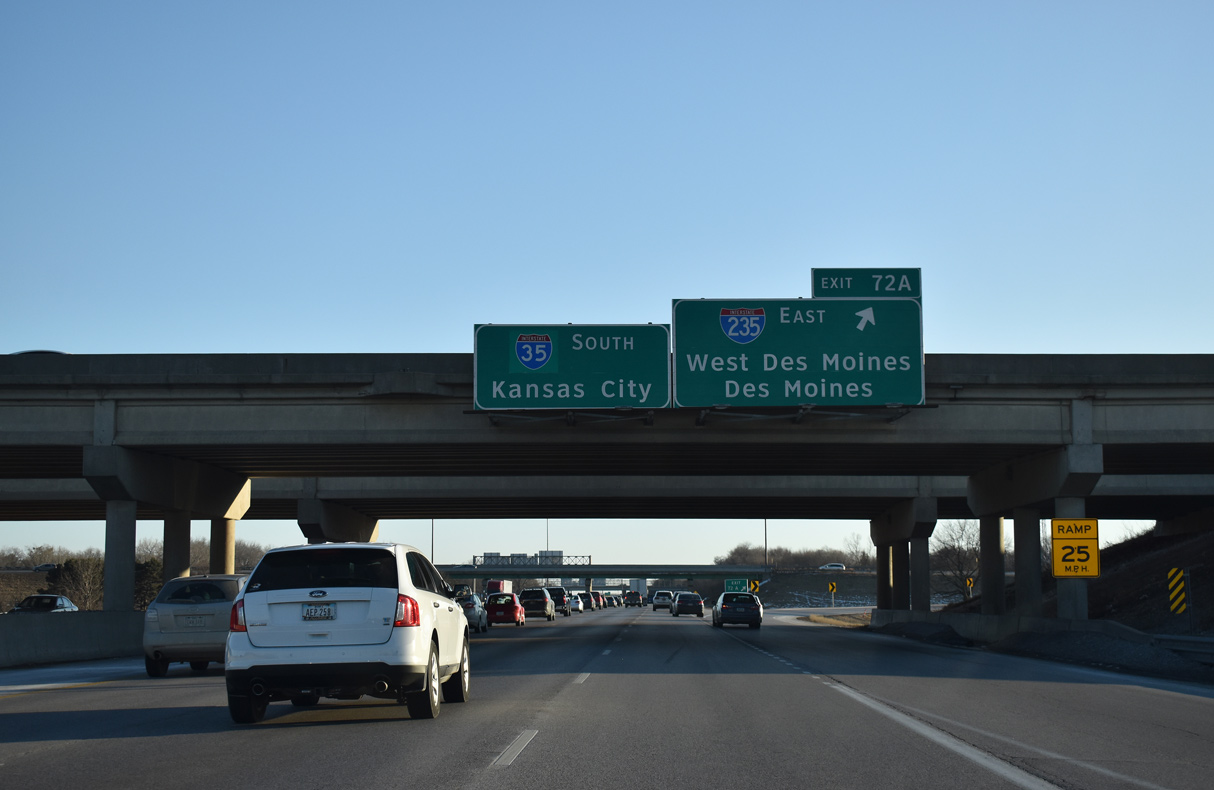
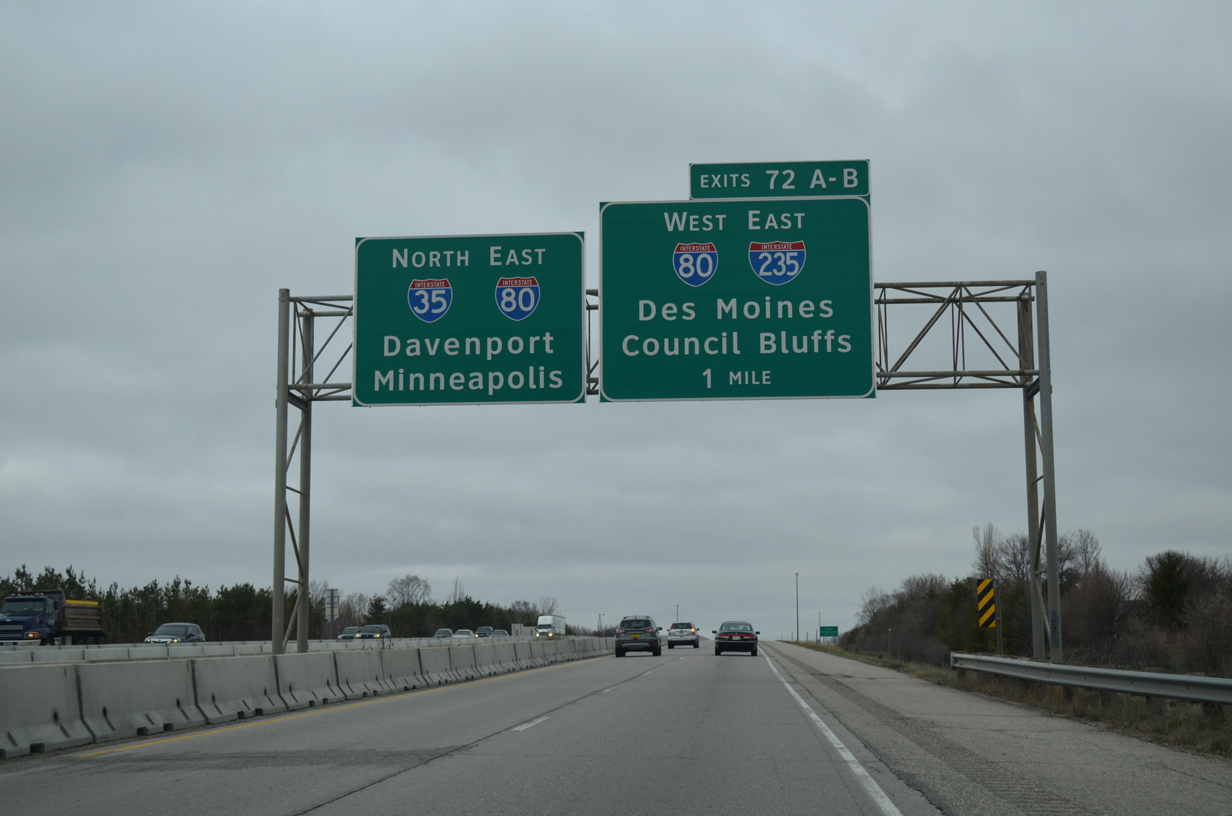
A half mile ahead of the Southwest Mixmaster Interchange (Exits 72 A/B) joining Interstate 35 north with I-80 west to Omaha and I-235 (MacVicar Freeway) east to Des Moines. 07/14/26
South West at
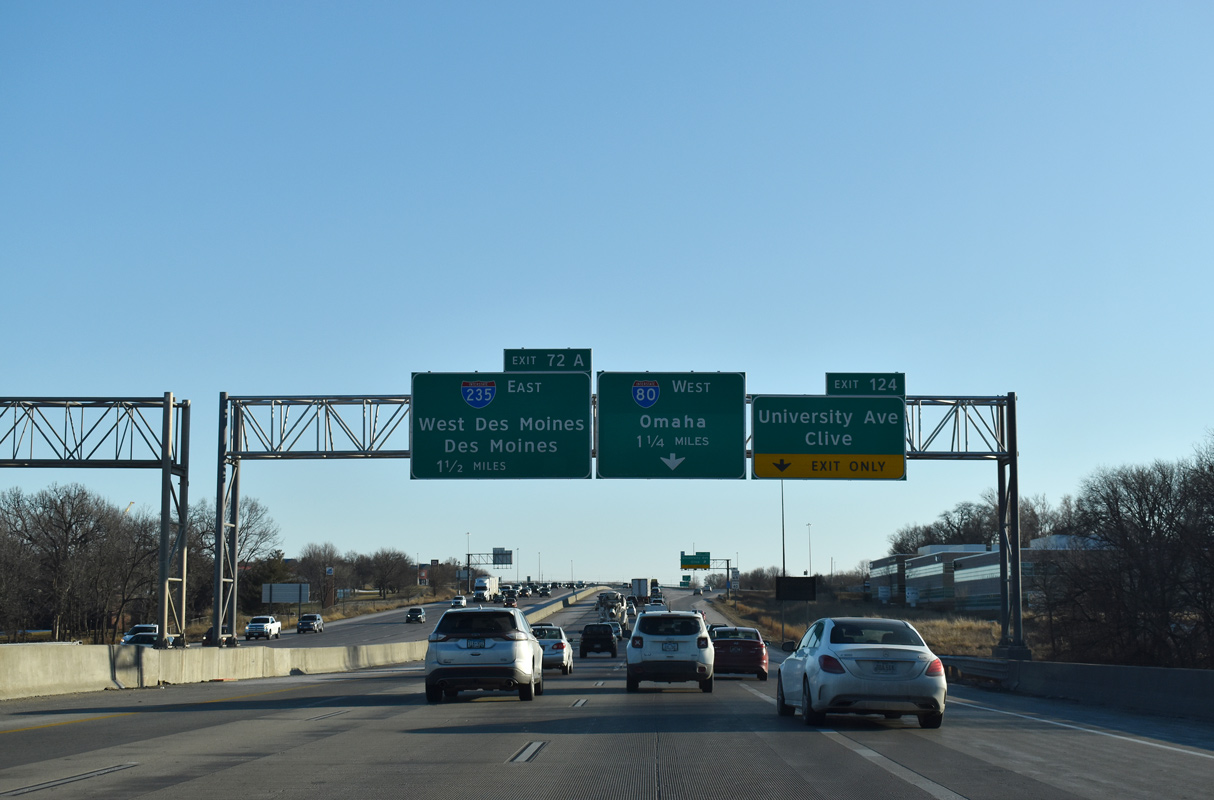
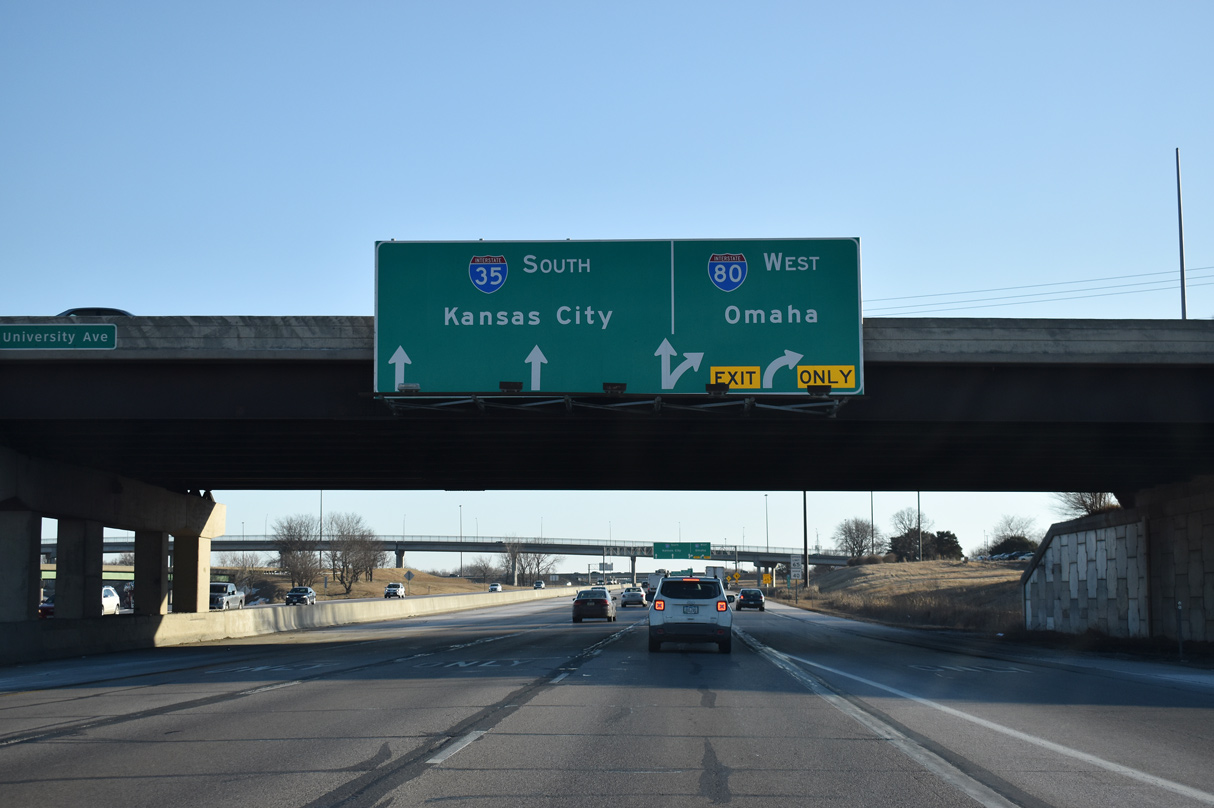
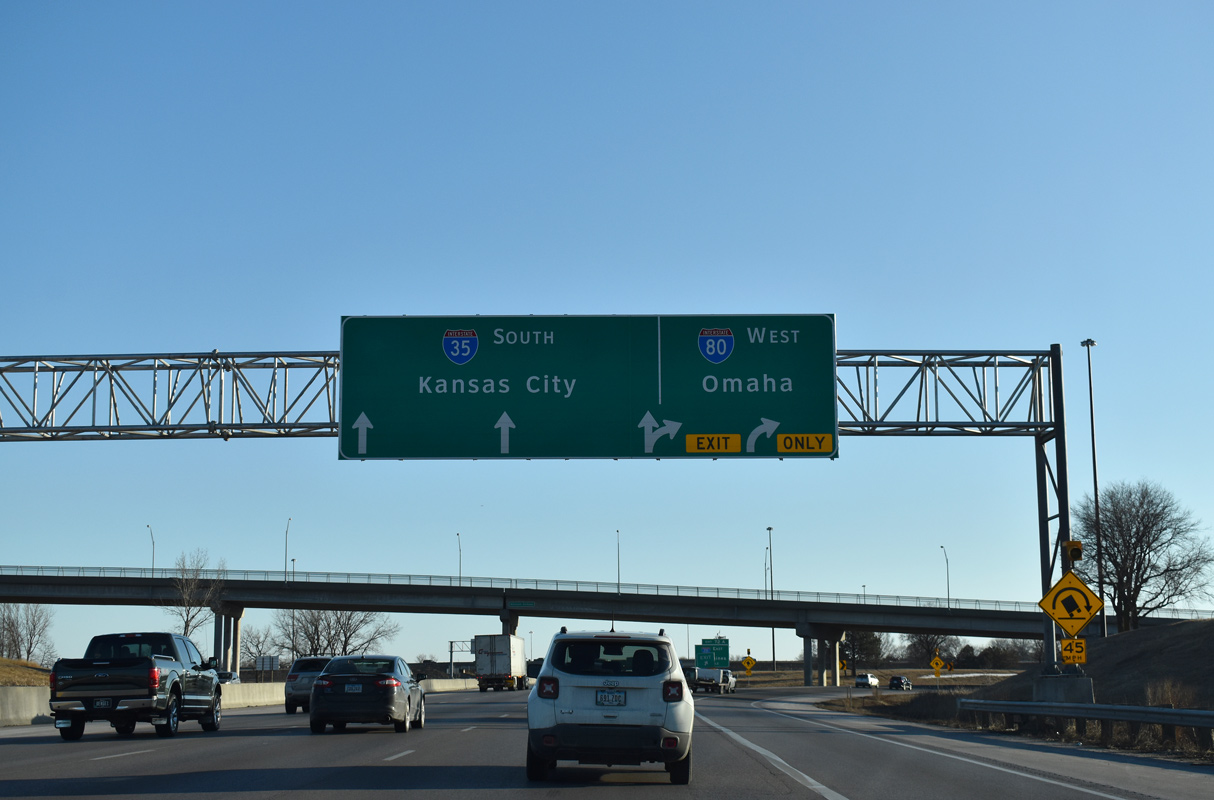
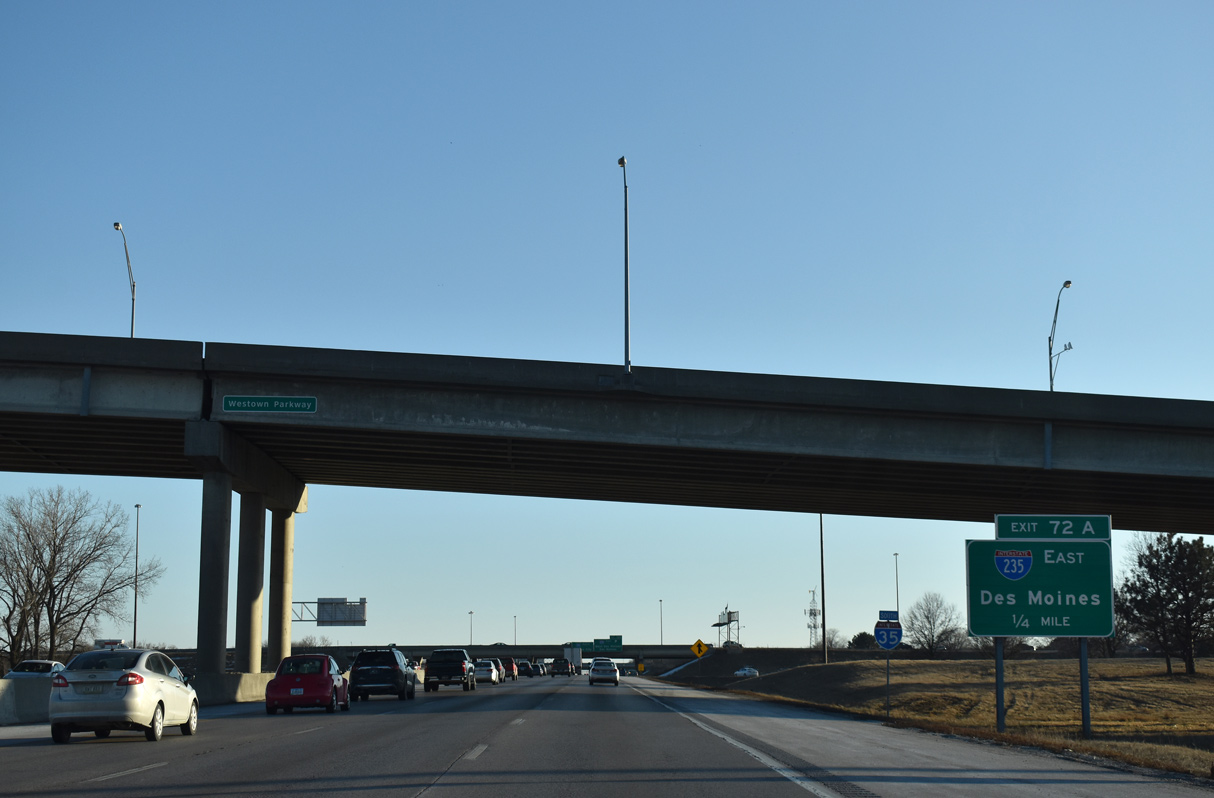
Passing over U.S. 6 on I-35 south and I-80 west, 1.25 miles ahead of the West Mixmaster Interchange with Interstate 235 east in Clive. 02/21/20
West End – Past Views
Past Views Gallery (Tap to Expand / Collapse Section)
West at
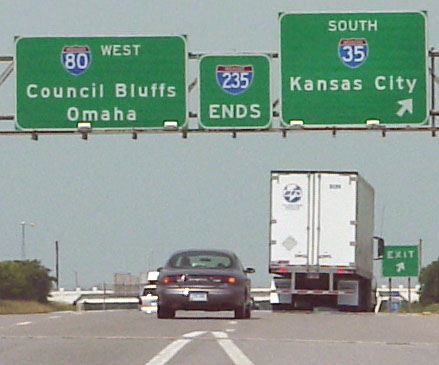
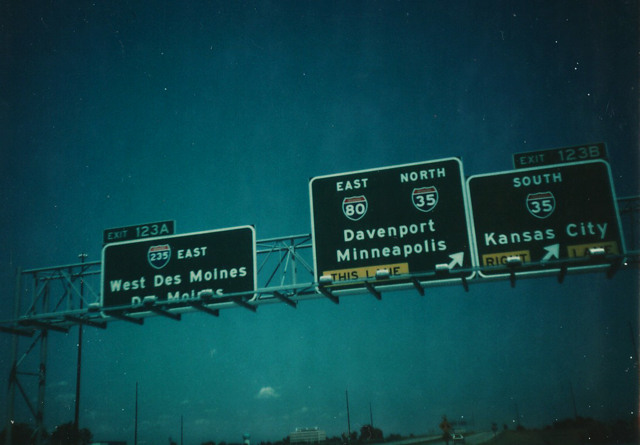
The loop ramp for Interstate 35 south was previously unnumbered. A slight change was also made for the I-235 end sign by 2005. Photo by Dale Sanderson (2002).
East at
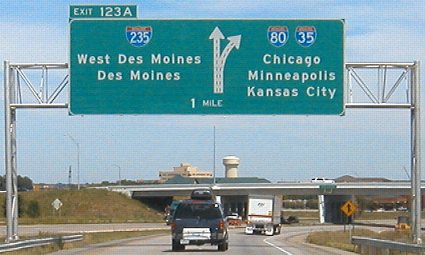
This diagrammatic sign was replaced with a sign using Clearview font by 2015 with West Des Moines was dropped as a control city. Photo by Jeff Morrison (08/19/04).
North at
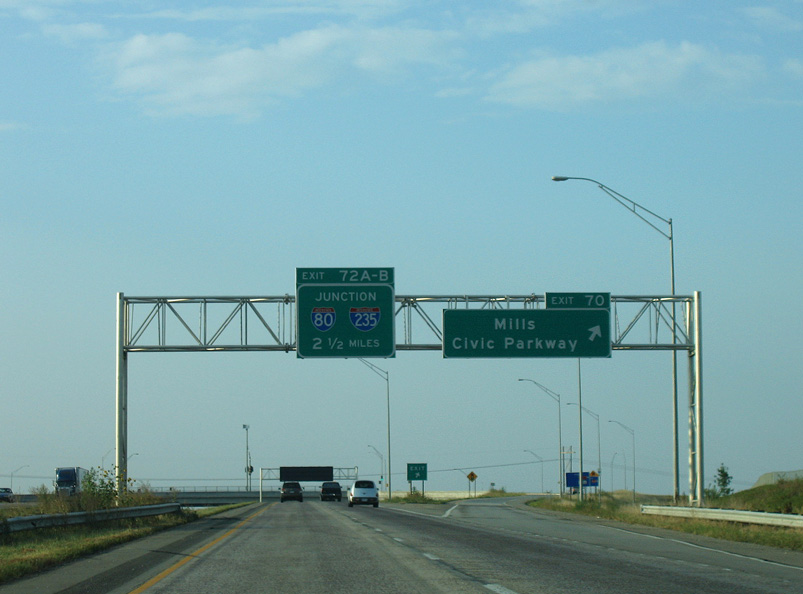
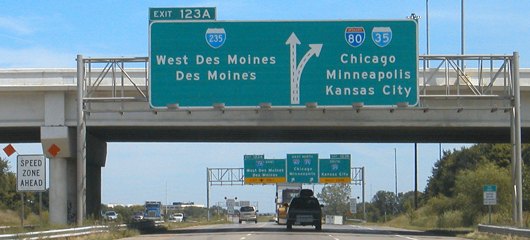
The first guide sign for the West Mixmaster Interchange was previously posted at the SPUI (Exit 70) with Mills Civic Parkway. Construction to expand I-35 to six overall lanes in 2011-13 removed this assembly. 09/04/05




South West at
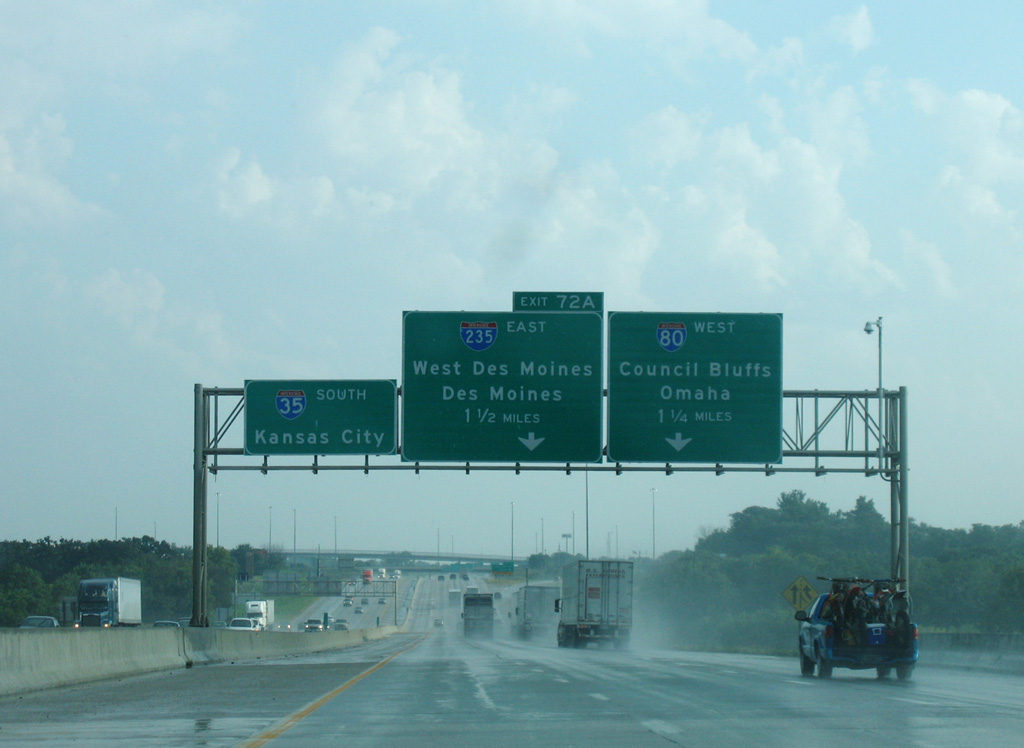
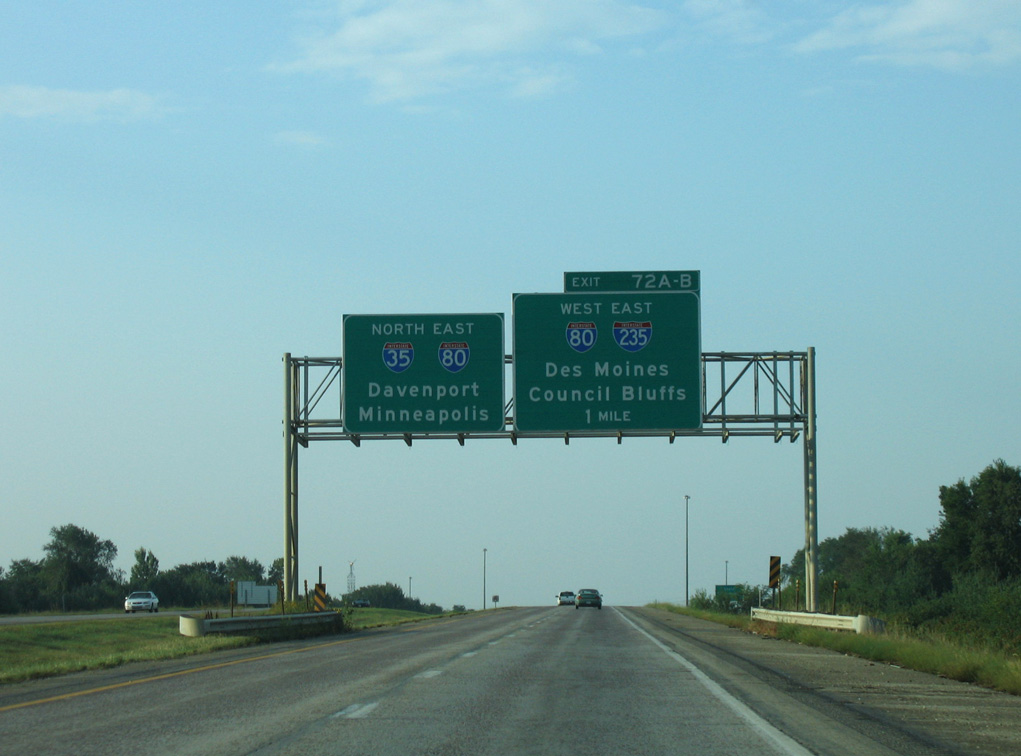
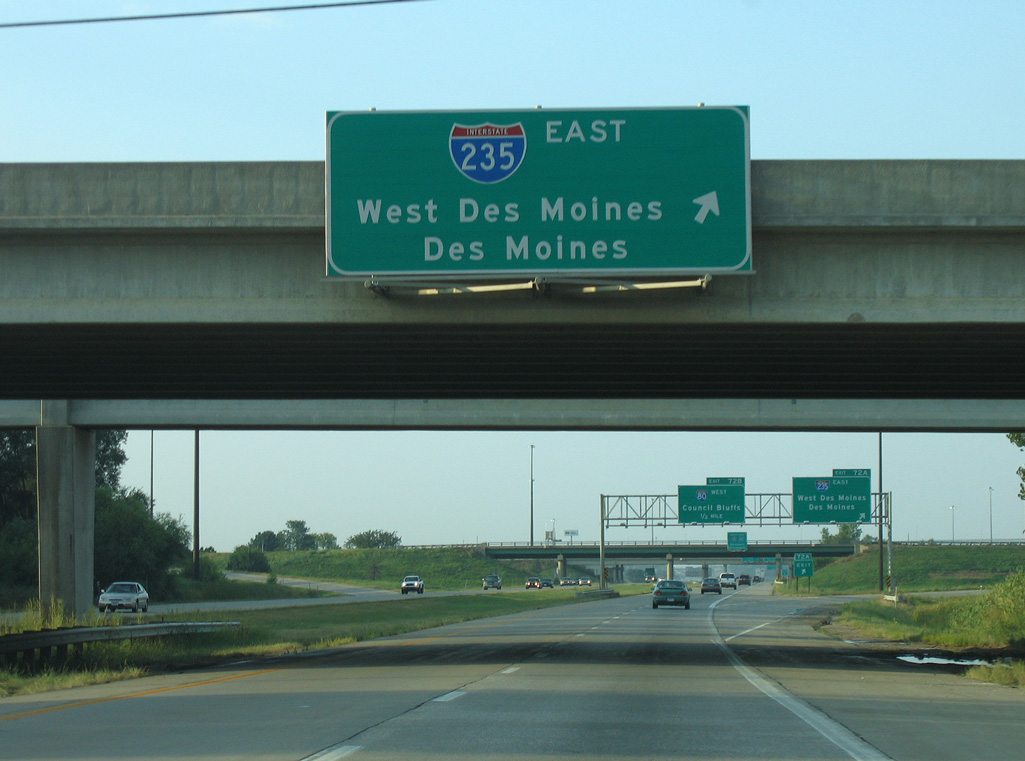
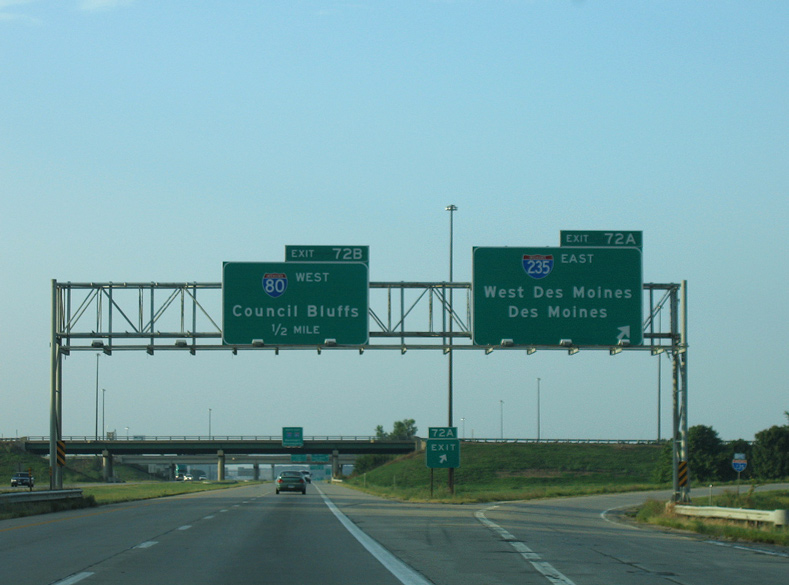
This sign bridge was removed after 2008 and replaced with a variant of these signs further south at the crossing of Walnut Creek. 09/04/05