
Interstate History
Federal-Aid Highway Act of 1956
Designated in 1956, the Eisenhower Interstate System includes over 46,000 miles with routes in each of the 50 states and the U.S. Territory of Puerto Rico. The Federal-Aid Highway Act of 1956 specified a limit of 41,000 miles to be built with Interstate Construction funds. Legislation eventually increased that limit to 43,000. Other legislation allows the Federal Highway Administration (FHWA) to approve additional mileage for freeways adhering to Interstate standards that would be a logical addition or connection. These routes are considered not chargeable, meaning they are not eligible for Interstate Construction funds under the 1956 Act.
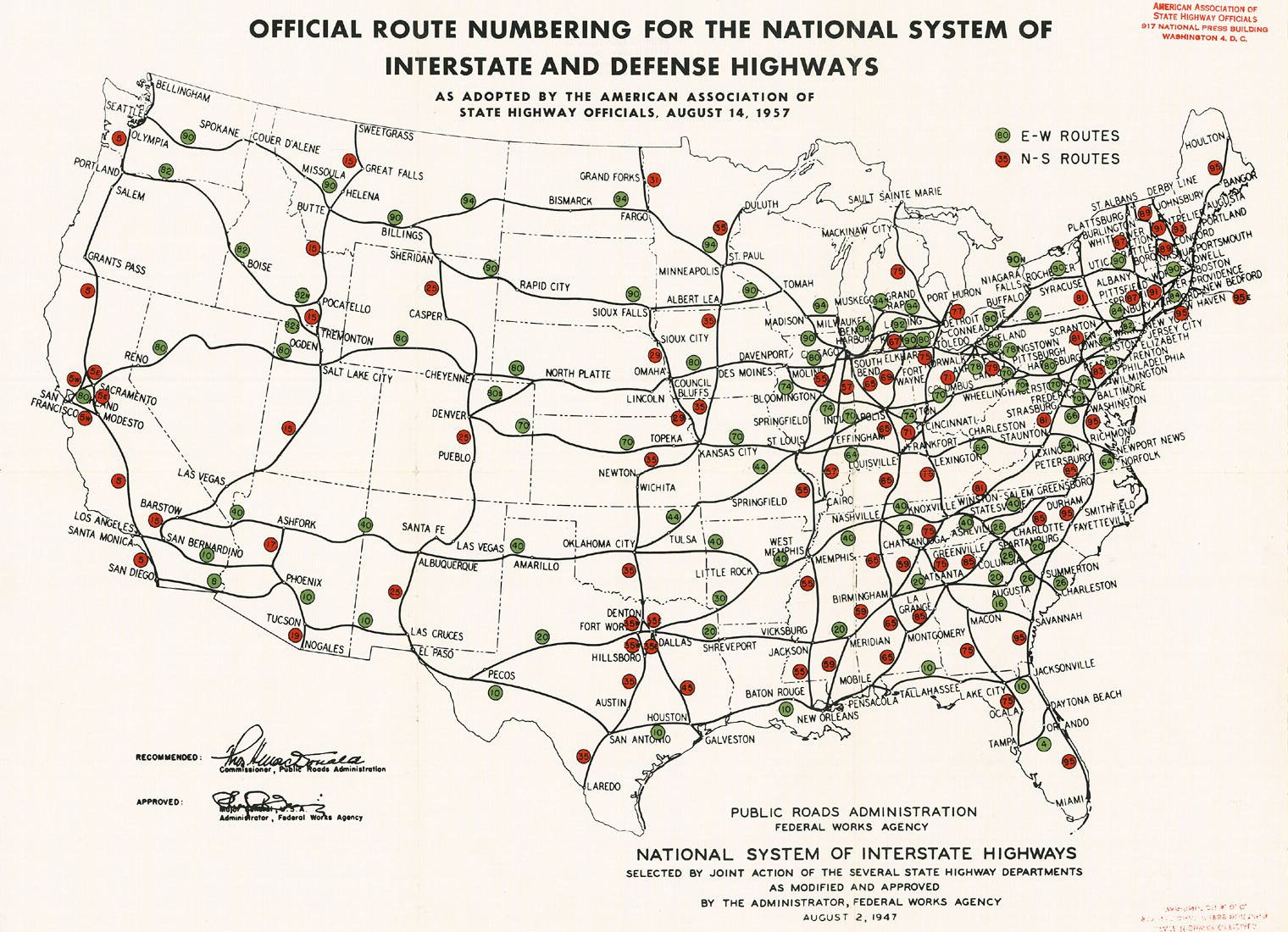
Some notable changes from the original system envisioned by transportation officials include:
- Interstate 31 in North Dakota was renumbered as part of an extended Interstate 29.
- Interstate 67 between Elkhart and Lansing was never built.
- Interstate 77 from Detroit to Port Huron became the easternmost extent of Interstate 94.
- Interstate 78 between Norwalk, Ohio and Youngstown was supplanted by the corridors of I-80 and I-80S (later I-76).
- Interstate 79 between Canton and Cleveland, Ohio was renumbered as Interstate 77.
- Interstate 80 from Youngstown southeast to Harrisburg was later changed to I-80N and ultimately I-76. The I-80N/S split east from Harrisburg now carries I-78 and I-76 respectively.
- Interstate 82 from Portland to Idaho was redesignated as Interstate 80N. I-82N in Idaho was later I-15W and today is I-86.
- Interstate 82 between Scranton and New York became I-81E (now I-380) and part of new I-80.
- Interstate 84 across northern Pennsylvania was dropped in favor of a southern alignment for new Interstate 80.
- Interstate 90N between Buffalo and Niagara Falls became Interstate 190
- Interstate 92 in Michigan was renumbered as the new alignment of I-94, with planned I-94 being replaced by I-96.
- Interstate 94N in Michigan became Interstate 196 and later the westernmost extent of I-96.
- Interstate 95E from Providence to New Bedford changed to Interstate 195.
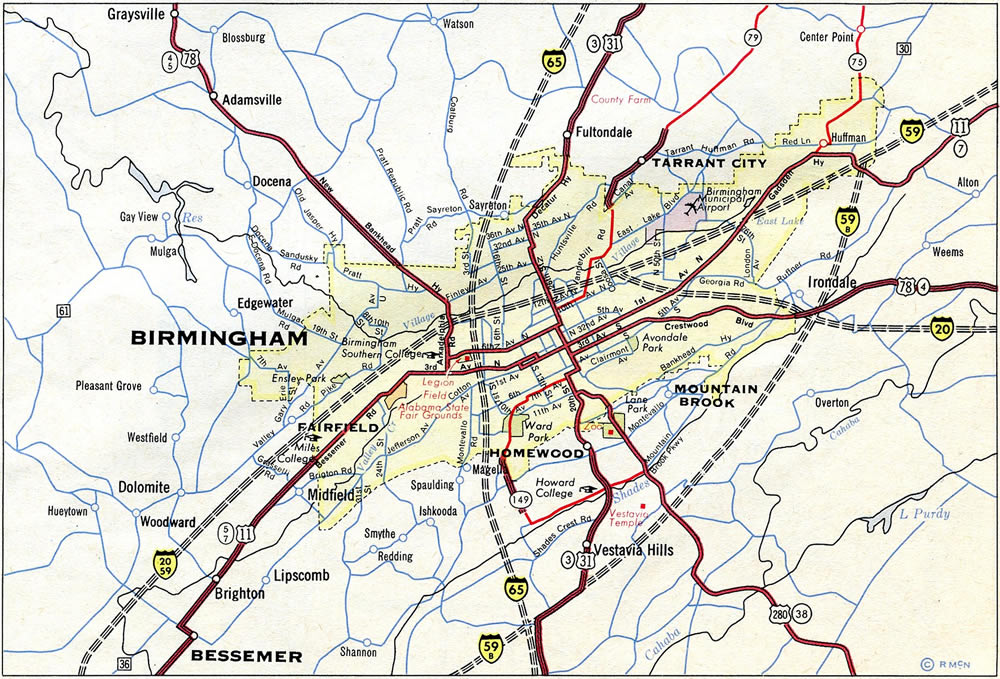
"First" Interstates
Some of the oldest toll roads were incorporated into the Interstate Highway System. These include the Kansas Turnpike and Pennsylvania Turnpike, among others.
- I-44 (Laclede County, Missouri) - first contract to be let for an Interstate Highway using Interstate Highway funds (08/02/1956)
- I-70 (St. Charles County, Missouri) - first contract to be awarded and to start construction (08/13/1956)
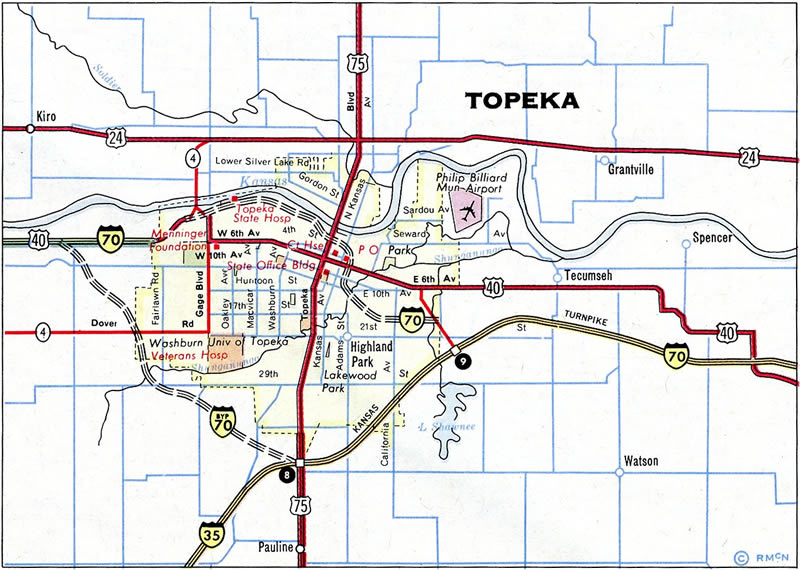
- I-70 (west of Topeka, Kansas) - contract awarded 08/31/1956, construction with new contract began 09/26/1956, construction completed and road opened 11/14/1956
- I-70/76 (Pennsylvania Turnpike from Irwin to Carlisle) - first section of Interstate Highway to be constructed (but not with Interstate Highway funds); road opened on 10/01/1940 but was not signed as Interstate until 1960s
- Finally, Nebraska was the "first state in the nation to complete its mainline Interstate System at a cost of
$435 million. Work began in 1957 and the final link was dedicated October 19, 1974." (Source: Nebraska Department of Roads Fast Facts
http://www.nebraskatransportation.org/docs/facts-roads.pdf)
Expansion Decades
Interstate business connections (loops and spurs) were approved by the American Association of State Highway and Transportation Officials (AASHTO) in 1964 as a method to provide access from the Interstate superhighway to the cities and towns bypassed by the freeway.
The Federal Aid Highway Act of 1968 increased the Interstate system by 1,500 miles. The 42,500 mile system then was envisioned for completion in 1980.
Completion Milestones
The "Last Pieces"
The last leg of Interstate 90 completed coast to coast was the elevated viaduct through Wallace. Idaho.